
Reviewed · AVEIRO DAY TRIPS
Aveiro: Stories, Canals, and Azulejos Guided Walking Tour
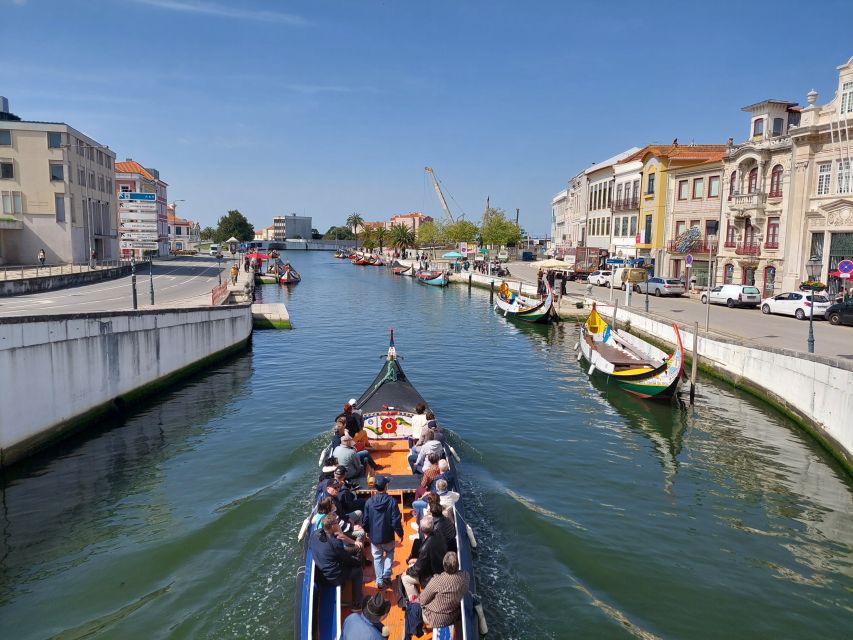
Aveiro makes its first impression with canals and brightly painted boats, but the best part of this walk is learning what lies behind the pretty surface. You follow the water from grand churches to old industrial buildings, tile-covered façades, salt traditions, and the unusual festival of São Gonçalinho. The city becomes much easier to read once António, or Tony Walker, points out the details.
I like the tour’s strong local angle and its sensible route through central Aveiro. I also like that you see more than the usual boat-trip postcard view, including Carmelite Baroque decoration, Art Nouveau ironwork, and the old ceramic industry. The main drawback is the walking itself: this is not a good fit for people with mobility limits, low fitness, or young children, and rain will not stop the tour.
In This Review
- Key Points
- Why This Walk Helps You See Aveiro Clearly
- Starting at Praça da República
- The Carmelite Convent Church and Its Baroque Interior
- Tiles at Casa de Santa Zita and Sapataria Leão
- Santa Joana and the Cathedral
- Canal da Fonte Nova and Aveiro’s Working Waterways
- Beira Mar, Art Nouveau, and Ironwork
- Salt Pans, Food, and the São Gonçalinho Finish
- The Value of Two Hours for $20
- Practical Details Before You Book
- Who Will Get the Most from This Aveiro Walk?
- Should You Book the Stories, Canals, and Azulejos Tour?
- FAQ
- How long does the Aveiro walking tour last?
- Where does the tour begin?
- Which languages are available?
- Is the canal boat ride included?
- Are entrance fees included?
- Can children join the tour?
- What should I bring?
Key Points
- A local guide with personal ties to Aveiro: António has lived in the city for more than 20 years and brings a teacher’s habit of explaining things clearly.
- A two-hour route with plenty of variety: Churches, calçada, azulejos, canals, boats, salt, architecture, and local food all fit into one walk.
- More than a canal photo stop: You learn how Aveiro’s waterways and lagoon boats supported work and trade.
- Excellent for architecture fans: Look for Art Nouveau, Art Deco, iron construction, and tile panels from several periods.
- A useful first look at Aveiro: The walk gives you context before you explore the canals, museums, or food shops on your own.
- A few practical limits: Bring comfortable shoes and sun protection, but leave luggage, bikes, and large bags behind.
Why This Walk Helps You See Aveiro Clearly
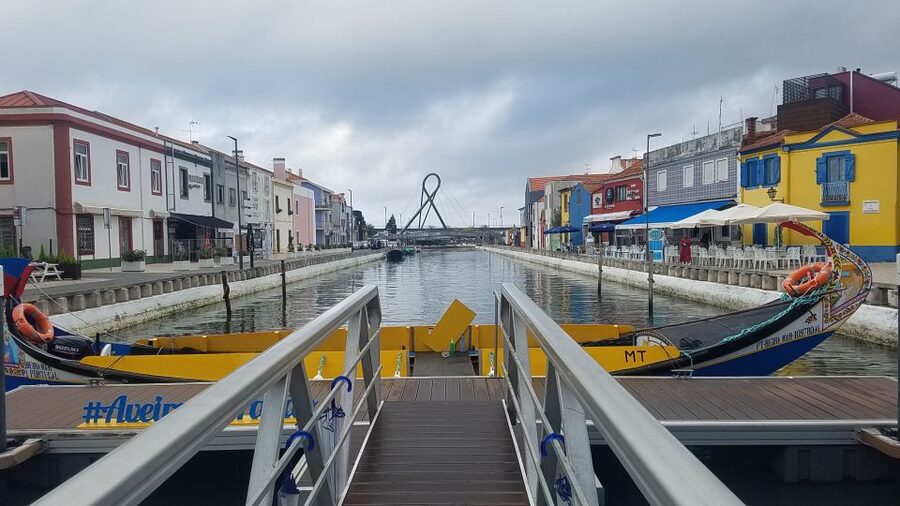
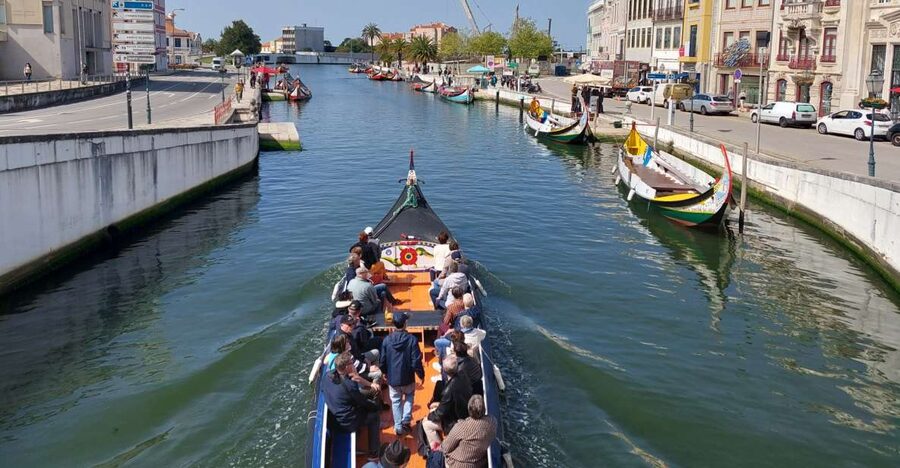
Aveiro is easy to underestimate. You can stroll beside a canal, admire a striped moliceiro, eat an ovo mole, and feel that you have covered the city. Yet the details are not always obvious. A tile façade may reflect a local business, a church may connect to a royal patron, and a canal may reveal an older working economy rather than serving only as a scenic backdrop.
This tour gives you that missing context without taking the whole day. The two-hour length is useful for a first morning or afternoon in town. You get a guided orientation, then still have time for a canal cruise, museum visit, meal, or independent wandering.
António is the named experience provider, and the walk benefits from his local connection. He has lived in Aveiro for over two decades and is also a retired teacher. That combination matters here. The tour covers many subjects, so a guide who can explain architecture, religion, industry, and local customs in plain language makes the route easier to follow.
The tone is social rather than formal. António is known for answering questions, adding humor, and adapting when the group wants to pause. If you like a guide who feels more like a well-informed local showing you his home city than someone reciting dates, this should suit you.
More Aveiro day trips:
- Aveiro: Traditional Moliceiro Boat Tour
★ 4.5 · 3,443 reviews - Aveiro: Scenic Guided Boat Tour
★ 4.4 · 1,047 reviews - Aveiro: Traditional Moliceiro Boat Cruise
★ 4.5 · 797 reviews
Starting at Praça da República
Meet near the statue in the middle of Praça da República. Your guide wears a yellow and blue badge, which makes the meeting point easier to identify.
The square gives you a useful opening view of Aveiro’s civic and religious sides. The Town Hall represents the city’s public life, while the Misericórdia Church introduces the decorative tile and stonework that appear again and again during the walk.
From here, you head along Rua de Coimbra. One early talking point is calçada à portuguesa, the black and white pavement made from small stones. It is easy to treat Portuguese paving as decoration, but the patterns are part of the visual language of the street. Look down occasionally, since the ground itself becomes part of the tour.
This opening section is not about racing from monument to monument. It helps you notice how Aveiro combines modest street details with formal buildings. Wear shoes with firm soles. Small stone paving can be tiring in thin or unsupportive footwear.
The Carmelite Convent Church and Its Baroque Interior
At Praça Marquês de Pombal, the group enters the Carmelite Convent Church. Entry to the sites visited is free, although access can depend on opening hours.
The church is small, but its Baroque decoration gives it real visual weight. This is one of the tour’s useful contrasts. Aveiro is often presented through canals and painted boats, yet its churches provide some of the strongest reminders of the city’s religious and artistic past.
António explains what you are seeing instead of leaving you to scan the room without context. That makes a compact church more rewarding, especially if you are not already familiar with Portuguese religious art.
Do keep the Monday issue in mind. Museum and church access can vary by day, and one tour experience was less complete because museums were closed on a Monday. The walk still functions when interiors are shut, but you should not assume every door will open.
Tiles at Casa de Santa Zita and Sapataria Leão
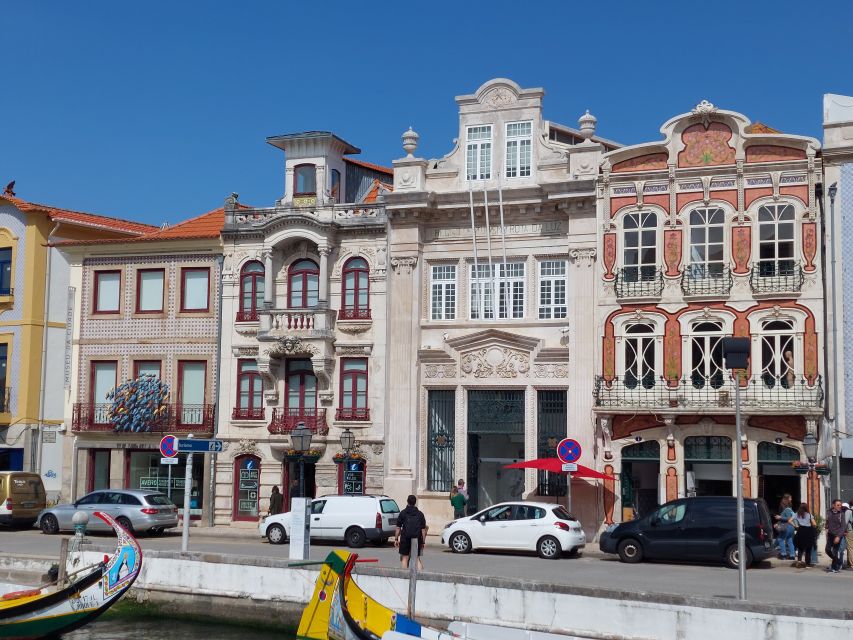
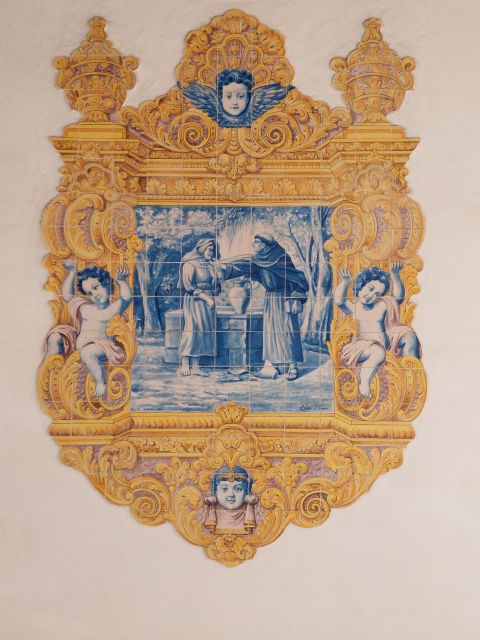
The route then brings you past the tile panels of Casa de Santa Zita and Sapataria Leão. These stops show why Aveiro rewards slow walking. You are not only looking for famous monuments. You are learning to spot how azulejos mark homes and businesses.
The tour covers tile work from the early modern period through more recent examples. That range is important because it prevents you from seeing every blue and white panel as the same. Patterns, colors, placement, and purpose can change with the building and period.
You will see azulejos used as decoration, but also as a way to give a façade identity. This is where a guide adds value. On your own, you may photograph the panels and move on. With António, you get a reason to stop and compare them.
For anyone interested in Portuguese architecture, these façades may be among the walk’s most useful stops. They also give you a visual theme to follow for the rest of the route.
More walking tours in Aveiro:
- Aveiro: Boat Cruise and City Walking Tour with Sweet Tasting
★ 4.7 · 318 reviews - Aveiro: Walking and Boat Tour, Ovos moles & Colorful Ribbons
★ 4.9 · 72 reviews - Aveiro: Flexible Walking Tour in Historic Center
★ 4.2 · 6 reviews - Aveiro: Private Walking Tour in the City and Moliceiro boat
★ 5.0 · 3 reviews
Santa Joana and the Cathedral
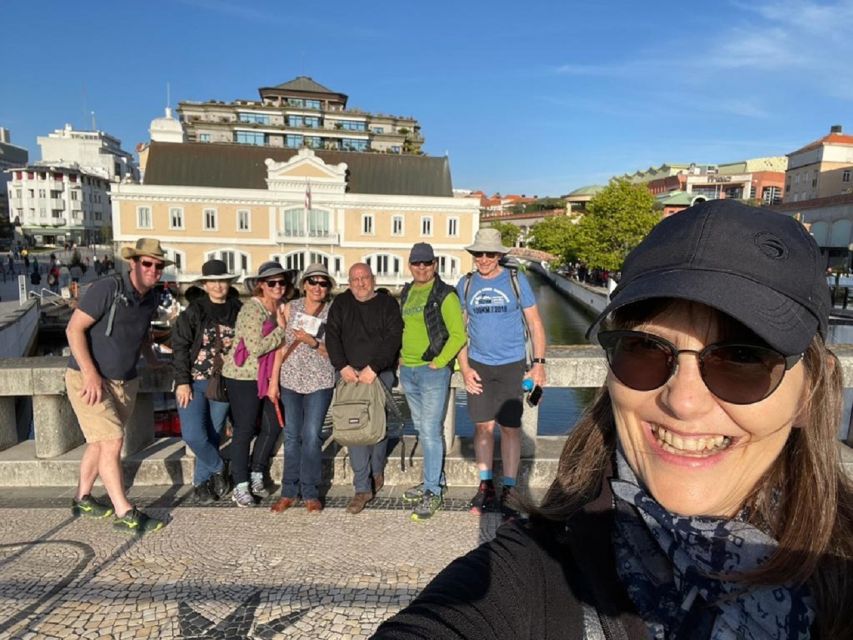
The walk passes the Dominican Convent of Jesus, where António tells the story of Princess Santa Joana, Aveiro’s patron saint. This adds a personal figure to the city’s religious past and gives the convent more meaning than a quick exterior view.
You then pass the cathedral. The route does not treat Aveiro as a collection of unrelated sights. Churches, royal connections, civic spaces, and the lagoon economy are tied together as parts of the city’s development.
This section is a good example of the walk’s balance. You get specific places, but also the stories that connect them. The guide discusses Aveiro’s period of influence from the 11th through the 15th centuries, its difficult years in the 17th and 18th centuries, and its revival in the 19th century.
That broad timeline helps explain why some parts of the city feel grand while others feel more modest. Aveiro’s appearance is not the product of one steady period of prosperity. It reflects change, setbacks, and renewal.
Canal da Fonte Nova and Aveiro’s Working Waterways
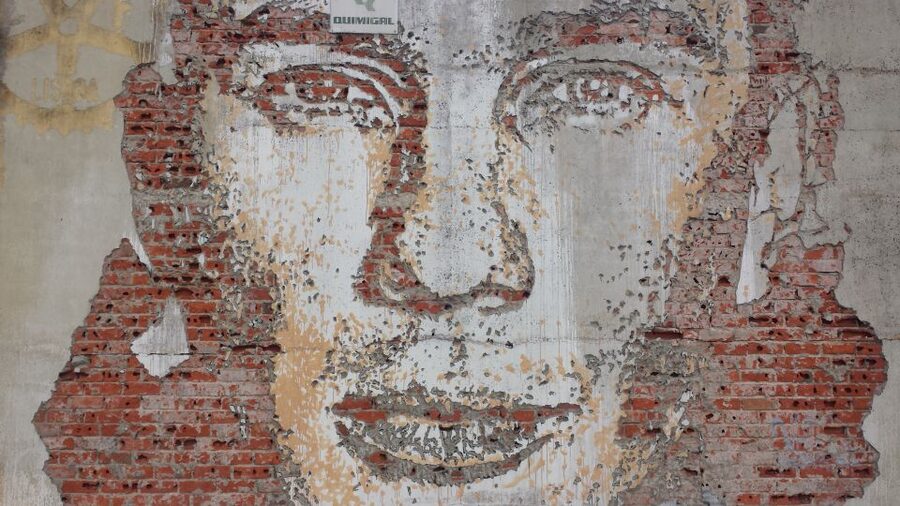
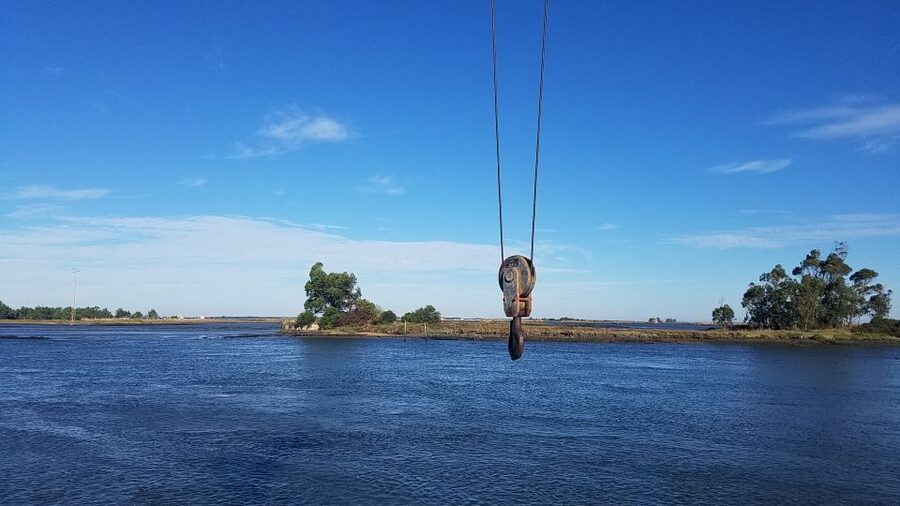
At Canal da Fonte Nova, you see the remaining building of one of the ceramic factories that once operated beside the water. This is a strong stop because it adds work and industry to the usual canal picture.
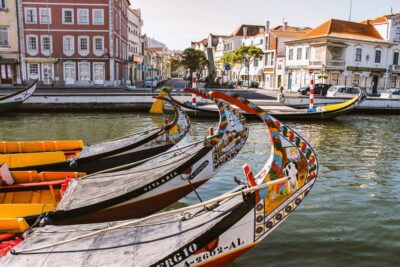
The canals were not created only for sightseeing. António explains their origin and practical use, then introduces the traditional boats of the Ria de Aveiro. You learn to tell apart moliceiros, mercanteis, and other boats linked to the lagoon.
A moliceiro is the boat most closely associated with Aveiro’s public image, but the point of the tour is to see more than its painted decoration. Different boats had different purposes, and the lagoon shaped local work, transport, and trade.
This is also where the smell of salt and lagoon water becomes part of the experience. You are walking through a city influenced by water in a direct, physical way. The old factory building helps you connect the canals to production, not just to leisure.
If your main goal is a boat ride, this walk is not a replacement. A canal cruise can be booked separately. But the walking tour may be the better first choice if you want to understand what you are looking at from the boat.
Beira Mar, Art Nouveau, and Ironwork
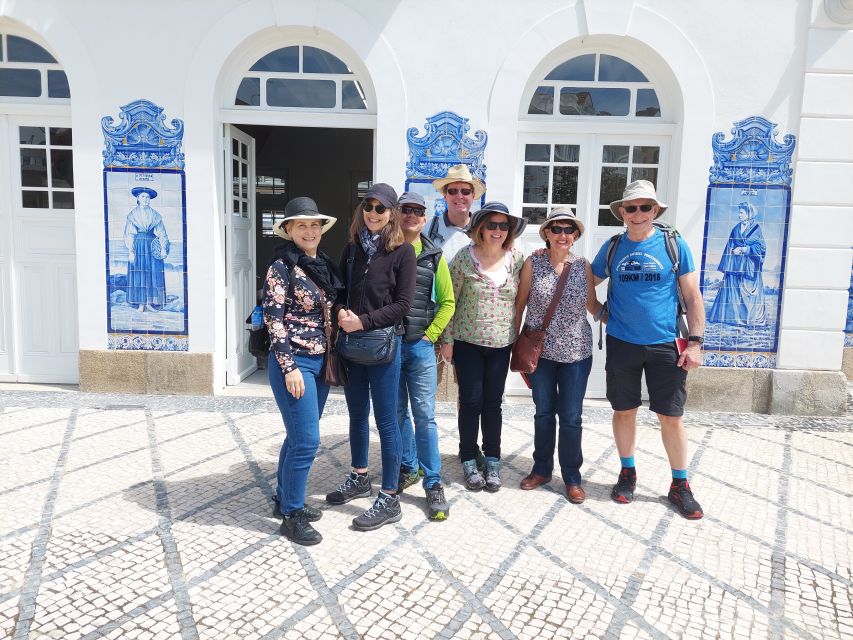
The route continues through the Beira Mar neighborhood, where tile-covered façades fill the streets. This section is likely to appeal most to people who enjoy city details rather than only major monuments.
António points out Art Nouveau and Art Deco features, along with iron architecture from the turn of the 19th to the 20th century. These styles give Aveiro a different character from the older churches and convent buildings.
You also see both façades of the Museum of Art Nouveau. The two views help you understand how decoration and structure work together. Look for the relationship between metalwork, curved lines, tile, and the building fronts around them.
The tour is especially helpful here because architectural details can be easy to miss. Aveiro’s streets may initially seem pleasant but visually confusing. Once someone identifies the style and points to the clues, the city gains sharper definition.
Do not expect a dedicated museum visit as part of the standard walk. The museum façades are part of the route, while museum opening times and access can affect what you see inside.
Salt Pans, Food, and the São Gonçalinho Finish
On the way toward the salt pans, the guide returns to Aveiro’s economic story and the role of salt. The walk does not simply present the lagoon as scenery. It shows how salt and water shaped the city’s fortunes.
Later, the conversation turns to food. You hear about eel stew and Aveiro’s famous ovos moles, a traditional sweet associated with the city. These references are brief, but useful. They give you ideas for what to look for after the tour and connect local food to place rather than treating it as a generic Portuguese menu.
The finish comes at São Gonçalinho Church. António explains the January festival held there, including the remarkable tradition of throwing a hard, heavy sweet over the heads of the faithful. It is an unusual ending, full of local humor and religious tradition.
This final stop leaves you with a story you are unlikely to pick up from a quick canal stroll. The festival also shows that Aveiro’s culture is not only preserved in buildings. It lives in public rituals, food, jokes, and neighborhood traditions.
The Value of Two Hours for $20
At $20 per person, the tour is priced as an affordable orientation rather than a premium private experience. The value comes from the amount of interpretation packed into two hours: architecture, churches, boats, canals, salt, industry, food, and local history.
Because the sites are free entry or viewed from outside, you are mainly paying for the guide’s time and explanations. That is a fair trade if you tend to miss architectural clues or want a clear introduction before exploring alone.
The tour may be particularly good value for a solo visitor or a couple who want a local point of view without committing to a longer excursion. It also suits an independent traveler who prefers to book a separate boat trip after learning how the lagoon and its boats fit together.
The walk is less useful if you only want photographs of moliceiros or a quick list of attractions. It is built around stories and connections, so give the explanations your attention.
Practical Details Before You Book
The walk lasts two hours and ends back at the meeting point. It runs in English, Portuguese, French, and Spanish. Check the available starting time when booking, since the schedule is not fixed in the supplied details.
Bring comfortable shoes, sunscreen, weather-appropriate clothing, and your passport or ID card. The tour runs rain or shine, so a forecast with wet weather should change your clothing choices, not your assumption that the activity will be canceled.
Leave luggage and large bags behind. Bikes, alcohol, drugs, baby carriages, and unaccompanied minors are not allowed. Children under 10 are not suitable for this experience, and it is also not suitable for pregnant people, wheelchair users, or people with mobility impairments or low fitness.
The route includes streets, squares, churches, and canal-side areas, so the physical demand is not just the distance. Uneven paving and sustained walking are the main concerns.
Cancellation is free up to 24 hours before the activity for a full refund. You can also reserve and pay later, which helps if your Aveiro plans depend on weather or a changing day trip schedule.
Who Will Get the Most from This Aveiro Walk?
I would choose this tour if you are visiting Aveiro for the first time and want the city to make sense beyond its canals. It is a good match for people who enjoy architecture, local customs, church interiors, urban history, and food traditions.
It also suits curious adults who like to ask questions. António’s style includes conversation, humor, and room for follow-up questions. If you prefer a silent stroll or a fast route with only headline facts, this may feel too talkative.
The walk works well as a foundation for the rest of your day. Afterward, you can return to a tile façade, visit a museum if it is open, sample ovos moles, or book a separate boat trip with a better understanding of the boats and waterways.
The biggest caution is access. This is a walking tour with no stated accommodation for wheelchairs, baby carriages, or limited mobility. Families with children under 10 should choose another way to see Aveiro.
Should You Book the Stories, Canals, and Azulejos Tour?
I would book it if you want to understand Aveiro rather than simply pass through it. The combination of António’s local experience, the compact two-hour route, and the broad mix of churches, tilework, Art Nouveau, canals, salt, and food makes the $20 price reasonable.
Choose it before a separate canal cruise if context matters more to you than being on the water right away. Skip it if your time is extremely short, walking is difficult, or you want only a boat ride and photographs.
For most independent visitors who can comfortably walk for two hours, this is a practical first look at Aveiro, with enough local detail to make the rest of your stay more rewarding.
FAQ
How long does the Aveiro walking tour last?
The tour lasts two hours and finishes back at the meeting point.
Where does the tour begin?
It begins in Praça da República, near the statue in the center of the square. The guide wears a yellow and blue badge.
Which languages are available?
The tour is available in Portuguese, French, English, and Spanish.
Is the canal boat ride included?
No. The walking tour explains Aveiro’s traditional boats, including moliceiros and mercanteis, but a boat trip can be booked separately.
Are entrance fees included?
All sites visited are either walk-through stops or free-entry locations. Food and drinks are not included.
Can children join the tour?
The experience is not suitable for children under 10. Unaccompanied minors are also not allowed.
What should I bring?
Bring comfortable shoes, sunscreen, weather-appropriate clothing, and a passport or ID card. Large bags, luggage, bikes, alcohol, drugs, and baby carriages are not allowed.
Latest reviews around Aveiro
- From Aveiro: Guided Canyoning Tour with Hotel Transfers★ 5.0 · 3 reviews
- Aveiro: Private Walking Tour in the City and Moliceiro boat★ 5.0 · 3 reviews
- Aveiro: Flexible Walking Tour in Historic Center★ 4.2 · 6 reviews
- From Porto Private Tour Half Day in Aveiro and Costa Nova★ 4.9 · 8 reviews
- Panoramic Boat City Tour in Aveiro★ 3.9 · 15 reviews
- Aveiro: Half Day Tour with Boat Ride★ 4.9 · 17 reviews
- Costa Nova and Barra Beach Tour★ 4.6 · 17 reviews
- Aveiro: Wine tasting & pairing★ 4.9 · 32 reviews
Aveiro Day Trips, compared.

Aveiro and Costa Nova Half Day Tour from Porto with Boat Ride
Read our review →

From Porto: Aveiro, Paiva Walkways and Arouca 516 Footbridge
Read our review →
Porto to Lisbon Up to 4 Stops: Aveiro, Nazare, Fatima & Obidos
Read our review →

Porto:Aveiro, Cruise, Costa Nova & Capelha da Pedra Full Day
Read our review →Browse the lists this tour appears in