
Reviewed · CYCLING TOURS
Historic Guided Tour – Electric Bike (Half day)
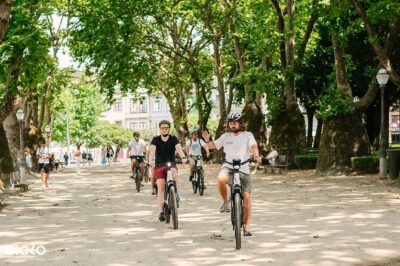
Porto’s hills are the trickiest part of seeing the city on foot, and this electric-bike tour turns them into a manageable half-day ride. You move from the cathedral and São Bento Station to the coast, crossing a lot more ground than a walking tour can cover.
I like the mix of old Porto, modern architecture, river views, and beaches. I also like that guide Miguel is named repeatedly in the feedback, with particular praise for his historical insight and ability to show the city from streets cars cannot use. The main consideration is simple: you need basic bike-handling skills, since the route covers paved streets and can reach about 22 to 24 kilometers.
In This Review
- Key points to know before booking
- Why an electric bike works so well in Porto
- Starting at Porto Cathedral
- Batalha Square and the city’s tiled landmarks
- Café Majestic and Porto’s Belle Époque side
- São Bento Station’s famous tile panels
- Clérigos Tower and Livraria Lello
- Casa da Música brings the route into modern Porto
- From the city park to the Atlantic shore
- Ponte da Arrábida and the Douro views
- Palácio da Bolsa closes the historic loop
- What Miguel adds to the ride
- The riding level and practical tradeoffs
- Is the $66.70 price good value?
- Who should book this Porto e-bike tour?
- FAQ
- Where does the electric-bike tour begin?
- Where does the activity end?
- How long does the tour last?
- Is the tour offered in English?
- How many people can join the tour?
- Are entrance fees included for Clérigos Tower, Livraria Lello, and Palácio da Bolsa?
- Can I cancel for a full refund?
- Should you book it?
Key points to know before booking
- About 22 to 24 kilometers of riding: This is an active sightseeing tour, not a short introductory spin.
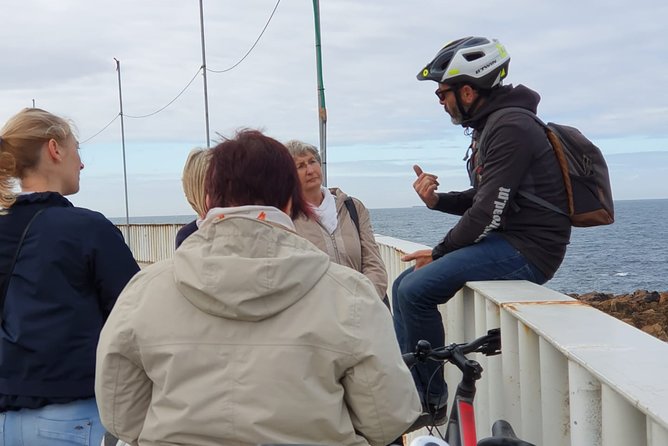
- Guide Miguel leads the English tour: His historical explanations are a major part of the experience.
- Electric assistance helps with Porto’s hills: You still pedal and steer, but the climbs should feel less demanding.
- The route links city, river, and sea: You see the historic center, Casa da Música, the Douro area, Ponte da Arrábida, and the seafront.
- Several landmark visits are viewing stops only: Entry fees for Clérigos Tower, Livraria Lello, and Palácio da Bolsa are not included.
- A small group of up to 10 keeps the ride practical: The tour begins and ends at Rua de Camões 703.
Why an electric bike works so well in Porto
Porto is compact on a map, but its slopes make sightseeing slower than the distances suggest. A bike lets you cover the old center, western neighborhoods, riverfront, and Atlantic shore in one outing. Electric assistance matters here because the route includes hills that can make an ordinary bicycle tiring.
You are not simply being driven between monuments. You need to steer, brake, watch the road, and ride with the group. That gives you a better sense of how Porto fits together, but it also means this is not the right choice if you want a completely passive sightseeing experience.
The route can cover roughly 22 to 24 kilometers, according to the detailed ride accounts, while the scheduled experience lasts about four hours. One account describes completing the main points in around two and a half hours, so the actual pace may depend on stops, traffic, group size, and how much time you spend listening at each landmark.
I like this format for a first or second day in Porto. You get your bearings quickly, see the city’s major symbols, and reach areas that would otherwise require several separate walks or public transport trips.
More bike days around Porto:
- Porto: City Highlights 3-Hour Guided Electric Bike Tour
★ 4.8 · 3,092 reviews - Porto: 3-Hour Old Town & Riverside Bike Tour – Guided Experience
★ 5.0 · 481 reviews - Porto: Riverside Panoramic E-Bike Tour
★ 4.6 · 312 reviews
Starting at Porto Cathedral
The meeting point is at Rua de Camões 703, and the ride heads toward the historic center. Porto Cathedral, or Sé do Porto, is one of the city’s oldest and most important monuments, located at the heart of the old town.
The stop is listed as about 10 minutes, with no admission fee. That makes it a brief orientation point rather than a full cathedral visit. You can expect to look at the building and surrounding historic streets while Miguel explains its place in Porto’s story.
A short stop here makes sense on a bike tour. The cathedral area is a useful starting marker, but its steep streets and busy pedestrian zones are not ideal for lingering with bicycles. If you want to explore the cathedral interior in detail, plan a separate visit.
Batalha Square and the city’s tiled landmarks
The ride continues to Praça da Batalha, an old gateway area of Porto. From here, you can see the National Theatre São João, the Church of Santo Ildefonso, and the Palácio da Batalha.
Again, the planned stop is about 10 minutes and does not include an admission charge. The value here is the concentration of architecture. You get several notable façades in one place, including the blue-and-white tilework that gives many Porto streets their familiar look.
I would pay attention to the way the tour moves through the city rather than treating each stop as an isolated monument. A guide can explain how these buildings relate to the old center, while the electric bike lets you leave the square quickly and continue toward the next district.
Café Majestic and Porto’s Belle Époque side
Café Majestic is a short stop with a very different mood. Its Belle Époque and Art Nouveau interior is famous for its ornate design and is often described as one of the world’s most beautiful cafés.
The itinerary allows about 10 minutes, and there is no included admission ticket. That timing suggests an exterior look or a quick pause rather than sitting down for coffee. If the café is busy, you should not expect a leisurely meal as part of the tour.
Still, it is a useful stop because Porto is not only churches, bridges, and industrial buildings. Café Majestic adds the polished, early twentieth-century side of the city. You see how the route shifts between grand public architecture and everyday urban life.
A few more Porto outings to weigh up
- Porto: Highlights in 3 Hours E-Bike Tour
★ 4.9 · 290 reviews - Porto Highlights in 3 Hours E-Bike Tour – Historical, Sightseeing
★ 5.0 · 166 reviews - Porto Private E-Bike Tour: Douro River, Parks & Beaches
★ 4.7 · 104 reviews - Private e-Bike Tour in Porto – Explore Riverside, Beaches & Parks
★ 5.0 · 57 reviews
São Bento Station’s famous tile panels
São Bento Railway Station is one of Porto’s most rewarding quick stops. The building was designed by Portuguese architect José Marques da Silva, but the main reason to pause is inside, where large tile panels decorate the station hall.
The stop lasts about 10 minutes and does not require an included admission ticket. The station remains a working transport hub, so this is a public place rather than a controlled museum visit. Your guide can point out the tile scenes and explain why the station matters.
This stop also shows the practical advantage of a bicycle. You can arrive, see one of Porto’s defining interiors, and continue without spending a large part of the morning walking between attractions. Keep your attention on the guide and the tiles, though, since a 10-minute stop goes quickly.
Clérigos Tower and Livraria Lello
The Church and Torre dos Clérigos form one of Porto’s best-known architectural groups. Designed by Nicolau Nasoni in the eighteenth century, the tower is one of the city’s clearest visual markers.
The tour allows about 10 minutes here, but admission is not included. That distinction matters. You will see the exterior and receive context, but climbing the tower is a separate activity with its own ticket and time commitment.
Livraria Lello follows with a very short five-minute stop. The bookstore is known for its artistic design and elaborate staircase, which is often connected with the magical stairways in the Harry Potter books. Entry is not included, so you should not expect to go inside during this ride.
This is one of the tour’s limitations for anyone whose main goal is interior sightseeing. Five minutes is enough to identify the building and hear why it is famous, but not enough for a proper bookstore visit. If you want to enter Lello or climb Clérigos Tower, arrange those visits separately and avoid trying to squeeze them into this half-day route.
Casa da Música brings the route into modern Porto
Casa da Música changes the architectural tone again. Designed by Dutch architect Rem Koolhaas, the concert hall is one of Porto’s modern icons and a major music venue.
The stop is planned for about 10 minutes, with admission not included. You should think of this as an exterior architecture stop, not a concert or building tour.
I like this inclusion because it prevents the route from presenting Porto as an old-town-only destination. The city has historic churches and tiled stations, but it also has bold contemporary design. Casa da Música gives you a clear contrast with São Bento and the cathedral.
The building may appeal most to visitors interested in architecture, but even if modern design is not your main concern, it helps explain the city’s wider identity. The ride gives you a quick view of how Porto extends beyond its oldest streets.
From the city park to the Atlantic shore
After the central landmarks, the route heads toward a large urban park described as covering 83 hectares, with roughly 10 kilometers of paths, lakes, plants, and wildlife. This section gives your legs and eyes a break from dense city streets.
The park is not just a green patch between attractions. It is a carefully designed public space connected to the city, with enough paths to make the bicycle especially useful. The supplied route details do not give the park a name, so you should treat this as a planned park section rather than assume a separate attraction or guided nature walk.
From there, the ride reaches Porto’s seafront promenade. The area is known for terraces, bars, gardens, and its polished seaside setting. This is where the tour feels less like a monument checklist and more like a look at how locals use the city’s edge.
You may find the coastal stretch more relaxed than the old center, but remember that this is still a guided ride. The timing does not promise a long beach stop or a meal break. It is best viewed as a scenic part of the route, with time to see the waterfront before continuing.
Ponte da Arrábida and the Douro views
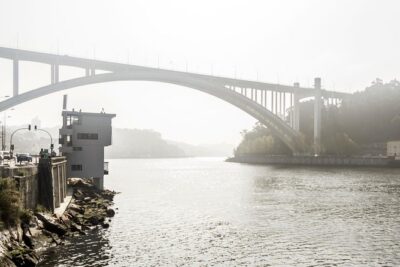
Ponte da Arrábida connects Porto with Vila Nova de Gaia. When it opened in 1963, its reinforced-concrete arch was the largest in the world, giving the bridge an important place in modern engineering history.
The listed stop lasts about five minutes and is free. That is enough for a short look and explanation, not a lengthy bridge visit. The bridge also gives the route a strong visual link between the city, the Douro River, and Gaia on the opposite bank.
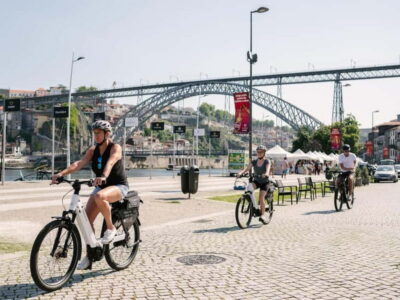
The river section is one of the best reasons to choose a bike over a conventional walking tour. You can connect the central streets with the western waterfront without spending hours retracing your steps. The ride also gives you a sense of Porto’s geography, with the old center, river crossings, and oceanfront all part of one city experience.
Palácio da Bolsa closes the historic loop
The final major stop is Palácio da Bolsa, a neoclassical building begun in 1842 after the closure of the Casa da Bolsa do Comércio left Portuguese merchants without a proper place for business.
The tour allows about 10 minutes, but admission is not included. You should expect an exterior view and a brief explanation rather than a full interior tour. The building is particularly useful as a final stop because it brings the route back to Porto’s commercial and civic past after the park, coast, and modern concert hall.
If you want to see the grand rooms inside Palácio da Bolsa, book that separately. The same advice applies to the other paid landmarks. This tour is designed to introduce you to many places, not to provide full entry at each one.
What Miguel adds to the ride
The guide can make or break a city bicycle tour, and Miguel is the named guide associated with the strongest praise. The comments about his work focus on two things: historical explanation and the amount of ground covered in a half-day.
That combination is important. A fast route through Porto can become a blur of façades unless someone explains what you are seeing. Miguel’s role is to connect the monuments with the city’s past while also giving you a contemporary sense of Porto, including the beaches, modern architecture, and riverfront.
The tour is offered in English. It is limited to a maximum of 10 people, which should make instructions and group movement easier than on a large coach tour. The price is listed as $66.70 per group of up to one person, so check the booking screen carefully if you are booking for more than one rider. As shown, the price is attractive for a private or solo booking, but the exact cost structure deserves attention before payment.
The riding level and practical tradeoffs
You should already feel comfortable handling a bicycle on paved streets. One detailed account specifically notes that some bike experience is needed, despite the electric assistance.
An e-bike reduces the effort of hills, but it does not remove the need to control speed, position yourself safely, and respond to city traffic. Porto’s streets can be narrow or uneven, and the route combines central urban riding with longer stretches toward the park, shore, and river.
The tour is a good fit if you want active sightseeing and like changing locations often. It is less suitable if you have not ridden a bicycle recently, dislike road riding, or want long interior visits at each landmark.
Wear practical clothes and shoes for several hours of pedaling. The information provided does not specify helmet arrangements, bike models, storage, or weather procedures, so ask the operator, Northroad Rentals & Tours, if any of those points matter to you.
The meeting point is near public transportation, and the tour returns to Rua de Camões 703 at the end. Confirmation is sent within 48 hours of booking, subject to availability. Most people can participate, but the bike-handling requirement is more useful to consider than the broad participation statement.
Is the $66.70 price good value?
At $66.70 per group of up to one person, the listed price looks reasonable for a four-hour guided ride that links the old center, modern Porto, the park, coast, bridge, and river area. You are paying for the bicycle, electric assistance, a guide, and the time saved between widely separated sights.
The value is strongest if you want an overview. In one outing, you can see places that would otherwise take several walks, including Casa da Música and the Atlantic shore. The route also avoids the need to work out every connection between the cathedral, city center, and waterfront yourself.
The price is less compelling if you mainly want to enter attractions. Clérigos Tower, Livraria Lello, and Palácio da Bolsa are not included, and the short stops do not leave much time for detailed visits. In that case, combine this tour with separate admission visits on another day.
Free cancellation is available up to 24 hours before the start time for a full refund. Changes or cancellations made inside that 24-hour window are not accepted for a refund, and the cut-off uses Porto’s local time.
Who should book this Porto e-bike tour?
I would choose this tour for a first visit when I wanted a broad city introduction without sitting on a bus. It suits active couples, solo visitors, and small groups who can manage a fairly long ride and prefer seeing several districts in one morning or afternoon.
It also works well for anyone who wants more than the postcard center. The route includes grand historic buildings, tilework, a modern concert hall, a large city park, the seafront, and a major bridge. That range gives you a more useful picture of Porto than a tour limited to the cathedral and Ribeira.
I would hesitate if I had no recent bicycle experience or if my priority was entering every famous attraction. The tour gives you context and exterior views, while the major paid interiors require extra time and money.
FAQ
Where does the electric-bike tour begin?
The tour begins at Rua de Camões 703, 4000-142 Porto, Portugal.
Where does the activity end?
The activity ends back at the meeting point on Rua de Camões 703.
How long does the tour last?
The tour lasts approximately four hours.
Is the tour offered in English?
Yes. English is the listed language for the experience.
How many people can join the tour?
The maximum group size is 10 people.
Are entrance fees included for Clérigos Tower, Livraria Lello, and Palácio da Bolsa?
No. Admission tickets for those three attractions are not included.
Can I cancel for a full refund?
Yes. You can cancel at least 24 hours before the experience start time for a full refund. Cancellations or changes made less than 24 hours before the start time are not accepted for a refund.
Should you book it?
Book this tour if you want to cover a lot of Porto by bicycle, enjoy historical explanation, and are comfortable riding on paved city streets. The combination of Miguel’s guiding, electric assistance, and a route reaching from the cathedral to the Atlantic shore gives you a strong first look at the city.
Skip it if you want a slow architectural tour with long interior visits, or if a 22 to 24 kilometer ride sounds demanding. For the right rider, though, this is a practical way to make Porto’s hills feel less intimidating while seeing far more than the old center alone.
More Historical Tours in Porto
- Douro Valley: Historical Sites, Wine Experience, Lunch & Cruise
★ 5.0 · 5,133 reviews - Porto: Historic City Center Walking Tour
★ 4.7 · 1,172 reviews - Porto: An Intimate Fado Show in a Historical Tavern
★ 4.8 · 1,093 reviews - Porto: Historical Center Walking Tour
★ 4.8 · 898 reviews
Latest reviews around Porto
- Private Walking Tour, highlights and secrets of Porto★ 3.9 · 3 reviews
- Private Porto Half-Day Tour – Wine Cellars & Cheese Tasting★ 5.0 · 3 reviews
- Portuguese Wine Tasting w Local Cheese & Cold Cuts pairing★ 5.0 · 3 reviews
- From Peso da Régua: Visit 3 wineries, tasting and viewpoint★ 5.0 · 3 reviews
- Porto: Full-Day All-Inclusive Private City Sightseeing Tour★ 4.3 · 3 reviews
- Small Painting Group with a Local Artist in Porto★ 5.0 · 3 reviews
- From Arouca: Paiva River Rafting Adventure – Adventure Tour★ 5.0 · 3 reviews
- Private Tour to Santiago de Compostela and its stunning Cathedral★ 5.0 · 3 reviews
Cycling Tours, compared.
Porto: City Highlights 3-Hour Guided Electric Bike Tour
Read our review →
Porto: 3-Hour Old Town & Riverside Bike Tour – Guided Experience
Read our review →
Porto Highlights in 3 Hours E-Bike Tour – Historical, Sightseeing
Read our review →
From Porto with view to Gaia: Private Bike Tour #DuckSideOfPorto
Read our review →Browse the lists this tour appears in