
Reviewed · HISTORICAL TOURS
LGBTour Porto: Walk through Porto, discover the LGBTQIA+ History
Porto’s LGBTQIA+ story is not printed on the usual sightseeing map. This three-hour walk with Ricardo Barros brings it into view through former meeting places, Pride landmarks, a queer-focused bookshop, legal history, and Ricardo’s own memories of growing up in the city. I like the personal, local angle, and I like that the tour supports queer culture beyond bars and nightlife. The main consideration is that this is a conversation-led history walk, not a greatest-hits tour of Porto’s big monuments.
I especially like the small group limit of 15 people, though the experience may feel most rewarding with a smaller gathering. The walk covers several busy streets and some historic parts of Porto, so comfortable shoes matter. It ends at the Miradouro das Virtudes, where you can pause over the Douro and think about what you have heard.
In This Review
- Key points to know before you book
- Why this Porto walk feels different
- Campo 24 de Agosto and the first Pride march
- Rua de Santa Catarina, a street changed by time
- Praça da República and queer business
- Livraria aberta and the place of queer writing
- Porto’s student area and changing ideas about inclusion
- Tribunal da Relação do Porto and the law
- Miradouro das Virtudes and a personal closing
- Three hours, up to 15 people, and a useful price check
- Who will get the most from this experience
- Should you book LGBTour Porto?
- FAQ
- How long is LGBTour Porto?
- How much does the tour cost?
- Who guides the tour?
- What language is the tour offered in?
- Where does the tour start?
- Where does the tour end?
- What places are included on the route?
- How large is the group?
Key points to know before you book
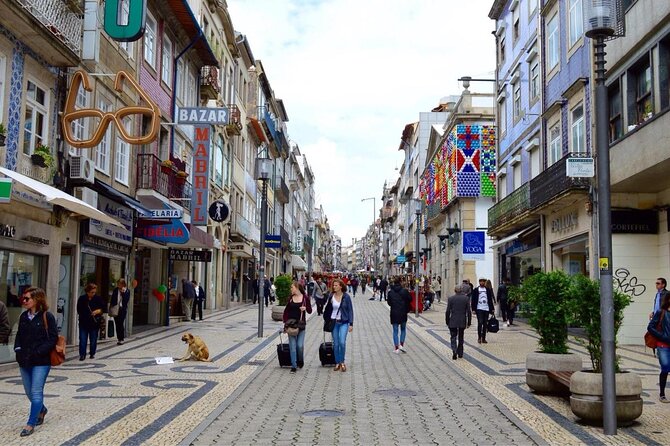
- Ricardo Barros brings lived experience: His personal stories connect national events and local places in a way a standard city tour rarely can.
- The first Pride march has a place on the route: Campo 24 de Agosto introduces Porto’s organized LGBTQIA+ history.
- Queer culture goes beyond nightlife: A bookshop visit puts literature, representation, and queer-owned business at the center.
- The route changes how familiar places feel: Rua de Santa Catarina, Praça da República, and the courts take on a different meaning.
- You finish with a Douro view: The Miradouro das Virtudes offers a calm place to discuss the past and present.
- It suits curious solo visitors and couples: Morning and afternoon departures make it easy to fit around a Porto sightseeing day.
Why this Porto walk feels different
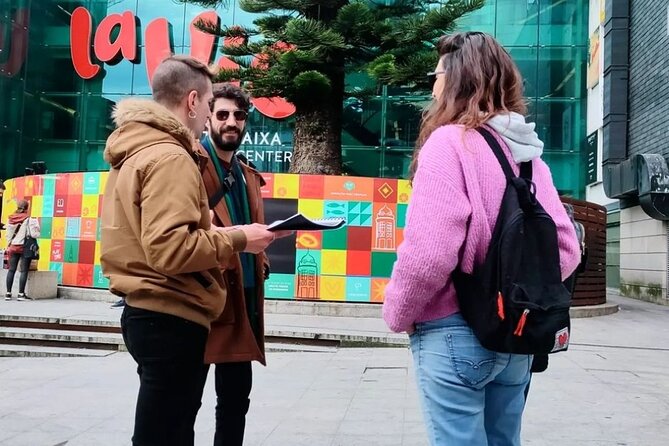
Many city walks use monuments to tell a tidy story. This one asks you to look at Porto through the people who were often left out of the official version. That makes the experience less about checking off sights and more about asking how public spaces, laws, businesses, and social attitudes have changed.
Ricardo’s approach is central. He shares local LGBTQIA+ history alongside memories from his own life in Porto. His stories cover struggle, celebration, activism, love, inclusion, and the ongoing work of protecting rights. You are not simply handed dates. You are invited into a discussion about how a city changes and who gets to feel at home in it.
I would not choose this walk if I wanted a fast introduction to the cathedral, São Bento Station, or the Ribeira waterfront. Those famous places are not the focus. I would choose it if I wanted a more thoughtful look at Porto, especially one that connects local events with Portugal’s wider social and legal changes.
The five-star rating from 51 reviews and a 100 percent recommendation rate point to a clear strength: people value Ricardo’s warmth, care, and personal storytelling. Still, those qualities also tell you what kind of tour this is. Its success depends on your interest in conversation and reflection, not just on the number of sights covered.
More history walks near Porto:
- Douro Valley: Historical Sites, Wine Experience, Lunch & Cruise
★ 5.0 · 5,133 reviews - Porto: Historic City Center Walking Tour
★ 4.7 · 1,172 reviews - Porto: An Intimate Fado Show in a Historical Tavern
★ 4.8 · 1,093 reviews
Campo 24 de Agosto and the first Pride march
The meeting point is at Avenida de Fernão de Magalhães 43, near Campo 24 de Agosto. The tour passes through the garden for about 20 minutes, with no admission fee.
This is an important opening because it links a real Porto location with the city’s first LGBTQIA+ Pride march. Rather than beginning with a famous church or grand plaza, Ricardo starts with a place tied to public visibility and collective action. You begin by considering what it meant for people to claim space in the city.
That choice sets the tone. The tour is not only about where queer people socialized. It is also about when they became visible in public, how Pride developed, and how social movements push institutions to change.
You should expect some walking before the history begins to settle into place. The start is in an urban area, and the route later passes through busy streets. If you prefer a gentle pace, one personal account describes Ricardo slowing the tour and reducing the walking for a participant with a disability. The general information says most people can take part, and service animals are allowed.
Rua de Santa Catarina, a street changed by time
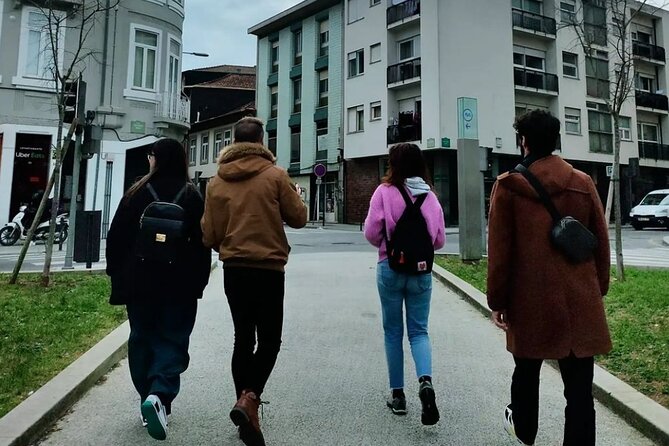
The stop at Rua de Santa Catarina lasts about 10 minutes. This is one of Porto’s busy shopping streets, and Ricardo uses it to examine how time and tourism have changed an area that once mattered to the LGBTQIA+ community.
This short stop may be one of the most revealing because the street looks like an ordinary part of modern Porto. Tourism can polish, commercialize, or erase the older meaning of a place. Ricardo encourages you to look past the shops and passing crowds and ask what used to happen here, who used the area, and what has been lost or reshaped.
The visit is not about finding a dramatic plaque or a clearly marked queer monument. Much of LGBTQIA+ history is less visible. A street can hold memories that are absent from its signs, buildings, and guidebooks. That is precisely why a local guide matters here.
If you want a photo stop, this is not the main event. If you want a fresh way to read a familiar Porto street, it works well.
Praça da República and queer business
After Rua de Santa Catarina, the walk reaches Praça da República and the Teófilo Braga Garden. This section takes about 40 minutes and includes a visit to a bookshop focused on LGBTQIA+ themes.
The square also has a direct link to present-day Pride. It is where the Pride march currently starts, giving the tour a useful connection between the movement’s earlier public steps and its current presence. Ricardo can discuss how public gatherings, community work, and social change remain connected.
The bookshop adds a practical point that I find especially valuable: supporting queer businesses. LGBTQIA+ culture is often reduced to nightlife, but a bookshop offers another way to keep community life visible and financially supported. You are encouraged to think about where you spend money and how ordinary purchases can help sustain inclusion.
This is also a good place for questions. The tour’s tone is open and personal, with attention to diversity and inclusion across social, racial, gender, and economic lines. You should expect more than a narrow account of gay nightlife. The wider focus includes people whose experiences do not always fit neatly into a single label or movement.
More walking tours in Porto:
- Porto Walking Tour, Lello Bookshop, River Cruise and Cable Car
★ 5.0 · 3,354 reviews - Experience Porto’s Charm: 3-Hour Guided Walking Tour
★ 5.0 · 2,432 reviews - Porto: 3-Hour Guided City Highlights Walking Tour
★ 4.8 · 2,050 reviews - Porto: Wine Tasting with Tapas Walking Tour
★ 4.4 · 1,541 reviews
Livraria aberta and the place of queer writing
The bookshop visit lasts about 30 minutes. It is linked to Diversity and Inclusion Books and provides a setting to discuss LGBTQIA+ writers, representation, and the effect of literature on public life.
This stop gives the walk a welcome change of pace. After discussing marches and public streets, you move into culture and ideas. Books can preserve voices that were ignored, censored, or pushed aside. They can also help people recognize themselves in a society that has not always offered that recognition.
I would pay close attention here if you are interested in Portuguese literature, publishing, or the role of art in social change. The details provided do not promise a shopping session or a particular author list, so treat the stop mainly as a guided cultural conversation. If a title catches your eye, the visit also gives you a chance to support a business connected to diversity and inclusion.
The bookshop is one reason this tour feels more useful than a simple walk past bars. It gives queer history a living present, not only a difficult past.
Porto’s student area and changing ideas about inclusion
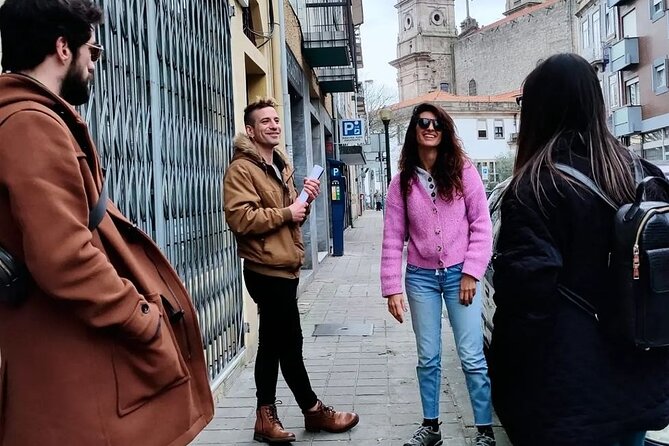
The route then passes through a very busy area with several well-known tourist references and a large student presence. The exact stop name and timing are not specified, but the theme is clear: education, students, and social change linked to diversity and inclusion.
This part helps connect public attitudes with younger generations and institutions. Students bring new ideas, challenges, and forms of activism into a city. At the same time, education is not automatically inclusive. Ricardo can use the area to explore how teaching and social attitudes affect the lives of LGBTQIA+ people.
There is a practical tradeoff here. Busy streets can be harder for a group to hear on, especially when the walk is moving between places. On the other hand, being in an active part of Porto reinforces the point that LGBTQIA+ life is not confined to a single district or discreet venue.
The route also gives you a feel for Porto’s daily rhythm without turning into a standard sightseeing circuit. You will pass tourist references, but the guide’s purpose is to question what those places leave out.
Tribunal da Relação do Porto and the law
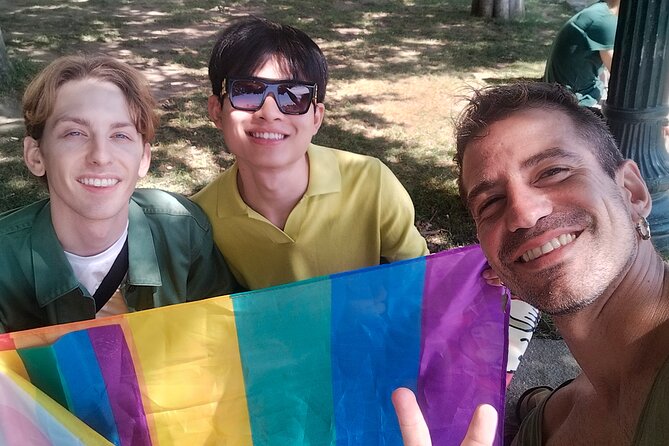
Near the end, the group stops outside the Tribunal da Relação do Porto for about 25 minutes. Ricardo explains key dates in queer history in Porto and Portugal in front of the statue of Justice.
This is where the personal and political sides of the tour meet. Laws can change how people live, but legal change does not instantly remove fear, prejudice, or unequal treatment. A courthouse is therefore a fitting place to discuss rights, restrictions, public institutions, and the gap between formal equality and daily life.
The supplied details do not list every date or legal event covered, so I would not book this expecting a formal legal lecture. Think of it as historical context brought into a place associated with justice and authority.
The stop also helps broaden the tour beyond Porto. Ricardo’s subject is local, but the story includes Portugal as a whole, including national activism, government, Parliament, and changes in human rights. That wider frame helps you understand why a local march or business matters.
Miradouro das Virtudes and a personal closing
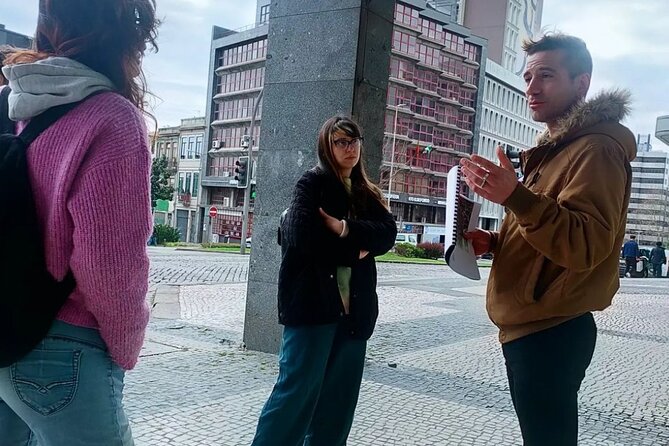
The final stop is the Chafariz das Virtudes area and the Miradouro das Virtudes, at Calçada das Virtudes 5. The official timing gives about 30 minutes here, and the tour ends at the viewpoint.
This is a good ending. The viewpoint is known for its city and Douro views, but the pause is not only for scenery. Ricardo summarizes the themes of the walk and talks about his youth in Porto and the growth of the queer movement as he experienced it.
Several people found the personal side of the tour particularly meaningful. Ricardo’s willingness to share parts of his life makes the history feel close, while his tone remains relaxed and welcoming. That combination matters. Difficult subjects can become heavy, but the closing allows room for pride, hope, and ordinary human connection.
You may want to leave extra time after the tour to enjoy the view. Since the endpoint is in a popular place for locals and visitors, it is also a practical spot from which to continue exploring Porto, though no onward itinerary is included in the tour details.
Three hours, up to 15 people, and a useful price check
The price is $38.45 per person for about three hours. Every stop has free admission, so you are paying for Ricardo’s time, route, research, storytelling, and personal perspective rather than entrance tickets.
That is fair value if the subject matters to you. A conventional walking tour may cover more famous buildings, but it cannot offer this same focus on LGBTQIA+ history, queer businesses, Pride, literature, and lived experience. The value is strongest for people who want context and conversation instead of a quick list of facts.
The group maximum is 15, which should help keep the discussion manageable. Some bookings may be much smaller, and a private-feeling conversation can make Ricardo’s personal stories easier to follow. You should still expect an urban walk rather than a quiet museum visit.
Morning and afternoon start times give you flexibility. A morning booking can help you get your bearings through a different lens before spending the rest of the day in Porto. An afternoon start leaves your morning free and ends at a scenic viewpoint.
The tour is offered in English and uses a mobile ticket. It is near public transportation, and confirmation is provided when you book. You can cancel for a full refund up to 24 hours before the start time. Changes or cancellations inside that 24-hour window are not accepted for a refund.
Who will get the most from this experience
I would recommend this walk to LGBTQIA+ visitors who want local history rather than a nightlife checklist. It is also a strong choice for allies, students, educators, and anyone interested in how cities remember social movements.
Solo visitors should feel comfortable here. The format encourages connection with the guide, and one person described the experience as especially suited to solo travel. Couples can also expect a more personal outing than a large group circuit.
The tour may suit people considering a longer stay in Porto or Portugal. It gives useful context about human rights, inclusion, local activism, and the social changes that shaped the city. It can also help you find queer-focused cultural places beyond the usual evening venues.
I would think twice if you want only major monuments, a rapid route, or a light entertainment walk. The subject includes discrimination, struggle, law, and political change. Ricardo’s style is warm, but the material can be moving and at times difficult.
Should you book LGBTour Porto?
Book it if you want to understand Porto through the lives and campaigns that official sightseeing often skips. The first Pride march site, the current Pride starting point, the queer bookshop, the courthouse, and Ricardo’s own memories form a clear three-hour story.
The strongest reason to go is the human connection. Ricardo Barros brings local experience and care to a subject that can otherwise remain invisible. The second is the tour’s wider idea of community: literature, businesses, law, education, activism, and daily life all count.
Skip it if your priority is Porto’s headline monuments or if you do not enjoy discussion-based walks. For everyone else, $38.45 is a reasonable price for a focused, personal look at the city, especially when you want to support queer culture in a way that goes beyond nightlife.
FAQ
How long is LGBTour Porto?
The tour lasts approximately three hours.
How much does the tour cost?
The listed price is $38.45 per person.
Who guides the tour?
The guide is Ricardo Barros.
What language is the tour offered in?
The tour is offered in English.
Where does the tour start?
It starts at Av. de Fernão de Magalhães 43, 4300-169 Porto, Portugal.
Where does the tour end?
It ends at Calçada das Virtudes 5, 4050-629 Porto, Portugal, at the Miradouro das Virtudes viewpoint.
What places are included on the route?
The route includes Campo 24 de Agosto Garden, Rua de Santa Catarina, Praça da República, Teófilo Braga Garden, a bookshop linked to Diversity and Inclusion Books, the area around the Tribunal da Relação do Porto, and the Miradouro das Virtudes.
How large is the group?
The activity has a maximum of 15 participants.
Latest reviews around Porto
- Private Walking Tour, highlights and secrets of Porto★ 3.9 · 3 reviews
- Private Porto Half-Day Tour – Wine Cellars & Cheese Tasting★ 5.0 · 3 reviews
- Portuguese Wine Tasting w Local Cheese & Cold Cuts pairing★ 5.0 · 3 reviews
- From Peso da Régua: Visit 3 wineries, tasting and viewpoint★ 5.0 · 3 reviews
- Porto: Full-Day All-Inclusive Private City Sightseeing Tour★ 4.3 · 3 reviews
- Small Painting Group with a Local Artist in Porto★ 5.0 · 3 reviews
- From Arouca: Paiva River Rafting Adventure – Adventure Tour★ 5.0 · 3 reviews
- Private Tour to Santiago de Compostela and its stunning Cathedral★ 5.0 · 3 reviews
Historical Tours, compared.

Douro Valley: Historical Sites, Wine Experience, Lunch & Cruise
Read our review →
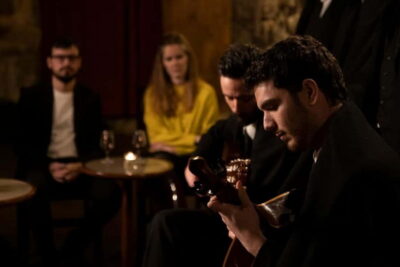
Porto: An Intimate Fado Show in a Historical Tavern
Read our review →
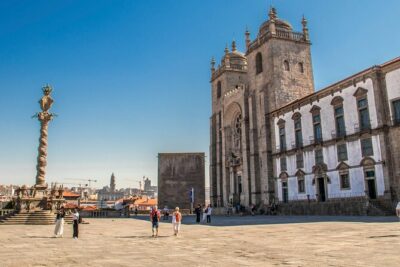
Historic Porto by Private Electric Tuk Tuk to Top Landmarks
Read our review →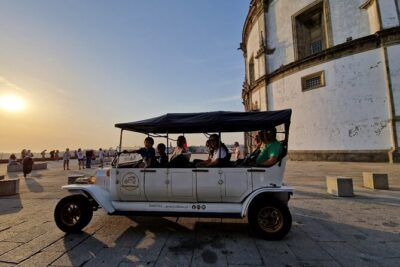
Porto:Private Tour of the Historic City in a Classic Ford T
Read our review →
Porto: Douro Valley History & Wine Tour with Cruise & Lunch
Read our review →
Porto Guided Tour to the Historical Center on a Tuk Tuk
Read our review →Browse the lists this tour appears in