
Reviewed · FOOD & DRINK
Matosinhos (Porto): “From the Sea to your Plate” Food Tour
The best part of this three-hour Matosinhos tour comes at lunch: you choose your own fish at the market, then watch it being prepared and cooked. Before that, you walk through a fishing town shaped by the sea, visit a tinned fish factory, see Leixões Harbour, and hear the painful story behind the Tragédia do Mar memorial.
I like the way this experience joins food with local history, rather than treating seafood as just another restaurant meal. I also like the choice of guides, including Rui and Oleksandra, who explain the town’s architecture, fishing traditions, and port development. The main consideration is pace: three hours covers many stops, so this is a brisk introduction rather than a slow, lingering tour.
In This Review
- Key points to know before booking
- Why Matosinhos makes such a good food stop from Porto
- Starting beside Matosinhos Beach
- Tragédia do Mar and the human cost of fishing
- Matosinhos Market and the fish-picking ritual
- Leixões Harbour and the Titan structure
- Senhor do Padrão and the parish church
- Pinhais Cannery and the Portuguese tinned-fish tradition
- Casa da Arquitectura and Matosinhos’s modern side
- The final meal: from market counter to table
- Guides, languages, and the pace of the walk
- What the $82 price really buys you
- Who should book this Matosinhos experience?
- FAQ
- Where does the Matosinhos food tour start?
- Can I arrange transport from Porto?
- What food is included?
- Which languages are offered?
- Is the activity wheelchair accessible?
- What happens if I need to cancel?
- Should you book it?
Key points to know before booking
- Choose your fish at Mercado Municipal de Matosinhos, then have it cooked for your meal.
- Try Portuguese tinned fish at Pinhais Cannery & Co., with an exclusive tasting included.
- Hear the human story behind Tragédia do Mar, a memorial linked to the loss of 72 fishermen in 1947.
- See Matosinhos beyond its seafood restaurants, including its church, industrial past, harbour, and modern architecture.
- Guides may include Rui or Oleksandra, and tours are offered in five languages.
- The $82 price includes the tour, tastings, lunch, insurance, and professional guiding, but not personal purchases or gratuity.
Why Matosinhos makes such a good food stop from Porto
Matosinhos sits beside Porto, but it feels like a different place. The town grew from fishing, ship traffic, industry, and its connection to Leixões Harbour. That gives your meal a useful sense of place: the fish on your plate is tied to a working port, a local market, and families whose lives have long followed the sea.
I like this setting because it avoids the usual Porto food-tour pattern of staying in the historic center. You get out to the coast and see how seafood moves from boats and fishmongers to the grill. The town also offers a mix of old religious sites, modern architecture, industrial structures, and beach scenery.
The tour costs $82 per person and lasts three hours. That is not a bargain-priced walking tour, but the price includes a substantial seafood lunch, a tinned fish tasting, a guide, and visits to several major sights. If you paid separately for a good seafood meal and then added a private guide, the package could offer fair value.
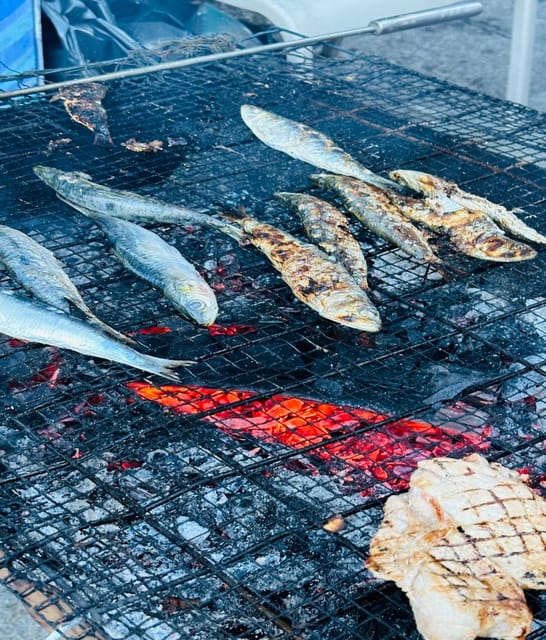
The exact meal depends on what is available at the market. Past meals have included sardines, sea bass, dorada, potatoes, barnacles, and wine. You choose the main fish, so the experience has more personal interest than simply being served a fixed dish.
More food tours in Porto:
- Authentic Food and Wine Tour in Porto by Food Lover Tour
★ 5.0 · 1,057 reviews - Porto: Delicious Food and Wine Walking Tour
★ 4.8 · 977 reviews - Porto: 3-Hour Food Tour
★ 4.9 · 807 reviews
Starting beside Matosinhos Beach
The meeting point is at Avenida General Norton de Matos 208, next to the tourist information office. Look for the guide wearing the company tag and holding a white umbrella. If you choose the Porto transfer, the pickup point is in front of Praça da República.
The walk begins around Matosinhos Beach. This gives you a quick sense of the town’s coastal position before the food stops begin. You will have time for sightseeing and photographs, but the tour is not designed as a beach day. Bring comfortable shoes and expect to keep moving.
Matosinhos Beach also helps explain the town’s identity. The coast is not just scenery here. It is part of the town’s work, worship, food, and memory. The guide connects the beach and harbour to the fishing community that developed around them.
Tragédia do Mar and the human cost of fishing
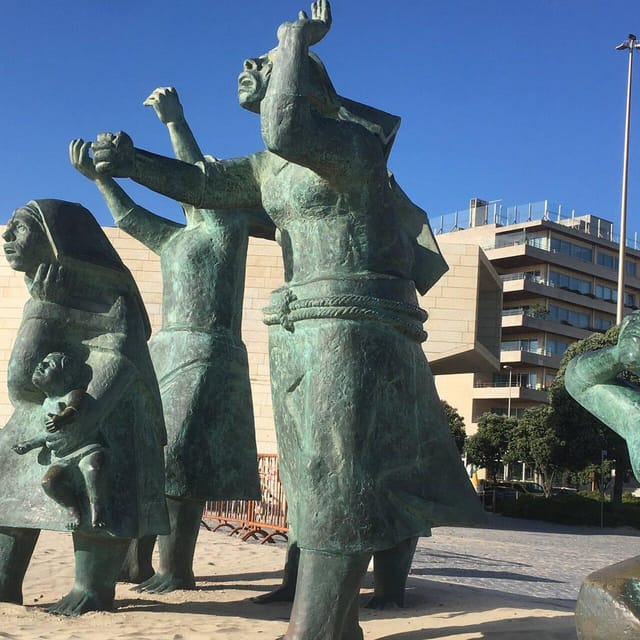
One of the most affecting stops is Tragédia do Mar, a memorial linked to a 1947 disaster. The loss left 72 widows and many children without fathers. The statue reflects grief, and the guide explains the event as part of Matosinhos’s social story.
This is an important pause in a food-focused outing. Seafood can seem simple when it arrives neatly cooked on a plate. The memorial reminds you that fishing has always involved danger, sacrifice, and hard work. I appreciate that the tour does not present the town only as a pleasant place for lunch.
The stop is guided, so you can ask questions about the tragedy and its meaning. It also gives the route an emotional center, making the later visit to the fishermen’s port feel more connected to real lives.
Matosinhos Market and the fish-picking ritual
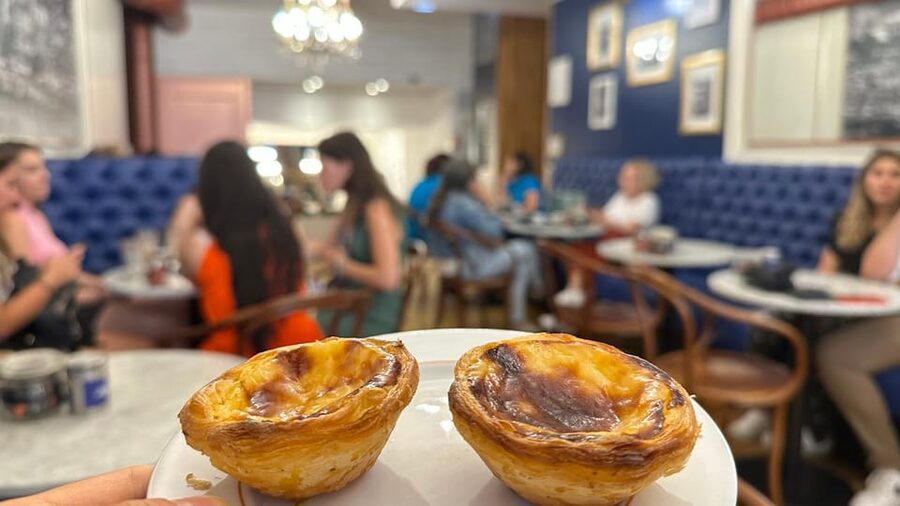
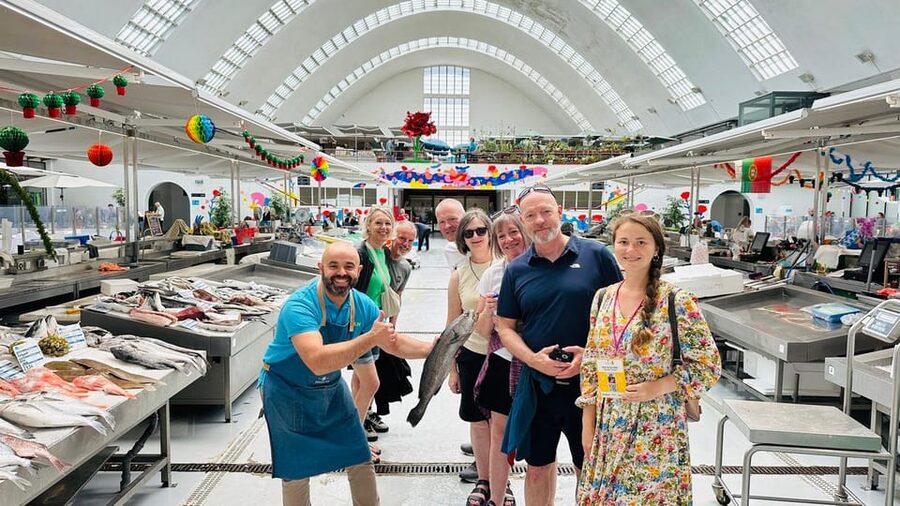
The Mercado Municipal de Matosinhos is where the tour’s central idea becomes practical. You see the fish market and then select the fish for your own lunch. Depending on the day’s supply, you might choose sea bass, sardines, dorada, or another fresh option.
For many people, this is the strongest feature of the experience. You are not simply told that the fish is fresh. You see the choice being made at the market, then follow it to the kitchen. One meal included two sardines, sea bass, potatoes, and goose barnacles. The sea bass was filleted in front of the diners and pan-fried.
Goose barnacles, known locally as percebes, can be a fun addition if they are available. They have a strong connection to the Portuguese coast and are not an everyday order for many international visitors. If you prefer familiar seafood, the ability to choose your fish makes the meal less risky.
The market is also a good place to observe local commerce. This is not a staged cooking demonstration. It is a working food market, and the selection depends on what is being sold that day. That means you should arrive open to the catch of the moment.
A different sort of Porto day altogether:
- The Unvanquished Tour in Porto City Center
★ 5.0 · 26,497 reviews - From Porto: Douro Valley w/ Boat Tour, Wine Tasting & Lunch
★ 4.7 · 19,061 reviews - Complete Douro Valley Wine Tour with Lunch, Wine Tastings and River Cruise
★ 5.0 · 12,920 reviews - Porto: Six Bridges Cruise
★ 4.2 · 11,680 reviews
Leixões Harbour and the Titan structure
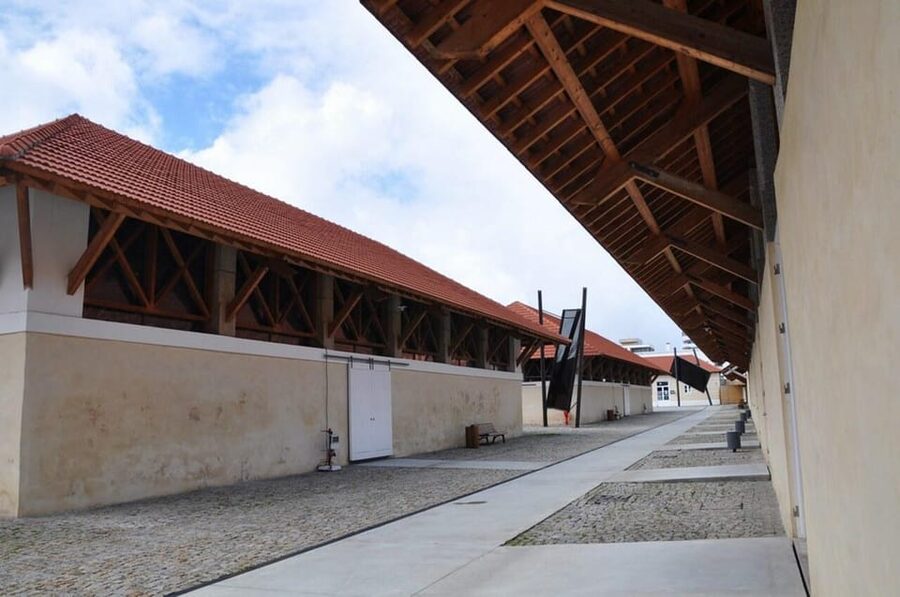
The route continues to the Port of Leixões, one of the key forces behind Matosinhos’s growth. The guide explains the harbour walls and the development of a newer port for Porto. You see how the port expanded the town’s role beyond fishing.
The itinerary includes the large Port Lifting Bridge and the Guindaste Titan, an industrial crane. These structures add a different layer to the tour. Matosinhos is not only a place of small fishing boats and seafood grills. It also has large-scale port and industrial history.
A viewpoint provides time for photographs and a short break. This is welcome in a compact itinerary with many stops. The coastal views are likely to be one of the most open visual moments of the walk, especially after the tighter spaces of the market and historic buildings.
You should not expect a long port tour or access to every working area. The stop is a guided look at the harbour and its structures, not a technical visit inside port facilities. Still, it helps you understand why Matosinhos became so important to Porto.
Senhor do Padrão and the parish church
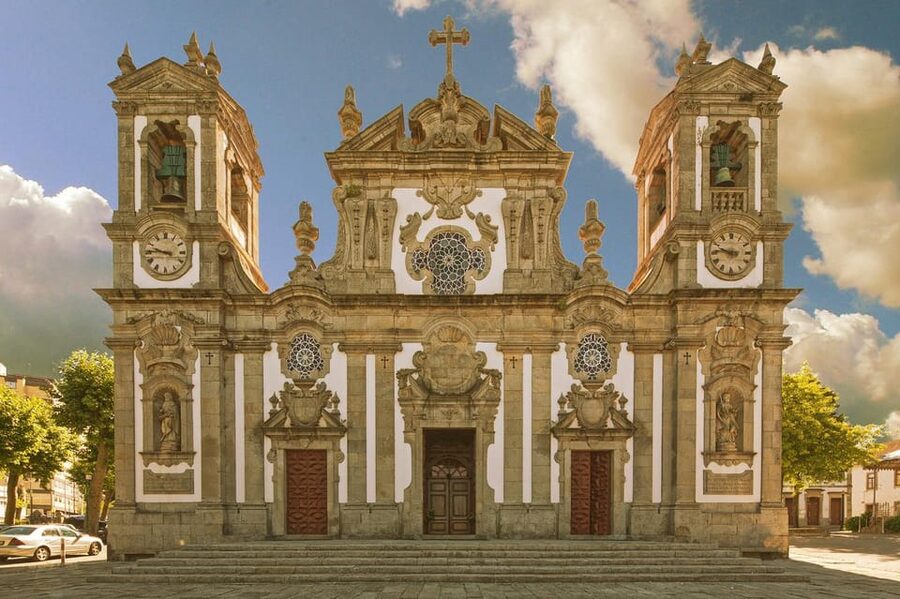
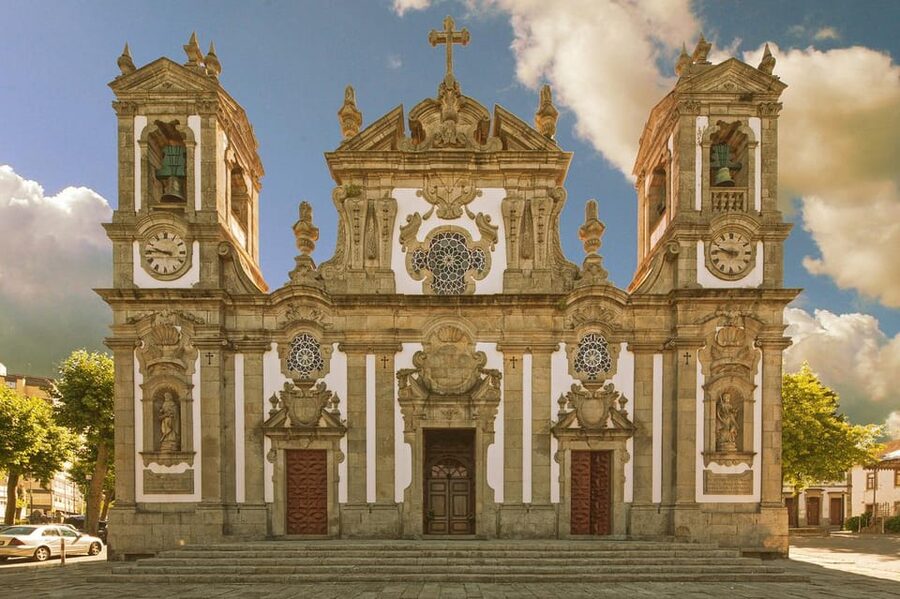
At Senhor do Padrão, the guide introduces another part of Matosinhos’s religious and maritime identity. The route also visits the Parish Church of Matosinhos, which houses the statue of Bom Jesus.
The church’s gold-leaf artwork is a highlight. It offers a strong contrast with the plain business of the fish market and the heavy machinery around the port. I like this change of mood because it shows how the town’s public life was shaped by both work and devotion.
The religious sites are not filler. For a fishing community, churches and maritime shrines often carried particular meaning, offering a place to pray for safety and remember those lost at sea. The guide’s interpretation helps place the buildings within the wider story of Matosinhos.
The amount of time at each site can vary. Since the entire experience lasts only three hours, you will see these places as part of a connected walk rather than spend a full hour studying one church.
Pinhais Cannery and the Portuguese tinned-fish tradition
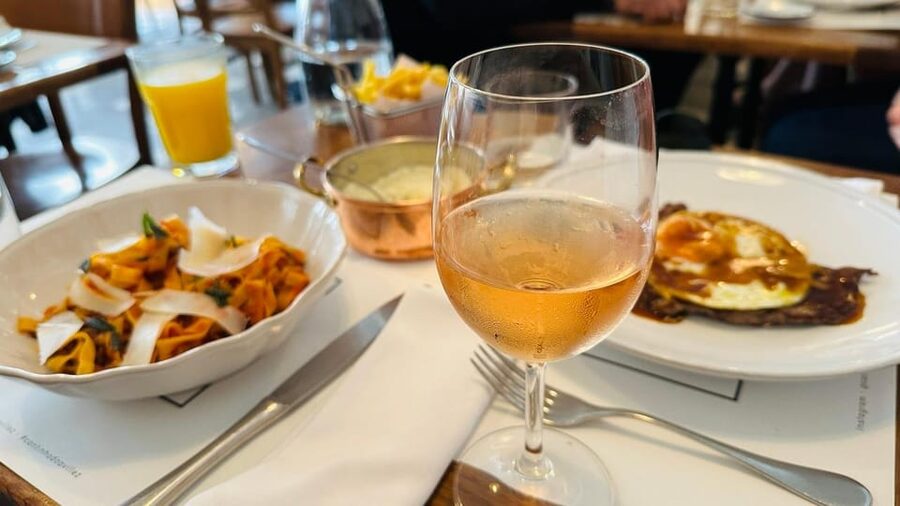
Pinhais Cannery & Co. adds a second seafood experience before lunch. You visit the factory and receive an exclusive tasting of tinned fish, served with local snacks. This is a useful stop because canned fish is an important part of Portuguese food culture, not merely a souvenir for tourists.
The visit gives you a look at the industrial side of seafood. Fresh fish goes to the market and grill, while other products are preserved and packaged for longer use. That contrast helps explain how the sea supports Matosinhos in more than one way.
The tasting is likely to appeal to curious eaters who want to compare Portuguese canned fish with the versions sold at home. It also gives you a small bite before the main meal, though the included lunch remains the centerpiece.
The factory visit has a clear practical advantage: it is included in the price. If you planned to buy tins as gifts, remember that souvenirs and personal purchases are not covered. The tasting is included, but extra shopping is your own expense.
Casa da Arquitectura and Matosinhos’s modern side
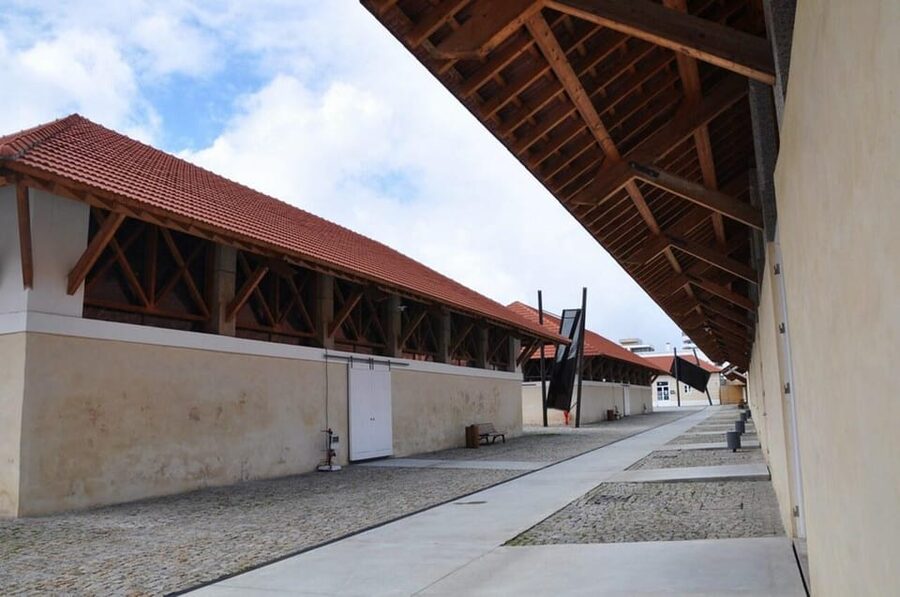
Casa da Arquitectura brings architecture into a tour that could otherwise focus only on fishing and food. The route also refers to the work and influence of architect Álvaro Siza, a major figure connected with Portugal’s modern design.
This stop helps explain why Matosinhos appeals to more than seafood lovers. The town’s identity includes new buildings, industrial forms, religious art, and coastal infrastructure. The guide can point out how these different periods sit close together.
Architecture fans will get the most from this part of the route, but you do not need specialist knowledge. The value is in seeing how the town developed and how design can reflect local materials, work, and public life.
If your main goal is a long museum visit, this tour may feel too quick. Casa da Arquitectura is one stop among many, not a full architecture day. For a first look at Matosinhos, that broad mix works well.
The final meal: from market counter to table
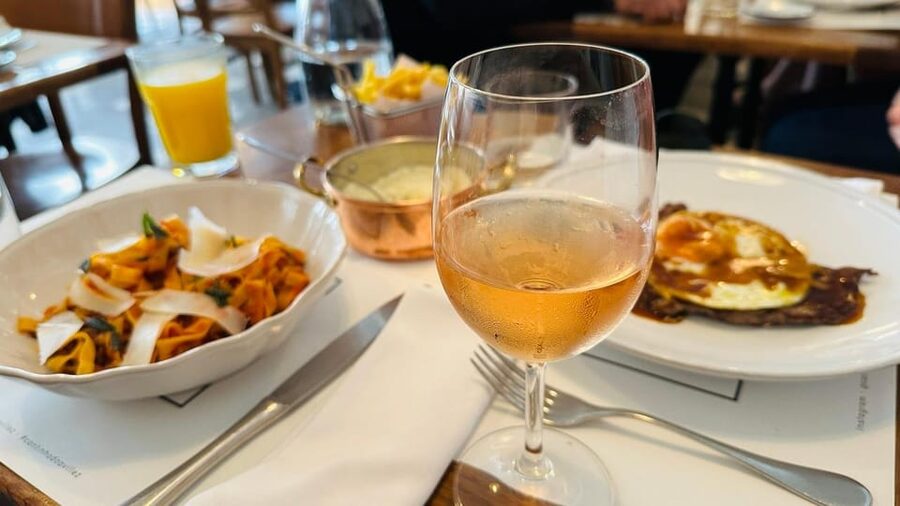
The tour ends with a secret lunch stop near the market. After choosing your fish, you sit down for the From the Sea to Your Plate meal. The restaurant prepares the catch, often by grilling or pan-frying it, and serves it with suitable sides.
The cooking is intentionally simple. Fresh fish needs little decoration, and the point is to taste the product rather than a complicated recipe. Potatoes, sardines, sea bass, barnacles, and a glass of wine have all featured in meals connected with the tour.
I especially like the transparency of this setup. You see the fish at the market, make the choice, and then see it prepared. A guide may even explain how the fish is handled or filleted in front of you. That small chain from counter to plate makes lunch feel like part of the town, not a separate restaurant booking.
The menu cannot be fully guaranteed because the selection depends on the catch and market supply. If you have a seafood allergy, strong food restriction, or dislike fish, this is not the right tour. The main meal is built around seafood, and the experience works best when you are willing to try what is fresh.
Guides, languages, and the pace of the walk
The guides named for this experience include Rui and Oleksandra. Rui has been praised for explaining the harbour, the 1947 tragedy, the church, the cannery, and the market meal. Oleksandra has a strong focus on local architecture, history, and Portuguese life, while also handling changes to the route when needed.
You can book the tour in Portuguese, Spanish, English, Ukrainian, or Russian. That range is useful for mixed-language groups and makes the cultural explanations more accessible.
The tour is listed as wheelchair accessible, but you should still consider the route’s character. It includes streets, a market, beach and harbour areas, churches, a factory, and several sightseeing stops. Ask the operator about the exact route if you need specific mobility details.
The experience may be a small-group outing, though the maximum group size is not stated. One reported departure had only two guests, which allowed for easy conversation and questions. Group size can affect the pace and personal attention, so it is worth checking at booking.
What the $82 price really buys you
At $82, you are paying for more than a three-hour walk. The package includes a professional guide, sightseeing at the main Matosinhos attractions, a tinned fish tasting, and the market-selected seafood lunch. Insurance and activity certification are also included.
For someone staying in Porto, the value improves if you use the available transfer option from Praça da República. You avoid working out the route yourself and get direct context from the guide. If you are already comfortable reaching Matosinhos by metro, you can instead meet at the local starting point.
The price does not include souvenirs, personal expenses, or gratuity. Plan separately for tins from the cannery or any other purchases. The lunch is included, but the exact fish, sides, and drink should be treated as dependent on the day’s choices and availability.
Free cancellation up to 24 hours before the start and reserve-now-pay-later booking make it easier to fit the tour into a changeable Porto schedule. Check the available start times before booking, since the activity lasts three hours and the schedule is not specified here.
Who should book this Matosinhos experience?
I would recommend it to you if you want seafood with a sense of place. It suits first-time visitors to Matosinhos, Porto visitors who have already seen the city center, and anyone interested in markets, fishing communities, industrial heritage, and Portuguese food.
It is also a good choice for people who prefer a guide to handle the connections between separate sights. You move from the beach to the memorial, market, harbour, church, cannery, architecture center, and lunch without having to plan the route.
You may want another type of outing if you prefer a relaxed meal with no walking, a full architecture tour, or a fixed menu. The route covers a lot, and the lunch selection is tied to what the market offers. Its strength is variety and local context, not a slow, single-subject visit.
FAQ
Where does the Matosinhos food tour start?
The main meeting point is at Avenida General Norton de Matos 208, next to the tourist information office. The guide is identified by the company tag and a white umbrella.
Can I arrange transport from Porto?
Yes. A transfer option is available from in front of Praça da República in Porto. You can also meet the tour at the Matosinhos starting point.
What food is included?
The experience includes an exclusive tinned fish tasting at Pinhais Cannery & Co. and a seafood lunch. You choose fresh fish at the Matosinhos market, and it is then prepared and cooked for you.
Which languages are offered?
The tour is available in Portuguese, Spanish, English, Ukrainian, and Russian.
Is the activity wheelchair accessible?
Yes, the activity is listed as wheelchair accessible. Because the route includes several outdoor and historic locations, you can ask the provider about the specific route for your needs.
What happens if I need to cancel?
You can cancel up to 24 hours in advance for a full refund. A reserve-now-pay-later option is also available.
Should you book it?
Book this tour if you want your Matosinhos lunch to come with a story. The market fish, Pinhais tasting, harbour structures, church art, and Tragédia do Mar memorial create a fuller picture than a restaurant meal alone.
The $82 cost is reasonable when you value the included lunch, tastings, transport option, and guiding. Choose it especially if you are curious about seafood and willing to let the market shape your meal. Skip it if you want a quiet beach afternoon or do not eat fish. For most food-focused visitors staying in Porto, this is a practical and memorable way to meet the coastal town next door.
Latest reviews around Porto
- Private Walking Tour, highlights and secrets of Porto★ 3.9 · 3 reviews
- Portuguese Wine Tasting w Local Cheese & Cold Cuts pairing★ 5.0 · 3 reviews
- Private Porto Half-Day Tour – Wine Cellars & Cheese Tasting★ 5.0 · 3 reviews
- From Peso da Régua: Visit 3 wineries, tasting and viewpoint★ 5.0 · 3 reviews
- Porto: Full-Day All-Inclusive Private City Sightseeing Tour★ 4.3 · 3 reviews
- Small Painting Group with a Local Artist in Porto★ 5.0 · 3 reviews
- From Arouca: Paiva River Rafting Adventure – Adventure Tour★ 5.0 · 3 reviews
- Private Tour to Santiago de Compostela and its stunning Cathedral★ 5.0 · 3 reviews
Food & Drink, compared.
From Porto: Douro Valley w/ Boat Tour, Wine Tasting & Lunch
Read our review →
Porto: Cálem Cellar Tour, Interactive Museum & Wine Tasting
Read our review →
Douro Valley Small-Group Tour with Wine Tasting, Lunch and Boat
Read our review →
Porto: Cálem Cellar Tour, Fado Show & Wine Tasting
Read our review →
Porto: Cockburn’s Port Lodge Tour and Tasting
Read our review →
Porto: Douro Valley Tour with Wine Tasting, Cruise and Lunch
Read our review →
Douro Valley Tour: Wine Tasting, Cruise and Lunch from Porto
Read our review →Browse the lists this tour appears in