
Reviewed · WINE TOURS
Museu do Vitral Entry Ticket with Wine Tasting
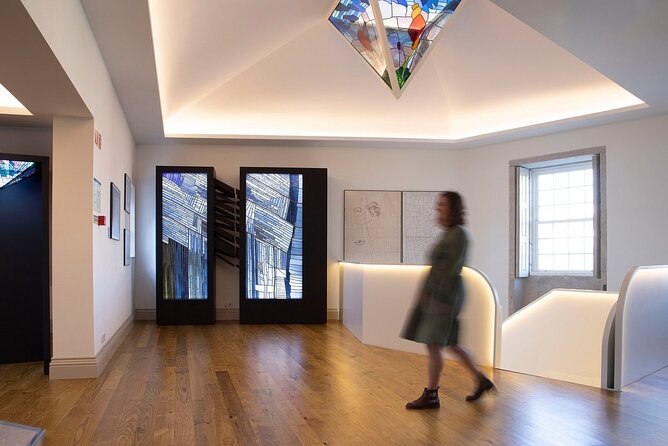
Porto’s Museu do Vitral turns stained glass into more than church decoration. In three floors of displays, you’ll see traditional panels, abstract installations, working sketches, maquettes, and a kaleidoscope made with more than 400 colours of glass. The included glass of port adds a distinctly Portuguese finish.
I like the museum’s clear explanation of how stained glass is made, especially the video, and I like the mix of finished works and planning material. You can see both the polished art and the sketches and models behind it. The main drawback is size: the visit lasts about an hour, and the exhibition could feel brief if you want a large museum with many rooms.
The museum is devoted to work from Atelier Antunes, Portugal’s oldest internationally known stained glass studio. At about $12, the ticket offers a compact cultural stop in Porto, though one published admission note lists €8 for adults and free entry for children up to age 10, so check the price shown when you book.
In This Review
- Key points to know before you go
- Why Museu do Vitral is worth an hour in Porto
- Three floors, several ways to see the craft
- The film makes the technique easier to understand
- Look for the sketches and maquettes
- The 400-colour kaleidoscope is the playful highlight
- What the port tasting adds
- Is the $12 price good value?
- Timing your visit in Porto
- Who will enjoy this museum most?
- Cancellation and booking advice
- Should you book Museu do Vitral?
- FAQ
- Where is Museu do Vitral?
- How long does the visit take?
- What is included with the ticket?
- What can I see inside the museum?
- Is there a video about making stained glass?
- Does the museum have mobile tickets?
- What are the published Monday opening hours?
- Can I cancel for a refund?
Key points to know before you go
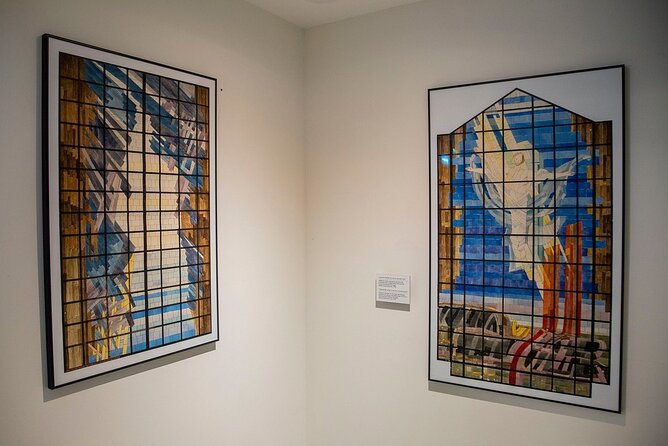
- Three floors of glass art: Expect traditional stained glass, decorative panels, abstract installations, sketches, and maquettes.
- A 400-colour kaleidoscope: This unusual display gives the visit a playful visual highlight.
- A practical craft video: The film explains how stained glass windows are designed and made.
- Port wine included: Your admission comes with one glass of port.
- About one hour: The museum works well as a short cultural stop between other Porto sights.
- Split opening hours: The published Monday schedule is 10:00 a.m. to 1:00 p.m. and 2:00 p.m. to 7:00 p.m.
Why Museu do Vitral is worth an hour in Porto
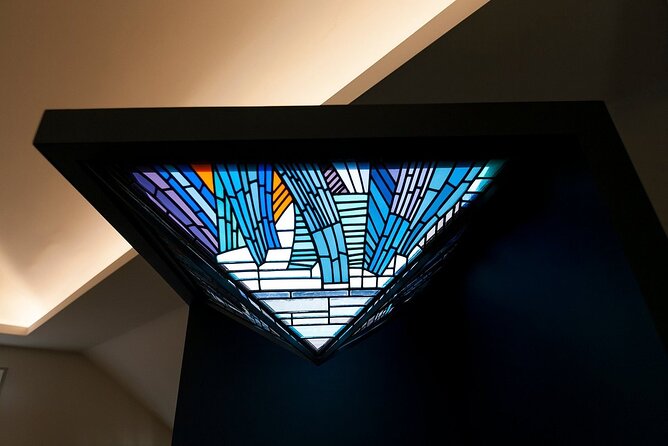
Stained glass is often treated as background scenery. You notice it in churches, town halls, and old homes, but you may not stop to consider how the panels were planned, assembled, and used to tell stories. Museu do Vitral gives that art its own room and asks you to look closely.
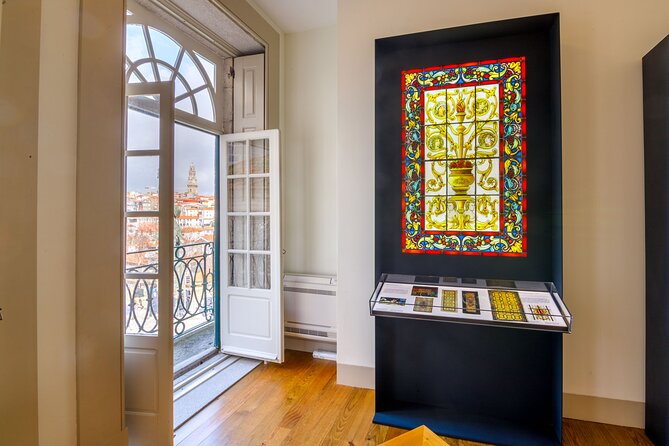
The museum presents stained glass across several settings. Its wider story reaches from Renaissance religious scenes to civic buildings and private houses. That context helps you understand why the medium mattered: glass could carry family symbols, political messages, religious narratives, and decorative patterns while also changing the light inside a room.
I like this approach because the museum does not limit itself to one period or one style. You’ll find traditional stained glass alongside abstract art, which makes the visit more useful for anyone curious about how an old craft still works as modern art.
The collection is tied to Atelier Antunes, described as Portugal’s oldest internationally renowned stained glass studio. That gives the museum a focused identity. You are not simply looking at unrelated pieces from different places. You are seeing work connected to a studio with a long place in Portuguese glassmaking.
More Porto wine tastings worth an afternoon:
- From Porto: Douro Valley w/ Boat Tour, Wine Tasting & Lunch
★ 4.7 · 19,061 reviews - Complete Douro Valley Wine Tour with Lunch, Wine Tastings and River Cruise
★ 5.0 · 12,920 reviews - Porto: Live Fado Show with Glass of Port Wine
★ 4.8 · 6,498 reviews
Three floors, several ways to see the craft
The exhibition is arranged across three floors. The available information does not provide a room-by-room map, so you should expect a compact museum visit rather than a fixed guided route with named stops.
The first part of the experience gives you a basic introduction to stained glass and its uses. This is useful if your knowledge begins and ends with colourful church windows. You’ll see that the art can appear in decorative panels, architectural settings, and free-standing installations.
As you move through the displays, look for the difference between a finished panel and the material used to plan it. The original sketches show how an idea begins on paper. The maquettes give you a smaller working model, helping you connect the first design to the completed glass piece.
That link between process and final object is one of the museum’s best features. A finished window can look effortless. The sketches and models remind you that stained glass depends on design, scale, colour decisions, and careful construction.
The collection also includes striking abstract installations. These pieces may appeal to you more than the religious or decorative examples if you prefer modern art. They show that stained glass is not locked in the past. Colour, transparency, light, and geometric form still give the medium plenty to explore.
The film makes the technique easier to understand
A short explanatory video covers the process of creating a stained glass window. This is a small part of the visit, but it adds useful structure to everything else you see.
Without an explanation, you might focus only on the colours and overall image. The film helps you understand the work behind those effects. It gives the museum a more educational edge without requiring you to read a long technical text beside every object.
I especially like this kind of introduction in a small museum. You can watch the film, then return to the displays with a better idea of what you are seeing. Even if you have never studied art, the process becomes easier to follow.
The film was singled out as an excellent part of the visit in the available feedback, and that makes sense. It gives you a quick answer to the basic question: how does an artist turn a design into a stained glass window?
The information provided does not state the film’s exact length or language options. If those details matter to you, ask at the museum or check the current information before visiting.
Look for the sketches and maquettes
The finished glass gets the most immediate attention, but I would give extra time to the original sketches and maquettes. They show the thinking that happens before glass enters the picture.
A sketch lets you see composition in its simplest form. You can focus on the shapes, lines, figures, and colour plan without the glow or texture of the final material. A maquette then takes that plan toward a three-dimensional or scaled version of the intended work.
This is useful for families, art students, and anyone who enjoys seeing how an idea develops. Children may respond to the bright finished panels, while adults often get more from the contrast between the first plan and the completed piece.
The exhibition also helps explain the different roles stained glass has played over time. It has illustrated religious narratives in churches and cloisters, marked family and political connections in town halls, and decorated private homes. Those uses make the art feel connected to everyday life, not limited to grand religious buildings.
More food tours in Porto:
- Porto: Cálem Cellar Tour, Interactive Museum & Wine Tasting
★ 4.5 · 4,113 reviews - Douro Valley Small-Group Tour with Wine Tasting, Lunch and Boat
★ 5.0 · 3,642 reviews - Porto: Cálem Cellar Tour, Fado Show & Wine Tasting
★ 4.4 · 3,530 reviews - Porto: Taylor’s Port Cellars & Tasting
★ 4.6 · 3,374 reviews
The 400-colour kaleidoscope is the playful highlight
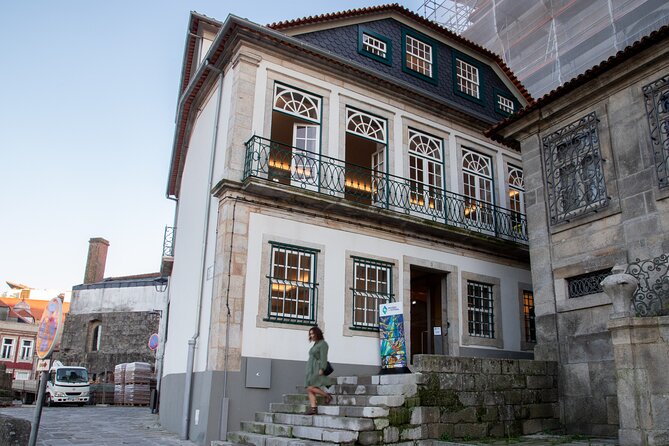
The one-of-a-kind kaleidoscope uses more than 400 colours of glass. It gives the visit a change of pace after the more formal panels and design material.
You can think of it as a simple demonstration of what makes stained glass so appealing: small changes in colour and light can create a very different visual effect. The kaleidoscope puts that idea into motion and gives you something immediate to enjoy.
It is also one of the easiest features to remember after the visit. If you are bringing children, this may be the display that keeps their attention while you spend more time with the sketches and historical context.
The available details do not explain exactly how the kaleidoscope operates or whether it has a viewing time limit. Treat it as a special display within the museum rather than a separate attraction requiring extra admission.
What the port tasting adds
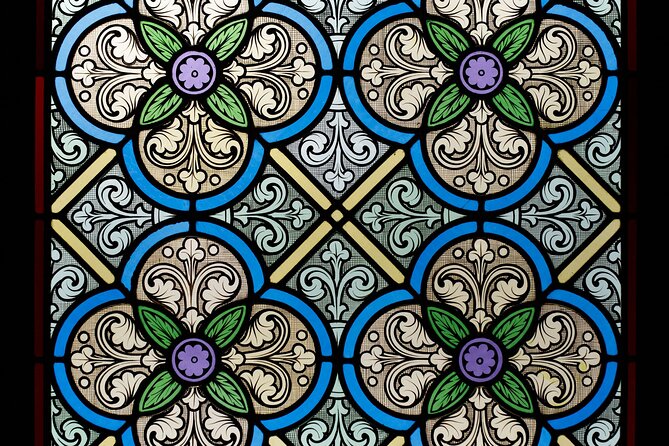
A glass of port wine is included with the ticket. It is a modest extra, but it changes the tone of the visit. After looking at work built around colour and light, you get a small taste of another Portuguese tradition.
Do not book this as a wine tour. The main purpose is the museum, and the port is a single included glass rather than a tasting of several wines or a lesson in port production.
Still, I like the pairing. Porto is closely associated with port, and the drink gives you a relaxed way to end a short art visit. It may be especially welcome if you are building a day around several indoor stops.
The supplied information does not specify the port style, serving location, or whether non-alcoholic alternatives are available. If you do not drink alcohol, ask about options before you arrive.
Is the $12 price good value?
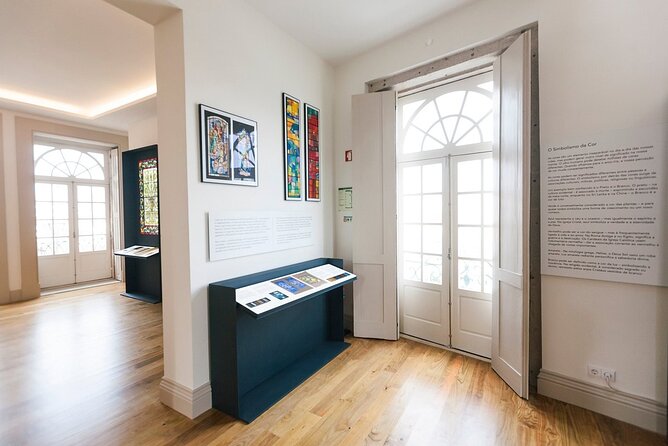
At the listed price of $12, the museum is reasonably priced for a short cultural stop, especially because the ticket includes the port. You are paying for access to a specialised collection rather than a large general art museum, so the value depends on your interest in glass, design, architecture, or Portuguese craft.
The museum’s limited size is both its strength and its weakness. You can see the main material without giving up half a day. That makes it useful when your Porto schedule is full. On the other hand, if you expect a large collection or many major rooms, you may finish sooner than planned.
One piece of pricing information requires care. The supplied details list the experience at $12, while another admission note gives a price of €8 per adult and free entry for children up to age 10. These may reflect different dates, booking channels, or price updates. Check the current amount and child policy at the time of purchase.
For a solo visitor, couple, or family looking for an hour indoors, the ticket can make sense. For someone who does not usually enjoy museums or decorative art, the value is less certain. The port helps, but it does not replace interest in the subject.
Timing your visit in Porto
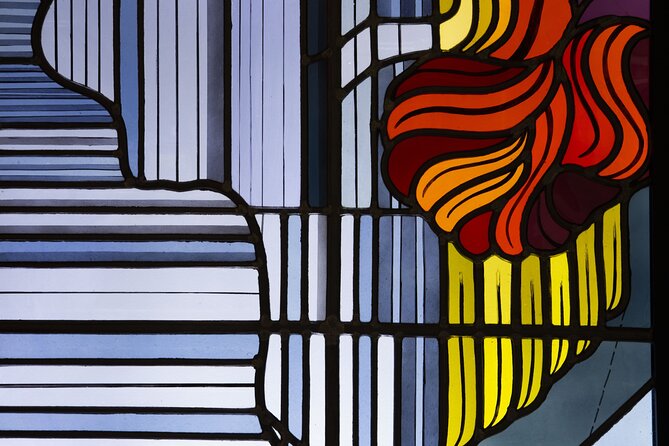
The published hours show Monday opening from 10:00 a.m. to 1:00 p.m., then from 2:00 p.m. to 7:00 p.m. That midday closure matters. Do not arrive just after 1:00 p.m. expecting to walk straight in.
The listed schedule covers December 27, 2023 through June 17, 2026. Opening hours can change, so check the current schedule before setting out, particularly if your Porto visit falls near a holiday.
Plan on about one hour inside. You may need less if you move quickly through the displays, or more if you study the sketches, watch the film carefully, and spend time with the installations.
The museum is near public transportation, which makes it practical to add to a day of sightseeing. The exact transport route is not provided, so use the museum’s location in your mapping app and allow time for the walk from your stop.
A mobile ticket is available. Keep it ready on your phone, and make sure the screen can be displayed clearly at entry.
Who will enjoy this museum most?
I would recommend Museu do Vitral to several kinds of visitors:
- People interested in stained glass, illustration, architecture, or design
- Art students and craft enthusiasts who want to see sketches and models
- Families looking for a manageable indoor visit
- Porto visitors who want a short activity rather than a full-day museum
- Anyone who enjoys seeing traditional techniques used in modern forms
- Visitors who appreciate a port tasting as part of a cultural outing
It may be less suitable if you want a large collection, a long guided tour, or a detailed tasting experience. The supplied information does not identify a guide or promise live commentary. Instead, the experience appears to be a self-directed visit supported by the exhibition and explanatory video.
Most people can participate, and service animals are allowed. No special physical demands are described in the available information, but the museum is spread across three floors, so ask the provider if you need specific access details.
Cancellation and booking advice
Confirmation is provided at the time of booking, and the ticket is mobile. Free cancellation is available if you cancel at least 24 hours before the experience begins.
If you cancel less than 24 hours before the start time, you will not receive a refund. Changes made within that same 24-hour window are not accepted. The cut-off uses Porto’s local time.
Because the museum has a split Monday schedule, check both the opening hours and your chosen start time before paying. The experience provider is Três Séculos, Realizações Hoteleiras.
Should you book Museu do Vitral?
Book it if you want a focused, affordable art stop with a clear connection to Portuguese craft. The film, sketches, maquettes, traditional panels, abstract installations, and 400-colour kaleidoscope give the visit more variety than a simple display of windows. The port is a pleasant extra.
Think twice if you need a major museum that will fill several hours. Museu do Vitral is compact, and its appeal depends on your interest in glass, light, and design. For the right visitor, that compact size is the point: you can learn something specific, see unusual work, and still have most of the day left for Porto.
FAQ
Where is Museu do Vitral?
The museum is in Porto, Portugal.
How long does the visit take?
The experience lasts approximately one hour.
What is included with the ticket?
Admission to Museu do Vitral and a glass of port wine are included.
What can I see inside the museum?
You can see traditional stained glass masterpieces, decorative panels, abstract art installations, original sketches, maquettes, and a kaleidoscope with more than 400 colours of glass.
Is there a video about making stained glass?
Yes. An explanatory video shows how stained glass windows are made.
Does the museum have mobile tickets?
Yes. The experience offers a mobile ticket.
What are the published Monday opening hours?
The published Monday hours are 10:00 a.m. to 1:00 p.m. and 2:00 p.m. to 7:00 p.m.
Can I cancel for a refund?
Yes, if you cancel at least 24 hours before the experience start time. Cancellations made within 24 hours are not refunded, and changes during that period are not accepted.
Latest reviews around Porto
- Private Walking Tour, highlights and secrets of Porto★ 3.9 · 3 reviews
- Private Porto Half-Day Tour – Wine Cellars & Cheese Tasting★ 5.0 · 3 reviews
- Portuguese Wine Tasting w Local Cheese & Cold Cuts pairing★ 5.0 · 3 reviews
- From Peso da Régua: Visit 3 wineries, tasting and viewpoint★ 5.0 · 3 reviews
- Porto: Full-Day All-Inclusive Private City Sightseeing Tour★ 4.3 · 3 reviews
- Small Painting Group with a Local Artist in Porto★ 5.0 · 3 reviews
- From Arouca: Paiva River Rafting Adventure – Adventure Tour★ 5.0 · 3 reviews
- Private Tour to Santiago de Compostela and its stunning Cathedral★ 5.0 · 3 reviews
Wine Tours, compared.

From Porto: Douro Valley w/ Boat Tour, Wine Tasting & Lunch
Read our review →
Complete Douro Valley Wine Tour with Lunch, Wine Tastings and River Cruise
Read our review →
Douro Valley: Wine Tour with Lunch, Tastings & River Cruise
Read our review →
Douro Valley: Historical Sites, Wine Experience, Lunch & Cruise
Read our review →
Authentic Small Group Douro Wine Tour with Lunch & River Cruise
Read our review →
Porto: Cálem Cellar Tour, Interactive Museum & Wine Tasting
Read our review →
Douro Valley Small-Group Tour with Wine Tasting, Lunch and Boat
Read our review →
Douro Valley Tour: 2 Vineyard Visits, River Cruise, Winery Lunch
Read our review →Browse the lists this tour appears in