
Reviewed · DOURO RIVER CRUISES
Porto: 6 Bridges Douro River Cruise
The best part of this 50-minute Douro cruise is its simple idea: put you on the river and let Porto reveal itself from a new angle. You sail aboard a traditional boat once used to carry Port wine barrels from the Douro Valley to the cellars of Gaia and Porto, now fitted with modern navigation equipment.
I like the bridge-by-bridge commentary, which gives meaning to the six crossings linking Porto and Vila Nova de Gaia. I also like the price, about $23 per person, for an easy outing that adds strong views, fresh air, and useful city orientation to a Porto visit. The main drawback is finding the correct boarding kiosk at Cais da Estiva, especially when several boat companies are operating along the quay.
In This Review
- Key points to know before boarding
- Why this short Douro cruise works so well
- Finding Cais da Estiva without wasting time
- Sailing on a former Port wine boat
- From Ribeira to Freixo: the upstream section
- Six bridges, six different views
- Returning downstream toward the Douro mouth
- Commentary, languages, and what you will learn
- Choosing the best departure time
- Who should book this experience?
- Practical value at $23 per person
- Booking and boarding tips that matter
- Should you book the Six Bridges cruise?
- FAQ
- How long is the Porto Six Bridges cruise?
- Where does the cruise depart?
- Do I need to check in if I have a mobile ticket?
- What route does the boat take?
- Are the six bridges explained during the cruise?
- Can I cancel the booking?
Key points to know before boarding
- Former Port wine transport boat: You sail on the type of vessel once used to move barrels down the Douro.
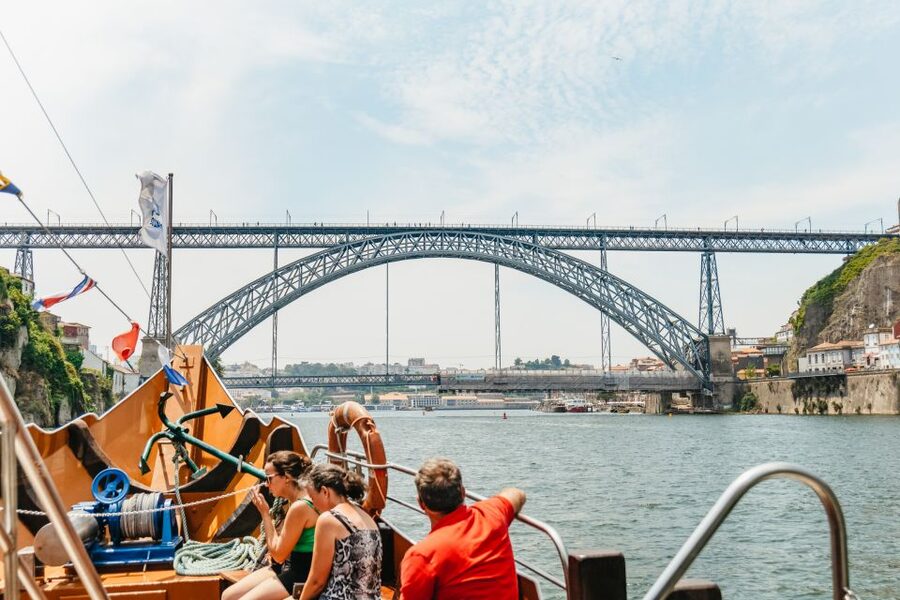
- Six bridges in one short ride: The cruise passes beneath Porto’s famous bridges and explains their role and design.
- Porto and Gaia from the water: You get wide views of Ribeira, the wine lodges, hillside buildings, and the river mouth.
- A compact 50-minute outing: It fits neatly into a busy sightseeing day and works well as a first look at the city.
- Check in at the right kiosk: A mobile ticket alone may not be enough. Find the blue and white Tomas kiosk, check in, and collect the boarding receipt.
- Morning or evening both work: Early departures can feel cooler and less crowded, while evening trips offer softer light and sunset views.
Why this short Douro cruise works so well
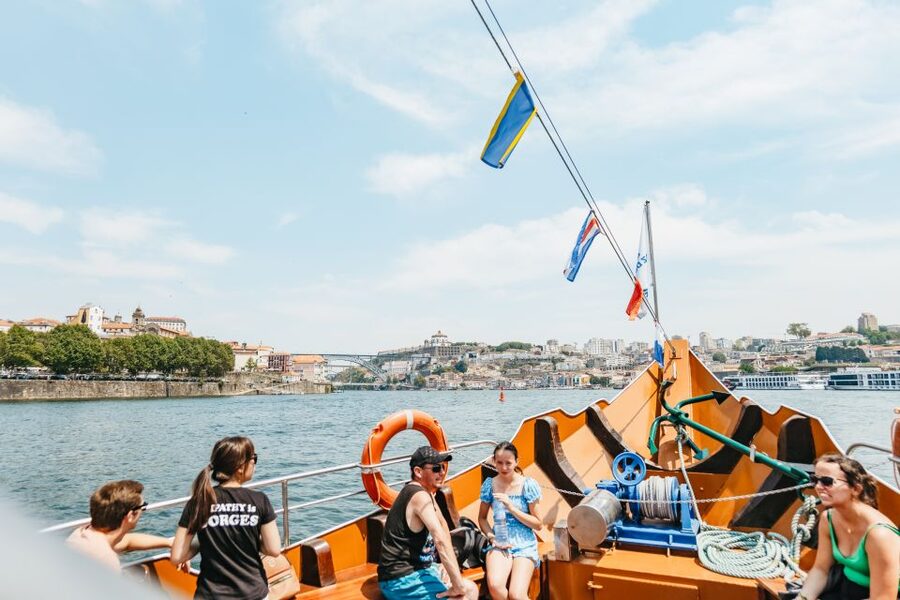
Porto is a city of steep streets, tiled façades, churches, and crowded viewpoints. From the river, the geometry changes. Instead of looking up at the city from a pavement, you look back at the hillsides, bridges, quay walls, and rows of buildings all at once.
That change of viewpoint is the real reason to book. You will see parts of Porto and Gaia that are difficult to understand from land, including how closely the two cities face each other across the Douro. The cruise also helps you spot places to visit later, such as Port wine cellars and the Gaia cable car.
At around $23, this is not the cheapest possible way to spend an hour in Porto, since you can walk along the river for free. But the boat takes you beneath the bridges, gives you open river views, and supplies commentary about the sights. For a first visit, I consider it a fair price, especially if you want a relaxing activity that does not demand much time or effort.
The rating of 4.3 from more than 6,000 bookings points to a solid, popular experience rather than a luxury cruise. Go expecting a scenic orientation ride, not an elaborate meal cruise or a full historical lecture.
More Douro river cruises:
- Complete Douro Valley Wine Tour with Lunch, Wine Tastings and River Cruise
★ 5.0 · 12,920 reviews - Porto: Six Bridges Cruise
★ 4.2 · 11,680 reviews - Douro Valley: Wine Tour with Lunch, Tastings & River Cruise
★ 4.6 · 6,081 reviews
Finding Cais da Estiva without wasting time
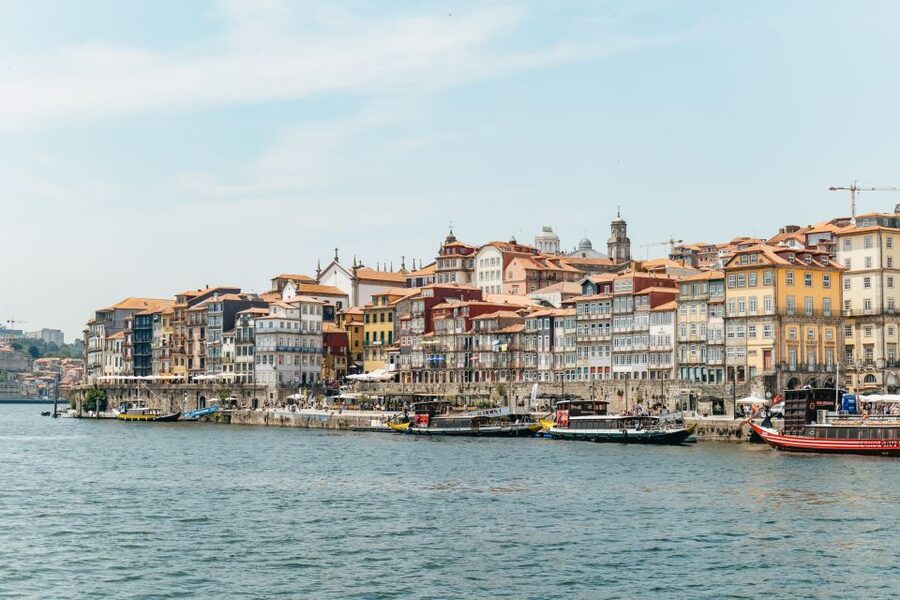
The departure point is at Cais da Estiva in Porto, along the Ribeira waterfront. This is a busy stretch of quay with several operators, similar boats, and multiple boarding areas. The map location may not take you directly to the exact kiosk, so allow extra time.
Look for the blue and white Tomas kiosk and confirm the boat before joining a line. You may need to exchange or validate your phone ticket for a boarding receipt. Keep your booking open on your phone, but do not assume that showing the digital ticket at the gangway is enough.
The walkway beside the river is shared by different operators. Avoid lining up at the first boat you see. Check the company name, ask staff if needed, and wait for the correct boarding instruction. Arriving early is especially sensible in summer, when the quay can be confusing and the most popular departures may fill.
If the boat is full, you may have to wait for the next cruise. That is one reason not to plan this activity too tightly against a train, museum booking, or restaurant reservation.
Sailing on a former Port wine boat
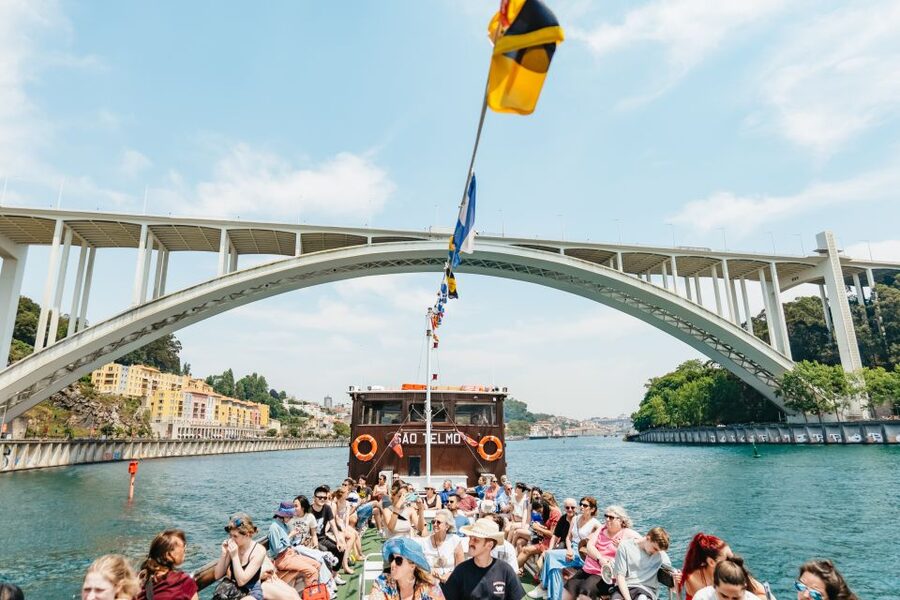
The boat’s connection with Port wine adds more character than a standard sightseeing vessel. These boats once carried barrels from the Douro wine region downriver to Porto and Vila Nova de Gaia, where the wine was stored and shipped.
Today, the boats have modern navigation equipment and are adapted for passenger comfort. The design keeps the river experience fairly traditional while providing a stable platform for sightseeing. You can move around after departure, and there are comfortable places to sit.
For photographs, the front of the boat is a popular choice because it gives a clear view ahead and broad angles toward both banks. Outdoor seating is useful on a bright day, but bring a light layer in cooler months. The river can feel breezier than the quay, and winter departures may not offer the same warmth as a sunny afternoon.
The ride is generally smooth and calm. That makes it a good break after walking Porto’s hills, and it also suits anyone who wants a low-effort activity. The boat is not a thrill ride. Its appeal is the steady pace and the chance to let the city pass by.
From Ribeira to Freixo: the upstream section
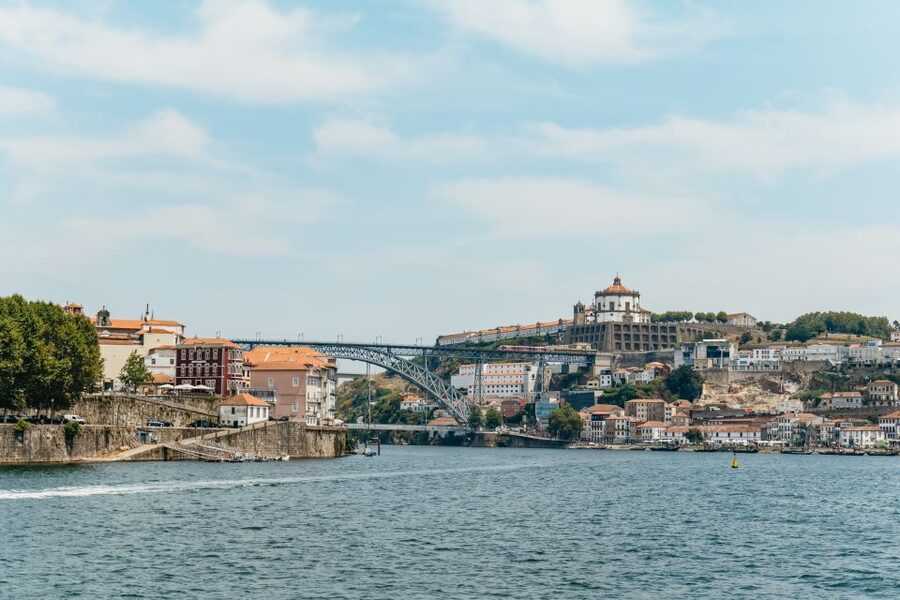
The cruise begins near Porto’s historic center, a UNESCO World Heritage Site. From the water, the Ribeira district appears as a wall of colorful buildings climbing the slope behind the quay. This is one of the best angles for seeing how dramatically Porto rises from the river.
As the boat travels upstream toward Freixo, the view gradually changes. The dense center gives way to broader river views and a less crowded setting. The route lets you see the Douro as a working waterway and as the natural line between Porto and Gaia.
The commentary focuses heavily on the bridges. You learn which crossings connect the two cities and hear background about the structures as the boat approaches and passes beneath them. On some departures, the information comes through recorded audio; on others, you may hear a guide speaking through the onboard system.
Several guides have been praised by name on individual departures, including Nuno, Tiago, and Ricardo L. Their style can add humor and warmth when they are leading the trip. Other departures use an audio guide, which can be clear and easy to follow but gives you no chance to ask questions.
The bridge commentary is useful because the structures can blur together from street level. From the river, you see their height, span, supports, and relationship to the banks. The views give you a better sense of why the Douro has shaped the growth of both Porto and Gaia.
A few more Porto outings to weigh up
- The Unvanquished Tour in Porto City Center
★ 5.0 · 26,497 reviews - From Porto: Douro Valley w/ Boat Tour, Wine Tasting & Lunch
★ 4.7 · 19,061 reviews - Porto: Live Fado Show with Glass of Port Wine
★ 4.8 · 6,498 reviews - Porto: Torre dos Clerigos Entrance Ticket
★ 4.6 · 6,395 reviews
Six bridges, six different views
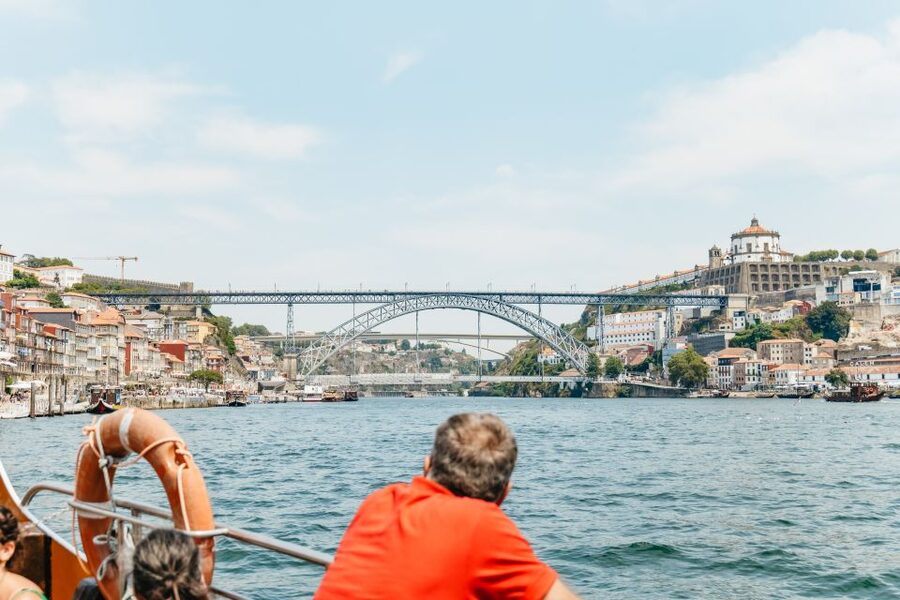
The six bridges are the heart of the experience. You do not simply pass a bridge in the distance. You travel under them, giving you a low, direct view that is hard to match from a city street.
The famous Dom Luís I Bridge is a major highlight, with its large metal structure and upper and lower levels. From the boat, you can appreciate its scale and see the connection between Porto and Gaia in a way that a crossing on foot does not provide.
Other bridges add variety to the route. Some feel modern and functional, while others have older engineering styles. The changing shapes make the ride interesting even if you are not a bridge enthusiast.
The boat’s position also gives you a useful photographic sequence. Take pictures before entering each bridge, look straight up as you pass beneath it, and turn toward the banks immediately afterward. The best view can change quickly, so staying mobile is helpful.
The commentary is informative but not equally detailed on every departure. Some passengers find the recorded explanations clear and crisp, while others want more facts or a live guide who can answer questions. If you enjoy a lecture-style tour, this may feel light. If you want just enough context to understand what you are seeing, the shorter format works well.
Returning downstream toward the Douro mouth
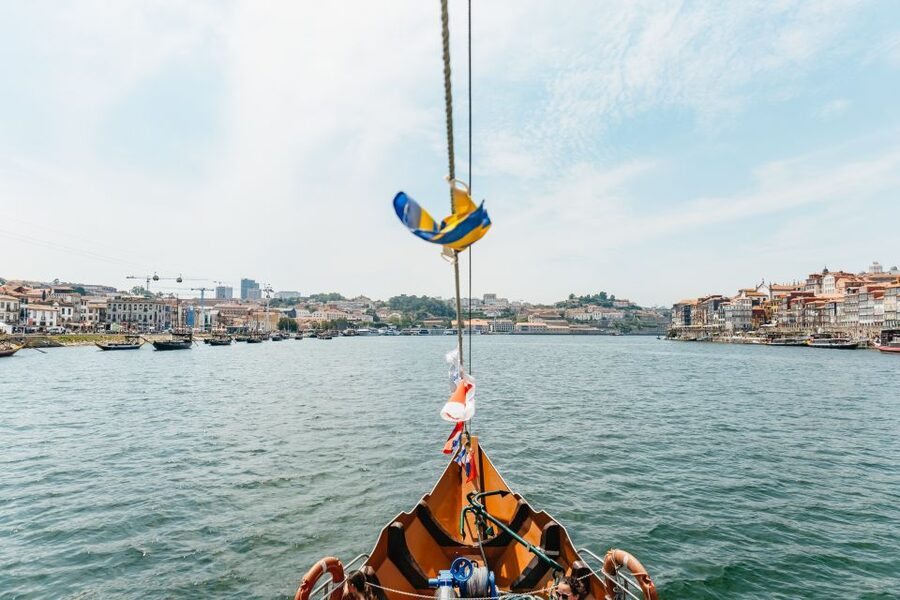
After heading upstream, the boat turns and travels back downstream toward the mouth of the Douro. This return section gives you a second look at Porto and Gaia from a different direction. Buildings that seemed compressed on the way out can appear more distinct as you approach them from downstream.
The river mouth adds another kind of scenery. The Douro opens toward the Atlantic, and the views become broader and less focused on the central bridges. Seeing the city’s riverfront connected to the sea helps explain Porto’s long relationship with trade, shipping, and Port wine.
The route is an out-and-back ride rather than a long river journey through the Douro Valley. That distinction matters. You will not reach vineyard terraces or inland wine estates on this 50-minute trip. A separate, longer Douro excursion is the right choice if your goal is to see the wine-growing region beyond Porto.
Still, the return trip is not wasted time. It provides more chances for photos and lets you settle into the ride after the busy boarding process. The whole outing feels easy and contained, with no need to organize transport between separate stops.
Commentary, languages, and what you will learn
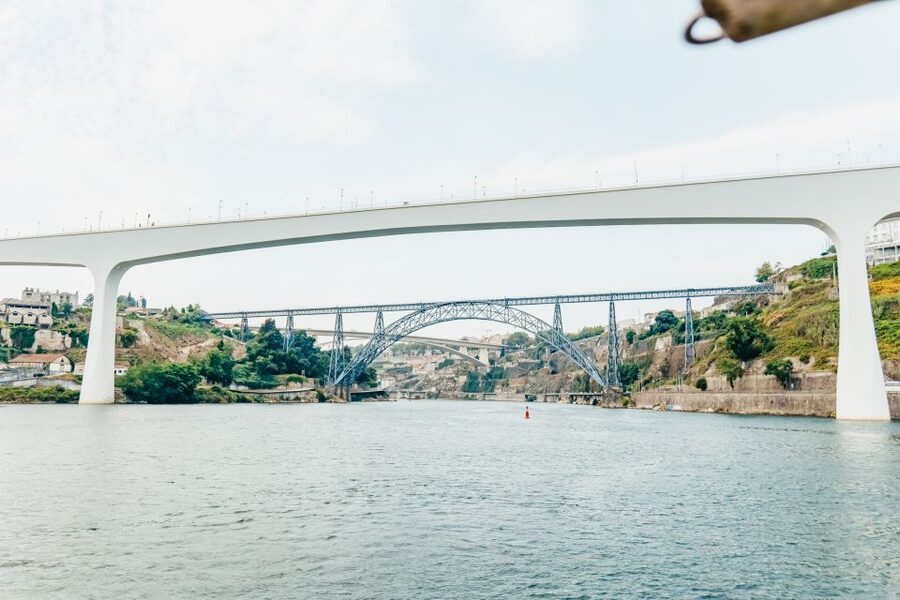
The onboard information covers the six bridges and notable sights along the riverbanks. It also points out places in Porto and Gaia that may deserve a later visit.
The audio has been clear and loud on some departures, with several language options available. That is useful for an international group, though sound quality can vary by seat and by boat. Sitting near a speaker may help if you want to follow every detail.
A live guide can make the experience more engaging. Guides such as Nuno and Tiago have been noted for combining facts with humor, while Sergio has been praised as a friendly and capable boat driver. These individuals may not be assigned to every departure, so book this for the river views first and treat a particular guide as a bonus.
If you want to ask detailed questions about architecture, wine production, or local history, this is not the ideal format. Some departures rely mainly on recorded commentary. You can listen, take pictures, and move around, but there is no promise of a personal guide on every boat.
Choosing the best departure time
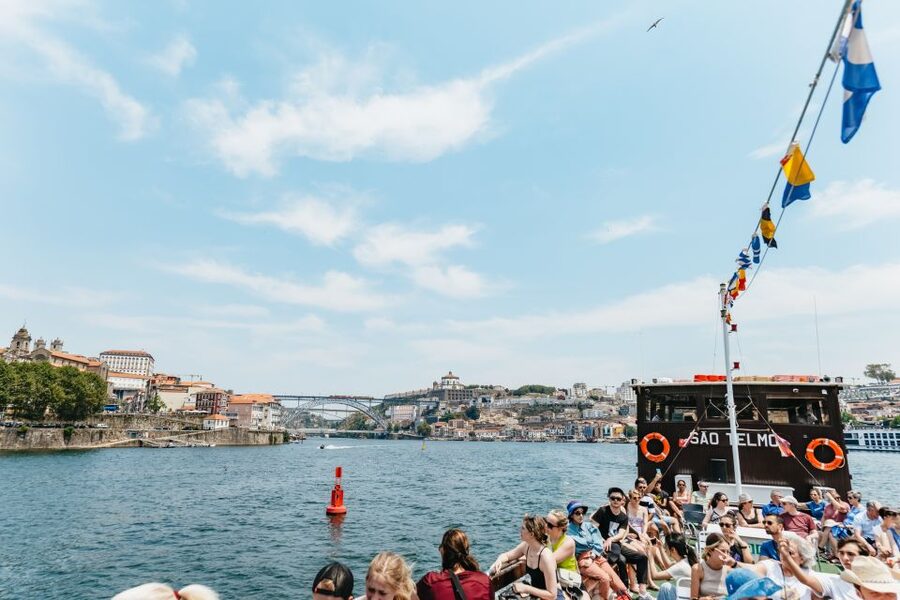
A morning cruise is a practical choice if you want cooler temperatures and fewer people. The first departure of the day can also help you get your bearings before spending the afternoon exploring Porto on foot.
Midday offers strong light for photographs but can feel hotter, especially in summer. The open seating is pleasant in good weather, but shade may be limited depending on where you sit.
An evening departure can be especially attractive. The riverfront buildings take on warmer light, and the view toward the mouth of the Douro can feel more atmospheric. Several departures around 7 p.m. have been enjoyed for sunset scenery and a cooler ride.
In winter, daylight hours matter. You may still get a lovely trip, but the city will not have the same golden glow as a summer evening. Check the available start times before booking rather than assuming that every hour runs year-round.
Who should book this experience?
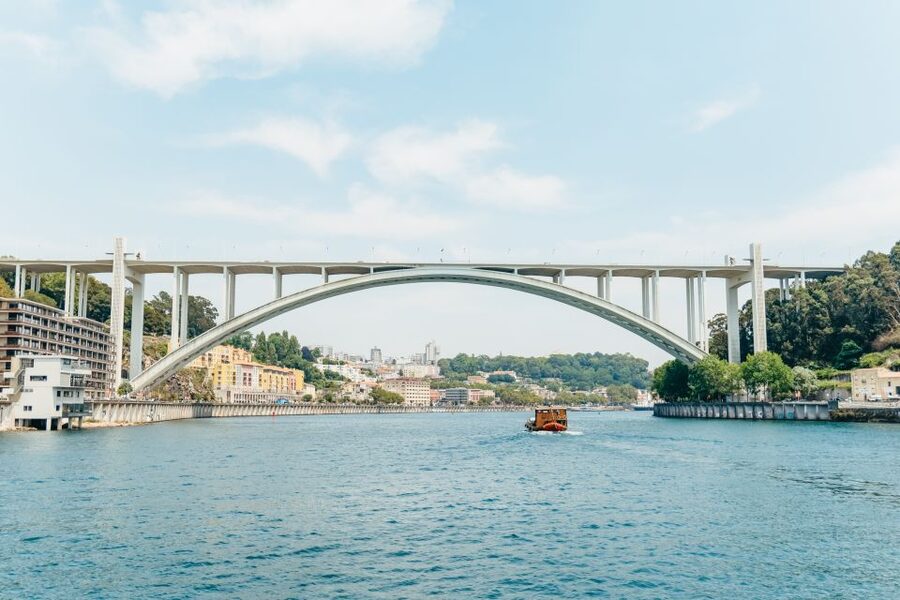
I would recommend this cruise to first-time visitors who want a quick introduction to Porto and Gaia. It is also a good fit for anyone who has already walked the riverfront but wants to understand the bridges and see the city from the water.
Families may appreciate the short length. You get a real excursion without committing to several hours on a boat. The smooth ride also suits older people or anyone who wants a break from Porto’s steep streets.
Photography fans should enjoy the changing angles, particularly from the front or outdoor seating. Sit where you can turn toward both banks, and keep your camera ready as the boat approaches each bridge.
This is less suitable if you want a long, quiet river journey through vineyards. It also may disappoint if you expect a highly personal tour with detailed answers throughout. The experience is best understood as a scenic city cruise with commentary, not as a full-day Douro Valley wine trip.
Practical value at $23 per person
The strongest value comes from combining several small benefits in one affordable outing. You get transport on the river, views of two cities, a look at six bridges, and commentary that helps you understand the scene.
You also save your legs. Porto is rewarding on foot, but its slopes can be tiring. A 50-minute ride gives you a pause without feeling like you have lost half a day.
The price is reasonable for a central Porto activity, especially if you choose a departure with clear commentary and good weather. Your experience depends heavily on those two factors. A gray day will not ruin the architecture, but sunshine makes the riverfront far more photogenic.
The main cost is not money but time spent locating the right kiosk and waiting if a boat is full. Build in a little margin. Once you are checked in and aboard, the trip itself is straightforward.
Booking and boarding tips that matter
Book ahead if you have a fixed schedule, but keep your plans flexible if possible. Cancellation is free up to 24 hours before departure, and you can reserve now and pay later, which helps if your Porto plans are still shifting.
Arrive early, especially in summer or near sunset. Find the Tomas kiosk, complete the check-in process, and confirm the boat name before heading to the gangway.
If you miss your scheduled time, contact the operator as soon as you can. A change to a later departure or even the following day may be possible, but it should not be treated as guaranteed.
Plan for roughly an hour from arrival at the quay through disembarkation. The cruise is advertised at 50 minutes, though individual departures have been reported at about 45 minutes or closer to a full hour. Delays can happen if boarding takes time or the previous boat returns late.
Should you book the Six Bridges cruise?
Yes, if you want an affordable, relaxing way to see Porto and Vila Nova de Gaia from the Douro. The former Port wine boat, the views beneath the bridges, and the compact route make this one of the easiest activities to fit into a city break.
Book it for the perspective, not for a long river adventure. Choose an early morning trip for a calmer start, or an evening departure for softer light. If you can handle the kiosk confusion and keep your expectations realistic about the commentary, $23 buys a pleasant and useful hour on the river.
FAQ
How long is the Porto Six Bridges cruise?
The cruise lasts 50 minutes, although individual departures may run for roughly 45 minutes to an hour.
Where does the cruise depart?
You should go to Cais da Estiva on Porto’s Ribeira waterfront and look for the pictured boat and the blue and white Tomas kiosk.
Do I need to check in if I have a mobile ticket?
Yes. You may need to check in at the correct kiosk and collect a boarding receipt before going to the boat. Having the ticket on your phone may not be enough.
What route does the boat take?
The boat travels from Porto’s historic center upstream toward Freixo, then returns downstream toward the mouth of the Douro River.
Are the six bridges explained during the cruise?
Yes. Commentary covers the six bridges connecting Porto and Vila Nova de Gaia, along with other sights along the riverbanks.
Can I cancel the booking?
You can cancel up to 24 hours before departure for a full refund. The activity also offers reserve now and pay later booking.
Latest reviews around Porto
- Private Walking Tour, highlights and secrets of Porto★ 3.9 · 3 reviews
- Private Porto Half-Day Tour – Wine Cellars & Cheese Tasting★ 5.0 · 3 reviews
- Portuguese Wine Tasting w Local Cheese & Cold Cuts pairing★ 5.0 · 3 reviews
- Porto: Full-Day All-Inclusive Private City Sightseeing Tour★ 4.3 · 3 reviews
- Small Painting Group with a Local Artist in Porto★ 5.0 · 3 reviews
- From Peso da Régua: Visit 3 wineries, tasting and viewpoint★ 5.0 · 3 reviews
- From Arouca: Paiva River Rafting Adventure – Adventure Tour★ 5.0 · 3 reviews
- Private Tour to Santiago de Compostela and its stunning Cathedral★ 5.0 · 3 reviews
Douro River Cruises, compared.
Complete Douro Valley Wine Tour with Lunch, Wine Tastings and River Cruise
Read our review →
Douro Valley: Wine Tour with Lunch, Tastings & River Cruise
Read our review →
Porto: Guided Tour by Tuk-Tuk & Optional Douro River Cruise
Read our review →
Authentic Small Group Douro Wine Tour with Lunch & River Cruise
Read our review →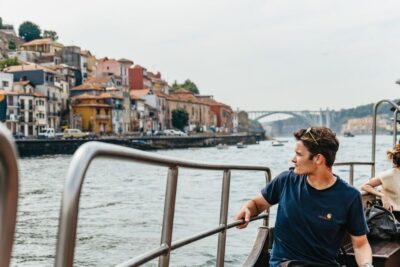
Douro Valley Tour: 2 Vineyard Visits, River Cruise, Winery Lunch
Read our review →
Porto Walking Tour, Lello Bookshop, River Cruise and Cable Car
Read our review →Browse the lists this tour appears in