
Reviewed · WALKING TOURS
Porto and Gaia: Walking Tour of Douro’s Two Riversides
Porto and Gaia are two towns with one shared soul, and this two-riverside walking tour makes that connection its main story. You begin beside Henry the Navigator’s statue, trace Porto’s medieval lanes and riverfront, then cross Dom Luís Bridge on foot into Vila Nova de Gaia.
I like the focus on Ribeira and Barredo, where the guide explains not only the past but also how tourism and gentrification are changing old neighborhoods. I also like the range of stops: a richly decorated church, medieval walls, Port wine cellars, a monastery, and bold modern art.
The main drawback is pace. Two hours is a short time for so much ground, and the route includes hills, uneven streets, and a bridge crossing. You will not visit a winery, and the tour is not suitable for wheelchair users.
In This Review
- Key points to know before you book
- Starting at Infante Square, where Portugal’s story begins
- Inside Palacio da Bolsa and the Church of Saint Francis
- Casa do Infante and the making of imperial Portugal
- Ribeira and Barredo, Porto’s oldest neighborhoods
- The Douro River, old walls, and the bridge’s hard stories
- Gaia, Port wine, and the story behind the name
- Corpus Christi Convent and the Half Rabbit
- What the two-hour format means for you
- Who will get the most from this Porto walk?
- Practical value, meeting point, and booking flexibility
- Should you book Porto and Gaia: Two Riversides?
- FAQ
- How long does the walking tour last?
- What is the price?
- Where does the tour begin?
- Where does the tour finish?
- Which languages are available?
- How many people are in the group?
- Is a winery visit included?
- Are food and drinks included?
- Is hotel pickup or drop-off provided?
- Is the tour suitable for wheelchair users?
Key points to know before you book
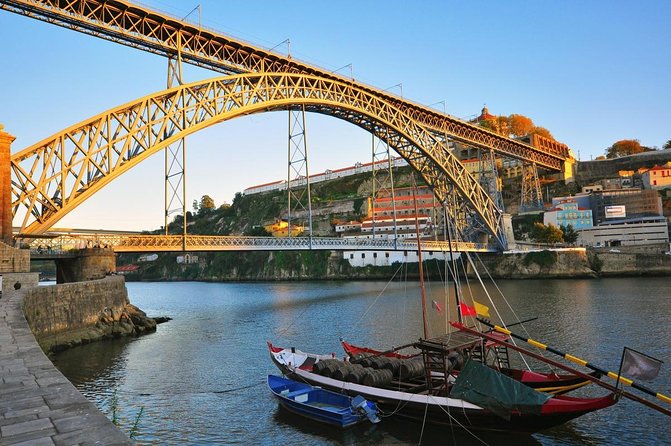
- Two cities in one walk: Start in Porto, cross the Douro on foot, and finish on Gaia’s riverfront.
- A strong local guide matters: English and Spanish tours are led by a live guide, with past praise for Eric, nicknamed Oso.
- Porto’s oldest quarters: Ribeira and Barredo bring medieval lanes, old customs, river trade, and present-day change into the conversation.
- History with modern edges: The route pairs the Corpus Christi Convent with Gaia’s striking Half Rabbit sculpture.
- Good value at $32: For two hours in a group capped at 10, the price is fair if you want orientation and context rather than a winery tasting.
- Plan for active walking: Expect some walking, a bridge crossing, and historic streets that may be difficult for anyone with limited mobility.
Starting at Infante Square, where Portugal’s story begins
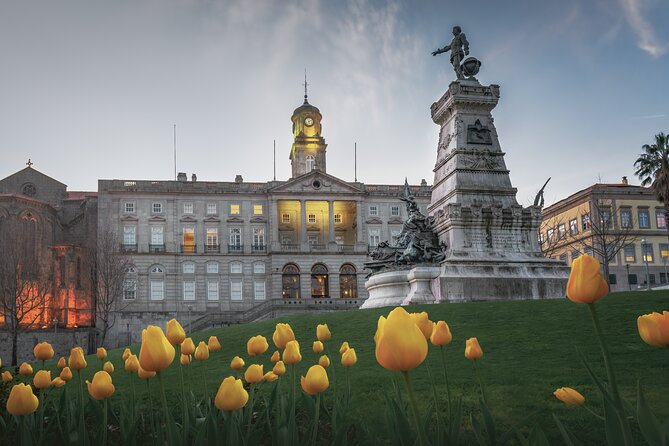
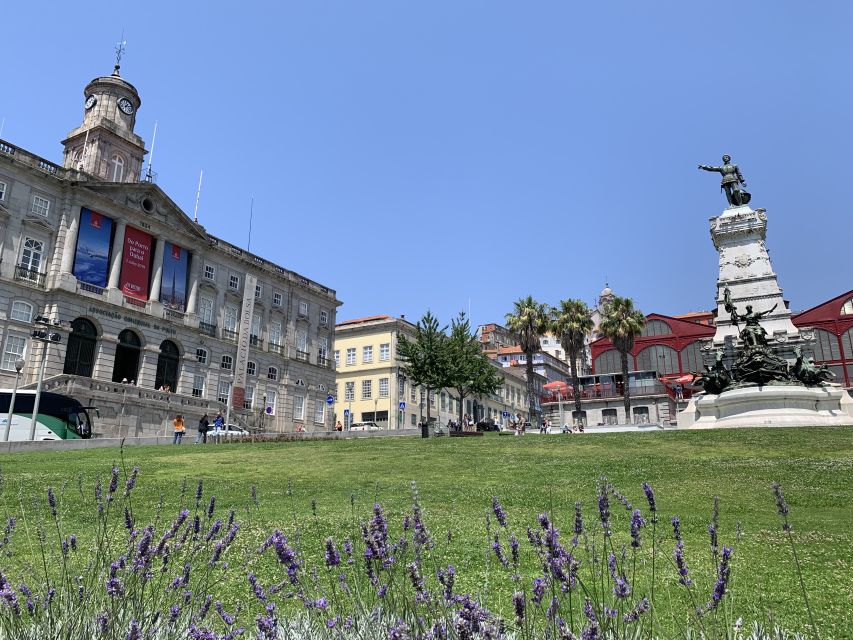
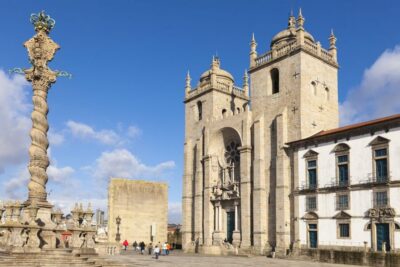
Your meeting point is at the foot of the statue with the blue umbrella in Jardim do Infante Dom Henrique. The square is named for Henry the Navigator, also called the Infante of Sagres, a Porto-born prince linked to Portugal’s Age of Discoveries.
This is a smart place to begin because the tour starts with a broad question: how did a small Atlantic kingdom build connections across four continents? You visit Casa do Infante, known as the house of Henry the Navigator, and hear how Porto fits into that national story.
I appreciate that this is not treated as a simple hero tale. The square also contains the Palacio da Bolsa, Portugal’s first stock exchange and one of Porto’s important buildings. Its presence points to the commercial side of Portugal’s rise, not only royal ambition and ocean voyages.
The stop at the Bolsa is listed as a 15-minute guided visit. That means you should expect an introduction and selected details rather than a long architectural tour. If you want to study every room or take an unhurried visit, plan to return another time.
More walking tours in Porto:
- Porto Walking Tour, Lello Bookshop, River Cruise and Cable Car
★ 5.0 · 3,354 reviews - Experience Porto’s Charm: 3-Hour Guided Walking Tour
★ 5.0 · 2,432 reviews - Porto: 3-Hour Guided City Highlights Walking Tour
★ 4.8 · 2,050 reviews
Inside Palacio da Bolsa and the Church of Saint Francis
From the square, the route turns to Palacio da Bolsa. The building gives the opening part of the tour a useful economic angle: Porto was shaped by trade, business, shipping, and river traffic as much as by churches and noble families.
Next comes the Monument Church of Saint Francis, another 15-minute guided stop. This church is considered one of Portugal’s most beautiful, and its interior is known for lavish decoration. The short visit gives you a chance to connect faith with daily life in Portuguese history and culture.
I like this pairing. The Bolsa represents commerce and public business, while Saint Francis shows the power of religious institutions and private devotion. Together, they keep the tour from becoming a string of unrelated landmarks.
Do not expect a full church lecture or a long period for quiet reflection. The guide has to keep moving, and the full route includes several more stops. Still, this is a useful first look at two of Porto’s major historic buildings.
Casa do Infante and the making of imperial Portugal
Casa do Infante is more than another old building on the route. It is tied to Henry the Navigator and helps frame Porto’s part in the Age of Discoveries.
The guide uses the house to explain how Portugal expanded its reach. This can be one of the more useful moments of the tour because it gives a local address to a national story. Instead of hearing only about Portugal as a whole, you connect the country’s overseas ambitions to a specific place in Porto.
The stop lasts about 15 minutes, so listen for the main thread rather than trying to absorb every detail. If you already know a lot about Portuguese exploration, you may find this section familiar. For a first visit, it helps set up the stories that follow.
Ribeira and Barredo, Porto’s oldest neighborhoods
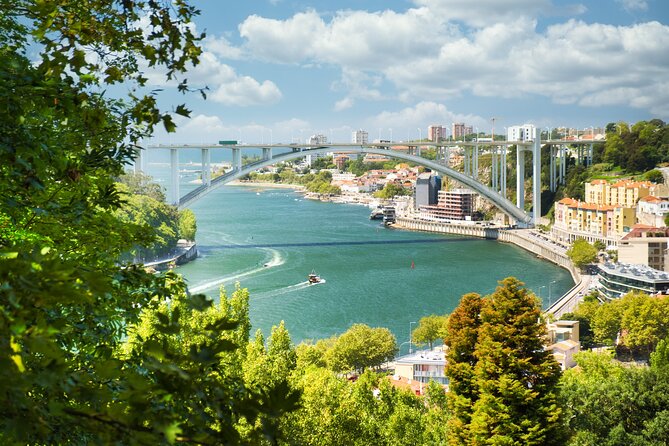
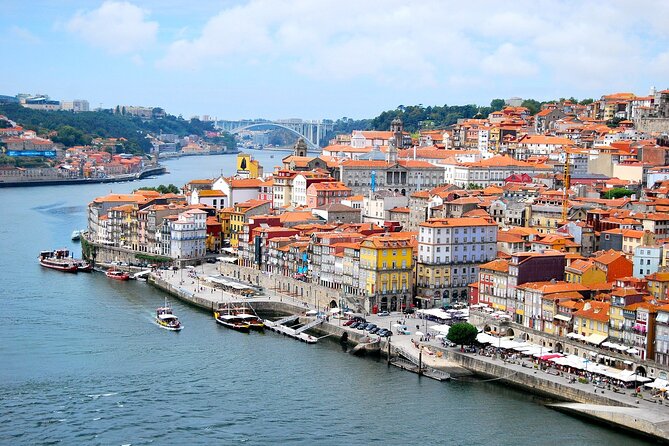
The tour then enters Ribeira and Barredo, two of Porto’s oldest neighborhoods. This is where I expect the walk to feel most personal, since the focus moves away from grand buildings and toward streets, houses, river work, and ordinary urban life.
The guide discusses the past, the current character of the districts, and the pressure caused by tourism and gentrification. That last point matters. You get a chance to see the old quarters not as frozen museum pieces but as living places shaped by new businesses, rising interest, and changing residents.
Ribeira sits beside the Douro and has long been tied to the water. Barredo’s narrow streets and old structures help explain how the city grew in a tight space above the river. The route’s value is not just seeing attractive lanes. It is learning why the city looks and feels this way.
The tradeoff is physical. Historic Porto is not flat or easy underfoot. You should be comfortable walking through older streets and staying with a group. Wear practical shoes, since the tour involves some walking and continues across the river.
A few more Porto outings to weigh up
- The Unvanquished Tour in Porto City Center
★ 5.0 · 26,497 reviews - From Porto: Douro Valley w/ Boat Tour, Wine Tasting & Lunch
★ 4.7 · 19,061 reviews - Complete Douro Valley Wine Tour with Lunch, Wine Tastings and River Cruise
★ 5.0 · 12,920 reviews - Porto: Six Bridges Cruise
★ 4.2 · 11,680 reviews
The Douro River, old walls, and the bridge’s hard stories
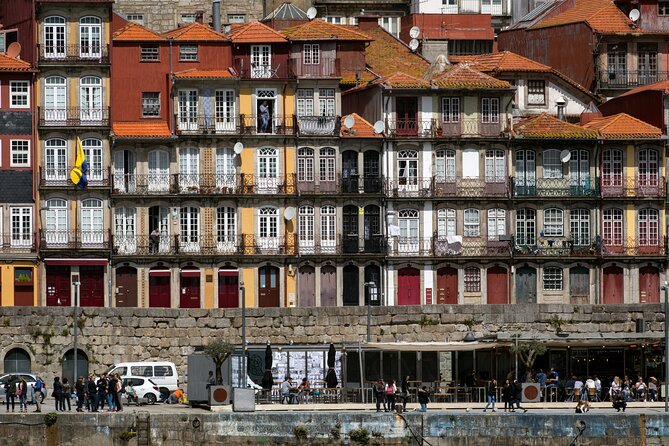
The Douro is treated as the life source of Porto. That is a useful idea to carry through the rest of the walk. The river shaped transport, trade, settlement, and the relationship between Porto and Gaia.
At the Alminhas of the Bridge, the guide brings in local memory, custom, and tragedy. The stop is tied to the old bridge and the people who lost their lives there. It gives the riverfront a human scale and shows how religious practice and public remembrance can meet in one small place.
On Porto’s side, you also hear stories about bridges, French invasions, royalty, legends, heroes, and villains. This mix should appeal to you if you prefer history told through people and dramatic events rather than dates alone.
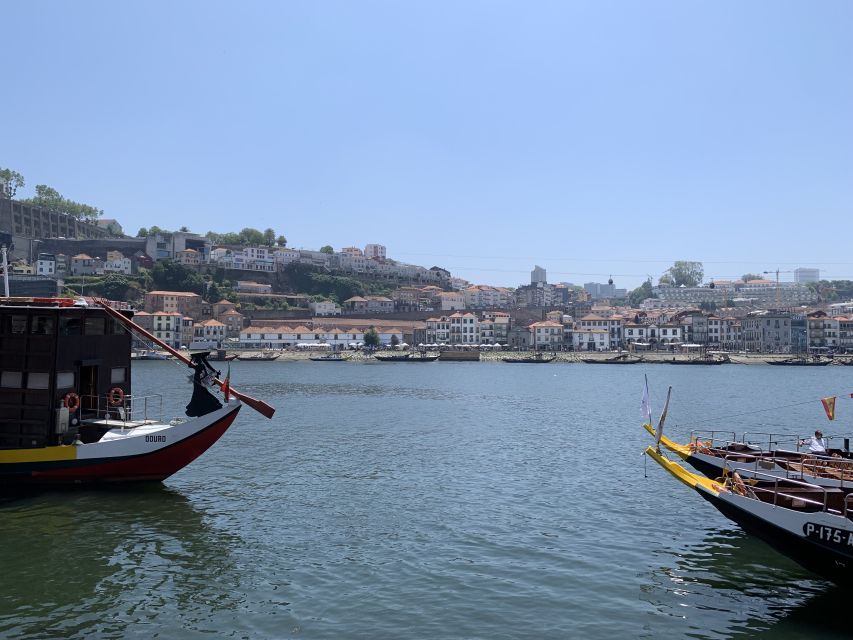
The Dom Luís Bridge is the route’s major crossing. You walk over it for about 10 minutes before reaching Gaia. The crossing gives you the essential geographical lesson of the tour: Porto and Gaia are separate municipalities, but the Douro and the bridge bind them closely together.
The route crosses the bridge on foot, so this is not a panoramic stop where you can linger at leisure. You should also expect the weather and foot traffic to affect the experience, since the bridge is an open public crossing rather than a private tour site.
Gaia, Port wine, and the story behind the name
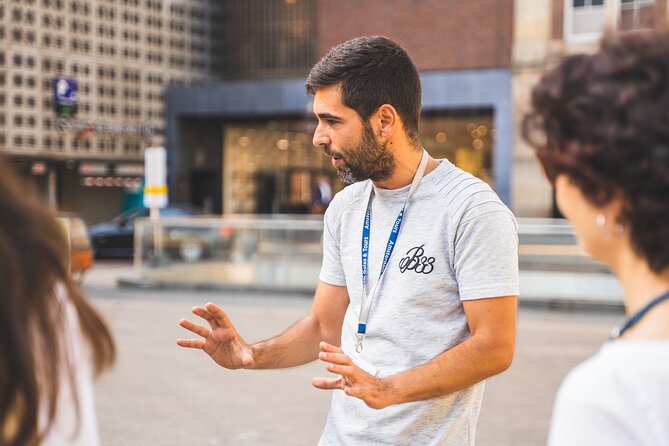
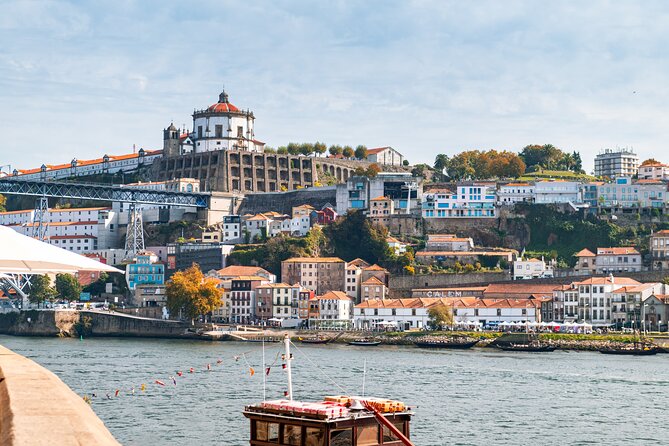
On the southern bank, the tour continues through Vila Nova de Gaia, which locals often simply call Gaia. The famous wine cellars are here, and the guide explains why Port wine is distinctive.
You will not enter a winery for a tasting. Instead, you learn about the history and identity of Port wine, including why it is not simply ordinary wine with a place name attached. This is a good choice for a short walking tour because it gives you useful background before you decide if a separate cellar visit is worth your time.
The cellars also help explain why Gaia matters. Porto’s name is known around the world, but Gaia has long been central to the storage and trade of Port. Seeing the cellars from the streets, then hearing how the wine developed, adds purpose to what might otherwise be a scenic stroll.
At $32 per person, the experience is fairly priced for a small group of up to 10 and a live guide in English or Spanish. I would see it as an orientation tour, not a substitute for a dedicated Port tasting or an inside visit to several cellars.
Corpus Christi Convent and the Half Rabbit
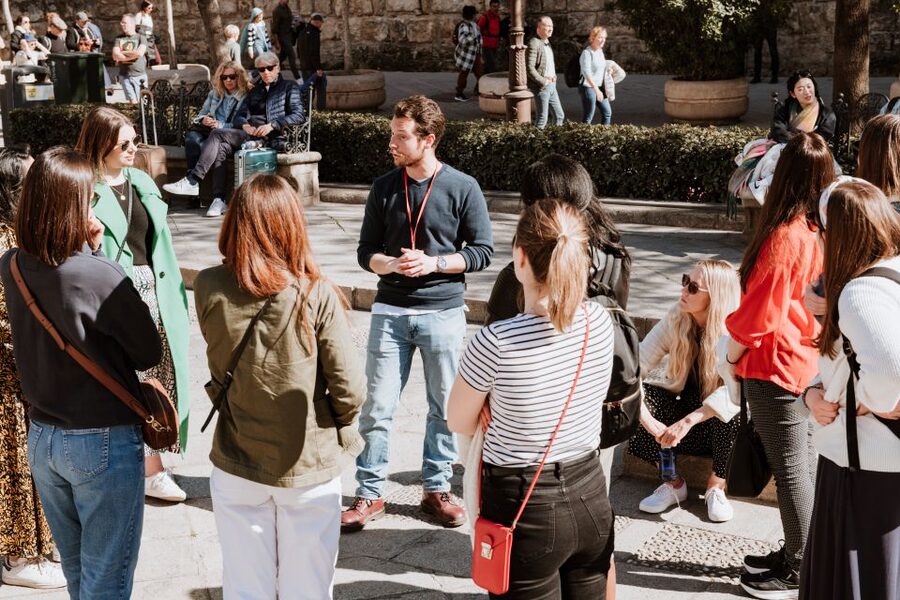
The final section pairs two very different sights: the historic Corpus Christi Convent and Gaia’s modern urban art, including the striking Half Rabbit sculpture.
The Corpus Christi Convent brings the route back to older beliefs, legends, and religious history. After the river, cellars, and commercial story of Port, this stop shows another side of Gaia. The tour presents it as a place with its own character, not merely Porto’s backdrop.
Then the Half Rabbit introduces a sharp modern contrast. The sculpture is made from discarded materials and has become one of Gaia’s recognizable pieces of urban art. Its unusual appearance gives the guide an opening to discuss how public art can alter a neighborhood and how new attractions sit beside older buildings.
I like this ending because it avoids presenting Porto and Gaia as polished old towns with no current tensions. You see tradition, commerce, redevelopment, and contemporary art in the same walk. The contrast also gives the tour a more current feel than a standard historic-center route.
The tour finishes at Cais de Gaia 19, on Gaia’s riverfront. That is useful if you want to continue among the cellars or spend time beside the Douro after the guide says goodbye.
What the two-hour format means for you
The route lists about 15 minutes at each major stop, with the bridge crossing taking roughly 10 minutes. That creates a brisk structure. You will get several short explanations rather than one long visit to a single monument.
I like this format for a first morning or afternoon in Porto. It lets you connect the main areas quickly, understand how the two riverbanks fit together, and mark places where you may want to return. It is less suitable if you prefer slow photography, extended church visits, or long breaks.
The small-group limit is one of the tour’s practical strengths. With no more than 10 participants, it should be easier to hear the guide and ask questions than on a large city tour. The minimum is four participants, however, and the tour may be cancelled if fewer people book.
The guide speaks English or Spanish. One previous booking gave special praise to Eric, also called Oso, for making the tour feel different and for explaining both riverbanks well. If Eric is leading your departure, you may find his personal storytelling style a particular draw, but guide assignment should be confirmed when you book.
Who will get the most from this Porto walk?
I would recommend this experience if you are visiting Porto for the first time and want a clear introduction to the city’s main historic areas. It suits you especially well if you enjoy stories about customs, trade, religious life, political change, and local legends.
It is also a good fit if you want to see Gaia without arranging separate transport. The walk connects Porto’s old center, the Douro, Dom Luís Bridge, Gaia’s cellars, the monastery area, and the riverfront in one compact route.
You may want something else if your main goal is tasting Port wine. No food or drinks are included, and there is no winery visit. You would need to arrange a separate cellar experience.
I would also hesitate to recommend it if walking is difficult for you. The tour is specifically not suitable for wheelchair users, and the route includes historic neighborhoods and a bridge crossing. The short duration does not remove the need for steady movement.
Practical value, meeting point, and booking flexibility
The $32 price is reasonable for a two-hour guided walk with a group limited to 10 people. You are paying for local explanation and route planning, not tickets, meals, tastings, or transportation.
The price includes the walking tour and a friendly guide in English or Spanish. It does not include food, drinks, hotel pickup, or hotel drop-off. Meet at the foot of the statue with the blue umbrella in Jardim do Infante Dom Henrique, and allow enough time to find the exact spot.
You can cancel up to 24 hours before the tour for a full refund. The reserve-now, pay-later option also helps if your schedule is still shifting, though you should remember that the departure may not run with fewer than four participants.
The tour lasts two hours, but I would keep extra time afterward. Since you finish at Cais de Gaia, you may want to explore the riverfront, look at the cellars, or simply enjoy the views before moving on.
Should you book Porto and Gaia: Two Riversides?
Book it if you want a compact introduction to both banks of the Douro, with history that reaches from medieval Porto to modern Gaia. The best parts are the old Ribeira and Barredo neighborhoods, the bridge crossing, and the contrast between Port wine culture, the Corpus Christi Convent, and the Half Rabbit sculpture.
Choose a longer or more specialized tour if you want extensive monument interiors, a Port tasting, or a slow photography walk. At $32, this is good value for context and orientation. It gives you enough history to make the city easier to understand, while leaving room for you to return to the places that catch your interest.
FAQ
How long does the walking tour last?
The tour lasts two hours.
What is the price?
The price is $32 per person.
Where does the tour begin?
It begins at Jardim do Infante Dom Henrique, at the foot of the statue with the blue umbrella.
Where does the tour finish?
It finishes at Cais de Gaia 19, 4400-245 Vila Nova de Gaia, Portugal.
Which languages are available?
The live guide speaks English or Spanish.
How many people are in the group?
The group is limited to 10 participants.
Is a winery visit included?
No. The tour discusses the story of Port wine but does not include a winery visit.
Are food and drinks included?
No. Food and drinks are not included.
Is hotel pickup or drop-off provided?
No. Hotel pickup and drop-off are not included.
Is the tour suitable for wheelchair users?
No. The tour is not suitable for wheelchair users and involves walking through historic areas and across Dom Luís Bridge.
Latest reviews around Porto
- Private Walking Tour, highlights and secrets of Porto★ 3.9 · 3 reviews
- Private Porto Half-Day Tour – Wine Cellars & Cheese Tasting★ 5.0 · 3 reviews
- Portuguese Wine Tasting w Local Cheese & Cold Cuts pairing★ 5.0 · 3 reviews
- From Peso da Régua: Visit 3 wineries, tasting and viewpoint★ 5.0 · 3 reviews
- Porto: Full-Day All-Inclusive Private City Sightseeing Tour★ 4.3 · 3 reviews
- Small Painting Group with a Local Artist in Porto★ 5.0 · 3 reviews
- From Arouca: Paiva River Rafting Adventure – Adventure Tour★ 5.0 · 3 reviews
- Private Tour to Santiago de Compostela and its stunning Cathedral★ 5.0 · 3 reviews
Walking Tours, compared.
Porto Walking Tour, Lello Bookshop, River Cruise and Cable Car
Read our review →
Experience Porto’s Charm: 3-Hour Guided Walking Tour
Read our review →
Porto: 3-Hour Guided City Highlights Walking Tour
Read our review →

Porto: Walking Tour, Lello Bookshop, Boat and Cable Car
Read our review →
Porto: Port and Douro Wine Walking Tour with 9 Tastings
Read our review →Browse the lists this tour appears in