
Reviewed · WALKING TOURS
Porto: Azulejos Tiles Walking Tour
Porto’s blue-and-white tiles are not just pretty decoration. They tell stories, mark old businesses, cover churches, and turn ordinary walls into public art. This walking tour follows that story from Carmo Church through the historic center, finishing near São Bento Station, where some of Porto’s most memorable tile panels await.
I like two things in particular. First, guides such as Susana and Nuno explain how to look at the tiles, including their patterns, colors, makers, and possible dates. Second, the route covers more than famous church facades, taking in depots, shops, street art, and the railway station. The main consideration is pace: at 2.5 hours, with plenty of explanation, it may feel long if you prefer a quick photo walk.
In This Review
- Key points to know
- Why Porto’s tiles deserve a walking tour
- Starting at Carmo Church’s tiled facade
- The Bank of Materials and Porto’s working side
- Churches, stores, and depots along the route
- São Bento Station and the final tile panels
- What the guides add to the experience
- Is $53 a fair price for 2.5 hours?
- Who will enjoy this Porto tile walk?
- Small details that make the walk work better
- Should you book the Azulejos Tiles Walking Tour?
- FAQ
- Where does the Porto Azulejos Tiles Walking Tour start?
- Where does the tour finish?
- How long does the tour last?
- What languages are available?
- What does the tour include?
- Is food included?
- What should I bring?
- Can I cancel the booking?
Key points to know
- Start at Carmo Church: Meet by the church’s tiled facade and begin with one of Porto’s most recognizable examples of azulejo art.
- Learn how to read tiles: Your guide explains techniques, applications, designs, colors, manufacturers, and the difference between original work and replicas.
- See more than blue-and-white church walls: The route includes churches, depots, stores, street art, and São Bento Station.
- Guides bring the subject to life: Susana is praised for her energy and clear answers, while Nuno adds useful detail about makers and production.
- Plan for steady walking: Wear comfortable shoes and bring water. Transport and food are not included.
- Good value for art lovers: At $53 per person, the tour makes sense if you want context, not just a collection of attractive photographs.
Why Porto’s tiles deserve a walking tour
You can spot azulejos all over Porto without joining a tour. The trouble is knowing what you are looking at. A tiled facade may be a church decoration, a commercial sign, a factory-made pattern, or a later replica designed to look old.
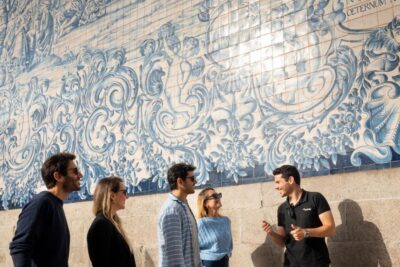
That distinction is what gives this experience its value. Instead of simply pointing out blue-and-white walls, your guide explains the different ways tiles were used across the city. Some panels cover large areas with repeated geometric patterns. Others show scenes, advertise a business, or frame a doorway.
I find this kind of introduction useful early in a Porto visit. Once you understand the basic ideas, you start noticing tilework on your own. You may begin looking for differences in color, pattern, finish, and age as you walk through the rest of the city.
The tour also connects tile art to Porto’s wider story. You hear about the factories that made the tiles and how production affected what appeared on churches, shops, and other buildings. The result is not a technical lecture alone. It is a way to understand why Porto looks the way it does.
More walking tours in Porto:
- Porto Walking Tour, Lello Bookshop, River Cruise and Cable Car
★ 5.0 · 3,354 reviews - Experience Porto’s Charm: 3-Hour Guided Walking Tour
★ 5.0 · 2,432 reviews - Porto: 3-Hour Guided City Highlights Walking Tour
★ 4.8 · 2,050 reviews
Starting at Carmo Church’s tiled facade
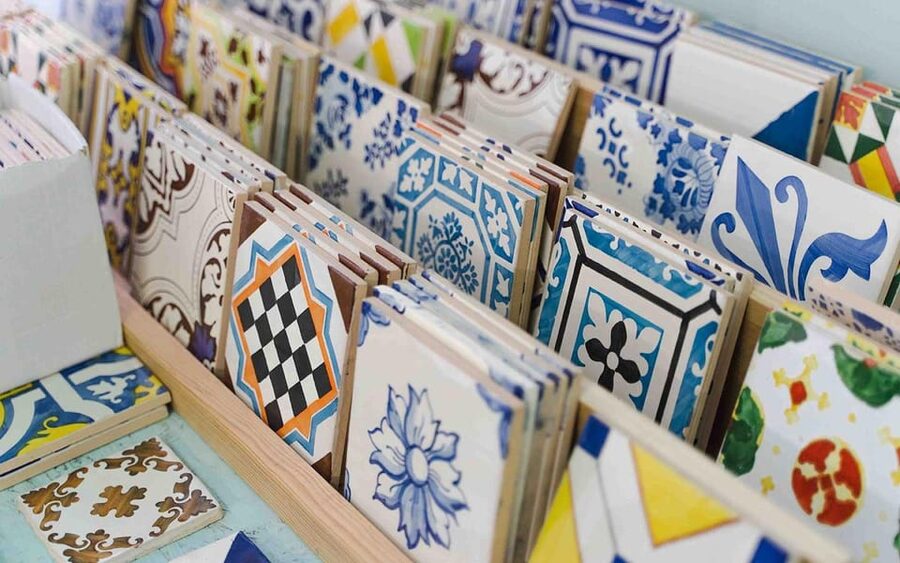
The meeting point is Igreja do Carmo, also called Carmo Church, by its tiled facade. This is a practical place to start because the building gives your guide an immediate visual example before the walk gets underway.
Allow a little time to find the correct meeting point. The instruction is to meet by the tiled facade, rather than at a separate office or transport stop. You should also arrive ready to walk, since there is no included transportation during the tour.
The Carmo stop lasts about 10 minutes. That is enough time for an introduction to the church and its tilework, along with the larger themes of the walk. Your guide may point out how the tiles fit into the building’s design instead of treating them as a separate layer pasted onto the wall.
This first stop helps set expectations. You are not signing up only for a list of famous facades. You are learning to notice how tile panels interact with architecture, streets, businesses, and public spaces.
The Bank of Materials and Porto’s working side
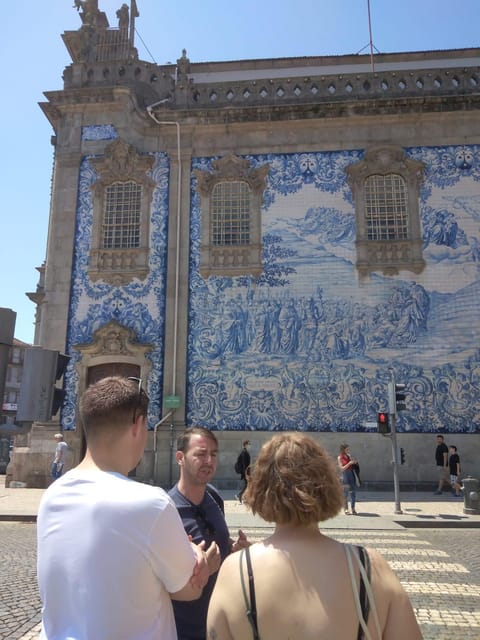
One of the more unusual stops is the Bank of Materials, scheduled for about 20 minutes. It adds a practical side to the tour, moving beyond the grand church facades that often dominate photographs of Porto.
The name suggests a place connected with preserving or examining building materials, and the tour uses the stop to discuss tiles and their production. The supplied details do not specify exactly what displays or objects will be available on the day, so you should think of this as an interpretive stop rather than expecting a particular exhibition.
This part matters because it gives you a better sense of how tilework is made, supplied, and reused. The guide discusses factories and different manufacturers, helping you connect the finished facade with the production process behind it.
For me, this is the sort of stop that separates a focused city walk from a standard sightseeing circuit. You are still seeing attractive architecture, but you are also learning how the material moved through Porto’s buildings and streets.
Churches, stores, and depots along the route
The walk continues through Porto’s historic center, a UNESCO World Heritage Site. The route includes churches, depots, stores, and other buildings where tile art appears in different forms.
Churches provide the most obvious examples. Their panels can be large and decorative, with repeated colors or detailed scenes. Your guide explains how the technique and application change from one building to another, so you are encouraged to compare rather than simply collect photographs.
Stores and depots show another side of the subject. Here, tiles may serve a practical or commercial purpose. Some form signs or billboards, while others cover a building in a regular pattern. These examples show how azulejos became part of everyday city life, not only religious or grand architectural settings.
The route may also include street art and modern uses of decorated surfaces. Exact stops can vary, and the supplied schedule lists a further visit of about 15 minutes without naming it. That lack of detail is worth noting if you want a fixed, minute-by-minute program. The strength is the range of examples, not a guaranteed checklist of every facade.
A few more Porto outings to weigh up
- The Unvanquished Tour in Porto City Center
★ 5.0 · 26,497 reviews - From Porto: Douro Valley w/ Boat Tour, Wine Tasting & Lunch
★ 4.7 · 19,061 reviews - Complete Douro Valley Wine Tour with Lunch, Wine Tastings and River Cruise
★ 5.0 · 12,920 reviews - Porto: Six Bridges Cruise
★ 4.2 · 11,680 reviews
São Bento Station and the final tile panels
The walk finishes on Avenida dos Aliados, with the practical information placing the end next to São Bento train station. These details point to the same central area, but you should check the exact ending instructions when you book, especially if you are meeting someone afterward.
São Bento is an especially useful final point because the station is one of Porto’s best-known places for tile panels. Ending near the station also leaves you in a convenient part of the historic center, close to major streets and further sightseeing.
Your guide uses the final section to bring together the ideas covered earlier: design, color, production, architecture, and public storytelling. By this stage, you have seen tiles in several settings, from religious buildings to commercial spaces and transport architecture.
I like ending a themed walk at a major city landmark rather than returning to the start. You do not spend time retracing the same streets, and you can continue exploring on your own afterward. Just remember that the tour does not include transport, food, or any separate meal stop.
What the guides add to the experience
The strongest part of this tour is the guide-led explanation. Susana is described as friendly, funny, passionate, and able to answer questions with ease. Nuno brings detailed information about tile makers, street art, and how to tell a replica from an older piece.
The practical benefit is that the tour gives you a vocabulary for looking. You may learn to ask who produced a panel, when it was made, what technique was used, and why it appears on that particular building.
That can change how you spend the rest of your time in Porto. Instead of walking past every tiled wall as background scenery, you can compare patterns and look for clues about period and manufacture. The activity is particularly useful at the start of your stay, since the knowledge can guide your later walks and souvenir choices.
There is one small tradeoff. A guide who has a lot to explain may speak at length. If you enjoy history, architecture, and art, that detail is likely to be welcome. If you prefer a brisk walk with short commentary, the pace could feel slower than expected.
The tour is offered in English and Portuguese. If you have a strong preference, check the available language before choosing a time.
Is $53 a fair price for 2.5 hours?
At $53 per person, this is not the cheapest way to look at Porto’s tiles. You can walk through the center independently and see many famous facades without paying an admission fee.
The price makes more sense if you want the interpretation. You are paying for a focused route, a live guide, and explanations about tile techniques, applications, factories, manufacturers, and the city’s architectural story. You also avoid spending your own time researching which buildings matter and how they connect.
The published information gives the duration as 2.5 hours, while the included description refers to a 3-hour guided walking tour. I would treat the experience as roughly 2.5 to 3 hours and avoid scheduling a tight appointment immediately afterward.
The tour does not include food or transport. That is not a serious drawback in Porto’s compact center, but you should wear shoes suited to hills and hard pavement. Bring water, particularly if you are walking in warm weather, and carry a camera if tile photography is one of your goals.
Free cancellation is available up to 24 hours before the activity for a full refund. You can also reserve now and pay later, which helps if your route through Portugal is still changing.
Who will enjoy this Porto tile walk?
I would choose this tour if you like architecture, art, urban history, or photography. It also suits anyone who wants a more focused introduction to Porto than a general city tour can provide.
It is a good match for a first or early day in the city. The guide’s explanations can help you recognize tilework afterward, and the central ending gives you an easy base for more sightseeing.
Families should note the minimum age of 8. The walk is not intended for people with mobility impairments according to the restrictions, although the activity information also describes it as wheelchair accessible. Because those details conflict, anyone using a wheelchair or managing limited mobility should confirm the route and street conditions before booking.
The activity is less suitable if you want a short, flexible photo stop. The route lasts several hours and includes sustained commentary. You should also be comfortable walking between several sites without included transport.
Small details that make the walk work better
Meet at the tiled facade of Carmo Church, not simply somewhere in the surrounding square. Comfortable shoes are essential, and water is a sensible addition to your day bag.
Keep your camera ready, but do not let photography replace the explanations. The value comes from learning why the tiles look different and how they relate to the buildings around them.
I would also take a few notes about manufacturers, design features, or terms that interest you. The subject can become surprisingly detailed, and a short note may help you identify similar tilework later in Porto or elsewhere in Portugal.
Finally, leave room in your schedule after the walk. The endpoint near São Bento and Avenida dos Aliados is well placed for continuing your own exploration, but the exact timing may run closer to three hours depending on the group and questions.
Should you book the Azulejos Tiles Walking Tour?
Book it if you want to understand Porto’s tilework rather than simply photograph it. The route covers a useful mix of churches, shops, depots, street art, and the railway station, while Susana and Nuno bring strong subject knowledge and an easy willingness to answer questions.
At $53, the tour is best value for people who care about art, architecture, and the story behind ordinary city details. Skip it if you prefer independent wandering, dislike extended explanations, or have mobility concerns that have not been confirmed with the provider.
For most curious visitors, I would place it near the beginning of a Porto stay. You will see familiar streets differently afterward, and that is the real payoff.
FAQ
Where does the Porto Azulejos Tiles Walking Tour start?
The tour starts at Igreja do Carmo, also called Carmo Church. Meet by the church’s tiled facade.
Where does the tour finish?
The tour finishes on Avenida dos Aliados. The practical information also describes the endpoint as next to São Bento train station.
How long does the tour last?
The activity duration is listed as 2.5 hours. The included section refers to a 3-hour guided walking tour, so allow roughly 2.5 to 3 hours.
What languages are available?
The live tour guide is available in English and Portuguese.
What does the tour include?
It includes a guided walking tour, visits to churches, depots, stores, and the train station, plus information about Porto’s tiles, their production, patterns, and applications.
Is food included?
No. Food and transport are not included.
What should I bring?
Bring comfortable walking shoes, water, and a camera.
Can I cancel the booking?
You can cancel up to 24 hours in advance for a full refund. A reserve-now, pay-later option is also available.
Latest reviews around Porto
- Private Walking Tour, highlights and secrets of Porto★ 3.9 · 3 reviews
- Private Porto Half-Day Tour – Wine Cellars & Cheese Tasting★ 5.0 · 3 reviews
- Portuguese Wine Tasting w Local Cheese & Cold Cuts pairing★ 5.0 · 3 reviews
- From Peso da Régua: Visit 3 wineries, tasting and viewpoint★ 5.0 · 3 reviews
- Porto: Full-Day All-Inclusive Private City Sightseeing Tour★ 4.3 · 3 reviews
- Small Painting Group with a Local Artist in Porto★ 5.0 · 3 reviews
- From Arouca: Paiva River Rafting Adventure – Adventure Tour★ 5.0 · 3 reviews
- Private Tour to Santiago de Compostela and its stunning Cathedral★ 5.0 · 3 reviews
Walking Tours, compared.
Porto Walking Tour, Lello Bookshop, River Cruise and Cable Car
Read our review →
Experience Porto’s Charm: 3-Hour Guided Walking Tour
Read our review →
Porto: 3-Hour Guided City Highlights Walking Tour
Read our review →

Porto: Walking Tour, Lello Bookshop, Boat and Cable Car
Read our review →
Porto: Port and Douro Wine Walking Tour with 9 Tastings
Read our review →Browse the lists this tour appears in