
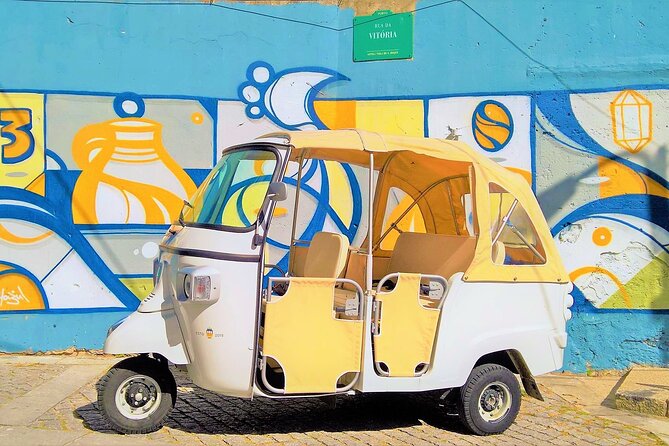
Reviewed · TUK-TUKS
Porto Half Day Private Tuk Tuk Tour
Porto is steep, hilly, and packed with sights. A tuk tuk lets you cover the old center, cross into Gaia, and reach high viewpoints without turning your first day into a workout. I especially like the Serra do Pilar overlook and the chance to shape the route around your interests.
I also like the small vehicle, which can slip through streets that defeat a bus, and the personal guidance from drivers such as Ana, Fabio, Gabi, Rafael, and Bernardo. The main caution is consistency: some bookings have been shortened, shared with another couple, or delivered with less commentary than expected.
In This Review
- Key points to know before booking
- What this 3.5-hour Porto tuk tuk tour is really for
- Starting near Porto Cathedral and the old Romanesque wall
- Serra do Pilar gives you the best wide-angle view
- Dom Luís I Bridge connects two different cities
- Gold-covered churches and Porto’s grand interiors
- Clérigos, Cordoaria, and the old prison
- Livraria Lello and the limits of a ten-minute stop
- Palácio da Bolsa, Infante Square, and old iron architecture
- Crystal Palace Gardens and the Douro views
- Alfândega, Carmelitas, and the route’s visual variety
- What the tuk tuk feels like on Porto’s hills
- Private, flexible, and not always consistent
- Is the $83.48 price fair?
- Who should book this Porto tuk tuk tour?
- Should you book it?
- FAQ
- Where does the Porto tuk tuk tour start?
- Where does the tour finish?
- How long does the tour last?
- Is the tour private?
- How many people fit in one tuk tuk?
- Is a guide included?
- Is wine tasting included?
- Are entrance tickets included?
- What is the cancellation policy?
Key points to know before booking
- See Porto and Gaia in one outing: The route crosses the Dom Luís I Bridge and reaches views over both sides of the Douro.
- A useful first-day tour: You can get your bearings, mark places to revisit, and ask for restaurant suggestions.
- Short stops, many sights: Most stops last only five to 20 minutes, so this is a survey tour rather than a series of full monument visits.
- Private does not always mean private in practice: The advertised format is for your group alone, but several bookings were combined with another couple.
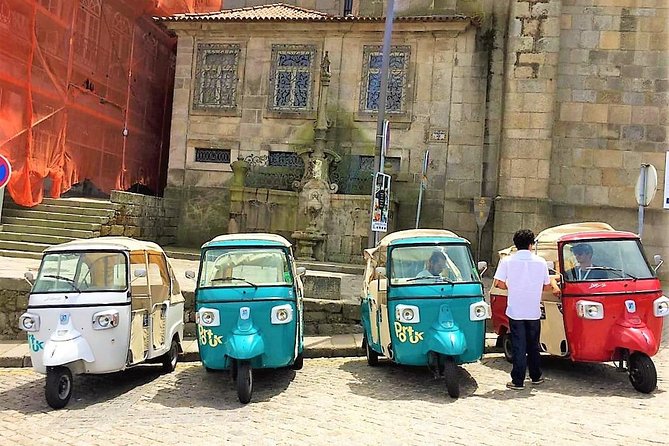
- The canopy can limit views: Plastic side and roof panels may be cloudy or obstructed, especially in rain.
- Wine tasting is included: Confirm it at the start, since some experiences did not include the promised tasting.
What this 3.5-hour Porto tuk tuk tour is really for
This is best understood as a fast orientation ride. In roughly three and a half hours, you pass major churches, gardens, monuments, bridges, markets, and viewpoints on both sides of the river.
You are not getting a deep visit inside each sight. The schedule includes brief photo stops at places such as Clérigos Tower, Carmo Church, and Livraria Lello, while other landmarks may be explained from the seat of the tuk tuk. That tradeoff makes sense if you have limited time, mobility concerns, or a first morning free before exploring on foot.
The private format should also make the tour flexible. You can ask to spend more time on churches, views, neighborhoods, food, or Gaia. Guides have adjusted routes for people who had already seen the central churches, taking them toward Foz and the Atlantic instead.
The experience costs $83.48 per person. That is a fair price for a genuinely private ride with a strong guide, but it is less appealing if the vehicle is shared or the commentary is thin. Since the route covers so much ground, the guide’s skill matters more than the tuk tuk itself.
More tuk tuk rides around Porto:
- Porto: Guided Tour by Tuk-Tuk & Optional Douro River Cruise
★ 4.5 · 5,980 reviews - Discover Porto’s Highlights on a 2-Hour Private Electric Tuk Tuk
★ 4.5 · 1,860 reviews - Historic Porto by Private Electric Tuk Tuk to Top Landmarks
★ 4.5 · 735 reviews
Starting near Porto Cathedral and the old Romanesque wall
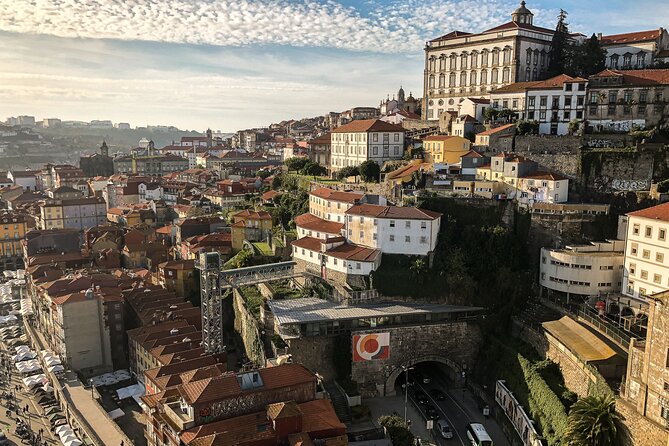
The meeting point is at R. de Augusto Rosa 180, close to the cathedral area. The opening section places you among Porto’s oldest streets and remnants of its medieval defenses.
One early stop is the old Romanesque wall, built in the 12th century to mark the city’s administrative and urban limits. Only important remains survive, but they help explain why Porto’s historic center feels compact and tightly built.
The route also includes the Carlos Alberto Theatre, a handsome early 20th-century building designed by Marques da Silva. Its façade uses Luís XVI influences and symbolic emblems linked with pain, quality, hate, and love. You may pass it quickly, but it is a good example of how Porto mixes medieval remains with later civic buildings.
This part of the route is more useful as spoken context than as a formal visit. Streets are narrow, and you may spend more time looking up at façades than getting out.
Serra do Pilar gives you the best wide-angle view
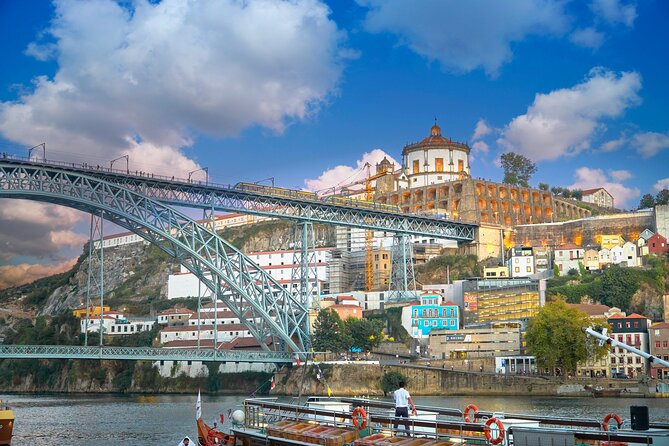
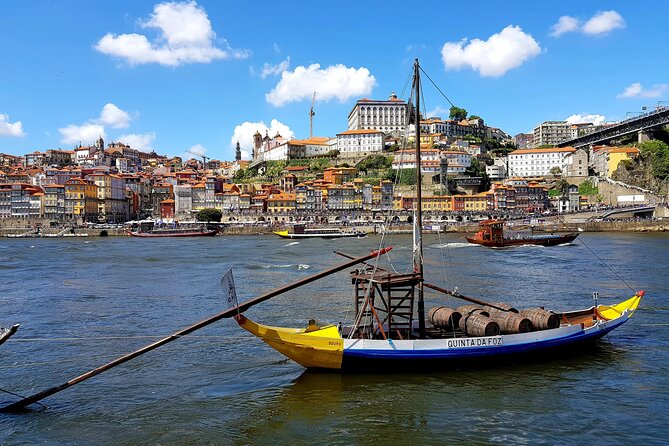
The 15-minute stop at Mosteiro da Serra do Pilar is one of the tour’s strongest moments. The monastery sits above Vila Nova de Gaia, giving you a broad view across the Douro toward Porto’s cathedral, the Dom Luís I Bridge, the historic center, Fontainhas, and the São João Bridge.
The monastery began in 1538 and took more than a century to finish. Its circular church and circular cloister are unusual, with the cloister formed by 36 Ionic columns. The site later served as a base for the liberal army during Portugal’s Civil War from 1832 to 1834, and restoration followed years of damage and neglect.
You normally have about 15 minutes here, enough for photographs and a quick look around. If views matter most to you, tell the guide early. This is the kind of stop where a few extra minutes can be more rewarding than rushing through another church façade.
Dom Luís I Bridge connects two different cities
The Dom Luís I Bridge is one of Porto’s defining sights. Designed by Teófilo Seyrig, a disciple of Eiffel, it opened in 1886 with two overlapping iron decks.
The bridge is 395 meters long and 8 meters wide. Its great forged-iron arch remains a major engineering feature, while the upper deck now carries Porto’s Metro between Porto Cathedral, Jardim do Morro, and Avenida da República in Gaia.
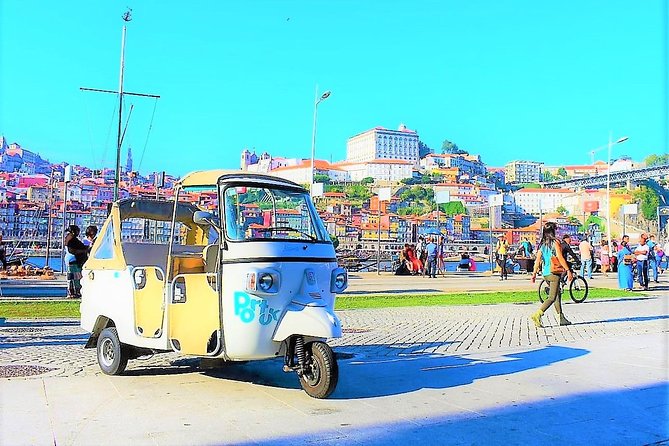
Crossing the bridge by tuk tuk gives you a quick sense of the relationship between Porto and Gaia. Porto rises on one side, while Gaia opens toward the port wine lodges and riverfront on the other. The tour does not replace a walk across the bridge, but it saves time and puts the city’s shape into focus.
A few more Porto outings to weigh up
- Porto Guided Tour to the Historical Center on a Tuk Tuk
★ 4.5 · 418 reviews - Porto: Private Sightseeing Tour by Electric Tuk Tuk
★ 4.8 · 305 reviews - Oporto Tuk-Tuk Tour: Fast, Fun & Flexible – 1H to Full Day!
★ 4.7 · 280 reviews - Porto Tuk Tuk: Clérigos, Seaside & Viewpoints – with Options
★ 5.0 · 202 reviews
Gold-covered churches and Porto’s grand interiors
The itinerary includes several important churches, but the short timing means you should decide which interiors matter most to you.
Igreja de São Francisco is Porto’s great Gothic church with a famously lavish Baroque interior. Its gilded wood carving earned it the nickname Church of Gold. The Tree of Jesse and catacombs are key details, though a full visit requires more time than this tour generally allows.
Igreja dos Carmelitas, a 17th-century church, has a classical façade and a Porto rococo altarpiece. Nearby Igreja do Carmo is especially recognizable for its side wall covered in blue-and-white tiles, added in 1912. The tile panels show scenes connected with the devotion to Nossa Senhora.
These churches are close to one another, making the tuk tuk useful for seeing their exteriors without navigating Porto’s hills. If you want to study the carvings or tile work, note the location and return later on foot.
Clérigos, Cordoaria, and the old prison
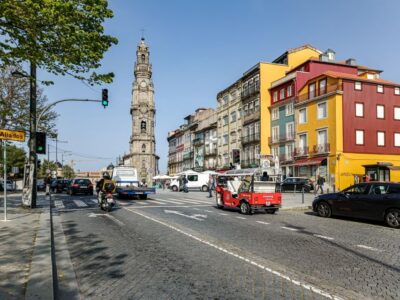
The Clérigos area is one of Porto’s busiest sightseeing zones. Clérigos Tower rises above the city and can be seen from many points. The planned stop is about 10 minutes, and admission is not included, so the usual experience is an exterior view rather than a climb.
Nearby Jardim de João Chagas, better known as Cordoaria Garden, offers a short green pause. Rope makers once worked here for about 200 years, and the public garden was created in the 19th century. It contains statues and modern works, including sculptures by Juan Muñoz.
The former Cadeia da Relação adds a darker note. This granite building began in 1582 and was rebuilt in the 18th century. Its 103 windows once looked onto a prison, and figures such as writer Camilo Castelo Branco and the bandit Zé do Telhado were held here. Today it houses the Portuguese Centre for Photography.
The prison’s shape and window pattern are easy to appreciate from outside. The building also shows how Porto reuses old structures rather than treating them as frozen relics.
Livraria Lello and the limits of a ten-minute stop
Livraria Lello is one of Porto’s most famous interiors. Opened in 1906, it combines an Art Nouveau exterior with Neo-Gothic details, painted plaster that resembles wood, a dramatic red staircase, and a large stained-glass skylight carrying the library’s motto.
The listed stop lasts about 10 minutes, and admission is not included. That is the key practical point. You may see the façade and receive an explanation, but do not assume you will have time for a relaxed bookstore visit. If Lello is high on your list, return separately and allow time for entry and browsing.
The same advice applies to Clérigos Tower, São Francisco Church, and the Palácio da Bolsa. The tuk tuk can show you where they are and why they matter, but a short city tour cannot give each one the attention it deserves.
Palácio da Bolsa, Infante Square, and old iron architecture
The Palácio da Bolsa is a National Monument and the headquarters of Porto’s Commercial Association. Built in a neoclassical style from 1842, it is best known for the ornate Arabian Room.
The palace is part of Porto’s Urban Wine Route, which fits the tour’s broader link between city history and the Douro wine trade. A side entrance provides access for people with reduced mobility, though you should confirm practical arrangements when booking if this matters to your group.
Nearby Infante Square has existed since 1885 and is framed by the Palácio da Bolsa and Mercado Ferreira Borges. Its monument to Infante D. Henrique celebrates Portuguese navigation and faith.
Mercado Ferreira Borges is a fine example of Porto’s iron architecture. Built in 1885 to replace an older market, it had a short life as a market before changing uses. It now houses Hard Club, an entertainment venue. The contrast between its iron structure and the heavy stone buildings nearby gives this short stop real visual interest.
Crystal Palace Gardens and the Douro views
Jardins do Palácio de Cristal is scheduled for about 20 minutes, the longest named stop on the route. It is a patchwork of smaller gardens with lawns, paths, fountains, sculptures, magnolias, camellias, cypress trees, and olive trees.
The gardens also provide views toward Porto and the Douro. I would use this stop to slow the pace, take photographs, and ask your guide about neighborhoods visible from the paths.
A few people have found that the tour spent too much time at markets and too little time at Crystal Palace Gardens. If this is a priority, say so before the tuk tuk leaves the meeting point. The advertised route is adjustable, but the tour has many sights competing for the same three and a half hours.
Alfândega, Carmelitas, and the route’s visual variety
The Alfândega Nova building sits beside the Douro and once served as a customs house. Its 19th-century design combines iron with stone, brick, and wood. After restoration guided by architect Eduardo Souto de Moura, it became home to the Museum of Transport and Communications, along with a congress center.
This is a good drive-by landmark because its river façade, industrial structure, and later cultural use tell several stories at once. You may not have time to enter the museum, but the guide can point out why the building matters.
The route then returns to the central area around Igreja dos Carmelitas, Fonte dos Leões, Cordoaria Garden, and the university district. Fonte dos Leões is a 19th-century French-made fountain, cast by the Val d’Osne foundry and based largely on a fountain in Leicester, England.
These smaller details are where a good guide earns the fee. Guides such as Ana, Fabio, Gabi, Rafael, and Bernardo have been singled out for clear explanations, local suggestions, and willingness to answer questions. Still, the level of commentary can vary, and some rides have felt more like transport between photo stops.
What the tuk tuk feels like on Porto’s hills
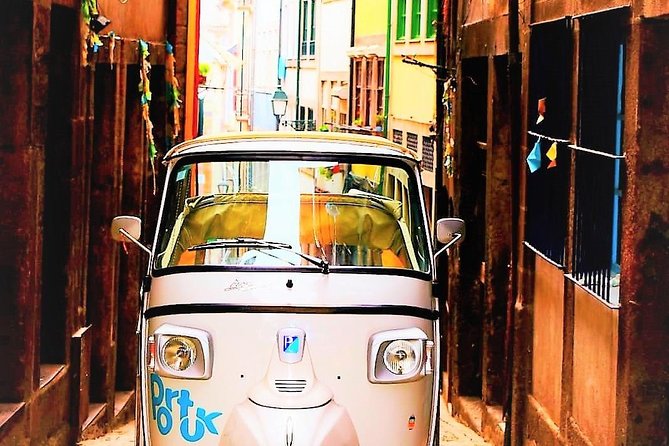
The tuk tuk is practical in a city where steep streets can make a short distance tiring. It can use narrow lanes that larger vehicles cannot, and skilled drivers have handled traffic, construction, and tight turns while keeping the group moving.
The ride is open-sided but covered. In bright weather, that protects you from the sun. In rain, the plastic panels help keep you dry, but they can also cloud the view and make it harder to look upward at churches and towers.
Communication is another practical concern. You are listening while the vehicle is moving, sometimes beside traffic, so ask the guide to repeat anything you miss. A few rides have suffered from poor sound or explanations that were difficult to hear.
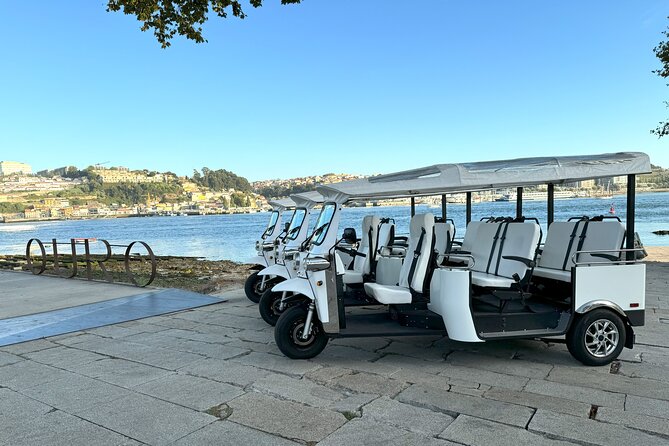
Each tuk tuk holds two, three, or four adults of average height, with a stated limit of up to 75 kilograms per person. Larger groups use multiple vehicles and travel together. Children must be accompanied by an adult, and service animals are allowed.
Private, flexible, and not always consistent
The tour is sold as a private activity, meaning only your group should participate. That is valuable for families and couples who want to ask questions, change the balance of stops, or avoid a large bus.
However, several bookings were combined with another couple because of overbooking. In those cases, the guide remained pleasant, but the experience no longer matched the price or the private promise. If privacy is essential, confirm the arrangement before departure and keep any communication about it in writing.
There are also reports of late arrivals, tours ending well before the promised duration, missed wine tastings, and routes that skipped requested stops. These are not small details. They affect the value of an $83.48-per-person booking.
At its best, the guide makes the difference. Ana has been praised for clear English and strong knowledge of Porto. Gabi has adjusted stops to match personal interests and helped with photographs. Fabio has mixed history with practical restaurant advice, while Bernardo has focused on neighborhoods, food, and local life. Names and assignments can change, so treat these as examples rather than a guarantee.
Is the $83.48 price fair?
The price works if you receive the full private ride, a capable English-speaking guide, the stated wine tasting, and the broad route through Porto and Gaia. You are paying for time saved, hill-climbing avoided, and access to a local person who can help you plan the rest of your stay.
It is weaker value if you mainly want admission to monuments. Entry to Clérigos Tower, Igreja do Carmo, Livraria Lello, and other attractions is not included, and the short stops leave little time for interiors.
I would book it early in a short Porto visit, ideally for the first morning. The activity is commonly reserved well ahead, with an average booking lead time of 49 days. Use it to learn the city’s layout, then return to two or three favorite places independently.
Free cancellation is available up to 24 hours before the start time. Changes or cancellations inside that window are not accepted for a refund, and poor weather may lead to a new date or a full refund.
Who should book this Porto tuk tuk tour?
I would choose this for a first visit, a short stay, families, and anyone who wants to cover both Porto and Gaia without spending the day climbing hills. It also suits people who value conversation and can tell the guide clearly what they want to see.
I would be more cautious if you want long monument visits, perfect privacy, or a highly structured history lecture. You should also think twice in bad weather, when the canopy may block views and the ride may feel less comfortable.
Should you book it?
Book this tour if your goal is to see the shape of Porto quickly, enjoy big river views, and get useful ideas for the rest of your stay. Ask at the start for the full duration, private vehicle, wine tasting, and your top two priorities.
Skip it if your main aim is to explore Livraria Lello, Clérigos Tower, or Porto’s churches inside. For that, walking with separate admission time will give you more depth and better value.
The best version of this experience comes with a guide who treats the route as a conversation, not a checklist. The weakest version is a rushed ride with missed stops. That gap is why I would book only after confirming the details and making your priorities plain.
FAQ
Where does the Porto tuk tuk tour start?
It starts at R. de Augusto Rosa 180, 4000-528 Porto, Portugal.
Where does the tour finish?
The activity ends back at the meeting point.
How long does the tour last?
The tour lasts approximately three hours and 30 minutes.
Is the tour private?
It is advertised as a private activity for your group only. However, some bookings were combined with another couple because of overbooking, so confirm this before departure if privacy is important.
How many people fit in one tuk tuk?
Each tuk tuk holds two, three, or four adults of average height, with a stated limit of up to 75 kilograms per person.
Is a guide included?
Yes. The experience includes a driver-guide, live commentary on board, and a local guide. It is offered in English.
Is wine tasting included?
Yes, wine tasting is listed as an inclusion. Some bookings did not receive it, so confirm the plan with your guide at the beginning.
Are entrance tickets included?
No. Admission is not included for stops such as Clérigos Tower, Igreja do Carmo, and Livraria Lello. Several other listed stops are free to visit from outside.
What is the cancellation policy?
You can cancel up to 24 hours before the start time for a full refund. Cancellations or changes made less than 24 hours before the start time are not refunded, and poor weather may lead to a different date or a full refund.
Latest reviews around Porto
- Private Walking Tour, highlights and secrets of Porto★ 3.9 · 3 reviews
- Private Porto Half-Day Tour – Wine Cellars & Cheese Tasting★ 5.0 · 3 reviews
- Portuguese Wine Tasting w Local Cheese & Cold Cuts pairing★ 5.0 · 3 reviews
- From Peso da Régua: Visit 3 wineries, tasting and viewpoint★ 5.0 · 3 reviews
- Porto: Full-Day All-Inclusive Private City Sightseeing Tour★ 4.3 · 3 reviews
- Small Painting Group with a Local Artist in Porto★ 5.0 · 3 reviews
- From Arouca: Paiva River Rafting Adventure – Adventure Tour★ 5.0 · 3 reviews
- Private Tour to Santiago de Compostela and its stunning Cathedral★ 5.0 · 3 reviews
Tuk-Tuks, compared.
Porto: Guided Tour by Tuk-Tuk & Optional Douro River Cruise
Read our review →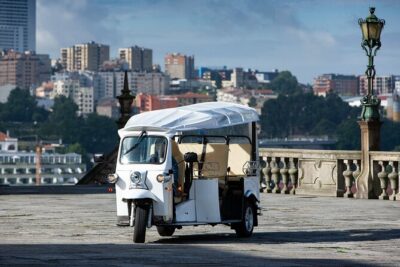
Discover Porto’s Highlights on a 2-Hour Private Electric Tuk Tuk
Read our review →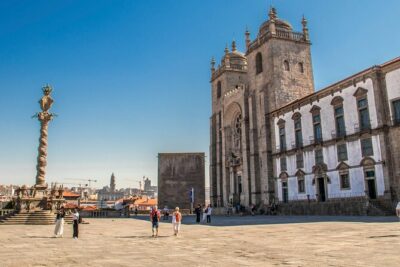
Historic Porto by Private Electric Tuk Tuk to Top Landmarks
Read our review →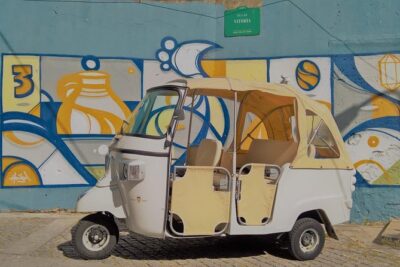
Porto Guided Tour to the Historical Center on a Tuk Tuk
Read our review →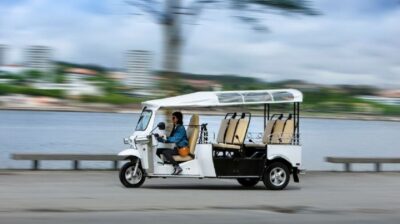
Porto: Private Sightseeing Tour by Electric Tuk Tuk
Read our review →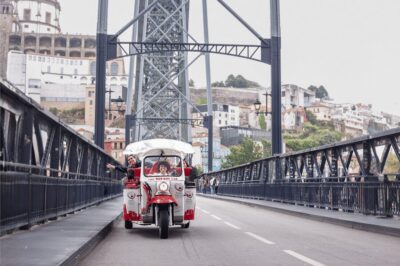
Oporto Tuk-Tuk Tour: Fast, Fun & Flexible – 1H to Full Day!
Read our review →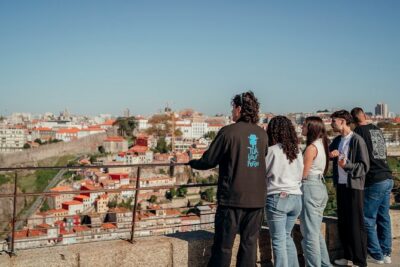
Porto Tuk Tuk: Clérigos, Seaside & Viewpoints – with Options
Read our review →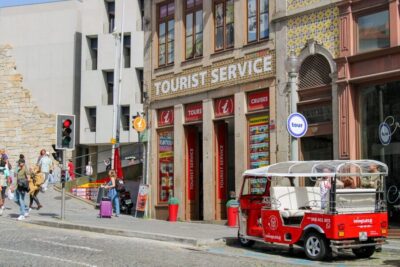
Porto: Tuk-Tuk Tour, Douro River Cruise, and Wine Tasting
Read our review →Browse the lists this tour appears in