
Reviewed · HISTORICAL TOURS
Porto: Historical Center Walking Tour
Porto’s old center makes the most sense on foot, and this tour gives you the city’s full shape in one steady walk. You begin beside the Sé Cathedral, wind down through steep lanes to Ribeira, then loop back past major monuments, the old defensive wall, and São Bento Station.
I like the clear route from hilltop to river, which helps you understand Porto instead of collecting disconnected sights. I also like the guide-led history, especially with Lucas, whose lively stories and local tips have earned repeated praise. The main drawback is the terrain: steep streets, stairs, and uneven paving make this a poor fit for anyone with limited mobility.
In This Review
- Key points to know before you book
- Why this Porto walk works as a first introduction
- Starting at Vímara Peres beside Sé Cathedral
- Down through Ribeira’s lanes and stairways
- Bolsa Palace and Porto’s trading power
- Vitória, the old wall, and the Jewish quarter
- Clérigos and Lello in the Cordoaria area
- Aliados and the changing face of central Porto
- São Bento Station, the tour’s longest stop
- What the guides add to the experience
- Is $32 a fair price for 2.5 hours?
- Who should book this walking tour?
- Should you book Porto’s Historical Center Walking Tour?
- FAQ
- How long does the Porto Historical Center Walking Tour last?
- How much does the walking tour cost?
- Where does the tour meet?
- Where does the tour finish?
- Which languages are available?
- Is a local guide included?
- Does the tour include entrance tickets to the sights?
- Is the tour suitable for people with mobility impairments?
Key points to know before you book
- The route covers Porto’s main historic spine: Sé Cathedral, Ribeira, Bolsa Palace, Clérigos, Lello, Aliados, and São Bento all fit into one walk.
- You get a useful city orientation: Starting high by the cathedral and reaching the river shows you how Porto’s neighborhoods connect.
- Lucas is the guide most often named: He is praised for clear explanations, local anecdotes, a friendly manner, and adapting the walk to different interests.
- The pace is steady but not effortless: Expect slopes, stairways, and cobblestones, so comfortable shoes matter.
- The tour costs $32 per person: That is fair if you want context and orientation, rather than only a list of photo stops.
- English and Spanish are available: The walk lasts 2.5 hours and includes a local guide.
Why this Porto walk works as a first introduction
Porto’s center is compact on a map but tricky underfoot. The city rises sharply from the Douro River, and its best-known sights are spread between the cathedral hill, the riverside Ribeira district, and the central Cordoaria and Aliados areas.
This route handles that geography well. You start near the top, descend toward the river, then climb and loop through the center before finishing where you began. I like this order because it gives you a mental map early in your visit. Afterward, you can decide which places deserve a longer return visit.
The guide-led format adds the missing links. You are not simply told that a building is old or attractive. The walk connects Porto’s religious power, trade, defensive walls, Jewish heritage, court buildings, churches, and railway history.
The historical center has been protected as a UNESCO World Heritage site since 1996. That label matters here because the appeal is not one isolated monument. It is the way churches, lanes, stairways, palaces, shops, and river views fit together.
More history walks near Porto:
- Douro Valley: Historical Sites, Wine Experience, Lunch & Cruise
★ 5.0 · 5,133 reviews - Porto: Historic City Center Walking Tour
★ 4.7 · 1,172 reviews - Porto: An Intimate Fado Show in a Historical Tavern
★ 4.8 · 1,093 reviews
Starting at Vímara Peres beside Sé Cathedral
The meeting point is next to the statue of Vímara Peres near Porto Cathedral. This is a sensible place to begin because the cathedral area gives you an immediate view of Porto’s upper city and its long religious role.
You will want to arrive with a little time to identify the guide. One person specifically noted that finding Lucas would have been easier if he had carried a sign. That is a small but useful warning: check the exact meeting instructions and look around the statue rather than waiting at the cathedral entrance.
The cathedral visit lasts about 15 minutes with the guide. That is enough for an introduction to the building and its place in Portugal’s religious story, but not enough for a slow architectural study. If you want extended time inside, plan to return independently.
The cathedral area also sets up the tour’s main physical challenge. From here, Porto begins to reveal its vertical character. You will soon be heading down through lanes and steps, so this is the point to adjust your shoes, water, and camera strap.
Down through Ribeira’s lanes and stairways
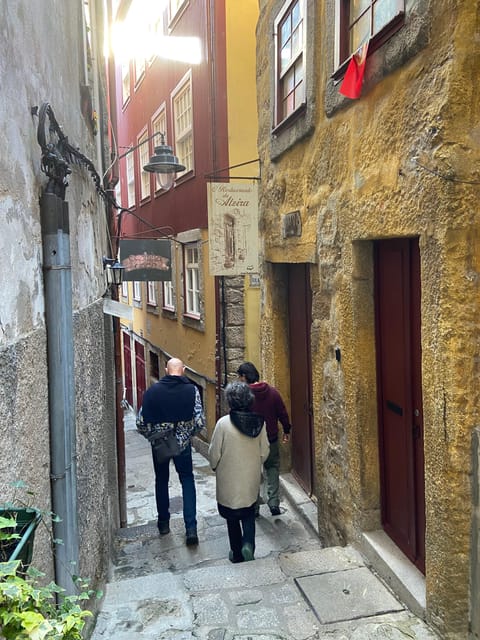
The walk continues into Ribeira, Porto’s old riverside trading neighborhood. The descent is one of the most satisfying parts of the route because you move from the cathedral’s high position into the tightly packed streets below.
Here, the route is less about one polished monument and more about how the old city functions as a place. Alleys, stairways, and changing views help explain the link between the river and the upper neighborhoods.
The guided stop in Ribeira is listed at about 15 minutes. That is a short visit, but the walk itself gives you more time to absorb the district as you move through it. You will not be spending the whole tour beside the river, so return later if you want a meal, a longer stroll, or more relaxed photographs.
Ribeira can also be the most demanding section for anyone who dislikes slopes or stairs. The tour is not suitable for people with mobility impairments, and that limitation should be taken seriously. Porto’s old center is beautiful partly because it has not been flattened into an easy grid.
Bolsa Palace and Porto’s trading power
From Ribeira, the route turns toward the Palace of the Stock Exchange, known locally as Palácio da Bolsa. The stop lasts about 15 minutes and places Porto’s commercial past beside its religious and residential quarters.
This is a valuable contrast. The cathedral shows ecclesiastical authority, while the Stock Exchange Palace points to merchants, business, and the port city’s outward connections. A guide can make that shift easier to understand than a quick look at the facade can.
The tour does not promise a full interior visit or an extended palace tour. Treat this stop as historical orientation and an exterior focus unless your guide confirms otherwise. If the building is high on your personal list, check whether you need a separate admission and return visit.
More walking tours in Porto:
- Porto Walking Tour, Lello Bookshop, River Cruise and Cable Car
★ 5.0 · 3,354 reviews - Experience Porto’s Charm: 3-Hour Guided Walking Tour
★ 5.0 · 2,432 reviews - Porto: 3-Hour Guided City Highlights Walking Tour
★ 4.8 · 2,050 reviews - Porto: Wine Tasting with Tapas Walking Tour
★ 4.4 · 1,541 reviews
Vitória, the old wall, and the Jewish quarter
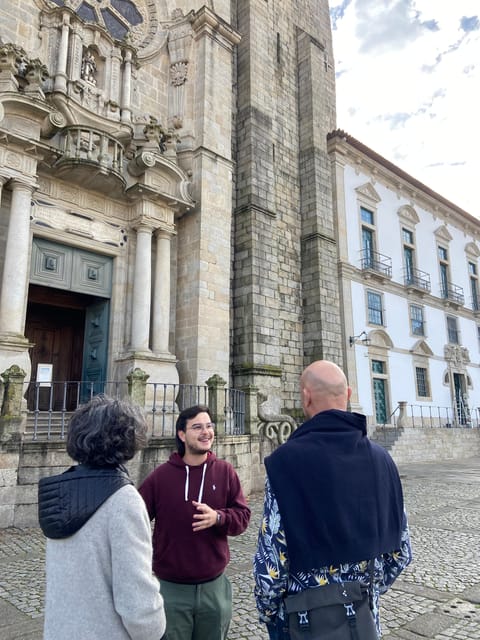
The walk then heads through Vitória, part of the upper historic center. The route follows the path of the 14th-century defensive wall as it loops around the old city.
This section is where the tour’s promise of a complete layout becomes most useful. You see that Porto was not built as a neat set of attractions. Its streets reflect defense, trade, worship, and the need to move up and down a steep hillside.
The route also includes the climb toward the former Jewish quarter of Juderia do Olival. That adds an important layer to the city’s story. The tour begins with Portugal’s Judeo-Christian framework, then widens the picture by pointing to the communities and traditions that shaped Porto over time.
The details here depend heavily on the guide. Lucas is repeatedly praised for explaining different periods of Porto and Portugal, using anecdotes rather than giving only dates. That matters in a neighborhood where the physical remains may be less obvious than at a cathedral or tower.
Clérigos and Lello in the Cordoaria area
Clérigos Church is another 15-minute guided stop. The church and its tower are among Porto’s most recognizable landmarks, and the Cordoaria area gathers several major sights within a relatively small part of the center.
You should know that this is a guided stop, not a tower climb. The tour information does not include tower admission or time to climb it. If you want the high view from Clérigos Tower, arrange that separately.
Nearby, Livraria Lello and Irmão receives its own 15-minute explanation. The famous bookshop is one of Porto’s most sought-after sights, so this brief stop can help you understand where it fits in the city rather than treating it as the entire point of the neighborhood.
Again, do not assume that this walking tour includes entry. The supplied details identify a guided stop but do not list admission to Lello. If you want to go inside, check the bookshop’s current entry rules and allow extra time outside the tour.
This part of the walk may feel busy, especially around the best-known monuments. The benefit of having a guide is that you can focus on the story and the surrounding streets instead of spending the whole time navigating from one famous facade to the next.
Aliados and the changing face of central Porto
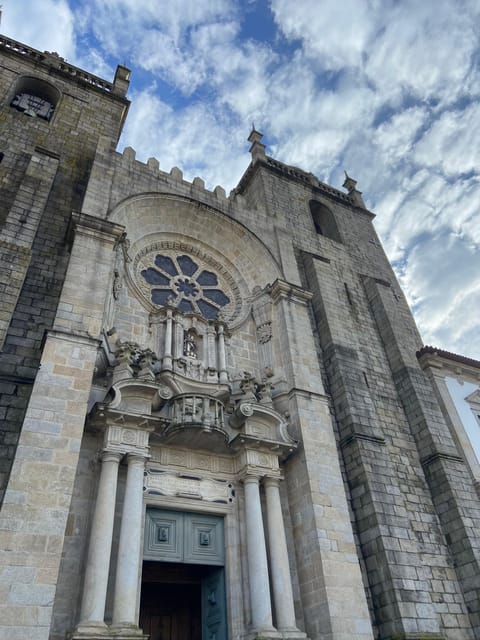
Avenida dos Aliados is the next major stop. This broad central avenue gives you a different Porto from the cramped streets of Ribeira and Vitória.
The contrast is useful. After seeing the medieval and early modern texture of the old center, you reach a more formal civic space shaped by grand buildings and modern urban planning. The guided stop lasts about 15 minutes, enough to place the avenue within the wider development of the city.
I like this part because it prevents the tour from becoming a narrow medieval walk. Porto’s identity also includes its later civic center, public buildings, and grand urban axis. You get a better sense of how the historic center expanded and changed.
São Bento Station, the tour’s longest stop
São Bento Station receives about 30 minutes, the longest single stop on the route. That extra time makes sense. The station is not simply a transport point, but one of Porto’s most important public interiors.
The tour gives you time to look closely and hear the guide explain why the station matters. If you are interested in tilework, architecture, or the way Portugal uses public spaces to tell national stories, this is likely to be one of the strongest sections.
The station also makes a practical stop in the middle of a walking tour. You can pause, regroup, and take in a major sight without rushing through it in five minutes. Even so, the exact depth of the explanation will depend on the group and the guide.
The route finishes by returning toward the cathedral area and the Bishop’s Palace. The palace, or Paço Episcopal, receives a final 15-minute guided stop. Its position near Sé helps bring the walk back to where it started, while reinforcing the role of church authority in Porto’s old upper city.
What the guides add to the experience
The strongest praise centers on Lucas. He is described as personable, passionate, entertaining, and able to answer questions across several periods of Porto’s history. He also adapts the tour to interests, which is useful when one person wants architecture and another wants local life or political history.
Several comments point to a steady pace. That is important in Porto, where a route can become tiring if the guide treats every slope like a race. Lucas is also credited with making history feel alive through anecdotes and clear explanations.
Local advice is another advantage. Lucas has suggested restaurants and places to visit, and one person received a recommendation for port wine from smaller producers. Ask for this kind of advice during the walk, while the neighborhoods and your preferences are fresh in the conversation.
Andreia is also identified as a guide and is praised for explaining clearly. The booking information lists English and Spanish, so confirm your preferred language when choosing a time.
One small practical issue remains: the meeting point may be harder to spot without a sign. That is easy to manage, but it is worth knowing before you arrive.
Is $32 a fair price for 2.5 hours?
At $32 per person, this tour makes sense if you value explanation, orientation, and a local point of view. You are paying for a 2.5-hour guided walk that connects many of Porto’s main sights, rather than for transport or entrance tickets.
The price is less attractive if you only want to see the exteriors quickly or plan to visit every interior independently. The tour does not list admission to the cathedral, Lello, Clérigos Tower, or Bolsa Palace as included, so budget separately for any places you want to enter at length.
For a first day in Porto, I think the value is solid. You cover a wide area, learn how the hill and river districts connect, and collect practical suggestions for later. The route can save you from spending your first hours wandering without a plan.
The booking terms also reduce risk. You can cancel up to 24 hours in advance for a full refund, and you can reserve while paying later. Starting times depend on availability.
Who should book this walking tour?
I would choose this for a first visit, especially if you want a history-led introduction before exploring Porto on your own. It suits people who enjoy asking questions and prefer a local guide to a recorded audio tour.
It is also a good match for couples, families with older children, and independent visitors who want restaurant, port-wine, and sightseeing suggestions. The steady pace helps, but you still need to handle Porto’s hills and stairs.
I would skip it if you have serious mobility limits, dislike walking for 2.5 hours, or want long interior visits at each monument. This is a broad orientation walk, not a series of full museum tours.
Wear comfortable shoes and clothes. Porto’s old paving can be hard on feet, and the route’s slopes are part of the experience rather than an occasional inconvenience.
Should you book Porto’s Historical Center Walking Tour?
Book it if you want Porto to make sense quickly. The route links Sé Cathedral, Ribeira, Bolsa Palace, Vitória, Clérigos, Lello, Aliados, São Bento, and the Bishop’s Palace in one connected story.
The best reason to choose it is the combination of strong city orientation and an engaging local guide. Lucas receives the most detailed praise, while Andreia is another named guide, and both English and Spanish are offered.
Skip it if your priority is independent entry into every major monument or if steep lanes and stairs will make the walk unpleasant. For most able walkers arriving in Porto, $32 is a reasonable way to get your bearings, learn the city’s past, and leave with better ideas for the rest of your stay.
FAQ
How long does the Porto Historical Center Walking Tour last?
The tour lasts 2.5 hours.
How much does the walking tour cost?
The price is $32 per person.
Where does the tour meet?
The meeting point is next to the Vímara Peres statue near Porto Cathedral in Porto.
Where does the tour finish?
The walk returns to the Vímara Peres statue near Porto Cathedral.
Which languages are available?
The tour is offered in English and Spanish.
Is a local guide included?
Yes. A local tour guide is included. Lucas and Andreia are named guides associated with the experience.
Does the tour include entrance tickets to the sights?
Entrance tickets are not listed among the inclusions. The included services are the walking tour and local tour guide.
Is the tour suitable for people with mobility impairments?
No. The tour is not suitable for people with mobility impairments, and you should expect hills, stairways, and uneven streets in Porto’s historic center.
Latest reviews around Porto
- Private Walking Tour, highlights and secrets of Porto★ 3.9 · 3 reviews
- Private Porto Half-Day Tour – Wine Cellars & Cheese Tasting★ 5.0 · 3 reviews
- Portuguese Wine Tasting w Local Cheese & Cold Cuts pairing★ 5.0 · 3 reviews
- From Peso da Régua: Visit 3 wineries, tasting and viewpoint★ 5.0 · 3 reviews
- Porto: Full-Day All-Inclusive Private City Sightseeing Tour★ 4.3 · 3 reviews
- Small Painting Group with a Local Artist in Porto★ 5.0 · 3 reviews
- From Arouca: Paiva River Rafting Adventure – Adventure Tour★ 5.0 · 3 reviews
- Private Tour to Santiago de Compostela and its stunning Cathedral★ 5.0 · 3 reviews
Historical Tours, compared.

Douro Valley: Historical Sites, Wine Experience, Lunch & Cruise
Read our review →
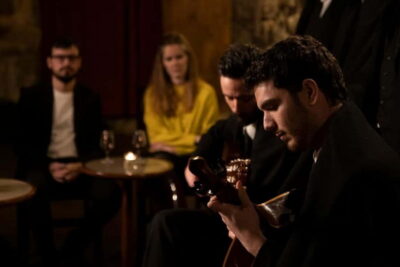
Porto: An Intimate Fado Show in a Historical Tavern
Read our review →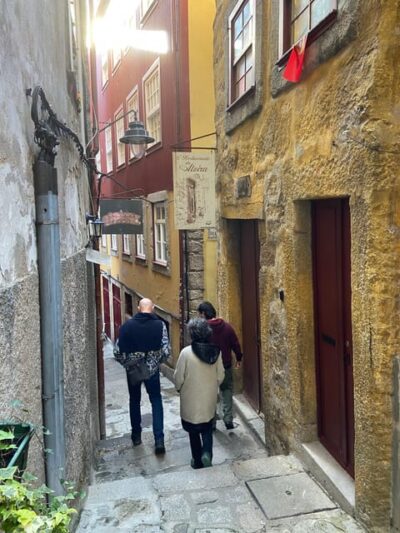
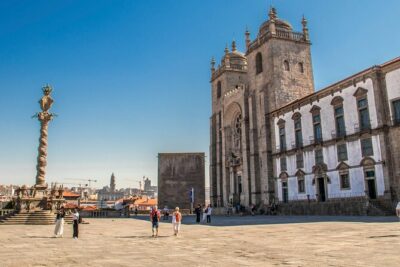
Historic Porto by Private Electric Tuk Tuk to Top Landmarks
Read our review →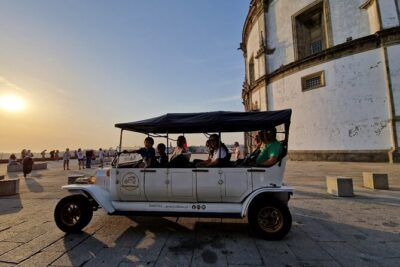
Porto:Private Tour of the Historic City in a Classic Ford T
Read our review →
Porto: Douro Valley History & Wine Tour with Cruise & Lunch
Read our review →
Porto Guided Tour to the Historical Center on a Tuk Tuk
Read our review →Browse the lists this tour appears in