
Reviewed · WALKING TOURS
Porto Walking Tour
Porto reveals itself best on foot, and this three-hour walk links the city’s major sights with its political and social story. You’ll move from the cathedral and Roman-era roots through Salazar’s dictatorship, the Napoleonic invasion, the nineteenth-century civil war, and the tiled halls of São Bento Station.
I like the small-group feel, with a maximum of 15 people and some departures described as groups of 10 or fewer. I also like the practical side: guides such as Nuno, Sid, and David explain where to eat and how to judge port, not just when to admire a church. The main drawback is the terrain. Porto’s pavements can be steep, narrow, and uneven, with cobbled streets and stairs.
In This Review
- Key points to know before you book
- Starting beside Porto Cathedral
- The old quarter and Porto’s long memory
- Clérigos Tower and Porto’s best-known skyline marker
- Cordoaria Garden, the courthouse, and Salazar’s dictatorship
- Vitória Viewpoint and the wars that shaped Porto
- Avenida da Liberdade and São Bento Station
- The port tasting and a light break
- What the guides add to the experience
- How much walking should you expect?
- Is $24.14 a fair price?
- Who should book this Porto walk?
- Cancellation and weather details
- Should you book it?
- FAQ
- Where does the Porto Walking Tour start?
- Where does the tour end?
- How long does the tour last?
- What language is the tour offered in?
- How much does the tour cost?
- Does the tour include port tasting?
- Is the tour suitable for most participants?
- How many people can join the tour?
- Are service animals allowed?
- Can I cancel for a full refund?
Key points to know before you book
- Three hours from cathedral to river: The route covers Porto’s historic core and finishes near the Douro at Ribeira Square.
- History beyond monuments: Expect discussion of Salazar’s dictatorship, the Napoleonic invasion, the Portuguese Civil War, and the city’s older traditions.
- A useful port tasting: The tasting includes guidance on how port is made, how to appreciate it, and how to check its origin and quality.
- Several experienced guides: Nuno, Sid, and David are named in the tour material, with praise for clear English, storytelling, patience, and local suggestions.
- Porto’s famous tiles get proper attention: At São Bento Station, you learn about the tile scenes, their artist, and the construction of the station.
- Plan for hills and cobbles: Wear sensible shoes and allow extra time if you walk slowly or need frequent rests.
Starting beside Porto Cathedral
The tour begins at 10:00 a.m. on Rua de São Filipe de Nery, close to the Clérigos area, while the first described sightseeing stop is Porto Cathedral. The meeting information and the sightseeing sequence are not perfectly aligned, so check the exact meeting instructions after booking.
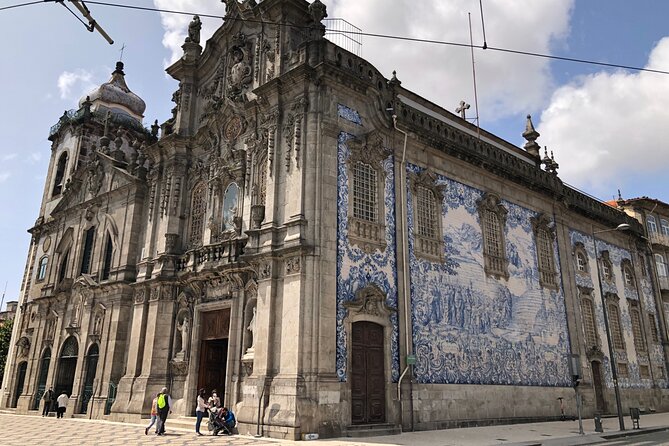
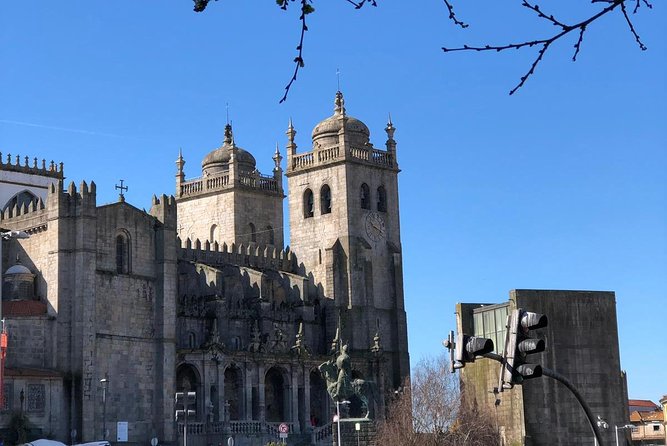
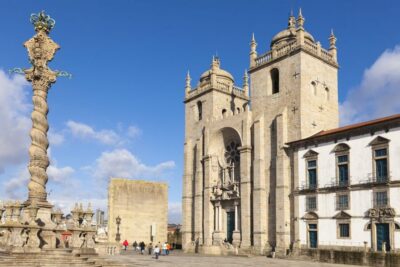
The cathedral is a strong place to begin. Here, the guide sets out the broad story of Portugal and Porto, giving you a frame for the streets that follow. You are not simply ticking off an old church. You are starting with the city’s religious power, its defensive position, and its role in the development of Porto.
The cathedral also puts you near several of the city’s most important sights. Guides have used the early part of the route to explain the Bishop’s residence, churches, and the way the Catholic Church shaped Porto’s public and political life.
That wider context is one of the best reasons to book a guided walk. On your own, you may notice different church façades, but miss why they mattered to the city. A good guide connects the buildings rather than treating each one as a separate photo stop.
More walking tours in Porto:
- Porto Walking Tour, Lello Bookshop, River Cruise and Cable Car
★ 5.0 · 3,354 reviews - Experience Porto’s Charm: 3-Hour Guided Walking Tour
★ 5.0 · 2,432 reviews - Porto: 3-Hour Guided City Highlights Walking Tour
★ 4.8 · 2,050 reviews
The old quarter and Porto’s long memory
From the cathedral, the walk enters Porto’s oldest and most traditional quarter. The focus here is on customs and daily life, from the Roman invasions to the present day.
The supplied details do not promise interior visits or a set list of streets in this part of the route. You should expect an outdoor walk through the historic center, with commentary about how traditions have survived and how the old neighborhoods have changed.
This is also where Porto’s physical character becomes obvious. Streets are narrow. Surfaces vary. Some sections rise sharply, while others involve stairs or uneven paving. The pace is described as comfortable, but comfortable does not mean flat or effortless.
I would book this early in your stay. A local guide can point out places you may want to revisit later, and the route gives you a useful mental map. Several guides also offer restaurant suggestions, including advice that can help you move beyond the most tourist-heavy dining areas along the river.
Clérigos Tower and Porto’s best-known skyline marker
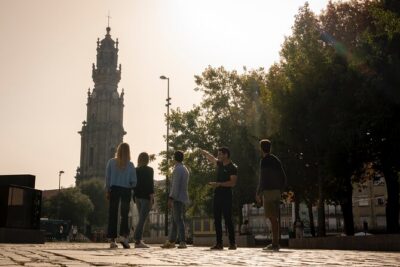
The route moves toward the Clérigos Tower, one of Porto’s defining landmarks. Some departures have begun near the tower and gone directly into the church, avoiding a line, but that should not be treated as guaranteed for every departure.
Clérigos matters because it is more than a tall bell tower. It helps orient you in the center, where streets, churches, public buildings, and commercial lanes meet. The guide uses this area to place the city’s architecture within its larger story.
The tour does not list a climb of the tower, so do not book expecting tower access. The value here is the explanation of the monument and its place in Porto, plus the surrounding streets and buildings.
This is a good example of the tour’s general approach. You get the headline sights, but the guide also explains what you are looking at. That makes a difference in a city where ornate churches, granite façades, tiled walls, and narrow lanes can otherwise blur together.
Cordoaria Garden, the courthouse, and Salazar’s dictatorship
Next comes the Jardim da Cordoaria and Porto’s courthouse. The guide discusses the dictatorship of António de Oliveira Salazar, a vital part of Portugal’s modern story.
This section gives the walk more weight than a standard photo tour. The route is not limited to medieval buildings and scenic viewpoints. It addresses political power, repression, and the way Portugal changed under a long authoritarian government.
The setting also helps you see how public spaces and official buildings fit into city life. You get a pause from the tight lanes of the old quarter, then return to the built-up historic center with a better sense of how Porto’s public institutions developed.
The subject matter is serious, but the guides are praised for being friendly, funny, and open to questions. That balance matters. You can ask about difficult parts of Portuguese history without getting a dry lecture.
A few more Porto outings to weigh up
- The Unvanquished Tour in Porto City Center
★ 5.0 · 26,497 reviews - From Porto: Douro Valley w/ Boat Tour, Wine Tasting & Lunch
★ 4.7 · 19,061 reviews - Complete Douro Valley Wine Tour with Lunch, Wine Tastings and River Cruise
★ 5.0 · 12,920 reviews - Porto: Six Bridges Cruise
★ 4.2 · 11,680 reviews
Vitória Viewpoint and the wars that shaped Porto
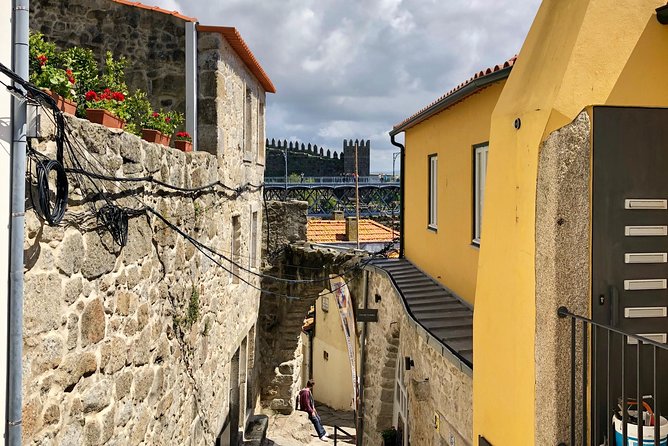
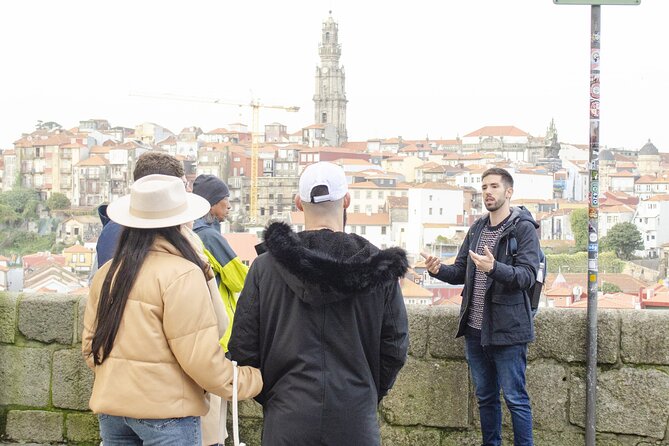
The walk then climbs to Miradouro da Vitória, one of the route’s strongest scenic stops. From here, you get a broad view over Porto and the Douro area.
The guide uses the viewpoint to discuss the Napoleonic invasion and the Portuguese Civil War of the nineteenth century. These stories become easier to follow when you can see the city’s position, its river, and the historic districts spread below you.
The climb is part of the bargain. Porto is hilly, and the viewpoint requires effort. You might find the ascent modest, or you might regard it as the hardest section of the morning, depending on your pace and mobility.
The route is suitable for most participants, but the published details do not promise a step-free experience. Service animals are allowed, and the tour is near public transportation. If hills or cobbles are a concern, contact the provider before booking and ask about the exact route on your date.
Avenida da Liberdade and São Bento Station
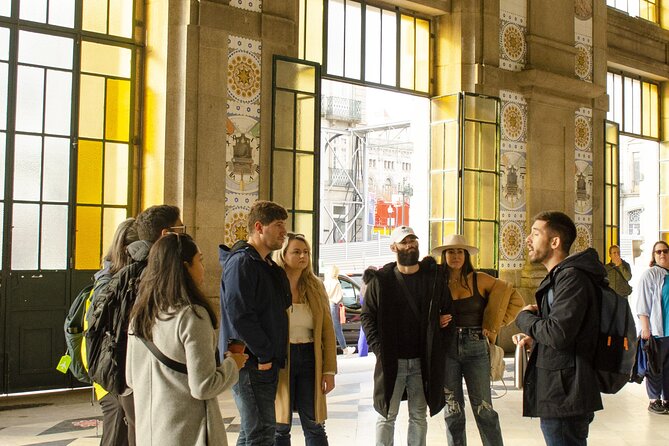
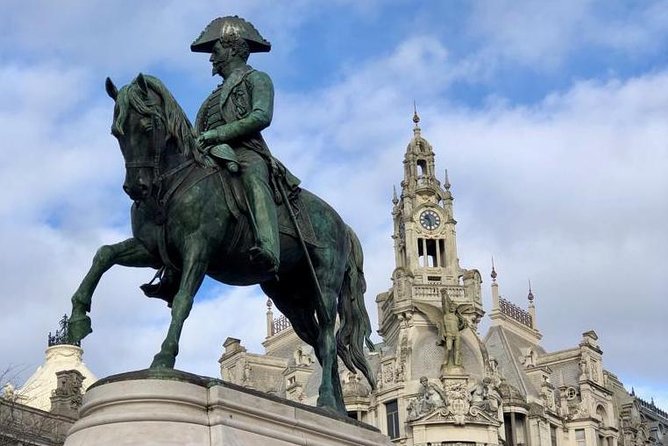
After the viewpoint, the route passes along Avenida da Liberdade and finishes inside São Bento Station according to the sightseeing description. São Bento began as a convent and is now famous as one of the world’s most beautiful railway stations.
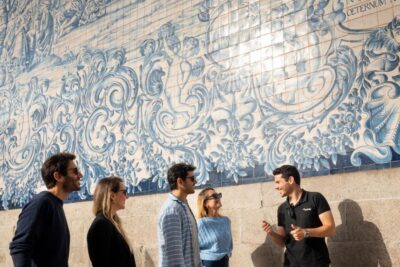
Its main attraction is the great display of blue-and-white tiles. The guide does more than point at the panels. You learn about the scenes depicted, how the artist made them, and how the station itself was built.
That extra explanation is valuable. Tilework can be admired at a glance, but the method, scale, and subject matter reward a slower look. You get help noticing details that are easy to miss when the station is crowded with commuters and people taking photographs.
The published meeting information gives Ribeira Square as the end point, next to the Douro, while the route description says the tour ends inside São Bento Station. Because those points are different, confirm the final drop-off location when you book. This matters if you have a restaurant reservation, a train to catch, or a timed visit elsewhere.
The port tasting and a light break
The experience includes a port tasting and, according to the tour details, a light snack. The tasting is not presented as a large winery visit. It is a short part of the walking tour, designed to introduce you to the drink and its place in Porto’s story.
Guides explain how port is made and how to appreciate it. You also get practical advice on checking a port’s origin and quality, which is useful if you plan to buy a bottle or order port later in your trip.
One review describes a single glass of port and a light snack. Treat that as the likely scale: a modest pause rather than a full meal or extended tasting flight. If you want a dedicated wine tour, this experience will feel too brief. If you want a cultural introduction with a well-placed drink, it adds real value.
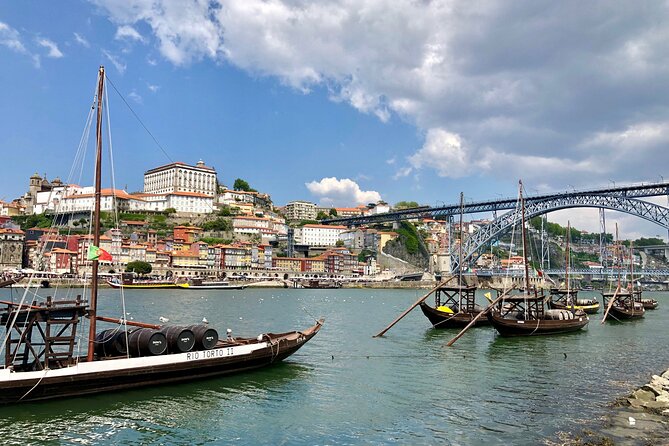
The tasting also ties the city to the Douro region and to the riverfront warehouses across the water. You do not need a specialist vocabulary to enjoy it. The guide’s role is to make the tasting less mysterious and give you a few useful habits for later.
What the guides add to the experience
The named guides include Nuno, Sid, and David. Nuno is described as funny, warm, and especially good at offering restaurant suggestions and explaining port. Sid is presented as a local with a background in history who is willing to pause for questions and let you examine places at your own pace.
David receives similar praise for storytelling, clear English, and explanations of both Porto’s past and present. He is also described as patient with families, including children aged 12 and 14.
You cannot choose a particular guide unless the company confirms it. Still, the repeated pattern is useful: this tour depends heavily on the person leading it, and the available guides are presented as engaged local storytellers rather than guides who simply recite dates.
The small maximum helps. With up to 15 people, you should have a better chance to ask questions than on a large coach excursion. Some bookings have operated with only a family or a small group, though you should not assume your departure will be private.
How much walking should you expect?
The tour lasts about three hours and covers a compact but hilly part of central Porto. Expect pavements, cobbled streets, changing gradients, and some stairs.
I would wear shoes with good grip and avoid carrying more than you need. The route is not described as strenuous, and one account calls the pace easy, but Porto’s hills can make a short distance feel longer.
Most people can participate, according to the tour information. That is a broad statement rather than a promise that the route suits every mobility level. If you need a flat route, frequent seating, or step-free access, ask before reserving.
The 10:00 a.m. start is practical. The morning gives you time to continue sightseeing afterward, and booking this as your first Porto activity can help you understand the city before exploring on your own. You may also want to return to the cathedral, Clérigos, São Bento, or the old quarter later when you have more time.
Is $24.14 a fair price?
At $24.14 per person, this is priced as an affordable introduction rather than a premium private tour. You receive about three hours of guiding, a port tasting, a light snack, and a route through many of Porto’s key historic areas.
The value is strongest if you are new to Porto and want several sights explained in one efficient morning. A self-guided walk costs less, of course, but you would need to research the dictatorship, the Napoleonic invasion, the civil war, the churches, São Bento’s tiles, and port production yourself.
You are also paying for local orientation. Restaurant advice can save you from eating only in the busiest riverfront strip, and the guide can answer questions that no sign or audio guide anticipates.
The price does not appear to include tower admission, a substantial meal, or an extended port flight. If those are your priorities, plan separate visits. For a compact history walk with a tasting, the cost is reasonable.
Who should book this Porto walk?
I would recommend it for first-time visitors, couples, solo visitors, and families with older children who want a clear introduction to the city. It also suits you if you enjoy architecture but want the politics and everyday traditions explained alongside it.
The tour works well for a short Porto stay because it covers the main center in one morning. It is also useful at the start of a longer visit, when local food suggestions and a basic sense of direction can shape the rest of your plans.
You might skip it if you strongly dislike hills, want a slow photography walk, or prefer to explore one monument in great depth. The route is broad rather than specialized, and the port stop is brief.
Book at least a day ahead if possible. The experience is often reserved about six days before the date, and confirmation may take longer when you book within 12 hours of departure. The tour is offered in English and accepts mobile tickets.
Cancellation and weather details
You can cancel for a full refund up to 24 hours before the local start time. Changes or cancellations made within 24 hours are not accepted for a refund.
Good weather is required. If poor weather cancels the experience, you are offered another date or a full refund. The tour also requires a minimum number of participants, so a cancellation for that reason brings an alternative date or experience, or a full refund.
Should you book it?
Book this Porto Walking Tour if you want a friendly, history-focused orientation with real local advice. The route brings together the cathedral, old quarter, Clérigos area, Vitória viewpoint, Avenida da Liberdade, São Bento Station, and Ribeira, while the guides add context about dictatorship, war, religion, traditions, and port.
The main question is your comfort with Porto’s hills and uncertain final meeting details. Confirm whether your departure ends at São Bento or Ribeira, wear sturdy shoes, and expect a tasting rather than a full wine excursion. For $24.14, it is a strong choice for getting your bearings fast and seeing the city as more than a collection of pretty façades.
FAQ
Where does the Porto Walking Tour start?
The listed start point is Rua de São Filipe de Nery in Porto, with a 10:00 a.m. start.
Where does the tour end?
The meeting information lists Ribeira Square, next to the Douro River, as the end point. The sightseeing description says the route finishes inside São Bento Station, so confirm the final location after booking.
How long does the tour last?
The walking tour lasts approximately three hours.
What language is the tour offered in?
The tour is offered in English.
How much does the tour cost?
The listed price is $24.14 per person.
Does the tour include port tasting?
Yes. The experience includes a port tasting, and the tour information also describes a light snack.
Is the tour suitable for most participants?
The tour information says most participants can take part. The route includes hills, cobbled streets, changing gradients, and some stairs.
How many people can join the tour?
The maximum group size is 15 participants. Some departures have operated with smaller groups, including groups of 10 or fewer.
Are service animals allowed?
Yes, service animals are allowed.
Can I cancel for a full refund?
Yes. You can cancel at least 24 hours before the experience start time for a full refund. Cancellations made less than 24 hours before the start time are not refunded.
Latest reviews around Porto
- Private Walking Tour, highlights and secrets of Porto★ 3.9 · 3 reviews
- Private Porto Half-Day Tour – Wine Cellars & Cheese Tasting★ 5.0 · 3 reviews
- Portuguese Wine Tasting w Local Cheese & Cold Cuts pairing★ 5.0 · 3 reviews
- From Peso da Régua: Visit 3 wineries, tasting and viewpoint★ 5.0 · 3 reviews
- Porto: Full-Day All-Inclusive Private City Sightseeing Tour★ 4.3 · 3 reviews
- Small Painting Group with a Local Artist in Porto★ 5.0 · 3 reviews
- From Arouca: Paiva River Rafting Adventure – Adventure Tour★ 5.0 · 3 reviews
- Private Tour to Santiago de Compostela and its stunning Cathedral★ 5.0 · 3 reviews
Walking Tours, compared.
Porto Walking Tour, Lello Bookshop, River Cruise and Cable Car
Read our review →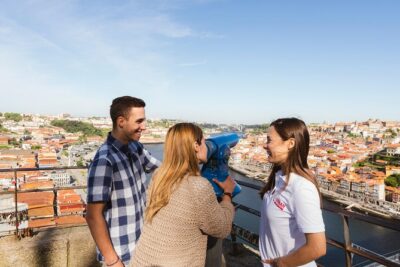
Experience Porto’s Charm: 3-Hour Guided Walking Tour
Read our review →
Porto: 3-Hour Guided City Highlights Walking Tour
Read our review →

Porto: Walking Tour, Lello Bookshop, Boat and Cable Car
Read our review →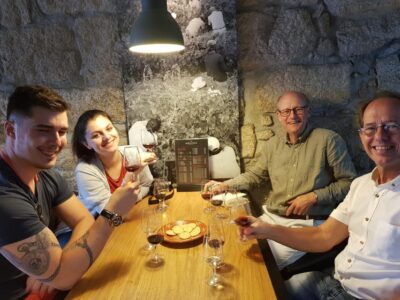
Porto: Port and Douro Wine Walking Tour with 9 Tastings
Read our review →Browse the lists this tour appears in