
Reviewed · WALKING TOURS
Small-group Porto’s Roots Walking Tour
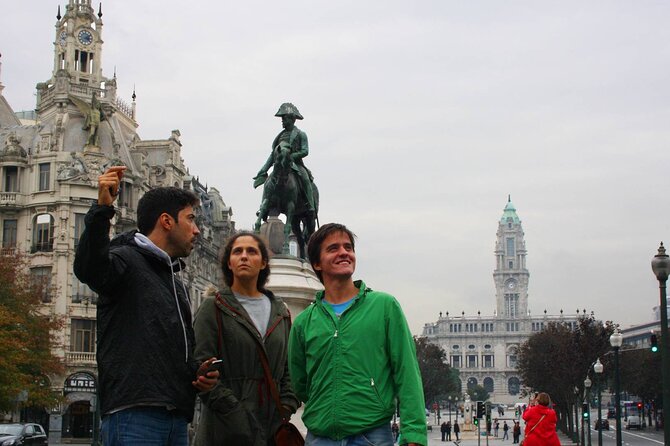
Porto’s past comes into focus on this three-hour walk through its oldest districts, from the cathedral’s medieval setting to the tiled halls of São Bento station. The route links major sights with the stories behind them: trade, wine, religious communities, civil war, and the people who shaped the city.
I like the small maximum of 10 people, which leaves room for questions, and I like that Carlota is from Porto and studied history. The main consideration is the pace and terrain: this is a walking tour requiring moderate fitness, and admission to the Clerigos Tower is not included.
In This Review
- Key points to know before you book
- A smart first walk through Porto’s old center
- Starting at Porto Cathedral
- Ribeira and the river’s commercial story
- Vitória viewpoint, Jewish heritage, and civil war
- The story behind Clerigos Tower
- Reading the tiles at São Bento Station
- Why the guide matters here
- What the three-hour schedule really means
- Group size, comfort, and practical limits
- Is $23.83 good value?
- Who should book this Porto walk?
- Cancellation and booking details
- Should you book the Small-group Porto’s Roots Walking Tour?
- FAQ
- How long is the Small-group Porto’s Roots Walking Tour?
- What time does the tour start?
- Where does the tour begin?
- Where does the tour end?
- What language is the tour offered in?
- How many people can join the tour?
- Is the Clerigos Tower admission included?
- Are service animals allowed?
- Can I cancel for a full refund?
Key points to know before you book
- A local guide with a history background: Carlota brings personal knowledge of Porto along with formal history studies.
- Five central Porto stops: The route covers the cathedral, Ribeira, Vitória viewpoint, Clerigos Tower, and São Bento station.
- Small group format: The tour accepts no more than 10 people, making questions easier than on a large coach tour.
- Strong value at $23.83: You receive about three hours of guided sightseeing, while the Clerigos Tower ticket remains separate.
- An English-language introduction: The tour is offered in English and uses a mobile ticket.
- A useful central finish: The walk ends at São Bento Railway Station, close to public transportation.
A smart first walk through Porto’s old center
If you are new to Porto, this route gives you a useful framework before you explore on your own. It does not try to cover the whole city. Instead, it follows a compact central path and uses five landmarks to explain how Porto grew, traded, worshiped, fought, and connected with the wider country.
That focus is the tour’s main strength. You are not simply moving from one photo stop to another. At the cathedral, you look at medieval Porto. At Ribeira, you connect the riverfront with commerce and wine. At Vitória, the story turns toward Porto’s Jewish community and Portugal’s 19th-century civil war.
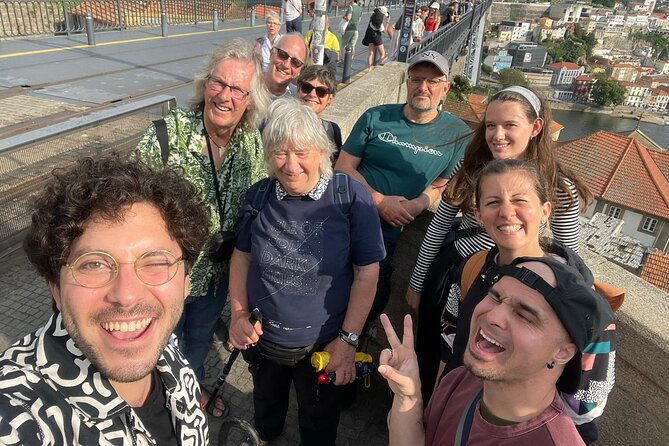
The format also suits people who prefer conversation over a set speech. With no more than 10 people, you can ask about a building, local customs, or a point that needs more explanation without trying to catch a guide’s attention across a crowd.
At $23.83 per person, the price is reasonable for roughly three hours with an English-speaking guide. The value comes from the historical explanation and the compact route, not from included entry fees. The Clerigos Tower admission is extra, and the tour is mainly about viewing and understanding the city rather than entering every major sight.
More walking tours in Porto:
- Porto Walking Tour, Lello Bookshop, River Cruise and Cable Car
★ 5.0 · 3,354 reviews - Experience Porto’s Charm: 3-Hour Guided Walking Tour
★ 5.0 · 2,432 reviews - Porto: 3-Hour Guided City Highlights Walking Tour
★ 4.8 · 2,050 reviews
Starting at Porto Cathedral
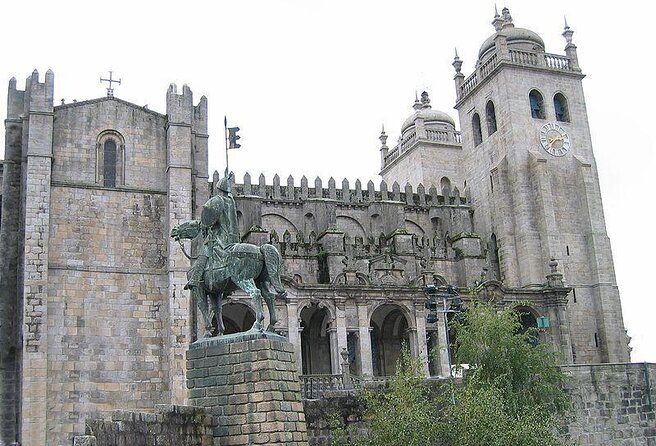
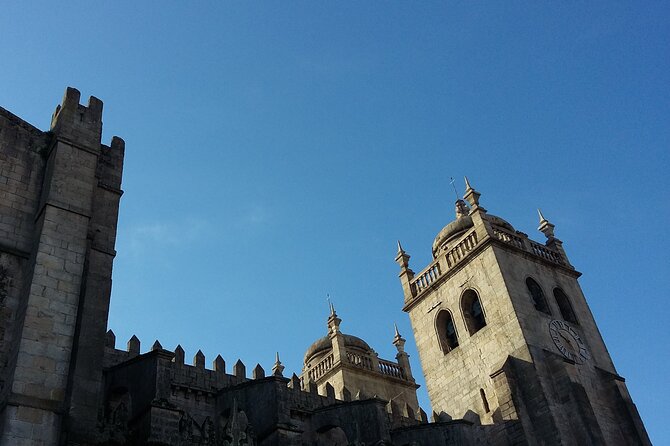
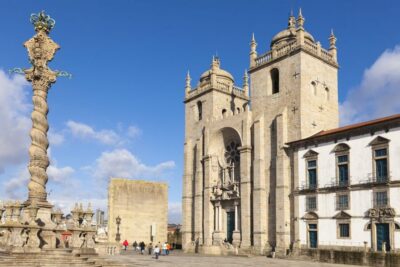
The meeting point is at R. de Dom Hugo 3, beside Catedral do Porto. The walk begins at 10:00 a.m., and the cathedral is a fitting place to start because it helps explain Porto’s medieval shape and status.
You spend about 15 minutes here discussing how the city developed during the medieval period, how far it expanded, and what social life was like. That context matters. Porto can seem like a jumble of steep lanes, old walls, churches, and viewpoints until you understand that its growth was gradual and tied to its position beside the Douro River.
The cathedral stop is brief, so you should not expect an extended interior visit or a long architectural lecture. Admission is free, and the main purpose is orientation. I see this as a good opening for first-time visitors because it gives you questions to carry through the rest of the walk.
You should also pay attention to the physical nature of the route from the start. Porto’s historic center is not flat, and the tour asks you to walk between several sites. A moderate level of fitness is required, so comfortable shoes are a practical choice.
Ribeira and the river’s commercial story
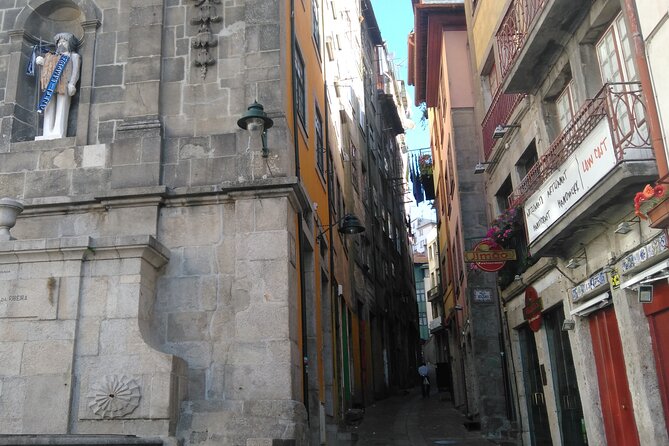
The second stop is Cais da Ribeira, reached after the cathedral portion. You spend about 20 minutes looking at the old medieval streets and discussing Porto as a commercial city and a center of wine production.
This is where the city’s connection to the Douro becomes easier to understand. The waterfront is not just a scenic place for photographs. It represents movement: goods, people, boats, and trade. The tour also discusses Porto’s bridges, adding another layer to the relationship between the city and the river.
I like this stop because it ties the attractive waterfront to useful historical facts. Without that explanation, it is easy to see Ribeira only as a colorful riverfront district. A guide can help you read the street plan and understand why commerce mattered so much to Porto’s growth.
The stop lasts about 20 minutes, so the emphasis is on the setting and the story rather than an exhaustive discussion of every building. If you want a long waterfront pause, a meal, or time for extended photographs, plan to return later. The scheduled walk continues.
Vitória viewpoint, Jewish heritage, and civil war
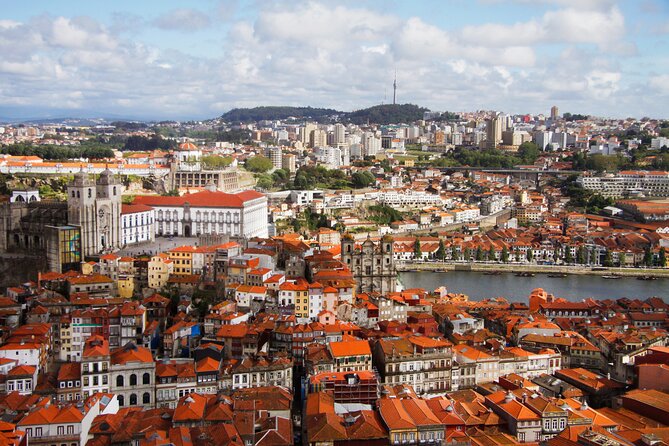
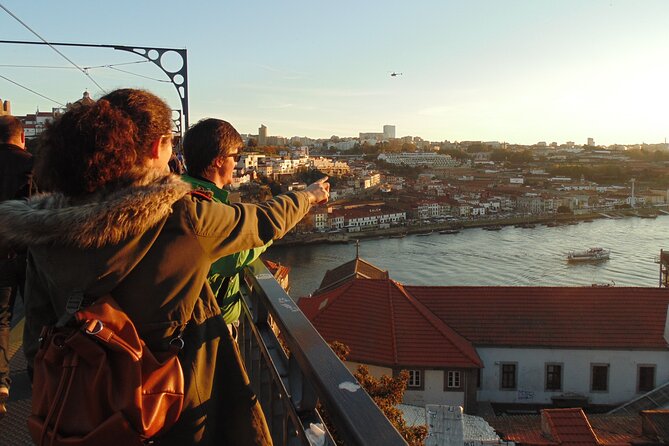
At Miradouro da Vitória, the tour shifts from trade and geography to communities and conflict. This viewpoint is used to explain Porto’s Jewish community across the centuries and Portugal’s civil war during the 19th century.
That change of subject is valuable. A city tour can become too focused on kings, churches, and grand buildings. This stop adds social and political history, showing that Porto’s story also includes religious communities and periods of internal struggle.
The viewpoint gives you a chance to connect the city’s physical setting with its past. You can look across Porto while hearing about events that affected the people who lived here. The supplied details do not promise a long pause for photographs, so expect the view to support the talk rather than replace it.
The stop is scheduled for about 20 minutes. The path may involve Porto’s familiar slopes and uneven historic streets, which is another reason to wear shoes with good support. You should also be ready for an outdoor stop that depends on the weather.
A few more Porto outings to weigh up
- The Unvanquished Tour in Porto City Center
★ 5.0 · 26,497 reviews - From Porto: Douro Valley w/ Boat Tour, Wine Tasting & Lunch
★ 4.7 · 19,061 reviews - Complete Douro Valley Wine Tour with Lunch, Wine Tastings and River Cruise
★ 5.0 · 12,920 reviews - Porto: Six Bridges Cruise
★ 4.2 · 11,680 reviews
The story behind Clerigos Tower
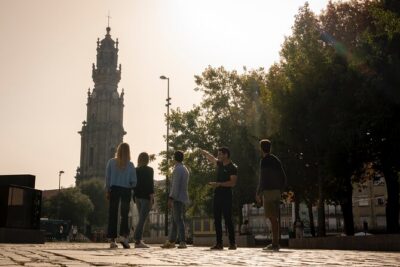
The tour then reaches Torre dos Clerigos, one of Porto’s best-known buildings. The scheduled discussion lasts about 10 minutes and focuses on the history of this city landmark.
This is a short stop, but it helps you place the tower within Porto’s skyline and urban story. The experience does not include the admission ticket, so you should treat this part as an exterior explanation unless you arrange entry separately.
That detail is important when comparing prices. At $23.83, the tour remains affordable, but it is not an attraction package with all entry fees covered. If climbing the tower is a priority, you need to handle that separately and account for the additional cost and time.
The short timing also means the tour keeps moving. I would not book this walk expecting a lengthy visit inside each monument. It is better suited to someone who wants an informed introduction, then plans to return to selected sights independently.
Reading the tiles at São Bento Station
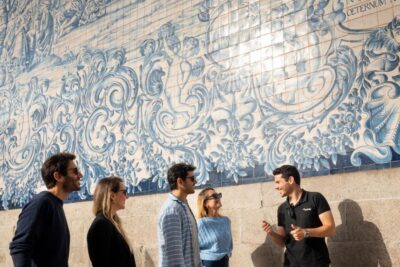
The final stop is São Bento Railway Station, where the tour ends. The station is famous for the tiles covering its main hall, and the guide explains what the scenes represent along with other details about the building.
This is a strong finish because it leaves you with a clear visual highlight. After hearing about medieval Porto, river commerce, religious communities, and civil conflict, you reach a place where history is presented through tilework in a grand public setting.
The stop lasts about 10 minutes. That is enough for an introduction to the tile scenes, but not necessarily enough for a slow, detailed study of every panel. I recommend staying in the hall after the tour if you want more time to look closely.
Ending at São Bento is also practical. The station is near public transportation, and the central location makes it easy to continue sightseeing, find lunch, or return to a nearby hotel. The finish is at Praça de Almeida Garrett, 4000-069 Porto.
Why the guide matters here
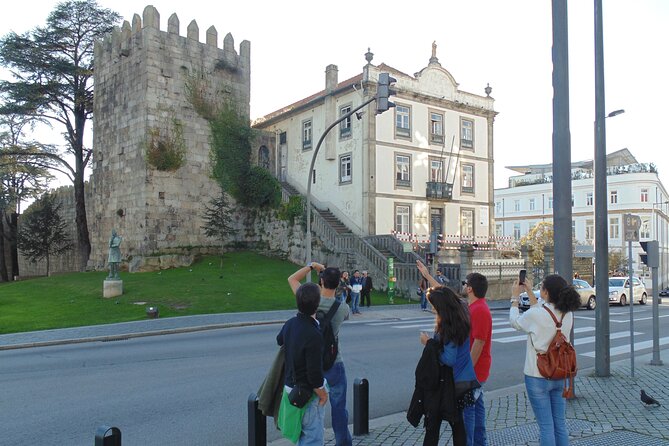
A route like this depends heavily on the guide. The landmarks are easy to find, but the connections between them are what turn a walk into a useful city introduction.
Carlota is from Porto and studied history. That combination is especially helpful for a tour built around local development, social context, religious communities, political conflict, and urban commerce. The strongest praise for the experience centers on her ability to explain clearly, tell stories, and allow time for questions.
That last point matters more than it may seem. A small group works best when the guide uses the format well. The available feedback highlights extra time for questions and comments, which suggests you are not limited to a tightly memorized speech. You can ask about something you noticed, request clarification, or connect the history to another part of your visit.
The guide’s local background also adds a human layer. Porto is more than a collection of famous buildings, and a native guide can explain the city and its people in a way that a generic sightseeing script may not.
What the three-hour schedule really means
The listed stops add up to about 75 minutes of scheduled explanation. The remaining time is used for walking between sites, moving through the historic center, and making the route work as a continuous tour.
That is normal for a walking experience, but it is worth understanding before booking. You are not receiving five long guided visits. You are getting a connected walk with short talks at key points.
The compact timing has benefits. You can cover several important areas in one morning without giving up a full day. You also finish in time for a separate lunch or afternoon visit. The tradeoff is that some stops will feel introductory, especially the cathedral, Clerigos Tower, and São Bento station.
For a first morning in Porto, I think that balance works well. You gain a map in your head, learn which places deserve a return visit, and get historical context before exploring more freely.
Group size, comfort, and practical limits
The maximum group size is 10 people. That is small enough for a more personal exchange and makes it easier to hear the guide in narrow streets or outdoor viewpoints.
The tour is offered in English and uses a mobile ticket. Confirmation is provided at booking, so you should have the booking details available on your phone when you arrive at the meeting point.
The activity requires moderate physical fitness. Porto’s historic center includes slopes and older streets, and you will be on foot for around three hours. The information provided does not specify a route suitable for people with limited mobility, so anyone with mobility concerns should check directly with the operator before paying.
Service animals are allowed, and the route is near public transportation. The tour starts at 10:00 a.m., which gives you a useful early introduction to the city and leaves much of the day open afterward.
Good weather is required. If poor weather forces a cancellation, you are offered another date or a full refund. For the best chance of a comfortable walk, keep some flexibility in your Porto schedule.
Is $23.83 good value?
At $23.83, I consider this a fair price for a three-hour, small-group history walk in central Porto. You are paying for a local English-speaking guide, a limited group, and a route that connects several major sights without requiring you to plan the sequence yourself.
The value is strongest if you enjoy context. You will get less from the tour if you only want entrance to buildings or plenty of free time at each stop. The Clerigos Tower ticket is not included, and the tour does not present itself as an all-admission sightseeing pass.
Still, the low price leaves you free to choose where to spend more later. You can decide after the walk if the tower, cathedral, or another site deserves a separate visit. That flexibility is useful for a short stay.
The small group also improves the value. A cheaper large tour may cover similar ground, but it may give you less chance to ask questions. Here, the group limit supports the guide’s strongest feature, personal explanation.
Who should book this Porto walk?
I would choose this tour if you are visiting Porto for the first time and want a clear introduction to its oldest center. It is also a good fit if you enjoy political and social history, not just architecture and photographs.
You should book it if you want:
- A local guide with formal history training
- A small English-speaking group
- A morning orientation before independent sightseeing
- A route linking the cathedral, riverfront, viewpoint, tower, and railway station
- Time to ask questions rather than follow a large crowd
I would choose another type of activity if you want extended interior visits, a food tasting, a wine cellar experience, or a flat and easy route. This is a walking history tour, not a tasting tour or a ticket bundle.
Cancellation and booking details
Free cancellation is available if you cancel at least 24 hours before the 10:00 a.m. start time. Cancellations made less than 24 hours before the start are not refunded, and changes within that period are not accepted.
The cut-off follows local Porto time. Since good weather is required, a weather cancellation gives you the choice of another date or a full refund.
Should you book the Small-group Porto’s Roots Walking Tour?
Book it if you want Porto explained by a local guide rather than simply photographed. The route is short enough to fit into a busy itinerary, the group limit is excellent, and Carlota’s local and academic background suits a tour built around history and city life.
Go in with the right expectations. You will receive a well-organized introduction to five important places, not long visits inside every landmark. Bring comfortable shoes, allow for slopes, remember that the Clerigos Tower ticket costs extra, and keep time after São Bento if you want to study the tiles.
For $23.83, this is a sensible choice for first-time visitors who value clear stories, a central route, and the chance to ask questions.
FAQ
How long is the Small-group Porto’s Roots Walking Tour?
The tour lasts approximately three hours.
What time does the tour start?
The tour starts at 10:00 a.m.
Where does the tour begin?
The meeting point is R. de Dom Hugo 3, 4000 Porto, Portugal, near Catedral do Porto.
Where does the tour end?
The tour ends at São Bento Railway Station, at Praça de Almeida Garrett, 4000-069 Porto, Portugal.
What language is the tour offered in?
The tour is offered in English.
How many people can join the tour?
The maximum group size is 10 people.
Is the Clerigos Tower admission included?
No. Admission to Torre dos Clerigos is not included.
Are service animals allowed?
Yes, service animals are allowed.
Can I cancel for a full refund?
Yes, if you cancel at least 24 hours before the experience start time. Cancellations made less than 24 hours before the start are not refunded.
Latest reviews around Porto
- Private Walking Tour, highlights and secrets of Porto★ 3.9 · 3 reviews
- Private Porto Half-Day Tour – Wine Cellars & Cheese Tasting★ 5.0 · 3 reviews
- Portuguese Wine Tasting w Local Cheese & Cold Cuts pairing★ 5.0 · 3 reviews
- From Peso da Régua: Visit 3 wineries, tasting and viewpoint★ 5.0 · 3 reviews
- Porto: Full-Day All-Inclusive Private City Sightseeing Tour★ 4.3 · 3 reviews
- Small Painting Group with a Local Artist in Porto★ 5.0 · 3 reviews
- From Arouca: Paiva River Rafting Adventure – Adventure Tour★ 5.0 · 3 reviews
- Private Tour to Santiago de Compostela and its stunning Cathedral★ 5.0 · 3 reviews
Walking Tours, compared.
Porto Walking Tour, Lello Bookshop, River Cruise and Cable Car
Read our review →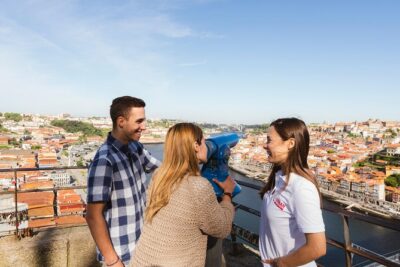
Experience Porto’s Charm: 3-Hour Guided Walking Tour
Read our review →
Porto: 3-Hour Guided City Highlights Walking Tour
Read our review →

Porto: Walking Tour, Lello Bookshop, Boat and Cable Car
Read our review →
Porto: Port and Douro Wine Walking Tour with 9 Tastings
Read our review →Browse the lists this tour appears in