
Reviewed · HISTORICAL TOURS
Walking Tour – History of Tiles in Porto
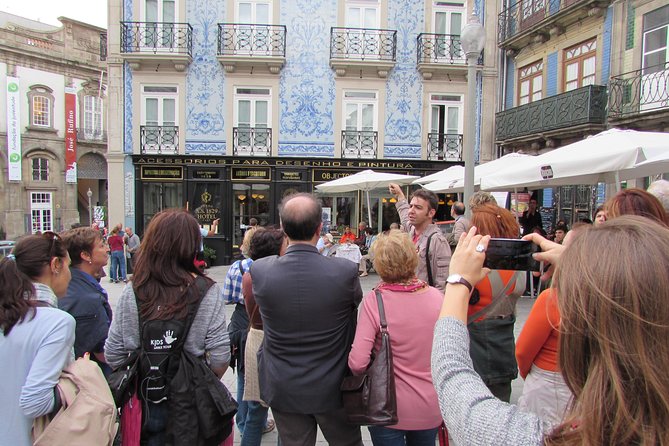
Porto’s tiles are not just pretty decoration. They tell stories, mark changing fashions, protect building walls, and reveal how art and industry shaped northern Portugal. This small-group walk teaches you how to read those blue-and-white panels, patterned facades, and newer works instead of simply photographing them.
I especially like the visit to São Bento Railway Station, where Jorge Colaço’s large tile scenes show battles and historic events. I also like the way the guides connect azulejos with architecture, street art, shops, and daily life, so the walk becomes a lesson in Porto rather than a narrow art lecture. The main consideration is the price: at $81.93 per person, this is a specialist tour, and you should have a real interest in design, buildings, or local history to get full value.
In This Review
- Key points to know before booking
- Why Porto’s tiles deserve a dedicated walk
- Starting at Carmo Church and Fonte dos Leões
- Learning how azulejos are made and used
- The Museu da Cidade do Porto and the tile bank
- São Bento Railway Station and Jorge Colaço’s scenes
- Beyond the famous blue-and-white look
- What the small group and timing mean
- Is $81.93 a fair price?
- Who will enjoy this Porto walk most?
- Should you book the History of Tiles in Porto walk?
- FAQ
- Where does the tour begin?
- Where does the tour end?
- How long does the tour last?
- What language is the tour offered in?
- How large is the group?
- Are admission, food, and transport included?
Key points to know before booking
- São Bento is the visual high point: Jorge Colaço’s grand tile panels turn the railway station into a history book.
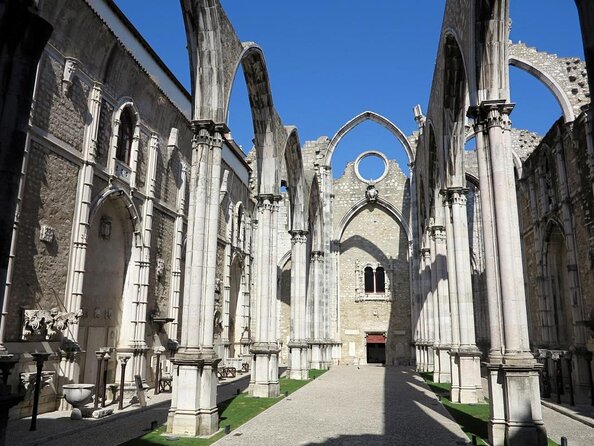
- Carmo Church shows tile art in a major architectural setting: You’ll see an important facade panel and learn how church decoration developed.
- The guides add much more than tile facts: Nuno’s architectural background and Susana’s art knowledge bring in Porto’s culture, street art, and city history.
- The group is capped at 10 people: That gives you a better chance to ask questions and inspect details.
- The route begins near Carmo Church: It then moves through Porto’s UNESCO-listed historic center and finishes around Ribeira Square, though the supplied meeting details also name São Bento as the end point, so confirm the finish location.
- The walk works best early in your Porto stay: You’ll keep noticing tile colors, patterns, and construction methods for the rest of your visit.
Why Porto’s tiles deserve a dedicated walk
You can see azulejos all over Porto without booking a tour. That is exactly the problem. With so many tiled facades, it is easy to admire the blue patterns for five seconds, take a photo, and move on.
This walk trains your eye. You learn to look at the method used to make a tile, the age of a panel, the colors chosen, and the building where the work appears. The result is a better understanding of why one facade feels formal and religious while another looks commercial, domestic, or modern.
The tour also gives context to the city’s industrial past. Porto’s tiles are tied to manufacturing, architecture, religion, commerce, and public memory. You are not simply learning a list of famous buildings. You are seeing how a practical building material became one of Portugal’s best-known art forms.
The guides seem particularly strong at linking separate subjects. Nuno is described as having an architectural background and a master’s degree focused on tiles. His talks also include Porto’s streets, contemporary art, and local customs. Susana is praised for her command of tile history and her ability to make technical information enjoyable.
That range matters. A specialist who talks only about glazing and firing methods might lose you after an hour. Here, tile production is used as a doorway into the city.
More history walks near Porto:
- Douro Valley: Historical Sites, Wine Experience, Lunch & Cruise
★ 5.0 · 5,133 reviews - Porto: Historic City Center Walking Tour
★ 4.7 · 1,172 reviews - Porto: An Intimate Fado Show in a Historical Tavern
★ 4.8 · 1,093 reviews
Starting at Carmo Church and Fonte dos Leões
The walk begins at Fonte dos Leões, outside Igreja do Carmo on Rua do Carmo. This is a useful starting point because the church places tile art right in front of you before the guide explains what to look for.
Carmo Church is associated with one of Porto’s important tiled church facades. The tour points out the first panel covering a church facade, then explains how religious buildings used tiles to create large-scale visual stories. The stop itself is listed as only about five minutes, but the value comes from learning how to inspect the surface rather than just admiring the whole building.
Look closely at the relationship between the tiles and the architecture. The panels are not separate paintings hung on a wall. They are fitted into the structure, working with windows, doors, borders, and stone details. That is one reason a guide with an architecture background can add so much.
The meeting point is near public transport, but the tour is on foot and takes place in Porto’s old center. Wear shoes that can handle slopes and uneven streets. The supplied information does not give a detailed route grade, so anyone concerned about mobility should ask the provider before booking.
Children must be accompanied by an adult. Service animals are allowed, and most people can take part.
Learning how azulejos are made and used
The most useful part of the walk is the basic visual training. You learn about different ways tiles are painted and created, along with changes in production over time.
You might look at the difference between a large decorative panel and a repeating facade pattern. You may also learn why some buildings use tiles across an entire front while others reserve them for a border, doorway, interior, or religious scene.
This is where the tour earns its specialist price. A standard city walk may point out a tiled church and say it is beautiful. This experience asks you to notice the construction, color, pattern, and purpose.
The information provided does not list every street or building on the route, but it does include churches, shops, houses, and public sites. That mix is important. Tile culture is not confined to grand monuments. It appears in ordinary city architecture, and seeing several settings helps you understand how widely the material was used.
The tour also brings in present-day street art. That gives the walk a useful time span, from older tile work to contemporary visual culture. You can compare how artists use walls, color, repetition, and public space today.
The guides also offer recommendations for restaurants and further exploring Porto. That is a practical benefit, especially if you take the walk on your first day. You get both a city orientation and a list of subjects to notice during the rest of your stay.
The Museu da Cidade do Porto and the tile bank
One itinerary stop is the Museu da Cidade do Porto, described here as the bank of material of the city hall. The visit lasts about 15 minutes and admission is included.
This is less of a grand showpiece than São Bento, but it adds an important civic side to the story. A city’s tiles are not just old decoration. They are part of its built record, and a municipal collection or tile bank helps preserve material from buildings that may change, deteriorate, or disappear.
A short stop here also breaks up the outdoor walk. You get a chance to examine examples in a more focused setting, then return to the streets and identify similar features on actual buildings.
Do not expect a full museum visit during this tour. Fifteen minutes is enough for an introduction, not a complete survey of the institution. If you want to spend serious time with the museum itself, you may need to return independently.
More walking tours in Porto:
- Porto Walking Tour, Lello Bookshop, River Cruise and Cable Car
★ 5.0 · 3,354 reviews - Experience Porto’s Charm: 3-Hour Guided Walking Tour
★ 5.0 · 2,432 reviews - Porto: 3-Hour Guided City Highlights Walking Tour
★ 4.8 · 2,050 reviews - Porto: Wine Tasting with Tapas Walking Tour
★ 4.4 · 1,541 reviews
São Bento Railway Station and Jorge Colaço’s scenes
São Bento Railway Station is the tour’s most famous stop and likely its most dramatic. The station contains tile panels by Jorge Colaço showing battles and other historical events.
The scale changes here. At Carmo, you are looking at a church facade integrated into city architecture. At São Bento, you enter a public building where tile panels occupy large interior walls and turn a working railway station into an art-filled civic space.
The guide can help you read the scenes rather than treating them as a wall of blue and white. You may notice how figures, horses, buildings, borders, and repeated patterns are arranged to tell a story. The tour also explains how these works fit into Porto’s wider artistic and industrial development.
The listed visit is about 10 minutes, with no separate admission charge. That is enough to see the key panels, but it may feel brief if you want to study every scene. The station remains a functioning transport hub, so the setting is public and active rather than a quiet gallery.
Still, this is an efficient stop. You get one of Porto’s major sights while learning why the tiles matter. If you later return on your own, you will look at the station with a far sharper eye.
One practical note needs attention. The supplied meeting information names São Bento Station as the end point, while the tour description says the walk concludes beside Ribeira Square. Since those are different parts of central Porto, confirm the final meeting location with Be My Guest In Porto before setting your afternoon plans.
Beyond the famous blue-and-white look
Many people arrive in Porto expecting blue-and-white azulejos. The tour helps widen that view.
You learn about tile colors, patterns, methods, and changing styles. The city’s tile tradition is not one fixed look repeated everywhere. Older and newer examples can differ in subject, surface, color, and purpose.
That broader view is one reason this experience appeals to people interested in architecture and design. You are encouraged to compare ancient examples with contemporary work and to notice tiles beyond the most photographed facades.
The walk also places tile art beside street art. That pairing may seem unexpected, but both depend on public walls and the way people experience the city outdoors. One is often formal and historic; the other can be immediate and modern. Seeing both gives you a more complete sense of Porto’s visual culture.
Nuno is also described as a Porto native and an artist, which may help explain the personal tone of the walk. A local guide can point out how buildings fit into the city’s character, while an art specialist can explain why a detail matters.
What the small group and timing mean
The tour lasts about 2 hours and 45 minutes, often described as a three-hour walk. A maximum of 10 people keeps it far more personal than a large bus or broad city group.
That group size matters for tile work. Many details are high on facades or spread across large walls. You need room to stop, look up, and ask why a certain panel was made. A smaller group also makes it easier for the guide to adjust the explanation to your interests.
The tour is offered in English. A professional art historian guide and a local guide are included, although the names assigned may vary. Past descriptions identify Nuno and Susana, and one entry uses the name Nino, so confirm who will lead your departure if having a particular guide is important to you.
The route begins at Carmo Church and moves through Porto’s UNESCO-listed historic center. It finishes after roughly three hours, with the provided description placing the conclusion near Ribeira Square. No food or drinks are included, though one account describes sampling special Porto treats during the walk. I would not book this expecting a food tour. Any tasting should be treated as an occasional extra rather than a guaranteed feature.
There is no hotel pickup or drop-off. You meet the group in the center and continue on foot.
Is $81.93 a fair price?
At $81.93 per person, this is not a budget introduction to Porto. You can walk past São Bento and Carmo Church without paying for a guide. The question is what you want from the visit.
I think the price can make sense if you care about art, buildings, photography, or local history. The experience combines a walking tour of central Porto with specialist teaching, access to listed stops, and a group limited to 10. You are also getting orientation that can improve the rest of your time in the city.
The value is weaker if you want only a quick overview of Porto’s main sights. A general city tour would cover more landmarks and may cost less. This walk spends its time on one subject, then uses that subject to explain the city.
The tour is booked an average of 34 days ahead, so it is sensible to reserve early if your dates are fixed. A minimum of two people is required, and no more than 10 can book. Confirmation is sent within 48 hours, subject to availability.
Free cancellation is available up to 24 hours before the start time for a full refund. Changes or cancellations inside that 24-hour window are not accepted for a refund.
Who will enjoy this Porto walk most?
I would choose this for you if you like:
- Architecture and historic buildings
- Ceramics, painting, or design
- Walking tours with a strong local focus
- Learning how ordinary city details connect to wider history
- Small groups and time for questions
- Starting a Porto visit with practical orientation
It is also a good choice for returning visitors who have already seen the big sights but want to understand them better.
You may want something else if you dislike standing outdoors, looking upward, or spending nearly three hours on one artistic subject. The tour includes broader city history and street art, but tiles remain the central theme.
Families can book, but children need an accompanying adult. Most people can participate, though the route is an old-city walking tour and the supplied information does not promise step-free access throughout.
Should you book the History of Tiles in Porto walk?
Book it if you want Porto to become more than a collection of attractive blue facades. The strongest parts are the expert explanations, the small group, Carmo Church, the São Bento panels by Jorge Colaço, and the chance to compare historic tile work with current street art.
I would schedule it near the start of your stay. Afterward, you will notice details on houses, churches, shops, and public buildings that might otherwise pass unnoticed. At $81.93, it is a considered purchase, but for an art-minded visitor it offers more lasting value than a quick photo stop.
Before paying, confirm the exact finish point and the guide assigned to your date. If you are happy with the price and have a real interest in how Porto was built and decorated, this is a strong pick from Be My Guest In Porto.
FAQ
Where does the tour begin?
It begins at Fonte dos Leões, outside Igreja do Carmo, at R. do Carmo, 4050-164 Porto, Portugal.
Where does the tour end?
The tour description says it ends beside Ribeira Square. The meeting information also lists São Bento Station, Praça de Almeida Garrett, as the end point. Confirm the final location with the provider before booking other plans.
How long does the tour last?
It lasts approximately 2 hours and 45 minutes, or about three hours.
What language is the tour offered in?
The tour is offered in English.
How large is the group?
The maximum is 10 people per booking, and the activity also has a maximum of 10 participants. A minimum of two people per booking is required.
Are admission, food, and transport included?
A professional art historian guide and local guide are included. Admission to the listed stops is free. Food, drinks, hotel pickup, and hotel drop-off are not included.
Latest reviews around Porto
- Private Walking Tour, highlights and secrets of Porto★ 3.9 · 3 reviews
- Private Porto Half-Day Tour – Wine Cellars & Cheese Tasting★ 5.0 · 3 reviews
- Portuguese Wine Tasting w Local Cheese & Cold Cuts pairing★ 5.0 · 3 reviews
- From Peso da Régua: Visit 3 wineries, tasting and viewpoint★ 5.0 · 3 reviews
- Porto: Full-Day All-Inclusive Private City Sightseeing Tour★ 4.3 · 3 reviews
- Small Painting Group with a Local Artist in Porto★ 5.0 · 3 reviews
- From Arouca: Paiva River Rafting Adventure – Adventure Tour★ 5.0 · 3 reviews
- Private Tour to Santiago de Compostela and its stunning Cathedral★ 5.0 · 3 reviews
Historical Tours, compared.

Douro Valley: Historical Sites, Wine Experience, Lunch & Cruise
Read our review →

Porto: An Intimate Fado Show in a Historical Tavern
Read our review →
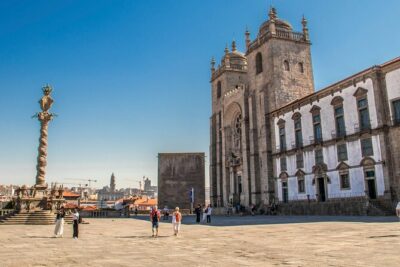
Historic Porto by Private Electric Tuk Tuk to Top Landmarks
Read our review →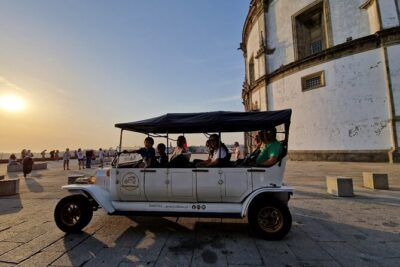
Porto:Private Tour of the Historic City in a Classic Ford T
Read our review →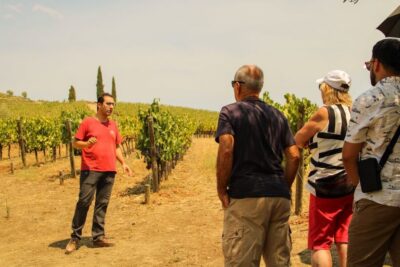
Porto: Douro Valley History & Wine Tour with Cruise & Lunch
Read our review →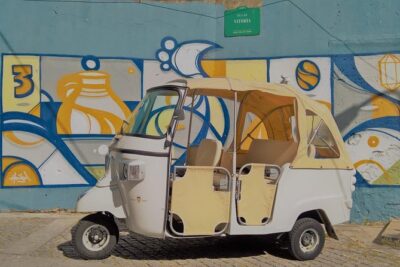
Porto Guided Tour to the Historical Center on a Tuk Tuk
Read our review →Browse the lists this tour appears in