
Reviewed · PORT WINE CELLAR TOURS
Cheese and Port Wine Pairing Activity
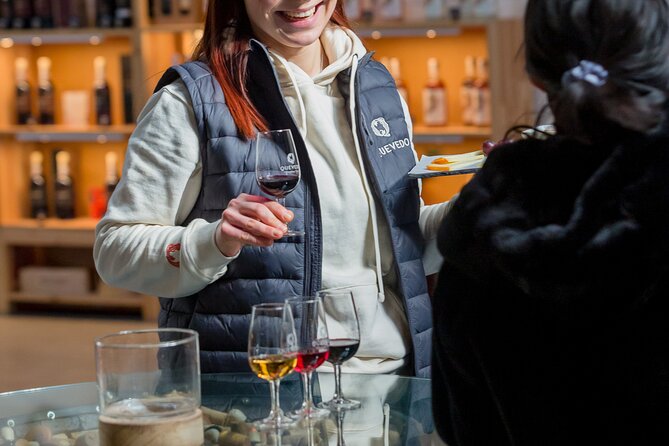
Port and cheese make a fine introduction to Porto, but the best part here is the chance to taste three very different Ports side by side. At Quevedo Lodge, you try Crusted Port, 10-Year-Old Tawny, and White Colheita 2009 with a small Portuguese cheese board, while a host explains what you are drinking and how the styles differ.
I like the small maximum group of eight, which keeps the session personal, and the short 40-minute format, which fits neatly into a day of sightseeing. The main drawback is that the cheese pairing may be more of a tasting accompaniment than a full lesson in why each cheese works with each Port, so serious food-and-wine students may want more detail.
In This Review
- Key points at a glance
- Three Ports, three different personalities
- The cheese board adds a Portuguese accent
- Inside Quevedo Lodge in Vila Nova de Gaia
- What happens during the 40-minute session
- How much value do you get for $31.24?
- What the guide does best
- The pairing lesson has one clear limitation
- Who should book this tasting?
- A simple way to get more from the tasting
- Should you book the Quevedo Port and cheese tasting?
- FAQ
- Where does the Port and cheese tasting take place?
- How long does the activity last?
- Which Port wines are included?
- Which cheeses are served?
- Is the tasting offered in English?
- How many people can join, and what is the cancellation policy?
Key points at a glance
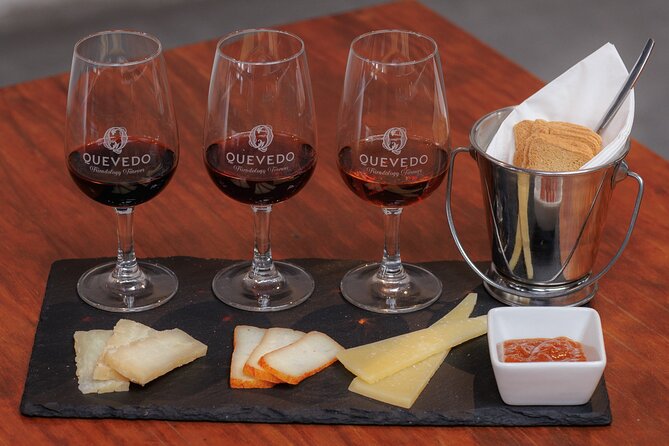
- Three distinct Ports: Compare Crusted Port, 10-Year-Old Tawny, and White Colheita 2009 rather than tasting one style in isolation.
- Three Portuguese cheeses: Try paprika-aged goat cheese, mixed cow and goat cured cheese, and cow cheese served with local jam.
- Quevedo Lodge setting: The tasting takes place at Quevedo’s wine bar and tasting room on Rua de Santa Marinha in Vila Nova de Gaia.
- Small group size: The activity accepts no more than eight people, allowing time for questions.
- Short and focused: The session lasts about 40 minutes and is offered in English.
- Good entry price: At $31.24 per person, this is a reasonable introduction to Port without committing half a day.
Three Ports, three different personalities
This tasting works because the wines are not all cut from the same cloth. You receive three Port styles that show how aging, color, and production choices can change the character of the drink.
The first pour is Crusted Port. The name refers to sediment that can form in the bottle as the Port ages. You do not need to know the technical details before arriving, but this style gives the host a useful opening for explaining that Port is not simply one sweet red wine.
Next comes 10-Year-Old Tawny Port, a style shaped by time in wood. Tawny Ports are generally lighter in color than ruby-style wines, and the listed age gives you a clear point of comparison with the Crusted Port.
The third pour is White Colheita Port 2009. White Port changes the rhythm of the tasting. After two darker wines, a white Port gives your palate a different starting point and shows that Port is not limited to the deep red and brown shades most people expect.
The pours are described as healthy portions, so this is not a token sample of wine at the bottom of a glass. You get enough to compare the three styles, but the tasting remains short. Eat something before or after if you need a full snack, since the cheese board is designed for pairing rather than lunch.
More port wine cellars to visit:
- Porto: Live Fado Show with Glass of Port Wine
★ 4.8 · 6,498 reviews - Porto: Cálem Cellar Tour, Interactive Museum & Wine Tasting
★ 4.5 · 4,113 reviews - Porto: Cálem Cellar Tour, Fado Show & Wine Tasting
★ 4.4 · 3,530 reviews
The cheese board adds a Portuguese accent
The food is simple, local, and useful for the tasting. You receive three cheeses:
- Paprika-aged goat cheese
- Mixed cow and goat cured cheese
- Cow cheese with local jam
That selection gives you different levels of salt, firmness, and flavor. The goat cheese brings a sharper edge, while the mixed cow and goat cheese offers a more familiar middle ground. The cow cheese with local jam supplies the sweetest combination on the board and can change how the Port feels in your mouth.
This is where the activity can be especially helpful for first-time Port drinkers. A sweet wine may taste heavy on its own, but salty or creamy cheese can make it feel more balanced. The jam creates another comparison, showing how sweetness in the food can either support or compete with the wine.
I would like the host to spend more time explaining the reason behind each pairing. The cheeses are named, and the guide offers pairing suggestions, but the level of detail can vary. If you care about the food-science side, ask direct questions: Which cheese works best with the Tawny? Does the jam suit the White Colheita? Is the goat cheese better with the Crusted Port? The small group gives you a good chance to ask.
Inside Quevedo Lodge in Vila Nova de Gaia
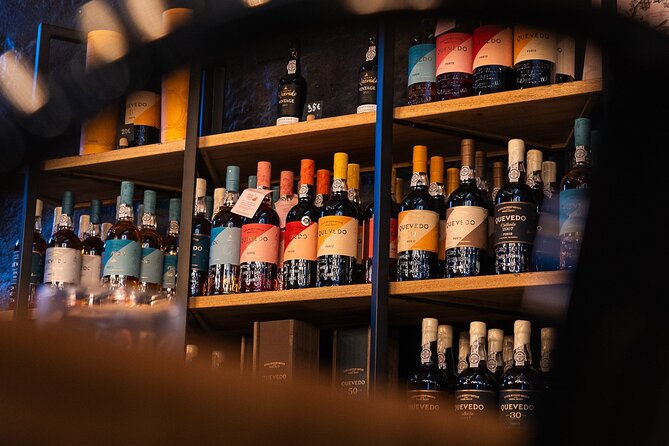
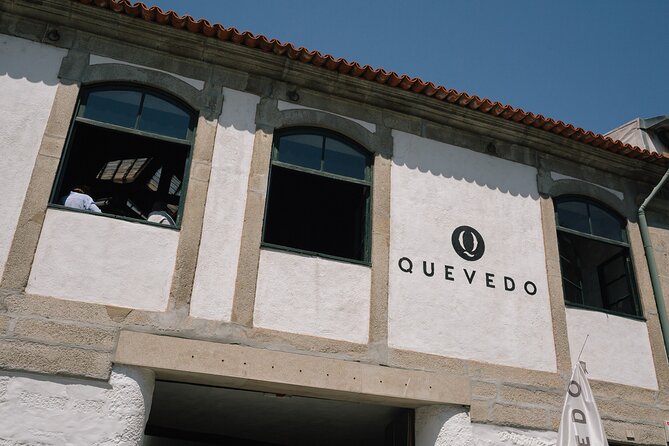
The meeting point is Quevedo Lodge, a wine bar and tasting room at R. de Santa M.nha 77, 4400-291 Vila Nova de Gaia. This is on the Gaia side of the Douro, the part of the Porto area known for its Port houses and tasting rooms.
The setting has been described as an old building with a pleasant window view. That matters on a rainy afternoon, when a warm indoor tasting makes a sensible break from walking along the river. You are not being sent through a large attraction with a long route and several rooms. The activity begins and ends at the same place.
That simple arrangement also helps if you are fitting the tasting between other plans. You do not need to arrange a transfer at the end, and you can continue exploring Vila Nova de Gaia afterward. The meeting point is near public transportation, though no particular route or station is specified, so check your own map before setting out.
The building and location provide atmosphere, but the wine remains the main event. Do not book this expecting a full cellar tour or a broad historical tour of Porto. The supplied details focus on tasting, Port production, style differences, and food pairing.
What happens during the 40-minute session
The experience follows a compact sequence. You arrive at Quevedo Lodge, settle in with the group, and receive the three Port pours with the cheese platter.
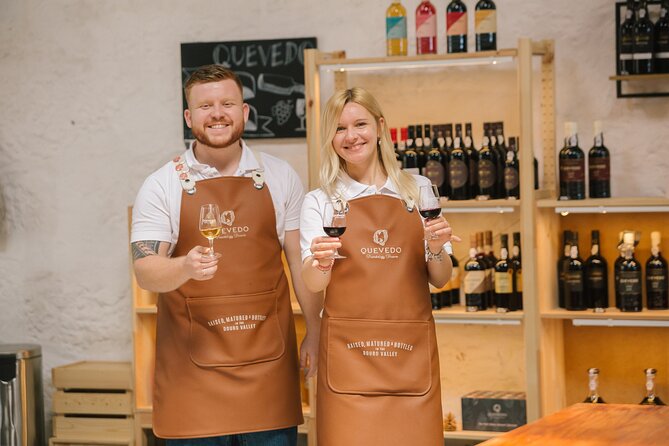
The host then explains how Port is made and how the three wines differ. Several hosts have led these sessions, including Miguel, Fernando, Danny, Dima, and Ricardo. The strongest descriptions of the experience point to guides who are friendly, clear, and happy to answer questions. Since the specific host is not guaranteed, expect a personal welcome but not a named-guide tour.
The presentation is short enough to hold your attention. You learn while tasting, rather than listening to a long lecture before seeing a glass. This is a good format if you have only a little time in Porto or Vila Nova de Gaia and still want some context for the bottles you encounter elsewhere.
The group limit of eight is one of the most useful details. A large tasting can feel like a sales presentation, with little chance to speak. Here, you are more likely to have room for questions and conversation. One person even arrived late and was still allowed to complete the activity, though you should not rely on that courtesy. Arrive on time so you do not miss the opening explanation or disturb the tasting.
At the end, you return to the meeting point. There is no separate drop-off. You may find bottles available for purchase, but there is no pressure to buy, according to the supplied experience details.
More Porto wine tastings worth an afternoon:
- From Porto: Douro Valley w/ Boat Tour, Wine Tasting & Lunch
★ 4.7 · 19,061 reviews - Complete Douro Valley Wine Tour with Lunch, Wine Tastings and River Cruise
★ 5.0 · 12,920 reviews - Douro Valley: Wine Tour with Lunch, Tastings & River Cruise
★ 4.6 · 6,081 reviews - Douro Valley: Historical Sites, Wine Experience, Lunch & Cruise
★ 5.0 · 5,133 reviews
How much value do you get for $31.24?
At $31.24 per person, this is priced as a focused tasting rather than a full meal or extended winery visit. The value depends on what you want.
If you are new to Port, the price is fair. You receive three wines, three cheeses, a guided explanation, and a historic wine-lodge setting. Buying several different Port bottles and cheeses on your own could cost a similar amount, while giving you less help in comparing them.
The activity is also good value for a packed sightseeing day. Forty minutes is enough to learn the basic differences between Crusted, Tawny, and White Colheita Port without spending an entire afternoon indoors. You can schedule it as a pause between visits in Porto and Gaia.
If you already know Port well, the value is less certain. The tasting lineup is interesting, but the session is introductory. You may want a longer format with more vintages, a deeper discussion of production, or a more exact explanation of every cheese-and-wine match. None of that is promised here.
The current score is 4.8 out of 5, with 94 percent of participants recommending the experience. That matches the strongest pattern in the feedback: warm hosts, good products, a pleasant venue, and a lot of information delivered in a short time. The weaker point is consistent too: at least one person felt the explanation of the pairings did not go far enough.
What the guide does best
The host makes or breaks a short tasting. With only 40 minutes, there is no time for a dull or unfocused talk.
The best sessions appear to combine clear explanations with a relaxed tone. Miguel was praised for explaining both Port and food science. Fernando was singled out for his friendly, detailed presentation, while Danny was described as adding humor to the tasting. Dima and Ricardo were also praised for being attentive and well informed.
Those names are useful because they show the kind of hosting Quevedo aims for, but they do not mean you can request a particular person or that one of them will lead your session. The provider is Quevedo, and the host depends on the schedule.
I would use the tasting as a conversation, not a test. Ask what makes the Tawny different from the Crusted Port. Ask why a White Colheita appears in the lineup. Ask which cheese the host prefers with each glass. You will get more from the session if you treat the guide as a resource rather than simply waiting for the next pour.
The pairing lesson has one clear limitation
The wine presentation sounds stronger than the food-pairing explanation. You can expect the host to identify the cheeses and offer an opinion about a favorite match. You may not receive a detailed explanation of why the texture, salt, acidity, or sweetness of each cheese works with a particular Port.
That distinction matters. A tasting with cheese is not automatically a pairing class. If your main goal is to understand the mechanics of food and wine, make your questions specific and listen for the answer. The small group may allow a more useful exchange than the set presentation alone.
For most people, though, the practical lesson is enough. Taste a Port by itself, take a bite of cheese, and try the wine again. Notice whether the cheese softens the sweetness or makes the wine taste fuller. Then try the jam. You can learn a surprising amount from this simple side-by-side approach.
The food itself receives strong marks for quality. Several people found both the Port and cheeses delicious, and one person who was not initially a Port fan found that the cheese changed the experience. That is a worthwhile reason to book this instead of ordering a single glass at a bar.
Who should book this tasting?
I would recommend it to first-time Port drinkers, couples, small groups of friends, and anyone with a tight Porto schedule. It is also a good rainy-day plan, especially if you are already in Vila Nova de Gaia and want a warm indoor stop.
It suits people who enjoy learning a little while they drink. The host explains the basic production and style differences, but the tone is social rather than academic. You can laugh, ask questions, and taste without needing prior wine knowledge.
It is less suited to someone seeking a full meal. The platter has three cheeses and local jam, but the experience is built around tasting. It may also disappoint a serious wine student who expects a long lesson on pairing theory, vineyard details, or a large range of vintages.
The activity is offered in English. Service animals are allowed, and the venue is near public transportation. Confirmation arrives at booking, and the group is capped at eight people. You can cancel for a full refund up to 24 hours before the start time. Changes or cancellations made inside that window are not accepted for a refund.
A simple way to get more from the tasting
Before the session, think about what you want to learn. If you simply want an enjoyable introduction, let the host guide you through the lineup. If you want practical knowledge for future ordering, focus on the difference between the three Ports.
Taste in the order presented unless your host suggests another sequence. Start with the Crusted Port, compare it with the 10-Year-Old Tawny, then try the White Colheita 2009. Take small bites of each cheese between sips.
Notice your own preferences. One person may favor the darker Crusted Port, while another may prefer the softer Tawny or the unusual White Colheita. There is no correct favorite. The point is to learn what you would order later at a restaurant, wine bar, or Port lodge.
Do not feel obligated to buy a bottle afterward. The experience offers a chance to purchase, but there is no reported pressure. Take notes on the style you liked and shop later if you want to compare prices or bottle sizes.
Should you book the Quevedo Port and cheese tasting?
Book it if you want a friendly, compact introduction to Port in a small setting. The three-wine lineup is more useful than a single-style tasting, the cheese board gives you a practical way to compare flavors, and the $31.24 price is reasonable for a 40-minute guided session.
Go in with the right expectation. This is not a full meal, a long cellar tour, or a technical pairing seminar. The wine explanation is likely to be the strongest part, while the cheese discussion may require your questions.
For most visitors spending time in Porto or Vila Nova de Gaia, I think it is a sensible choice. You get a taste of local wine culture, a comfortable old setting, and enough information to make your next glass of Port more interesting.
FAQ
Where does the Port and cheese tasting take place?
It starts and ends at Quevedo Lodge, Wine Bar and Tastings, R. de Santa M.nha 77, 4400-291 Vila Nova de Gaia, Portugal.
How long does the activity last?
The tasting lasts approximately 40 minutes.
Which Port wines are included?
The listed tasting includes Crusted Port, 10-Year-Old Tawny, and White Colheita Port 2009.
Which cheeses are served?
The platter includes paprika-aged goat cheese, mixed cow and goat cured cheese, and cow cheese with local jam.
Is the tasting offered in English?
Yes. The experience is offered in English.
How many people can join, and what is the cancellation policy?
The activity has a maximum of eight participants. You can cancel up to 24 hours before the start time for a full refund. Cancellations or changes made less than 24 hours before the start time are not accepted for a refund.
More Cheese in Porto
- Vila Nova de Gaia: Port Wine Tasting with Cheese Pairing
★ 4.8 · 1,074 reviews - Porto: Cálem Cellar with Chocolate, Cheese, and Wine Tasting
★ 4.6 · 310 reviews - Porto: Wine and cheese tasting on a sailboat on the Douro River
★ 5.0 · 37 reviews - Porto: Cheese and Port Wine Tasting in a Unique Place
★ 4.8 · 30 reviews
Latest reviews around Porto
- Private Walking Tour, highlights and secrets of Porto★ 3.9 · 3 reviews
- Private Porto Half-Day Tour – Wine Cellars & Cheese Tasting★ 5.0 · 3 reviews
- Portuguese Wine Tasting w Local Cheese & Cold Cuts pairing★ 5.0 · 3 reviews
- From Peso da Régua: Visit 3 wineries, tasting and viewpoint★ 5.0 · 3 reviews
- Porto: Full-Day All-Inclusive Private City Sightseeing Tour★ 4.3 · 3 reviews
- Small Painting Group with a Local Artist in Porto★ 5.0 · 3 reviews
- From Arouca: Paiva River Rafting Adventure – Adventure Tour★ 5.0 · 3 reviews
- Private Tour to Santiago de Compostela and its stunning Cathedral★ 5.0 · 3 reviews
Port Wine Cellar Tours, compared.

Porto: Cálem Cellar Tour, Interactive Museum & Wine Tasting
Read our review →
Porto: Cálem Cellar Tour, Fado Show & Wine Tasting
Read our review →
Porto: Cockburn’s Port Lodge Tour and Tasting
Read our review →
Porto: Bridges Cruise with Wine Cellar Tour or Sunset Option
Read our review →
Porto: Authentic Fado Show, Port Wine & Handmade Instruments
Read our review →
Porto: City Train Tour, River Cruise & Wine Cellar
Read our review →
Porto: Live Fado Concert with Glass of Tawny Port Wine
Read our review →
Port Wine Lodges Tour Including 7 Port Wine Tastings (English)
Read our review →Browse the lists this tour appears in