
Reviewed · DESSERT TOURS
Chestnut Liquor and Sweets Proof
Chestnuts are more than a seasonal snack in northern Portugal. At Marron Oficina da Castanha, they become liqueur, pastry, cultural tradition, and the subject of a compact guided visit. You’ll see how one local ingredient shapes food and rural life in Trás-os-Montes.
I like the hands-on tasting, which includes two chestnut liqueurs and two chestnut pastries. I also like the clear local focus: you hear about production and processing in Trás-os-Montes, then see the workshop’s collection of roasted chestnuts. The main drawback is the short format, since 45 minutes gives you an introduction rather than a full workshop or farm visit.
In This Review
- Key points
- Why chestnuts matter in Trás-os-Montes
- Beginning inside the interpretive center
- Seeing the roasted chestnut collection
- Tasting two chestnut liqueurs
- Sampling two chestnut pastry candies
- What the $6.16 price really offers
- Fitting the 45-minute visit into your day
- Who will enjoy this chestnut experience
- A friendly introduction, with limits
- Should you book Marron Oficina da Castanha?
- FAQ
- Where does the chestnut experience begin?
- Where does the activity end?
- How long does the visit last?
- What does the tasting include?
- Is transportation included?
- Is the activity offered in English?
- What is the cancellation policy?
Key points
- Two liqueurs and two chestnut pastries: The tasting gives you several ways to compare the chestnut’s sweet and savory character.
- A local food lesson: You learn how chestnuts are produced and processed in Trás-os-Montes.
- A collection of roasted chestnuts: The display adds a visual stop to what could otherwise be only a talk and tasting.
- A useful rainy-day activity: The indoor setting works well when Bragança’s sightseeing plans need a break.
- A low-cost cultural stop: At $6.16 per person, the visit offers a modest price for a guided introduction and four tasting portions.
- A short, simple schedule: The activity lasts about 45 minutes, begins and ends at R. Combatentes da Grande Guerra 135, and is offered in English.
Why chestnuts matter in Trás-os-Montes
This visit works because it treats the chestnut as a part of local culture, not just a dessert ingredient. In Trás-os-Montes, chestnut production and processing have a place in the region’s food traditions, and the talk explains how the ingredient moves from production into different dishes.
That context gives the tasting more meaning. You are not simply sampling flavored alcohol and sweets. You are connecting each item with a regional crop and with the work required to prepare it for the kitchen.
I find this especially useful if you are exploring northern Portugal beyond the major city routes. Bragança has its own local identity, and a chestnut-focused visit gives you a way to understand that identity through food.
The presentation is also approachable. The experience is designed around an interpretive center within the workshop, so you can expect an explanation supported by objects and examples rather than a long formal lecture. The supplied information does not name the guide, but the host is described as welcoming and strongly connected to local culture.
A few more Northern Portugal outings to weigh up
- Porto: Cálem Cellar with Chocolate, Cheese, and Wine Tasting
★ 4.6 · 310 reviews - Porto: Entry Ticket at WOW The Chocolate Experience by 20|20
★ 4.2 · 115 reviews - Porto: Chocolate Museum – Chocolate’s Delicious Journey + Tasting
★ 4.0 · 15 reviews
Beginning inside the interpretive center
The visit starts at the workshop at R. Combatentes da Grande Guerra 135 in Bragança. You meet there, and the activity returns to the same point at the end. That makes the timing easy to manage alongside other plans in town.
Inside the interpretive center, the guide introduces chestnuts and explains their role in the region. You hear about production, processing, and the ways chestnuts can be used in different dishes. The subject is specific, but that is part of its appeal. Instead of receiving a broad and hurried introduction to Portuguese food, you get one ingredient explained properly.
I would treat this first section as the foundation for the tasting. Pay attention to the difference between growing and processing. Those steps help explain why the same chestnut can appear as a roasted food, a sweet, or a liqueur.
The indoor format is practical. You do not need special clothing or a long block of free time, and the visit can fit into a morning or afternoon in Bragança. Since the center is near public transportation, you can reach the meeting point without arranging private transport.
Seeing the roasted chestnut collection
A visit to the workshop’s collection of roasted chestnuts follows the introduction. This is a small but useful feature because it gives you something concrete to examine while the production story is being explained.
The collection helps show the variety within a food that can seem simple at first glance. You get a visual link between the chestnut as a local crop and the finished products served later. It also gives the visit a sense of place. You are not only sitting at a table for a tasting; you are seeing part of the workshop’s own material.
The available details do not specify the size or design of the collection, so you should think of it as a focused display rather than a large museum. That distinction matters. If you want an extensive agricultural museum or a full production tour, this activity may feel too brief. If you want a compact look at a regional specialty, it fits well.
I like the way this stop breaks up the talk. A short food visit is more memorable when you can look at examples as well as listen to an explanation.
Tasting two chestnut liqueurs
The tasting includes two chestnut liqueurs. Having two versions matters because it gives you a comparison rather than a single sample with no reference point.
You can focus on how the chestnut flavor changes between the liqueurs, then consider which one feels more suited to an after-meal drink. The information does not specify the exact recipes, alcohol level, sweetness, or serving size, so you should not expect a technical spirits class. The point is to connect the liqueur to the ingredient and to the workshop’s use of chestnuts.
This part may be the strongest reason to book if you enjoy small local tastings. The price is low, yet you receive two separate liqueur samples along with the sweets and the cultural explanation. That creates better value than a visit limited to a single drink.
If you do not drink alcohol, the supplied details do not confirm whether substitutes are available. I would check with Marron Oficina da Castanha before booking if that matters to you.
A different sort of Northern Portugal day altogether:
- Star canyoning
★ 5.0 · 290 reviews - Private Rafting Experience in Melgaço
★ 5.0 · 186 reviews - Classic Wine Tasting with GUIDED TOUR
★ 5.0 · 93 reviews - Rafting Experience on the Minho River with Coraltours Minho
★ 5.0 · 70 reviews
Sampling two chestnut pastry candies
The second part of the tasting includes two chestnut pastry candies. These provide a useful contrast with the liqueurs, since you experience the ingredient in a solid sweet rather than a drink.
The pastries are not described in detail, so the exact shapes, fillings, and textures are not specified. You can expect chestnut-based sweets, but you should not book this expecting a particular pastry style or a full bakery lesson.
The tasting has a pleasant balance. You learn how the ingredient is processed, see roasted examples, and then try it in both liquid and pastry form. That sequence turns an unfamiliar specialty into something easy to understand.
The sweets are also a good choice for anyone who prefers food-focused activities to formal sightseeing. You receive a local taste without giving up half a day. A Spanish-language review specifically praised both the liqueurs and the sweets, as well as the staff’s kindness. That matches the experience’s strongest quality: it is personal and food-centered without being complicated.
What the $6.16 price really offers
At $6.16 per person, this is an inexpensive add-on to a Bragança itinerary. The price includes the guided visit, the lesson on Trás-os-Montes chestnut production and processing, the roasted chestnut collection, two liqueurs, and two chestnut pastry candies.
I would judge the value by the experience’s purpose. It is not priced like a full-day food tour, and it does not provide transportation, a farm excursion, or a long cooking class. Instead, you pay for a short cultural stop with a tasting attached.
That makes it particularly useful if you have 45 minutes available and want something indoors. The visit can also help you decide if chestnut products are worth seeking elsewhere in northern Portugal.
The price is less compelling only if you want a major attraction or an extended activity. The center’s small scale and short schedule are part of what keeps the cost low. I would view it as a good-value introduction, not a destination that should fill an entire afternoon.
Fitting the 45-minute visit into your day
The activity runs approximately 45 minutes. That is long enough for an explanation, the collection, and the tasting, but short enough to place between other plans.
The workshop is open daily from 10:00 a.m. to 7:00 p.m. for the stated operating period, which runs through February 7, 2027. Those broad hours give you useful flexibility, though you should still use your confirmed booking time rather than simply arriving at any point during the day.
Because the activity starts and ends at the same address, you do not lose time changing meeting points. Private transportation is not included, but the location is near public transportation.
I would schedule this after a castle or old-town visit, or during the middle of the day when you want a quiet indoor stop. The 45-minute length also makes it suitable before dinner, especially if you want to sample a local drink without committing to a larger food tour.
The maximum group size is 50 people. That is a fairly large possible group for a small workshop, so the feeling may depend on the number booked on your date. A small group should feel more intimate. At full capacity, the tasting and display may feel less personal.
Who will enjoy this chestnut experience
I would recommend the visit to you if you enjoy learning about regional food through a short, direct activity. It suits couples, solo visitors, families with older children, and anyone looking for a low-cost break from outdoor sightseeing.
It is also a good choice for people who want to understand northern Portugal’s rural food traditions. The focus on Trás-os-Montes gives the experience a clear regional purpose, and the tasting shows how one crop can appear in several forms.
You may also like it if you enjoy small producers and specialty ingredients. The workshop setting feels more focused than a general market visit, and the guide explains the work behind the products.
I would be more cautious if you need a fully detailed agricultural tour. The information does not promise a chestnut orchard visit, a factory demonstration, or a cooking session. You also should not expect a long tasting menu. This is a compact introduction.
The activity is offered in English, which makes it practical for English-speaking visitors. Confirmation is provided at booking, and free cancellation is available up to 24 hours before the start time. If you cancel later than that, the payment is not refunded, and changes made within that period are not accepted.
A friendly introduction, with limits
The most praised part of the experience is the welcome. The host is described as representing local culture warmly, and the staff’s kindness is singled out alongside the food.
That matters in a small workshop. A short visit depends on the guide’s ability to make a narrow subject feel worthwhile. The available comments describe the presentation as surprisingly detailed for its size, which suggests you should expect more than a quick product pitch.
Still, the visit’s strength is also its limit. The experience centers on one ingredient, one workshop, and one tasting. If you are already an expert on chestnuts or have visited several chestnut producers, you may find the content familiar.
For most people, though, the focused subject is a plus. You leave with a clearer sense of how chestnuts are grown, processed, roasted, and turned into sweets and liqueur. That is a useful memory from a part of Portugal where food traditions can be easy to miss if you only visit the headline sights.
Should you book Marron Oficina da Castanha?
Book it if you want a short indoor activity in Bragança with a strong local food connection. The $6.16 price is easy to justify when you count the talk, the collection, two liqueurs, and two pastries.
I would especially choose it on a rainy day, during a gap between sightseeing plans, or when you want to learn about Trás-os-Montes through a regional ingredient. The warm presentation and well-liked tasting add to its appeal.
Skip it if you are searching for a long farm visit, private transport, or a full meal. The 45-minute format is an introduction, not an all-day food experience. For the right schedule, though, it is a simple and tasty way to see Bragança from a local angle.
FAQ
Where does the chestnut experience begin?
It begins at R. Combatentes da Grande Guerra 135, 5300-252 Bragança, Portugal.
Where does the activity end?
The activity ends back at the meeting point.
How long does the visit last?
The visit lasts approximately 45 minutes.
What does the tasting include?
You receive a tasting of two chestnut liqueurs and two chestnut pastry candies.
Is transportation included?
No. Private transportation is not included, though the meeting point is near public transportation.
Is the activity offered in English?
Yes. The activity is offered in English.
What is the cancellation policy?
You can cancel up to 24 hours before the start time for a full refund. Cancellations or changes made less than 24 hours before the start time are not accepted for a refund.
Latest reviews around Northern Portugal
- Waterfall Route in Peneda Gêres National Park★ 5.0 · 3 reviews
- Deep canyoning★ 5.0 · 4 reviews
- Buggy or Moto4 tour through Melgaço★ 5.0 · 5 reviews
- Moliceiro boat trip, with experience in bivalves harvesting★ 5.0 · 5 reviews
- Private visit with wine tasting in Alijó Douro★ 5.0 · 5 reviews
- Private Guided Tour – Peneda Gerês National Park★ 5.0 · 8 reviews
- 4×4 Adventure in Douro: Wine Tasting, Boat Trip and Lunch★ 5.0 · 9 reviews
- Canyoning on the River Varziela – Initiation Route★ 5.0 · 9 reviews
Dessert Tours, compared.
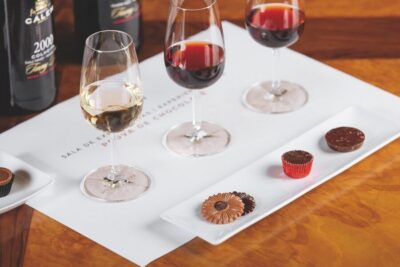
Porto: Cálem Cellar with Chocolate, Cheese, and Wine Tasting
Read our review →
Porto: Entry Ticket at WOW The Chocolate Experience by 20|20
Read our review →
Porto: Chocolate Museum – Chocolate’s Delicious Journey + Tasting
Read our review →
Porto Small-Group Local Food, Wine, and Sweets Tasting Tour
Read our review →
Porto: Pastry and Dessert Tasting Tour with a Local Guide
Read our review →
Browse the lists this tour appears in