
Reviewed · DOURO RIVER CRUISES
Douro River Tour
The most interesting part of this Douro River tour is its full route. You do not simply cruise between Porto and Vila Nova de Gaia. You pass beneath the six bridges, continue toward the Atlantic, and reach the mouth of the river near Foz do Douro. That longer view gives you a useful sense of how Porto, Gaia, and the coast fit together.
I like two things in particular: the small group of no more than eight and the friendly, hands-on hosting from guides such as Claudia, Isabel, Jonas, and Bernardo. I also like the port welcome drink, the chance to see the city from the water, and the blankets offered when the breeze picks up.
The main consideration is the departure point at R. do Ouro 160, which is away from the busiest cluster of river cruises. The boat also moves at a relaxed pace, so this is better for views, conversation, and atmosphere than for speed.
In This Review
- Key points to know before you book
- Why this Douro cruise feels different from a standard bridge trip
- Starting near R. do Ouro 160 in Porto
- The D. Luís I Bridge and Porto’s riverfront
- Five more bridges and the story of engineering
- Rabelos, port wine, and the Gaia bank
- Afurada and the river’s working side
- Cantareira, Foz do Douro, and the Atlantic edge
- What the onboard experience is really like
- Is $21 good value for two hours?
- Who should book this Porto boat tour?
- My call: a worthwhile way to meet Porto from the river
- FAQ
- How long is the Douro River Tour?
- Where does the tour begin and end?
- What is included in the tour?
- How many people can join the boat trip?
- Does the boat tour reach the ocean?
- What happens if bad weather cancels the tour?
Key points to know before you book
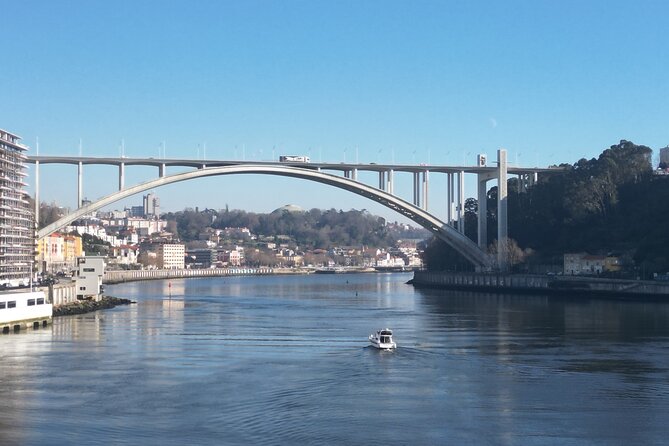
- Six bridges in one trip: See the D. Luís I, Infante Dom Henrique, Maria Pia, São João, and Freixo bridges, along with Ponte da Arrábida.
- A small boat with space to breathe: The group limit is eight people, and the boat has both outdoor seating and a cabin.
- Porto meets the Atlantic: The route continues past Gaia, Afurada, Cantareira, and Foz do Douro toward the river mouth.
- Best at sunset: Late-afternoon departures can bring warm light over the river and coast, though clouds and cold are possible.
- Personal hosting: The crew may provide blankets, snacks, extra port, and life jackets for children.
- Good value at about $21: The price is modest for roughly two hours on the water, especially if you want more than a short bridge cruise.
Why this Douro cruise feels different from a standard bridge trip
Many Porto boat rides focus on the central riverfront. That gives you the classic view: Porto’s steep old quarter on one side, Gaia’s wine lodges and terraces on the other, and the D. Luís I Bridge tying the scene together.
This trip goes farther. It begins near the Porto side of the river and heads toward the bridges before continuing downstream toward the Atlantic. You get the old city, the working riverfront, quieter stretches of the Douro, fishing areas, beaches, and the open water near Foz do Douro.
That wider route matters because Porto can look almost vertical from land. From the river, you see the city’s slopes, churches, stone walls, terraces, and bridges in one broad view. Gaia looks different too. Its riverfront is not only a postcard of wine lodges and restaurants. It is also the southern bank of a river shared by two cities with separate identities.
The pace is intentionally easy. One sailing description notes a trip of about one and a half to two hours, while the advertised duration is approximately two hours. You have time to look around, take photographs, listen to explanations, and enjoy the port without feeling pushed from one sight to the next.
More Douro river cruises:
- Complete Douro Valley Wine Tour with Lunch, Wine Tastings and River Cruise
★ 5.0 · 12,920 reviews - Porto: Six Bridges Cruise
★ 4.2 · 11,680 reviews - Porto: 6 Bridges Douro River Cruise
★ 4.3 · 6,472 reviews
Starting near R. do Ouro 160 in Porto
The meeting point is R. do Ouro 160, 4150-685 Porto, and the boat returns there at the end. You receive a mobile ticket, and confirmation is provided when you book.
The location is worth checking on a map before you set out. It is not in the most crowded part of the central river cruise area, so you might find the start less convenient if you are staying around the Ribeira waterfront or on the Gaia side. That out-of-the-way position can also mean a quieter departure and a smaller group.
There is no private transport included. You need to make your own way to the meeting point. The tour is near public transportation, and service animals are allowed. Most people can take part, but the information provided does not give detailed mobility guidance, so contact the operator if you have a specific access need.
Once aboard, expect a relaxed setting rather than a large excursion boat. The vessel has outdoor seating and a cabin. Most of the sightseeing happens outside, which gives you the best views but also leaves you exposed to wind and spray. Bring an extra layer even on a sunny day. The crew has supplied blankets when the temperature drops, and passengers have been allowed into the cabin when light rain arrives.
The D. Luís I Bridge and Porto’s riverfront
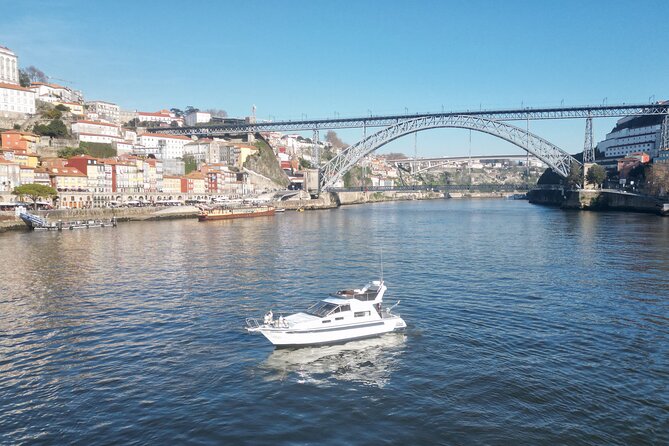
The D. Luís I Bridge is the visual star of the central section. Its two metal decks were built between 1881 and 1886, linking Porto with Vila Nova de Gaia across the Douro.
From the water, the bridge is easier to understand than from the streets above. You can see its great iron structure, the upper and lower crossings, and the way it frames the old city on one side and Gaia on the other. The tour explains basic facts about its construction and place in Porto’s architecture.
The boat also gives you a fresh look at Ribeira. This old Porto district sits beside the river and forms part of the city’s UNESCO-listed historic center. From the deck, you see the waterfront as a connected scene rather than a series of narrow streets and steep stairways.
This is a good moment for photographs, but do not spend the whole crossing with your phone raised. The point of a river trip is to watch the relationship between the buildings, the bridge, and the water. The crew encourages you to enjoy the moment, and that advice is sound.
Five more bridges and the story of engineering
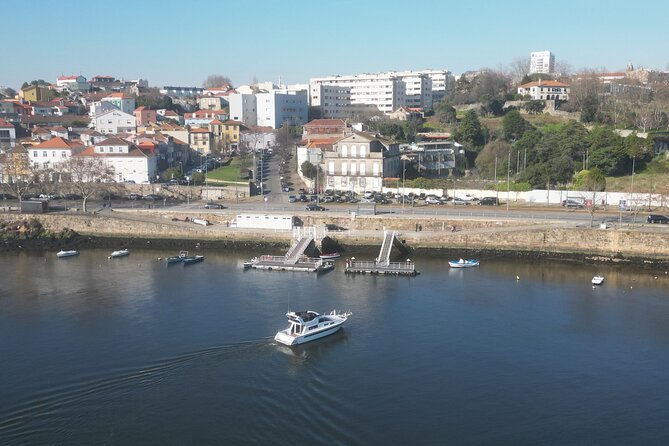
After the D. Luís I Bridge, the tour covers the other five major crossings on the route. Each has a different look and purpose.
Ponte da Arrábida is an arch bridge linking Porto and Gaia. Its broad arch makes a strong contrast with the metal latticework of the D. Luís I Bridge. Seeing both from below helps you notice how bridge design changed over time.
The Infante Dom Henrique Bridge is named for Infante D. Henrique. It sits close to the central crossings and forms part of the modern road network between the two cities. The guide uses the bridge as a chance to explain the name and its place in Porto’s riverfront story.
The Maria Pia Bridge carries an older name and a notable story. It is named for D. Maria Pia, and the tour explains who she was and why the bridge bears her name. From the water, you can appreciate its older iron form, even as later structures around it show how the river crossing system has changed.
The São João Bridge carries the Northern railway line across the Douro. It was built to replace the century-old Maria Pia Bridge, which had reached the end of its useful working life for modern rail traffic. This makes the bridge more than a visual landmark. It shows how Porto’s connection with northern Portugal depends on the river crossings.
Finally, the Freixo Bridge is the most upstream bridge on the Douro in this group. It is farther from the old center, so the scenery becomes less tightly packed and more open. The commentary explains its importance and history as the boat reaches the calmer parts of the river.
You do not need to be a bridge enthusiast to enjoy this section. The value is in seeing how six crossings mark different periods of Porto’s growth. The trip also gives you a practical orientation: after it ends, you will have a better idea of where the old center sits in relation to Gaia and the wider river.
A few more Porto outings to weigh up
- The Unvanquished Tour in Porto City Center
★ 5.0 · 26,497 reviews - From Porto: Douro Valley w/ Boat Tour, Wine Tasting & Lunch
★ 4.7 · 19,061 reviews - Porto: Live Fado Show with Glass of Port Wine
★ 4.8 · 6,498 reviews - Porto: Torre dos Clerigos Entrance Ticket
★ 4.6 · 6,395 reviews
Rabelos, port wine, and the Gaia bank
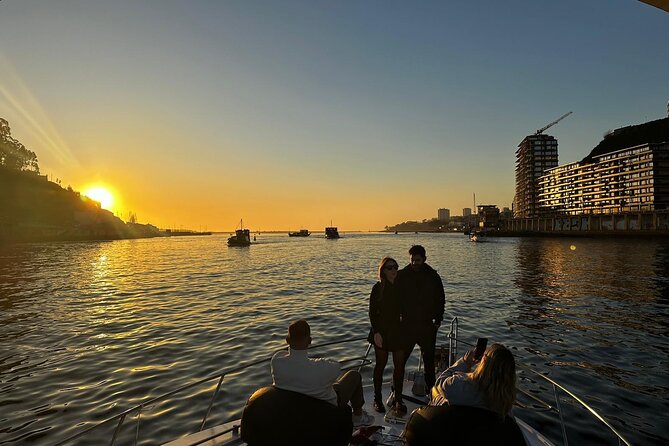
Keep an eye out for the traditional Rabelos boats. These long, distinctive vessels once carried barrels of port wine down the Douro from the wine-growing region to Gaia. The boats you see today are closely tied to Porto’s wine trade and remain part of the river’s visual identity.
The tour discusses their shape and purpose as you pass them. That short explanation adds meaning to the view. Without it, the Rabelos can look like decorative boats placed for photographs. With the context, they become a reminder that the Douro was once a working transport route as much as a scenic one.
The river separates Porto and Vila Nova de Gaia, but the two places developed together. Porto occupies the northern bank, while Gaia spreads along the southern bank. The cruise gives you time to compare the slopes, waterfront buildings, terraces, and older structures on both sides.
Cais de Gaia is especially striking from the boat. Its restaurants, bars, terraces, and wine businesses face Porto’s historic center across the water. The tour explains why this area matters to both tourism and the local economy.
The port welcome drink is included. Some sailings also provide snacks, and the crew has been generous with an additional glass on occasion. The formal inclusion is the port wine, so if snacks matter to you, treat them as part of the onboard hospitality rather than the main reason to book.
Afurada and the river’s working side
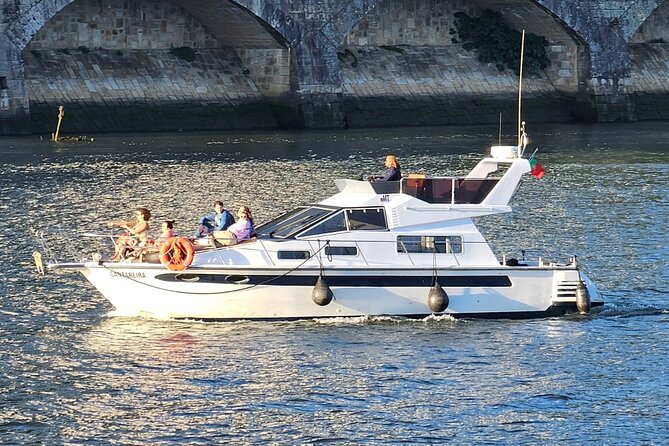
As the boat moves toward the sea, the view changes. The tightly packed city gives way to more open waterfront and the old fishing village of Afurada.
Afurada offers a useful counterpoint to the polished terraces of Cais de Gaia. Its identity is tied to fishing and the river, and the guide discusses the village’s past, customs, stories, and local myths. This section helps you see that the Douro waterfront is not only a scenic setting for restaurants and sightseeing boats.
The experience does not appear to include a walk through Afurada. You see it from the water and hear about its character as the boat passes. That is both a strength and a limit. The cruise provides context without taking you into the village, but you will need a separate visit if you want to explore its streets or spend time at its restaurants.
The calmer stretch of the Douro can also be the most relaxing part of the tour. The boat moves slowly enough for you to watch the banks and listen to the guide. One guide, Claudia, has been praised for mixing local trivia with personal stories, while other crew members have focused more on creating a friendly, informal mood than on delivering a long lecture.
Cantareira, Foz do Douro, and the Atlantic edge
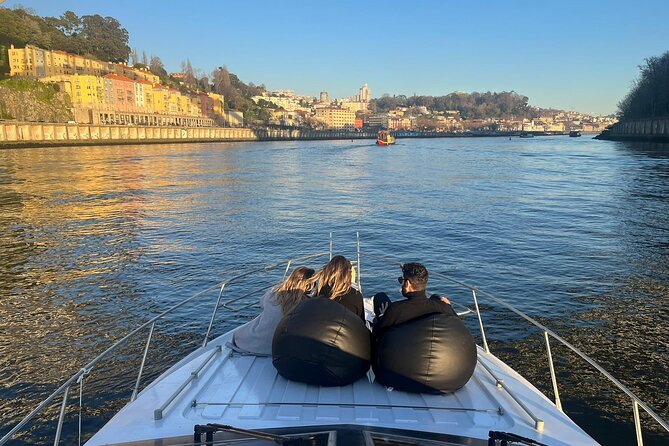
Near Cantareira, the guide points out the area and connects it with a well-known Portuguese singer who wrote about it. The exact amount of detail can vary with the guide and conditions, but the stop adds a cultural note to the river journey.
The final stretch toward Foz do Douro is the tour’s biggest scenic change. Here, the river meets the Atlantic, and the setting becomes coastal. You see the seaside area, its beaches, and the transition from inland river to open ocean.
Praia da Luz and Praia do Homem do Leme are among the beaches discussed. Foz is not just a beach district. It also has a historical setting shaped by the river mouth, maritime traffic, and the need to guide vessels safely along the coast.
The lighthouse is another focus. The guide explains when it was created, how it was used in the past, and why its setting matters. From the boat, you get the kind of view that is hard to arrange on foot because the lighthouse, coast, river mouth, and city all sit within one frame.
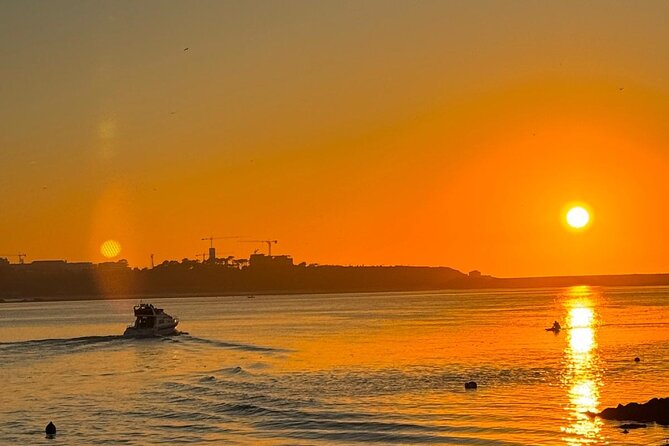
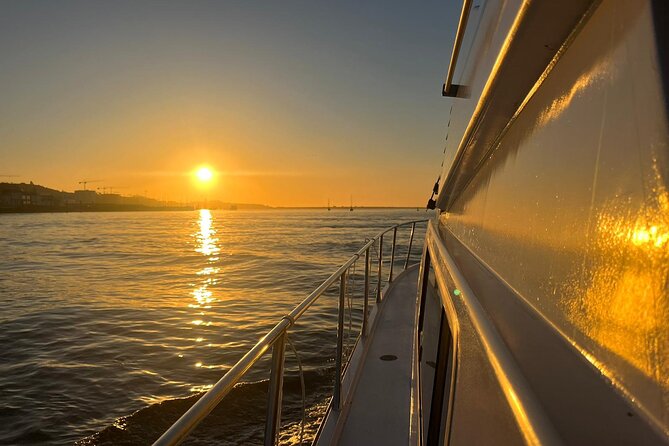
If you choose a late-afternoon departure, this is where the timing can pay off. The sun may settle near the ocean as you return toward Porto and Gaia. On a clear evening, the combination of warm light, port wine, and open water can be the most memorable part of the experience.
Sunset is not guaranteed, of course. Cloudy weather can make the ride cold and gray, and light rain is possible. The crew may provide blankets and access to the cabin, but you should still check the forecast and dress for the river rather than the temperature you feel on a sheltered city street.
What the onboard experience is really like
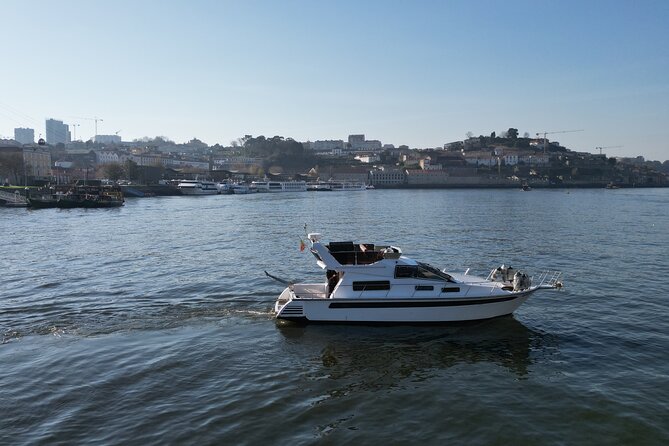
This is a social but intimate outing. With a maximum of eight people, you have a fair chance to speak with the crew and ask questions. The small scale also means the boat does not feel crowded, though that may be less appealing if you prefer a large vessel with lots of room to move.
The captain handles the boat while the host explains the sights. Names associated with different departures include Claudia, Isabel or Isobel, Jonas, and Bernardo. Their roles can vary. Claudia, for example, may normally drive the boat but also lead the commentary.
The tone is friendly and casual. You get facts about the bridges and waterfront, followed by stretches when you can simply watch the scenery. That balance suits you if you want an introduction to Porto without sitting through a nonstop lecture.
Families can consider this trip. Life jackets are provided for children, and the open views give younger passengers something to watch. One memorable touch has been allowing children to take a turn at the controls under supervision, though you should not assume this happens on every departure.
The boat has been described as well maintained and comfortable. The outdoor seating is useful for sightseeing, but the same position exposes you to wind and cold. The cabin offers a warmer option when needed.
Is $21 good value for two hours?
At about $21, this is a strong value if you want a small-group river ride that goes beyond the central bridges. The price includes the port welcome drink and roughly two hours on the Douro. You are paying for the route, the personal hosting, and the chance to see both the city and the coast from the water.
The value is even better if you choose a time with good light. A sunset departure can turn a standard sightseeing ride into a pleasant evening activity, though weather remains a factor. You may also receive snacks, but the clearly listed inclusion is port wine.
The lower price does come with practical tradeoffs. Private transportation is not included, and the departure point may require extra planning. This is not a fast speedboat ride, despite the boat’s speedboat-style design. The crew favors a gentle pace, and larger boats may pass you.
That slower speed is not necessarily a flaw. It gives you more time to listen, take photographs, and see the banks. If you want a thrilling ride or a tight schedule, choose something else. If you want a calm outing with a broad route, the price is sensible.
Who should book this Porto boat tour?
I would choose this experience if you want to see Porto from a new angle after exploring the old center. It is also a good first activity because the bridge route gives you a clear mental map of Porto, Gaia, and the river mouth.
It suits couples, families, and solo visitors who enjoy smaller groups. The port tasting makes it appealing to adults, while the bridges, boat, and open views give children something to follow. The crew’s warm approach is a major part of the appeal.
You should think twice if you need a fully indoor activity, dislike slow boat rides, or have only a short window in Porto and cannot easily reach R. do Ouro 160. You should also avoid booking without a weather check. The tour requires good weather, and a cold, cloudy evening will change the mood.
Cancellation is free up to 24 hours before the start time for a full refund. Changes or cancellations within 24 hours are not accepted for a refund. If poor weather forces the operator to cancel, you are offered another date or a full refund.
My call: a worthwhile way to meet Porto from the river
I would book the Douro River Tour if the weather looks good and I wanted a personal, low-cost introduction to Porto’s waterfront. Its best features are specific: a group capped at eight, all six bridges, the quieter river sections, and the continuation to Afurada and Foz do Douro.
Choose the late afternoon for the best chance of sunset, but bring a warm layer and keep expectations realistic. This is not a high-speed cruise or a formal history lesson. It is a relaxed boat outing with useful local stories, friendly crew, port wine, and some of the finest views of Porto and Gaia.
FAQ
How long is the Douro River Tour?
The advertised duration is approximately two hours. The experience may last about one and a half to two hours depending on the departure and conditions.
Where does the tour begin and end?
It begins at R. do Ouro 160, 4150-685 Porto, Portugal, and returns to the same meeting point.
What is included in the tour?
A port wine welcome drink is included. Snacks have also been served on some departures, but port wine is the specifically listed inclusion.
How many people can join the boat trip?
The activity has a maximum of eight travelers, making it a small-group experience.
Does the boat tour reach the ocean?
Yes. The route follows the Douro toward Foz do Douro and the river mouth, passing areas such as Afurada and Cantareira along the way.
What happens if bad weather cancels the tour?
If poor weather causes the operator to cancel, you can choose a different date or receive a full refund. You can also cancel up to 24 hours before the start time for a full refund.
Latest reviews around Porto
- Private Walking Tour, highlights and secrets of Porto★ 3.9 · 3 reviews
- Private Porto Half-Day Tour – Wine Cellars & Cheese Tasting★ 5.0 · 3 reviews
- Portuguese Wine Tasting w Local Cheese & Cold Cuts pairing★ 5.0 · 3 reviews
- From Peso da Régua: Visit 3 wineries, tasting and viewpoint★ 5.0 · 3 reviews
- Porto: Full-Day All-Inclusive Private City Sightseeing Tour★ 4.3 · 3 reviews
- Small Painting Group with a Local Artist in Porto★ 5.0 · 3 reviews
- From Arouca: Paiva River Rafting Adventure – Adventure Tour★ 5.0 · 3 reviews
- Private Tour to Santiago de Compostela and its stunning Cathedral★ 5.0 · 3 reviews
Douro River Cruises, compared.
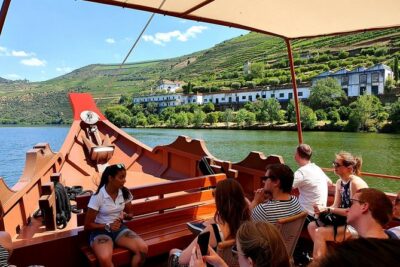
Complete Douro Valley Wine Tour with Lunch, Wine Tastings and River Cruise
Read our review →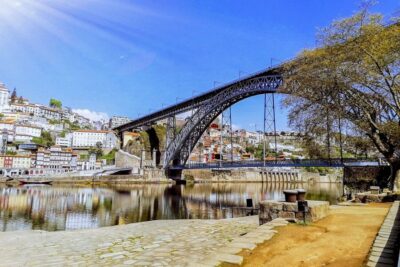
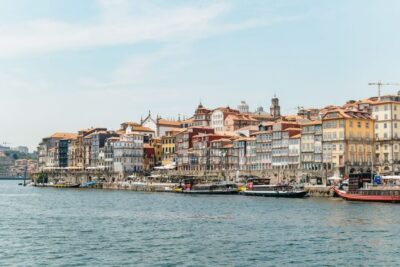
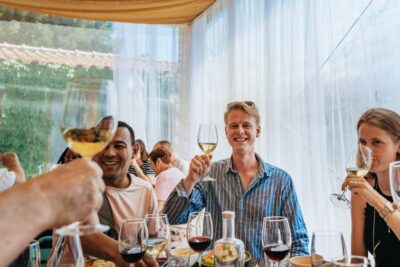
Douro Valley: Wine Tour with Lunch, Tastings & River Cruise
Read our review →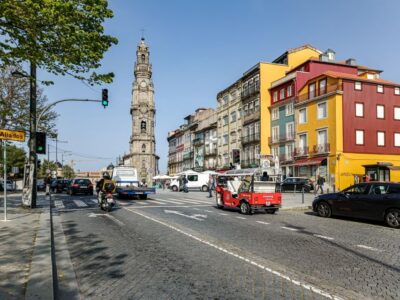
Porto: Guided Tour by Tuk-Tuk & Optional Douro River Cruise
Read our review →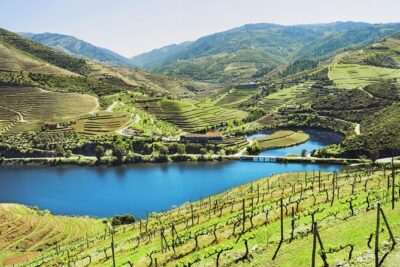
Authentic Small Group Douro Wine Tour with Lunch & River Cruise
Read our review →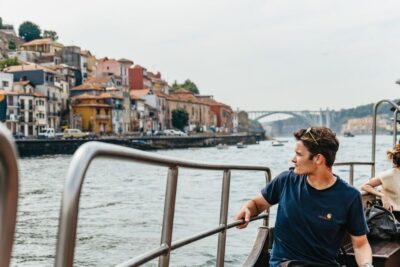
Douro Valley Tour: 2 Vineyard Visits, River Cruise, Winery Lunch
Read our review →Browse the lists this tour appears in