
Reviewed · TUK-TUKS
Full-Day Private Tuk Tuk All Around Porto
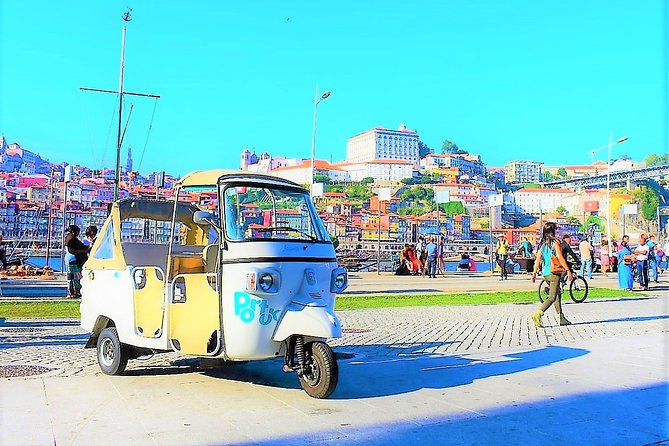
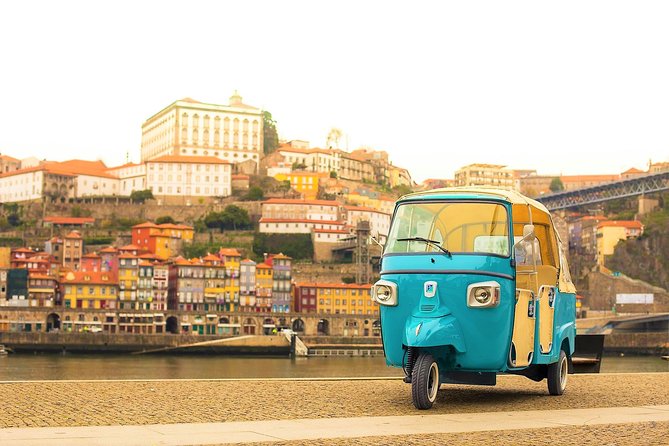
Porto is built for a tuk-tuk. Its steep lanes, tight corners, cobbled streets, and scattered viewpoints make a small open vehicle far more useful than a large sightseeing bus. This full-day tour takes you from the cathedral and São Bento Station across the Dom Luís I Bridge to Vila Nova de Gaia, then through gardens, churches, squares, and riverside landmarks.
I like the private format, which lets you shape the day around your interests, and I like the chance to see a lot of Porto without wearing out your legs on its hills. Guides such as Gabi, Fabio, Gonçalo, Leonardo, Leandro, and Bernardo have been praised for friendly service, local suggestions, and flexible pacing. The main concern is vehicle comfort, and one serious complaint involved a supposedly private booking being combined with another group at short notice.
In This Review
- Key points to know before booking
- Why a Porto tuk-tuk works so well
- São João Theatre and Porto Cathedral
- São Bento Station and the tiled center
- Lello, Clérigos, and the Cordoaria gardens
- São Francisco and the views from Crystal Palace
- Lunch with local products and small-producer wine
- Crossing the Douro to Vila Nova de Gaia
- Palácio da Bolsa, Ferreira Borges, and the riverfront
- Is eight hours too long?
- Price, private value, and what to confirm
- Who should book this Porto day?
- Should you book it?
- FAQ
- How long does the Porto tuk-tuk tour last?
- Where does the tour start?
- Is the tuk-tuk tour private?
- What is included in the price?
- What food is served at lunch?
- Are monument entrance fees included?
- Does the tour cross into Vila Nova de Gaia?
- Can children join the tour?
- What happens if the weather is poor?
Key points to know before booking
- Eight hours covers both Porto and Gaia: You cross the Dom Luís I Bridge and see the city from several angles.
- The tuk-tuk reaches places buses cannot: Narrow lanes and steep streets are part of the appeal, though cobblestones can make the ride tiring.
- You can shape the route: The tour is private in principle, so tell your guide what matters most, from churches and architecture to viewpoints and food.
- Lunch is a tasting meal: Regional cheeses, sausages, canned fish, and wine from small producers are included rather than a standard restaurant lunch.
- Most major interiors cost extra: Cathedral, Livraria Lello, and Clérigos Tower admission are not included.
- Check the private arrangement: A past booking was combined with another group, so confirm the vehicle and group size before departure.
Why a Porto tuk-tuk works so well
A full-sized bus gives you a broad view of Porto, but not much access to its older streets. A tuk-tuk can slip through the historic center, approach viewpoints, and stop near sights without asking you to climb every hill on foot.
That matters in Porto. The city rises sharply from the Douro River, and the distance between attractions can look modest on a map while feeling much longer under the afternoon sun. The tuk-tuk handles the uphill work while you save your energy for churches, gardens, and lookout points.
You start at 9:30 a.m. on Rua de Augusto Rosa, near the cathedral and the São João Theatre. The experience lasts about eight hours and ends back at the same meeting point. Since only your group should participate, you can ask for extra photo stops, more time in a garden, or a quicker pass through a sight that does not interest you.
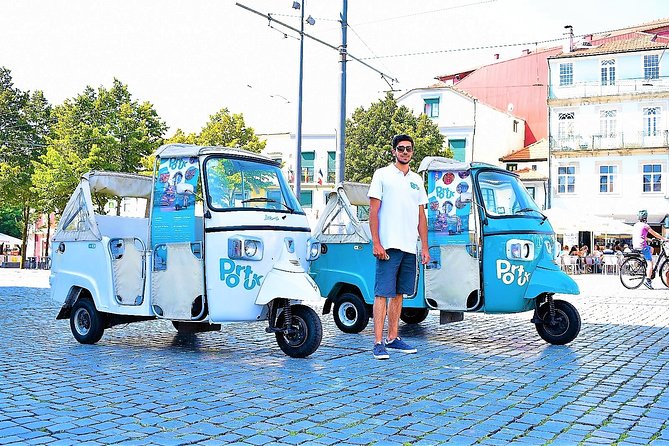
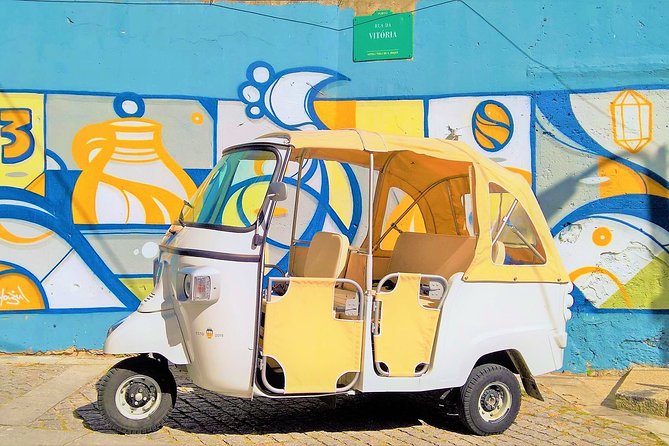
The vehicle is the trade-off. Three adults can fit, but one past booking found the seating tight, especially after a full day. The cobblestones also make the ride bumpy. If you are broad-shouldered, tall, or sensitive to jolts, ask about the vehicle size before you pay.
More tuk tuk rides around Porto:
- Porto: Guided Tour by Tuk-Tuk & Optional Douro River Cruise
★ 4.5 · 5,980 reviews - Discover Porto’s Highlights on a 2-Hour Private Electric Tuk Tuk
★ 4.5 · 1,860 reviews - Historic Porto by Private Electric Tuk Tuk to Top Landmarks
★ 4.5 · 735 reviews
São João Theatre and Porto Cathedral
The first stop is the Teatro Nacional São João, a handsome early twentieth-century building designed by Marques da Silva. It opened in 1910 after the earlier Real Theatre burned in 1908. Its façade has Luís XVI influences, with decorative emblems linked to pain, quality, hate, and love.
You do not pay an entrance fee here, and the usual stop is best treated as an exterior introduction to Porto’s theatre tradition. The building still serves as a national theatre, with a program that includes classic and modern works from Portugal and abroad.
Nearby, Porto Cathedral gives you a much older starting point. Its construction began in the twelfth or thirteenth century in Romanesque style, though later additions and twentieth-century restoration shaped the appearance you see today. The cathedral feels more like a fortified medieval church from outside than a delicate Gothic monument.
Allow time for the Gothic São João Evangelista Chapel and the fourteenth-century cloister. The cloister is especially rewarding, with tile panels and architectural details that reward a slow look. Inside, you may also see the eighteenth-century silver altar, Baroque frescoes by Nicolau Nasoni, and sculpture by Teixeira Lopes.
Cathedral admission is not included. The listed stop is about 10 minutes, so ask your guide if you want a longer visit and be prepared for the day’s timing to shift.
São Bento Station and the tiled center
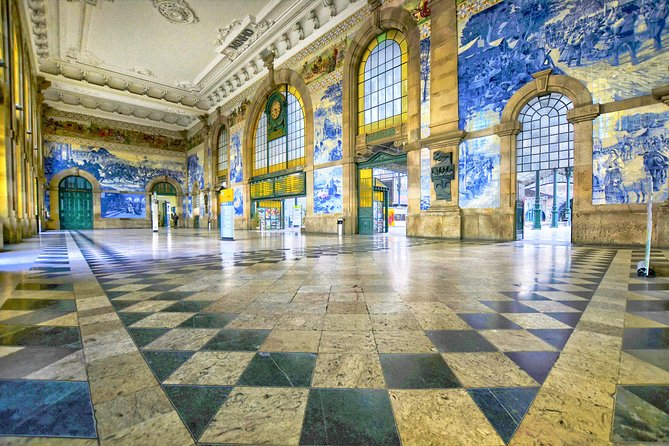
São Bento Railway Station is one of Porto’s easiest great sights. You can enter without an admission ticket, and the main lobby immediately explains why the station appears on nearly every first-time itinerary.
The walls carry about 20,000 blue-and-white narrative tiles by Jorge Colaço. They depict Portuguese scenes and events in large panels, turning a working railway station into a free art stop. Your guide can help you read the scenes rather than simply taking a quick photograph and leaving.
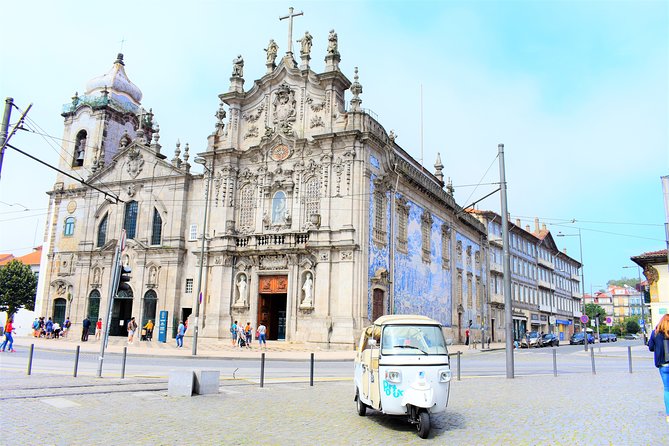
The route then moves toward Igreja do Carmo, Igreja dos Carmelitas, and the nearby Fonte dos Leões. The two churches are close together, and their façades help you read Porto’s changing architectural tastes.
Igreja do Carmo dates from the second half of the eighteenth century and is known for its Rococo carving. Its side wall was covered with figurative tiles in 1912, showing scenes connected with devotion to Our Lady. Entry is not included.
The neighboring Igreja dos Carmelitas began in the seventeenth century. Its classical façade dates from the 1850s, and its Porto Rococo altarpiece is considered an important design. The listed visit is about five minutes, so this is mainly a quick orientation stop unless you ask to spend longer inside.
The Fountain of the Lions is a small but curious pause. Made in nineteenth-century France by the Val d’Osne foundry, it copies much of the fountain in Leicester’s Town Hall Square. It is not a grand Porto original, but it adds a nice bit of European civic history to the walk between major sights.
Lello, Clérigos, and the Cordoaria gardens
Livraria Lello is Porto’s most famous bookshop, and also one of the places where admission planning matters. The building opened in 1906, with an Art Nouveau exterior, neo-Gothic details, a carved-looking painted interior, a stained-glass ceiling, and the famous red staircase.
You receive about 20 minutes here, but entrance is not included. The bookshop can be busy, so the stop works best if you already know that you want to see the interior and are willing to pay the separate fee. If you would rather avoid another ticket, use the exterior and spend your time elsewhere.
The Clérigos Tower is another optional paid interior. The Baroque church and its tall bell tower are among Porto’s most recognizable sights. From many parts of the city, the tower acts as a useful landmark, and climbing it can provide a strong view across the historic center if your legs and schedule allow.
Jardim de João Chagas, usually called Cordoaria Garden, gives you a break from stone streets. The park began as a public garden project in the 1860s on ground once linked to rope makers. It includes statues, modern sculpture, and broad paths around lawns and trees.
The 30-minute stop at the gardens is a good place to slow the day down. You may find the shade welcome after the enclosed churches and busy streets. It is also a useful point to tell your guide if you want more green spaces or more architecture during the rest of the tour.
A few more Porto outings to weigh up
- Porto Guided Tour to the Historical Center on a Tuk Tuk
★ 4.5 · 418 reviews - Porto: Private Sightseeing Tour by Electric Tuk Tuk
★ 4.8 · 305 reviews - Oporto Tuk-Tuk Tour: Fast, Fun & Flexible – 1H to Full Day!
★ 4.7 · 280 reviews - Porto Half Day Private Tuk Tuk Tour
★ 4.5 · 246 reviews
São Francisco and the views from Crystal Palace
Igreja de São Francisco is Porto’s great interior shock. The outside is Gothic, but the inside is covered with elaborate gilded woodwork from the seventeenth and eighteenth centuries. The effect explains why it became known as the Church of Gold.
Look for the Tree of Jesse and the catacombs. The church is a National Monument and part of Porto’s UNESCO-listed historic center. The itinerary lists admission as free, but because monument access can change, it is sensible to confirm the current arrangement with your guide.
The Jardins do Palácio de Cristal are one of the day’s best stops. This is not simply one formal garden, but a series of smaller spaces connected by paths. Lawns, fountains, magnolias, camellias, cypress trees, olive trees, and sculptures appear as you move through the grounds.
The reward is not only the greenery. The gardens open toward wide views of Porto and the Douro River, making this an excellent photo stop. You receive about 30 minutes here, though a private tour gives you a chance to ask for a little extra time if the views are a priority.
Lunch with local products and small-producer wine
Lunch is described as a tasting meal rather than a formal multi-course restaurant lunch. Expect regional cheeses, sausages, canned fish, and wines from small local producers. Wine tasting is included, and an extra glass of port has sometimes been offered during the day.
This format suits Porto well. You get a taste of several local products instead of committing to one large meal, and your guide can point out foods you may want to seek out later. Several outings have included a local fish restaurant or a family-run place, while one particularly well-received lunch took place at Mercado Lendário.
You should clarify the lunch style if you need a substantial midday meal. One past party found the food closer to tapas than lunch, and a requested vegetarian option had not been arranged with the restaurant. If you have dietary needs, state them clearly before the tour and confirm that the guide has received them.
The food stop is also where the private format can pay off. You can explain whether you want seafood, local snacks, wine, or a nonalcoholic tasting. Do not assume every request will be handled automatically, though. Get confirmation in advance.
Crossing the Douro to Vila Nova de Gaia
The tour then reaches the Dom Luís I Bridge, Porto’s most famous crossing. Designed by Teófilo Seyrig, a student of Gustave Eiffel, it opened in 1886 with two overlapping iron decks. The upper level now carries Porto’s Metro and links the cathedral area with Gaia.
Crossing the bridge gives you the essential Porto view: tiled roofs, church towers, the Douro, and the opposite riverbank rising toward Vila Nova de Gaia. The tuk-tuk lets you see the relationship between the two cities without treating them as separate destinations.
On the Gaia side, the Mosteiro da Serra do Pilar provides one of the finest viewpoints of the day. The monastery began in 1538 and took more than a century to complete. Its circular church and circular cloister are unusual, with the cloister supported by 36 Ionic columns.
The terrace looks back toward Porto’s riverfront, cathedral, Dom Luís I Bridge, and the Arrábida Bridge. Turn the other way and you can see the Fontaínhas area and the São João Bridge. The stop lasts about 15 minutes and has no admission charge.
The newer Ponte Infante Dom Henrique appears as another piece of Porto’s bridge story. Opened in 2003, it replaced road use on the upper deck of Dom Luís I Bridge when that level became part of the Metro route. Its long, high arch is an elegant example of modern bridge design.
Palácio da Bolsa, Ferreira Borges, and the riverfront
Back in the historic center, Jardim do Infante Dom Henrique places you beside the Palácio da Bolsa and Mercado Ferreira Borges. The square also holds a monument to Prince Henry the Navigator, completed in 1900 to honor Portuguese navigation and religious faith.
The Palácio da Bolsa is a National Monument and the headquarters of Porto’s Commercial Association. Built in a Neoclassical style from 1842, it is best known for the Arabian Room, an ornate nineteenth-century interior inspired by Moorish design.
The supplied tour details list the palace as free, but the attraction is normally visited as a guided monument with its own access arrangements. Since monument entrances are specifically excluded from the tour price, confirm whether your guide plans an exterior visit or whether you need to buy a separate ticket.
Mercado Ferreira Borges is an attractive iron building from 1885. It was intended to replace the old Ribeira Market but served as a market only briefly. It now houses Hard Club, an entertainment venue, so the stop is mainly about the building’s structure and its place in Porto’s commercial history.
The Alfândega Porto Congress Centre closes the riverfront portion of the route. This former nineteenth-century customs building has one façade facing the Douro and another facing the city. Its restoration combined stone, brick, wood, and iron, and it now includes the Transport and Communications Museum and a congress center.
Is eight hours too long?
For many people, eight hours is exactly right for a first look at Porto. You cover the upper center, the historic core, the riverfront, Gaia, several viewpoints, and a food stop without trying to organize complicated taxi rides or public transport connections.
The day can feel long if you expect to enter every monument. The listed stops include many places, but several visits last only five to 20 minutes. The tour is better at showing you the shape and character of Porto than at providing a slow museum day.
You will also spend a long time seated. A tuk-tuk is small, and three adults may find it cramped. Cobblestones add to the strain. One highly positive experience still noted stiffness and soreness after the full day, while another person preferred the idea of a half-day tour for that reason.
Ask for regular stops if you need them. The guides have adjusted the route and pace for different abilities, and the private setup should make that easier. The tuk-tuk has no enclosed side covers according to one complaint, so rain can be a real problem. The tour requires good weather, and poor conditions may lead to a new date or refund.
Price, private value, and what to confirm
At about $166.99 per person, this is not the cheapest way to see Porto. Its value depends heavily on group size. For two people, you are paying a premium for a full day with transport, a driver-guide, local commentary, lunch, and wine tasting. For a larger private group, the per-person cost may feel more reasonable.
You are also paying for time. A standard sightseeing bus may cost less, but it will not offer the same ability to stop in narrow lanes, change the pace, or follow your interests. Walking is cheaper, but Porto’s hills make it physically demanding to cover this much ground.
The private promise deserves special attention. One past booking was combined with another group the night before departure, with conflicting explanations about a sick driver and a broken tuk-tuk. The party also reported five people sharing a vehicle with only four seatbelts. That is a safety concern, not a minor inconvenience.
I would contact Portuk before the cancellation deadline and ask three direct questions: Is the booking guaranteed to remain private? How many passengers will fit in the vehicle? Are all seats equipped with seatbelts? Also confirm the lunch plan if you need vegetarian food or have allergies.
Free cancellation is available up to 24 hours before the 9:30 a.m. start time. Changes made inside that window are not accepted, and the experience may be canceled for poor weather with a choice of another date or a full refund.
Who should book this Porto day?
I would choose this tour if you want a broad introduction to Porto, prefer sitting to long uphill walks, and enjoy having a local person adjust the day around your interests. It is especially useful at the beginning of a stay, since guides such as Fabio and Bernardo have offered practical ideas for later meals and sightseeing.
It suits couples, families with children, and small groups who want their own vehicle. Children must be accompanied by an adult, and service animals are allowed. Most people can participate, but the tight seating and bumpy roads are worth considering before booking.
I would choose a shorter outing if you dislike prolonged sitting, want long interior visits, or plan to spend hours at Livraria Lello, Clérigos Tower, or the cathedral. You will see more on foot at a slower pace, with fewer quick photo stops.
Should you book it?
Book it if your priority is seeing Porto’s full layout in one day, with the hills handled for you and a local guide adding history, food advice, and viewpoints. The best outings appear to come from guides who treat the day as a flexible tour rather than a race through a checklist.
Before paying, confirm that your vehicle will remain private, ask about passenger capacity and seatbelts, and check the lunch arrangements. If those answers are clear and the weather looks good, this is a lively, practical first day in Porto. If comfort, long monument visits, or a guaranteed large vehicle matter more, split the same sights across several walking days instead.
FAQ
How long does the Porto tuk-tuk tour last?
The tour lasts about eight hours and starts at 9:30 a.m. It ends back at the meeting point on Rua de Augusto Rosa.
Where does the tour start?
The meeting point is R. de Augusto Rosa 180, 4000-528 Porto, Portugal.
Is the tuk-tuk tour private?
It is advertised as a private activity for your group only. Because one past booking was combined with another group, confirm the private arrangement with Portuk before departure.
What is included in the price?
A driver-guide, live commentary, a local guide, wine tasting, and a tasting lunch of regional products are included.
What food is served at lunch?
The tasting lunch includes products such as cheeses, sausages, and canned fish, accompanied by wines from small local producers.
Are monument entrance fees included?
No. Monument entrances are not included. The itinerary specifically lists admission as not included for Porto Cathedral, Igreja do Carmo, Livraria Lello, and Clérigos Tower.
Does the tour cross into Vila Nova de Gaia?
Yes. The route crosses the Dom Luís I Bridge and visits the Mosteiro da Serra do Pilar in Vila Nova de Gaia.
Can children join the tour?
Yes. Children must be accompanied by an adult, and a minimum of two people is required per booking.
What happens if the weather is poor?
The experience requires good weather. If it is canceled because of poor weather, you will be offered a different date or a full refund. You can also cancel up to 24 hours before the start time for a full refund.
More Full-Day in Porto
- From Porto: Braga and Guimarães Full-Day Trip
★ 4.6 · 3,951 reviews - Santiago de Compostela Full-Day Tour From Porto
★ 4.7 · 1,036 reviews - Small Group Geres National Park Full Day with picnic from Porto
★ 5.0 · 846 reviews - Porto: Douro Valley Full-Day Boat, Train, and Lunch Tour
★ 4.7 · 787 reviews
Latest reviews around Porto
- Private Walking Tour, highlights and secrets of Porto★ 3.9 · 3 reviews
- Private Porto Half-Day Tour – Wine Cellars & Cheese Tasting★ 5.0 · 3 reviews
- Portuguese Wine Tasting w Local Cheese & Cold Cuts pairing★ 5.0 · 3 reviews
- From Peso da Régua: Visit 3 wineries, tasting and viewpoint★ 5.0 · 3 reviews
- Porto: Full-Day All-Inclusive Private City Sightseeing Tour★ 4.3 · 3 reviews
- Small Painting Group with a Local Artist in Porto★ 5.0 · 3 reviews
- Private Tour to Santiago de Compostela and its stunning Cathedral★ 5.0 · 3 reviews
- From Arouca: Paiva River Rafting Adventure – Adventure Tour★ 5.0 · 3 reviews
Tuk-Tuks, compared.
Porto: Guided Tour by Tuk-Tuk & Optional Douro River Cruise
Read our review →
Discover Porto’s Highlights on a 2-Hour Private Electric Tuk Tuk
Read our review →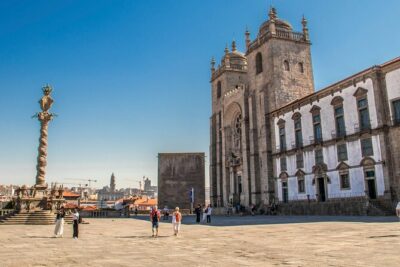
Historic Porto by Private Electric Tuk Tuk to Top Landmarks
Read our review →
Porto Guided Tour to the Historical Center on a Tuk Tuk
Read our review →
Porto: Private Sightseeing Tour by Electric Tuk Tuk
Read our review →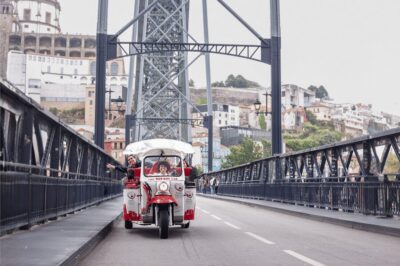
Oporto Tuk-Tuk Tour: Fast, Fun & Flexible – 1H to Full Day!
Read our review →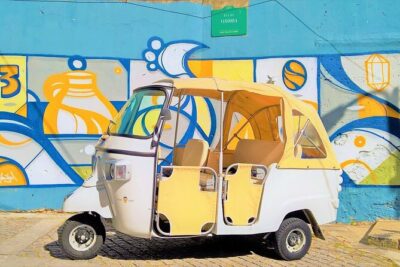
Porto Tuk Tuk: Clérigos, Seaside & Viewpoints – with Options
Read our review →Browse the lists this tour appears in