Reviewed · PORTO TOURS
Learn How to Make Pastel De Nata in a Beautiful Porto Home
Porto’s famous custard tart is best understood with your hands, not just your fork. In Joana’s sunny home, you’ll learn how to make pastel de nata from scratch, hear about the pastry’s origins, and eat the results fresh from the oven with a drink.
I like the maximum group size of four, which gives Joana room to guide each person through the work. I also like the mix of cooking and local advice: Joana, a tourism graduate, shares stories about Porto and offers ideas for places to eat and drink.
The main drawback is the meeting address. The experience is presented as being in Porto, but the listed address is in Fânzeres, outside the city center, so check your confirmation voucher carefully before setting out. The class is also not suitable for toddlers or small children.
In This Review
- Key points to know before booking
- Why pastel de nata makes a good Porto food class
- Inside Joana’s sunny home
- What happens during the two-hour class
- Learning from Joana, not just from a recipe
- The fresh-from-the-oven payoff
- Is $55 a fair price?
- Location details deserve extra attention
- Who should book this class?
- My verdict on the Porto pastel de nata class
- FAQ
- How long does the pastel de nata class last?
- What time does the activity begin?
- Where does the class meet?
- Where does the activity end?
- How many people can join the class?
- Are drinks included?
- Can I cancel for a full refund?
Key points to know before booking
- You make the pastel de nata yourself: This is a hands-on class, not a demonstration where you simply watch.
- Joana teaches in her home: Expect a personal cooking session in a sunny apartment rather than a commercial kitchen.
- The group is capped at four people: That small size should allow more help with the pastry and custard.
- Fresh tarts and a drink are included: You finish with your own pastel de nata, coffee, tea, or orange juice.
- You take recipes home: A recipe booklet helps you repeat the class in your own kitchen.
- Check the exact location: The address supplied for the meeting point is in Fânzeres, and the full details appear on your confirmation voucher.
Why pastel de nata makes a good Porto food class
Pastel de nata is one of Portugal’s signature foods, but it can seem simple at first glance: crisp pastry, baked custard, and perhaps a dusting of cinnamon. The charm is in the details. The pastry needs the right handling, and the custard needs care if you want a smooth filling rather than a heavy or scrambled one.
That makes this a useful class for anyone who wants more than a quick pastry stop. You get to see how the parts come together, take part in the work, and taste the finished result while it is still fresh.
I also like the scale of the subject. You are not trying to prepare an entire Portuguese meal in two hours. The class focuses on one beloved dish, so the session has a clear purpose and leaves room for conversation.
A few more Porto outings to weigh up
- The Unvanquished Tour in Porto City Center
★ 5.0 · 26,497 reviews - From Porto: Douro Valley w/ Boat Tour, Wine Tasting & Lunch
★ 4.7 · 19,061 reviews - Complete Douro Valley Wine Tour with Lunch, Wine Tastings and River Cruise
★ 5.0 · 12,920 reviews
Inside Joana’s sunny home
The setting is part of the appeal. Joana hosts the class in her central sunny apartment, giving the morning a more personal feel than a standard cooking school. You are meeting a local in her own space and hearing stories about life in Porto as you cook.
That setting also means you should know what you are booking. This is a home-based activity, not a formal restaurant or a large teaching studio. If you prefer polished equipment, a professional demonstration kitchen, or a bigger menu, this may feel too intimate.
For many people, though, the home setting is exactly the point. The class is built around conversation, shared work, and a relaxed meal at the end. The small group limit of four is especially helpful here. With only a few people at the counter, Joana can divide up the tasks and give individual guidance.
The class has received a very high overall rating of 4.9 from 11 ratings, with 100 percent recommending it. That is a small sample, so I would not treat the number as a guarantee. Still, the same strengths appear repeatedly: Joana’s teaching, the hands-on format, her stories, and the quality of the finished pastry.
What happens during the two-hour class
The activity begins at 10:00 in the morning. That timing works well for a food class. You can cook before the day gets busy, then use Joana’s Porto suggestions to plan lunch, drinks, or sightseeing afterward.
The session starts with an introduction to pastel de nata and its origins. The supplied details do not set out every step in a fixed timetable, so the pace may vary with the group. You should expect an easy-to-follow class aimed at all levels rather than a technical pastry course.
Joana then leads you through the preparation. The important point is that you are expected to work, not just watch. Hands-on participation was a major strength of the class, with the tasks divided so everyone could take part and learn.
That format is useful for beginners. You can ask questions as you go, see how the pastry is handled, and get help before small mistakes become larger ones. It also keeps the session social. Cooking alongside three other people gives the morning a shared rhythm without the crowd of a large group.
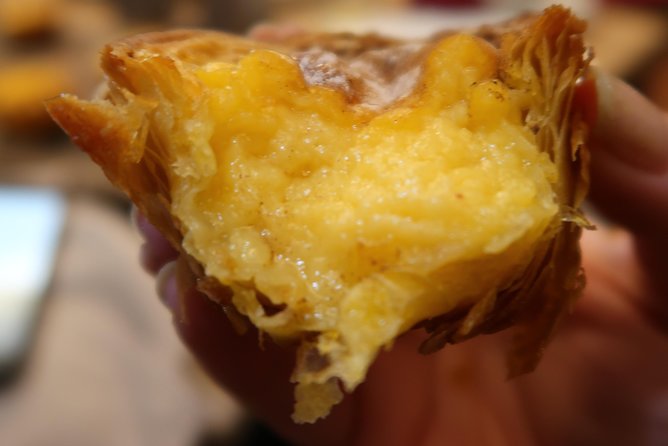
As the tarts bake, the class moves toward its reward: tasting the pastel de nata you helped make. Eating them fresh from the oven gives you a clear sense of why this pastry matters in Portugal. You can compare the crisp pastry and warm custard with the versions you try in bakeries around Porto later in your trip.
Coffee, tea, and orange juice are included. That is a modest detail, but it matters because the class ends as a small breakfast or morning snack rather than stopping at the oven.
Learning from Joana, not just from a recipe
Joana’s role is more than showing you a method. She brings stories about Porto and talks about daily life in the city. Her background in tourism adds another useful layer, since she can point you toward places to eat and drink.
I would value that advice most if this is your first visit. Restaurant choices can be hit or miss, and local suggestions can help you plan the rest of your stay. The food tips also connect the pastry lesson to the wider city. You learn one dish at home, then get ideas for finding other Portuguese flavors outside the class.
The class has been praised for its storytelling as well as its cooking. That balance matters. A purely technical pastry lesson can feel dry, while a social visit without enough instruction may leave you unsure how to repeat the dish. This activity aims for both.
Do keep your expectations realistic. The class lasts about two hours, so you will not receive a full survey of Portuguese cooking. The focus is pastel de nata, with drinks and conversation around it.
A different sort of Porto day altogether:
- Porto: Six Bridges Cruise
★ 4.2 · 11,680 reviews - Porto: Live Fado Show with Glass of Port Wine
★ 4.8 · 6,498 reviews - Porto: 6 Bridges Douro River Cruise
★ 4.3 · 6,472 reviews - Porto: Torre dos Clerigos Entrance Ticket
★ 4.6 · 6,395 reviews
The fresh-from-the-oven payoff
The best part of a cooking class is often the moment when you eat what you made. Here, that means tasting the pastel de nata fresh after baking. You have seen the work behind the pastry, so the final bite carries more meaning than one bought from a bakery window.
The class is also practical because you leave with a booklet of traditional recipes. That gives you something concrete to use after Portugal. You may need to adapt ingredients or equipment at home, but the booklet gives you a starting point and helps preserve the method taught during the morning.
Pastel de nata is a good recipe to carry home because it is recognizable and shareable. You can make it for friends, use it to extend your Portugal memories, or test whether your own oven can match the result from Joana’s kitchen.
The available comments are especially positive about the final pastry. The class has been described as fun, very hands-on, and successful in producing fabulous tarts. One participant planned to make them at home, which is a good sign for anyone seeking a skill rather than a one-time snack.
Is $55 a fair price?
At $55 per person, this is not the cheapest way to eat a pastel de nata. You can buy the pastry itself for much less at a bakery. The value comes from the private-home setting, instruction, drinks, recipes, local recommendations, and the chance to make the dish yourself.
The group limit strengthens the value. A four-person maximum is quite different from a class where one instructor manages a dozen or more people. You have a better chance to handle the ingredients, ask questions, and receive corrections.
I would see the price as reasonable for someone who enjoys food activities and wants a personal introduction to Porto. It is less convincing for someone who only wants to taste the pastry or who is traveling on a strict budget.
The fact that the class is often reserved about 95 days in advance is useful when planning. It suggests that popular dates may disappear well before a Porto visit, especially if you need the 10:00 morning start. You can cancel for a full refund up to 24 hours before the start time, but changes or cancellations inside that window are not refunded.
Location details deserve extra attention
The stated location is Porto, but the meeting point information gives Rua Doutor Américo Jazelino Dias Costa, 4510-551 Fânzeres, Portugal. Fânzeres is not the same as central Porto, so do not assume that you can simply walk from a central hotel.
The full address is provided on the confirmation voucher under the Before You Go section. Read that information closely after booking and check the route before the morning of the class. The meeting and ending point are the same, and the activity starts at 10:00.
The address is near public transportation, which helps, but no exact transport route or travel time is supplied. I would avoid making a tight appointment immediately afterward until you know how long it will take to reach the class and return.
This is the one practical issue I would want clarified before paying. The home setting sounds appealing, but the location description and the Fânzeres address do not line up perfectly. Confirm the exact place with the provider if the distinction affects your plans.
Who should book this class?
This activity fits adults, couples, friends, solo food fans, and small groups who enjoy doing rather than simply seeing. It is also a good choice if you want a slower morning with a local host instead of another sightseeing stop.
Beginners should feel comfortable booking. The class is designed for all levels and is described as easy to follow. You do not need to arrive as a pastry expert.
I would also recommend it to anyone who wants a souvenir with a practical use. The recipe booklet and the skills you practice are more useful than a typical trinket, particularly if you enjoy baking.
The class is not suitable for toddlers and small children. If you want to book for a child, you must book the class for yourself as well. The home setting and hands-on cooking may work for an older child, but the supplied information does not promise a child-specific format.
People with food allergies or special diets should communicate those restrictions in advance. The class centers on pastel de nata, so do not assume the recipe can be changed without prior discussion.
My verdict on the Porto pastel de nata class
I would book this if you want to connect a famous Portuguese food with a real person, a real kitchen, and a useful skill. Joana’s friendly teaching, the four-person limit, fresh pastries, drinks, recipes, and Porto tips give the $55 price a solid purpose.
I would skip it if you only want a quick taste, need a central Porto meeting point, or are traveling with toddlers. Before booking, check the Fânzeres address on the confirmation voucher and make sure the transport plan works for you.
For the right visitor, this is a compact and enjoyable way to spend a Porto morning. You leave with warm pastries in your stomach, recipes in your bag, and a better idea of where to eat next.
FAQ
How long does the pastel de nata class last?
The class lasts approximately two hours.
What time does the activity begin?
The class begins at 10:00 am.
Where does the class meet?
The listed meeting address is Rua Doutor Américo Jazelino Dias Costa, 4510-551 Fânzeres, Portugal. The full address appears on your confirmation voucher under the Before You Go section.
Where does the activity end?
The activity ends back at the meeting point.
How many people can join the class?
The class has a maximum of four participants.
Are drinks included?
Yes. Coffee, tea, and orange juice are included.
Can I cancel for a full refund?
Yes. You can cancel at least 24 hours before the start time for a full refund. Cancellations or changes made less than 24 hours before the start are not refunded or accepted.
Latest reviews around Porto
- Private Walking Tour, highlights and secrets of Porto★ 3.9 · 3 reviews
- Private Porto Half-Day Tour – Wine Cellars & Cheese Tasting★ 5.0 · 3 reviews
- Portuguese Wine Tasting w Local Cheese & Cold Cuts pairing★ 5.0 · 3 reviews
- From Peso da Régua: Visit 3 wineries, tasting and viewpoint★ 5.0 · 3 reviews
- Porto: Full-Day All-Inclusive Private City Sightseeing Tour★ 4.3 · 3 reviews
- Small Painting Group with a Local Artist in Porto★ 5.0 · 3 reviews
- From Arouca: Paiva River Rafting Adventure – Adventure Tour★ 5.0 · 3 reviews
- Private Tour to Santiago de Compostela and its stunning Cathedral★ 5.0 · 3 reviews
Porto Tours, compared.
From Porto: Douro Valley w/ Boat Tour, Wine Tasting & Lunch
Read our review →
Complete Douro Valley Wine Tour with Lunch, Wine Tastings and River Cruise
Read our review →
Porto: Live Fado Show with Glass of Port Wine
Read our review →