
Reviewed · BRAGA & GUIMARAES DAY TRIPS
Guimarães Experience
Guimarães tells Portugal’s origin story in a compact, walkable setting. This 3.5-hour guided tour links the castle, Ducal Palace, churches, old squares, and city walls, so you get the big picture without spending your day piecing the route together.
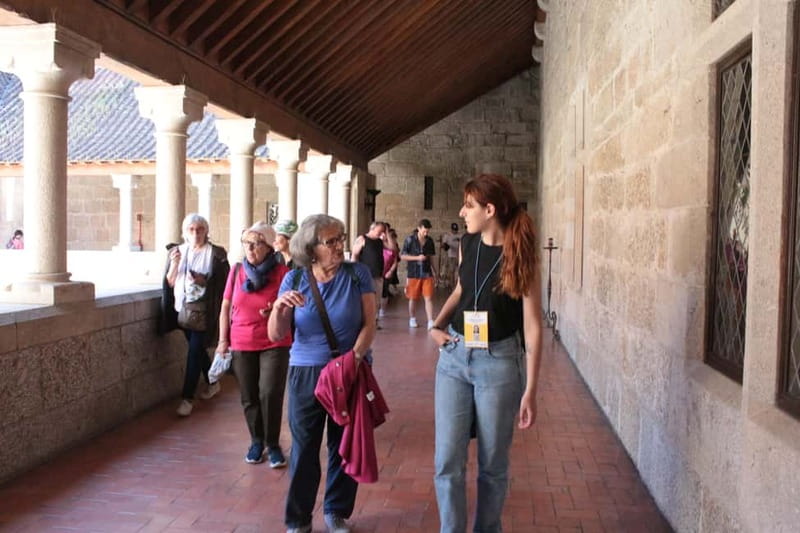
I like the special guided visit inside the Ducal Palace and the tasting at a local café. The tour also has a human touch: Rui has a gift for connecting politics, architecture, art, and daily life, and one recent group even received an extra museum stop and more time in town. The main drawback is pace. You cover a lot on foot, and the long church and old-town walk may feel brisk if you prefer slow wandering.
In This Review
- Key points to know before booking
- Why Guimarães works so well as a half-day visit
- Guimarães Castle: the right place to begin
- São Miguel Church and the early royal setting
- Inside the Ducal Palace for 50 minutes
- Churches, gardens, and the old streets
- Largo da Oliveira and the phrase Aqui Nasceu Portugal
- City walls and a more physical sense of the past
- Pastries, wine, and a useful final pause
- The guide makes the difference
- Is $69 a fair price?
- Timing, cancellation, and who should book
- Should you book the Guimarães Experience?
- FAQ
- How long does the Guimarães Experience last?
- Where does the tour begin?
- Where does the tour end?
- Which attractions are included?
- Is the Ducal Palace included?
- Are food and drinks included?
- What languages are available?
- Can I cancel the tour?
Key points to know before booking
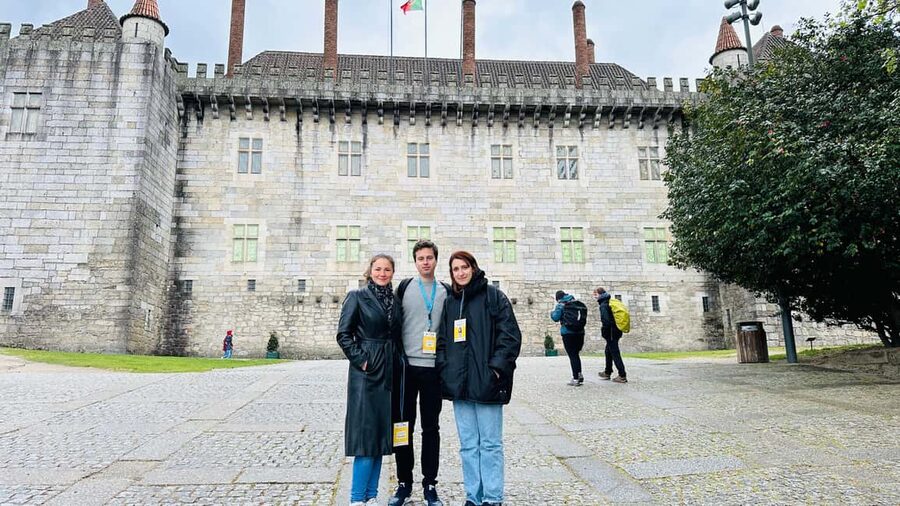
- Guimarães Castle and São Miguel Church give you the clearest look at the city’s medieval beginnings.
- The Ducal Palace visit lasts about 50 minutes, making it the tour’s main interior attraction.
- Local pastries and drinks finish the walk, with wine and regional sweets served at a café.
- Rui is a particularly engaging guide when available, bringing history, architecture, and modern Guimarães together.
- Skip-the-line access is included through a separate entrance at the main attractions.
- The route is wheelchair accessible, and guiding is offered in Portuguese, English, Spanish, Russian, and Ukrainian.
Why Guimarães works so well as a half-day visit
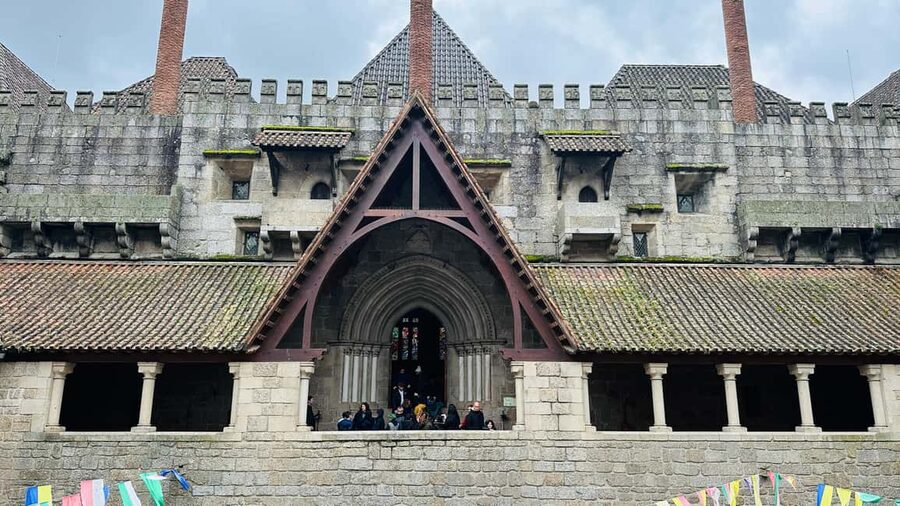
Guimarães is often called the birthplace of Portugal, and the nickname makes sense once you see how tightly its early royal and military sites are grouped. The city’s story is not scattered across distant ruins. The castle, church, palace, old squares, and surviving walls sit within a manageable historic center.
That compact layout is the great strength of this experience. You get a proper walking tour rather than a quick photo stop from a vehicle. You move through narrow lanes and broad stone squares, with the guide supplying the links between them.
I especially like this format for a first visit. You can arrive without much background and leave knowing why Guimarães matters, which buildings shaped its story, and where you might want to return for a slower look.
The route begins at Campo de São Mamede. Your guide is identified by the company tag and a white umbrella, a useful detail in a busy meeting area. The walk finishes at Largo do Toural, so you end near one of the city’s main public spaces rather than being returned to the starting point.
More Braga and Guimaraes day trips:
- Sightseeing Tours by Electric Tuk-Tuk in Guimarães
★ 4.8 · 49 reviews - Guimarães: Palace of the Dukes of Bragança Entry Ticket
★ 4.3 · 44 reviews - Braga & Guimarães Full-Day Tour from Porto
★ 4.3 · 20 reviews
Guimarães Castle: the right place to begin
The first major stop is Guimarães Castle, where a guided visit lasts about 20 minutes. The castle’s position gives the tour a strong opening. You are looking at one of the city’s most important medieval landmarks before heading into the streets below.
A short castle visit can work well here because the guide keeps the focus on the building’s role in the formation of Portugal. You are not left to read every panel or guess which parts matter most. Instead, you receive the main context and then continue to the next site.
The experience may also include a virtual reality feature at the castle. That detail was singled out by one of the strongest accounts of the tour, so it is worth asking your guide about it when you arrive. It can help you picture how the castle and its surroundings changed over time.
Do not expect a long free period inside the castle. Twenty minutes is enough for an introduction and guided look, but not for a leisurely visit to every corner. If you love medieval fortifications, you may want to return later with more time.
São Miguel Church and the early royal setting
Next comes the Church of São Miguel do Castelo, with about 10 minutes for the visit. This small stop adds a religious setting to the military story begun at the castle.
The church is important to the old royal center, and seeing it immediately after the castle makes the relationship between power, faith, and daily life easier to understand. The short visit also helps keep the larger route moving.
This is one of several places where a guide adds real value. On your own, you might walk past a modest church while concentrating on the larger castle and palace. With an explanation, the smaller building becomes part of the city’s larger story.
Ten minutes is brief, so expect a focused visit rather than quiet reflection. Wear shoes that are comfortable for stone streets and repeated stops. The route has many sights, but it is still a walking route.
Inside the Ducal Palace for 50 minutes
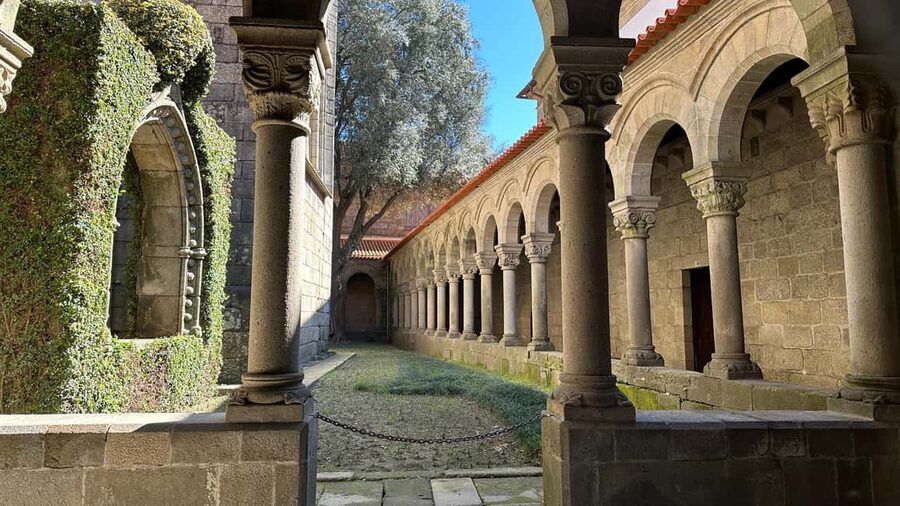
The Palace of the Dukes of Braganza is the tour’s longest major interior stop, with a guided visit of roughly 50 minutes. This is the place where the route shifts from medieval defense to courtly life.
The palace gives you a chance to see the scale and formality of aristocratic Portugal. Rooms, furnishings, and architectural details help explain how the ruling class lived and presented itself. A guide can point out what you would likely miss by simply moving from room to room.
This stop is also where the tour’s skip-the-line arrangement matters most. A separate entrance can save useful time, especially when you have several sites still ahead. It keeps the schedule practical instead of using half the morning in queues.
The palace visit may be the highlight for anyone interested in interiors, dynasties, and architecture. It can feel more structured than the outdoor walking sections, since you follow the palace route and listen to an organized explanation.
The tradeoff is time. Nearly an hour indoors is a large part of a 3.5-hour tour. If you mainly want cafés, photography, and unplanned wandering, you may find the palace portion longer than expected. If you want a guided look at one of Guimarães’ main attractions, it is a sensible use of the schedule.
A few more Guimaraes outings to weigh up
- Private Guimarães Half-Day Tour from Porto
★ 4.6 · 19 reviews - Guimarães: Flexible Walking Tour in Historic Center
★ 4.5 · 17 reviews - From Porto: Braga and Guimarães Day Tour with Lunch
★ 4.8 · 14 reviews - Medieval Castles from Porto – Private All‑Inclusive Tour
★ 5.0 · 10 reviews
Churches, gardens, and the old streets
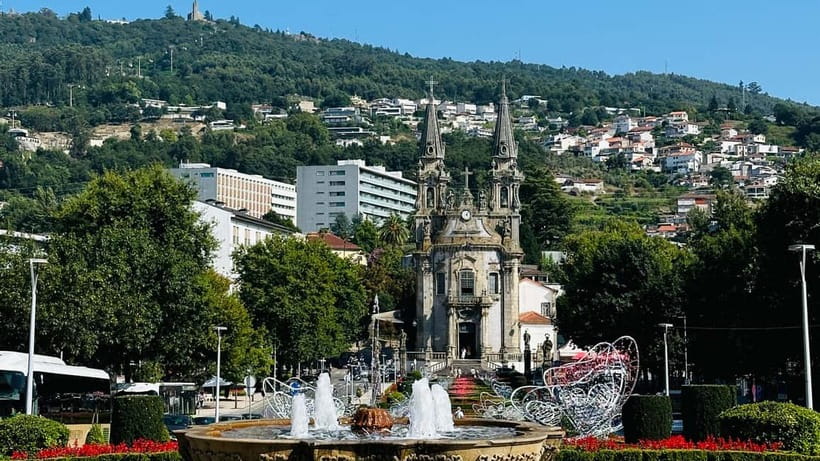
After the palace, the route opens into a longer walking section. It includes the Church and Oratories of Nossa Senhora da Consolação e Santos Passos, followed by Guimarães’ historic center.
This part of the experience is less about one famous object and more about the feel of the city. You walk through old lanes and public spaces where buildings, churches, and everyday movement sit side by side. The city feels lived in, not arranged as a single museum complex.
The church stop is listed as both sightseeing and a walk, with about an hour assigned to this portion. That makes it one of the more substantial stretches of the route. You should be ready to spend time on foot and to move between several points rather than settle in one place.
The itinerary also includes an inside visit to Igreja de Nossa Senhora da Oliveira. This gives you another chance to see Guimarães beyond its castle and palace. Religious buildings are a large part of the city’s character, and the interior visit adds detail to the outdoor route.
The old center receives a further 20-minute sightseeing walk. You can expect the guide to point out the parts of the medieval city that make the area distinctive, rather than simply leading you from one ticketed building to the next.
Largo da Oliveira and the phrase Aqui Nasceu Portugal
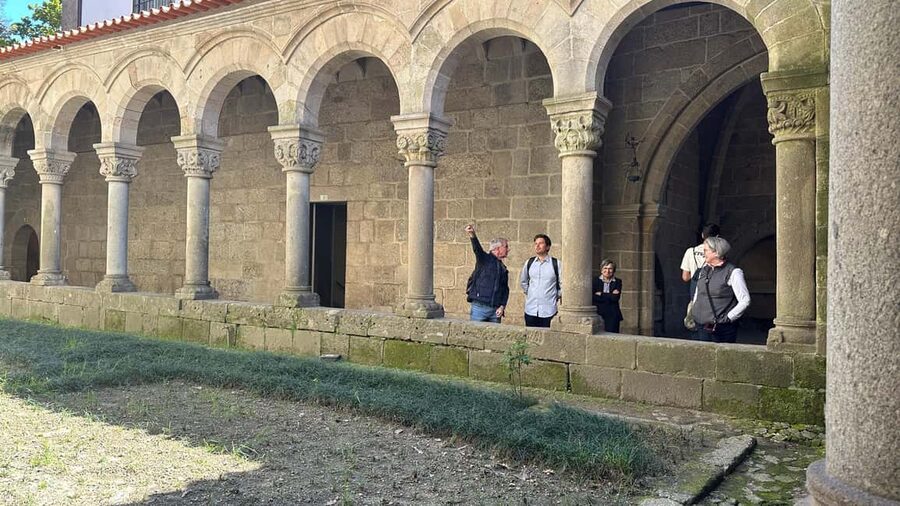
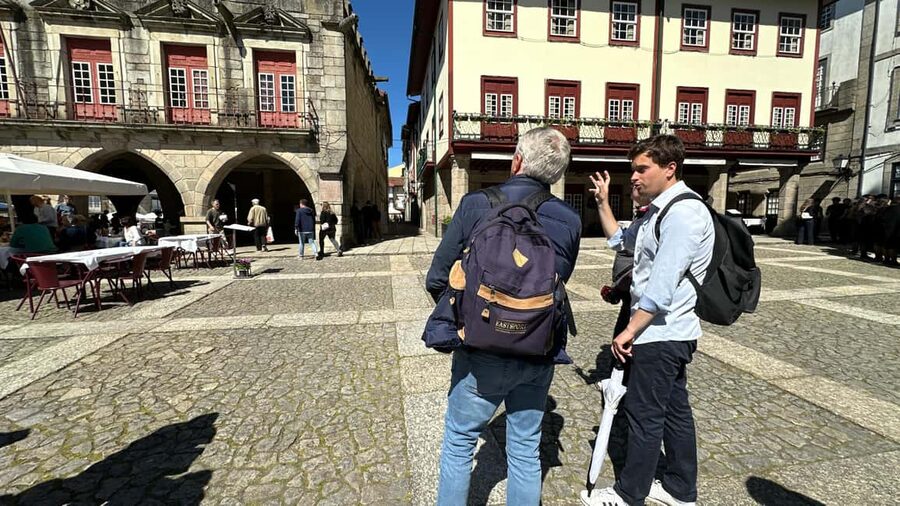
Largo da Oliveira is one of the tour’s central public spaces, with a guided visit of about 20 minutes. This is a good place to pause and understand how Guimarães’ civic life developed around its churches, arcades, and stone streets.
The square is also part of the city’s visual appeal. You get the sort of setting that rewards looking up, checking architectural details, and noticing how the old center remains part of ordinary city life.
The route then reaches the spot marked Aqui Nasceu Portugal, or Here Portugal Was Born. This is not just a photo opportunity. It gives the guide a natural moment to explain Guimarães’ place in the national story and why the city carries such symbolic weight.
I like having this message appear after the castle, palace, and old streets. By then, the phrase has some substance behind it. You have seen the places that give the claim meaning, rather than hearing it as a slogan at the start.
City walls and a more physical sense of the past
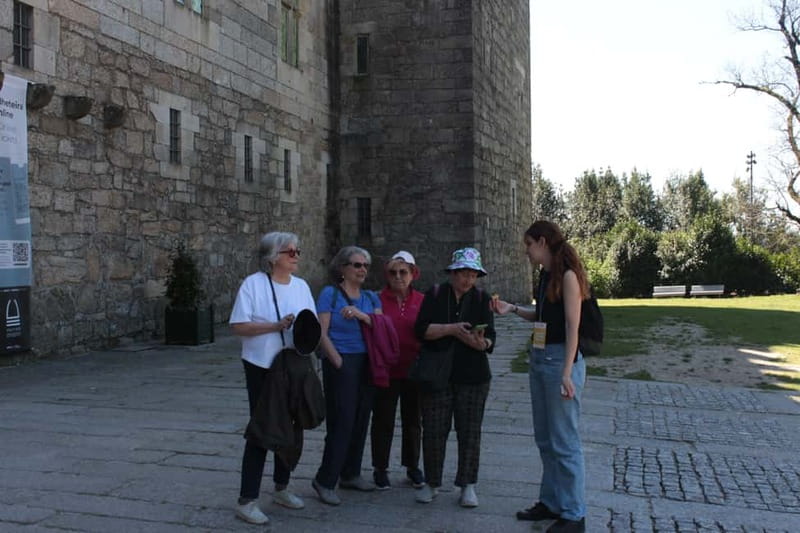
The city walls offer another way to understand Guimarães. A wall is not only an architectural feature. It tells you about defense, movement, boundaries, and the scale of the old settlement.
The tour’s city-wall exploration is woven into the walking route, so do not picture a separate, lengthy fortress excursion. Instead, you will see surviving sections and hear how they fit into the historic center.
This is a useful contrast with the palace. The palace shows controlled indoor life and ceremony. The walls show the practical limits and pressures that shaped the city. Together, the two stops make the past easier to picture.
As with the rest of the walk, the surface can be uneven because the route passes through old streets. The activity is marked wheelchair accessible, but anyone with mobility concerns should still confirm the exact route and meeting arrangements before booking. Accessibility in a historic center can depend on the condition of individual streets and interiors.
Pastries, wine, and a useful final pause
The final stop is a local café, where about 30 minutes are set aside for wine tasting and food tasting. This is more than a sweet finish. It gives you a chance to connect the city’s past with its food traditions and to ask follow-up questions while sitting down.
The tasting includes Guimarães pastries and typical drinks. One especially memorable local specialty described by the guide’s group was a pastry made with a pumpkin-like vegetable. That is the kind of small regional detail that makes a tasting more useful than a generic coffee break.
Wine is included, along with local delicacies and drinks. Personal expenses are not included, so plan to pay separately if you want extra food, drinks, or souvenirs.
The timing is well chosen. After several hours of walking, a half-hour pause gives your feet a break and lets the tour end on a relaxed note. It also keeps the experience from feeling like a string of entrances and lectures.
Do not expect a full meal. The tasting is designed as part of the tour, not as lunch. If you are hungry, plan around it rather than assuming the café stop will replace a proper meal.
The guide makes the difference
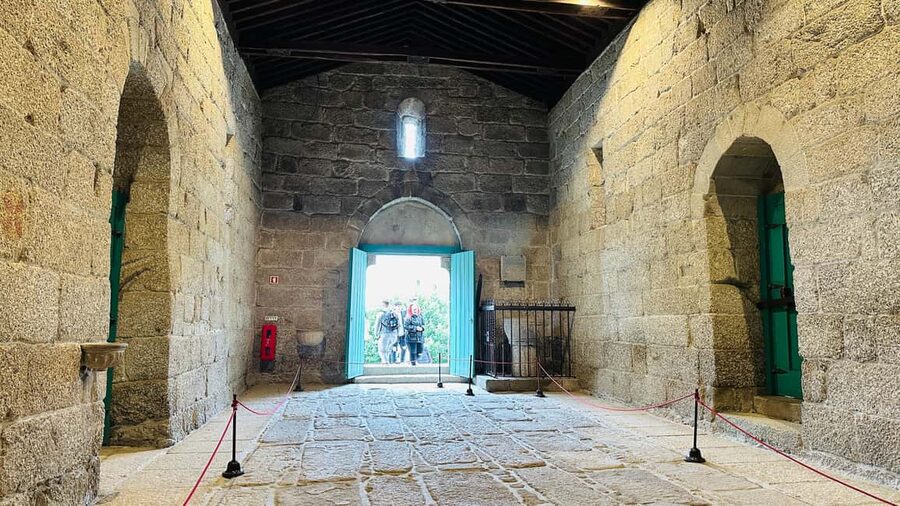
Rui is the guide named most often in the supplied tour information, and his approach appears to be a major reason the experience earns such strong praise. His strengths are history, art, architecture, local people, and the way Guimarães is changing today.
That last point matters. A good city tour should not treat Guimarães as a frozen medieval display. The route includes old buildings, but the guide also helps you see a city that still functions as a place to live, work, worship, eat, and meet.
Rui has also been known to add value beyond the formal route. One group received a visit to the Alberto Sampaio Museum and extra time in the city. Those additions should not be treated as guaranteed inclusions, but they show the kind of flexible guiding that can make a small-group experience feel personal.
The tour is offered in Portuguese, English, Spanish, Russian, and Ukrainian. If you have a language preference, choose it when checking availability. The live guide is central to the experience, so clear communication will shape how much you get from the historical detail.
Is $69 a fair price?
At $69 per person, this is a solid value if you plan to visit the main paid sights anyway. Entrance tickets to the city’s principal attractions are included, as are the guide, insurance, certifications, local delicacies, and drinks.
The value comes from the combination. You are not paying only for a walk around the old center. You receive guided visits to the castle, São Miguel Church, and Ducal Palace, plus the city walls, major squares, church interiors, and a tasting.
The price is less compelling if you prefer to choose one or two sights and spend the rest of the day alone. Independent visitors can move at their own pace and decide how long to stay inside each building.
For a first visit, though, $69 buys a clear route and saves you the work of organizing several historic sites. The separate entrance for the main attractions can also protect your limited time.
Timing, cancellation, and who should book
The advertised duration is 3.5 hours, while the detailed route allows roughly 3.5 to 4 hours. I would keep the later end in mind, especially if the guide spends extra time answering questions or adds a brief stop.
The tour begins at Campo de São Mamede, with the guide holding a white umbrella and wearing the company tag. It ends at Largo do Toural. Check the available starting times before you book, since the tour does not list one fixed departure time.
You can cancel up to 24 hours ahead for a full refund. The reserve-now-and-pay-later option is useful if your Portugal plans are still shifting. The activity is wheelchair accessible, and insurance and certifications are included.
This tour suits you best if you:
- Want a guided introduction to Guimarães rather than a self-guided checklist
- Care about Portuguese history, royal buildings, churches, and architecture
- Like walking tours that finish with local food and drink
- Have only part of a day in the city
- Prefer a guide who can explain both the old monuments and modern local life
You may want another format if you need long, unhurried periods at each site, dislike structured schedules, or want a full meal rather than a tasting.
Should you book the Guimarães Experience?
I would book this tour for a first visit, especially if you want the castle and Ducal Palace covered in one well-planned walk. The route gives you the city’s main historical framework, then softens the formal sightseeing with old streets, church interiors, and regional pastries.
The strongest reason to choose it is the guide-led interpretation. Rui’s approach, when he is your guide, appears especially useful for making the city’s history feel connected to its people and present-day life. The main caution is the pace: this is a busy half-day, not a slow café-and-photography stroll.
Book it if you want context, included entrances, and a taste of local specialties. Skip it if you already know Guimarães well and would rather wander without a schedule.
FAQ
How long does the Guimarães Experience last?
The tour is advertised as 3.5 hours, with the detailed route allowing approximately 3.5 to 4 hours.
Where does the tour begin?
The meeting point is Campo de São Mamede. Your guide will be identified by the company tag and a white umbrella.
Where does the tour end?
The activity ends at Largo do Toural.
Which attractions are included?
The route includes Guimarães Castle, the Church of São Miguel do Castelo, the Palace of the Dukes of Braganza, Nossa Senhora da Oliveira Church, Largo da Oliveira, the historic center, the city walls, and the site marked Aqui Nasceu Portugal.
Is the Ducal Palace included?
Yes. The Palace of the Dukes of Braganza is included, with a guided visit lasting about 50 minutes.
Are food and drinks included?
Yes. Local delicacies and drinks are included, with a tasting at a local café. Wine tasting and food tasting are part of the final stop.
What languages are available?
Live guiding is available in Portuguese, English, Spanish, Russian, and Ukrainian.
Can I cancel the tour?
You can cancel up to 24 hours in advance for a full refund. You can also reserve now and pay later.
Latest reviews around Guimaraes
- Porto: Braga and Guimarães Private Day Tour with Local★ 4.3 · 3 reviews
- From Porto: Braga & Guimarães full day experience with lunch★ 4.8 · 4 reviews
- From Porto: Braga & Guimarães Day Trip with Lunch★ 5.0 · 5 reviews
- Guimaraes Local Tours ; Visit the Castle , Palace and City★ 5.0 · 6 reviews
- Braga and Guimarães Historical and Cultural Tour from Porto★ 4.6 · 6 reviews
- Medieval Castles from Porto – Private All‑Inclusive Tour★ 5.0 · 10 reviews
- Viana do Castelo: Vez River SUP with Transfer Options★ 4.9 · 10 reviews
- From Porto: Braga and Guimarães Day Tour with Lunch★ 4.8 · 14 reviews
Braga & Guimaraes Day Trips, compared.

From Porto: Braga and Guimarães Full-Day Trip
Read our review →
Best of Braga and Guimaraes Day Trip from Porto
Read our review →
Porto: Guimarães & Braga Tour with Entry Tickets and Lunch
Read our review →
From Porto: Braga & Guimarães with Lunch Small Group Tour
Read our review →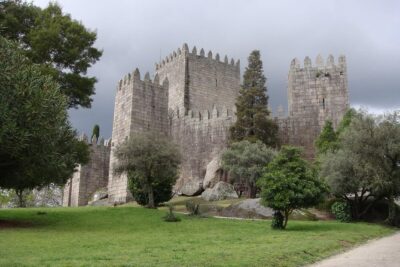
Braga & Guimarães Small Group Tour: Lunch & All Tickets Included
Read our review →
From Porto: Viana do Castelo, Braga and Guimarães Day Tour
Read our review →
Porto: Guimaraes & Braga Small Group Tour with Lunch and Tickets
Read our review →
Browse the lists this tour appears in