
Reviewed · PORT WINE CELLAR TOURS
Porto: Graham’s Port Lodge Tour and Port Essentials Tasting
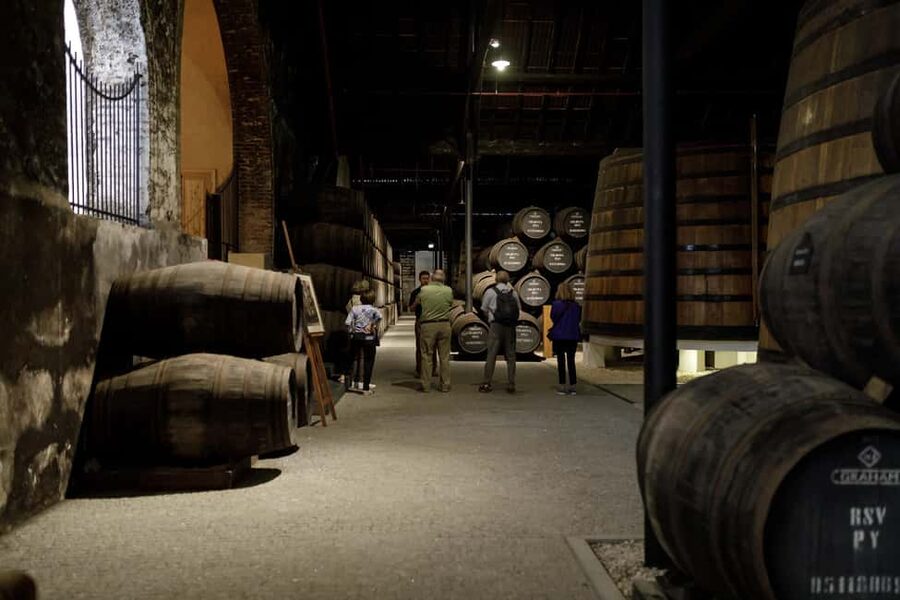
Graham’s Port Lodge gives you two good reasons to cross the Douro: a working 1890 cellar filled with aging Port, and a grand view back toward Porto’s old center and the two-tier bridge. This is not just a tasting room with barrels arranged for decoration. The building still houses more than 2,000 oak pipes and 40 large vats.
I like the tasting’s clear progression, from Graham’s Blend Nº5 White to Six Grapes, Quinta dos Malvedos Vintage Port, and a 30-Year-Old Tawny. I also like the two-hour length, which gives the tour enough time to explain the wine without taking over your day. The main drawback is that transportation is not included, and the lodge’s hilltop location in Vila Nova de Gaia requires you to make your own way there.
In This Review
- Key points to know before you book
- Why Graham’s Port Lodge feels different
- Entering the 1890 lodge in Vila Nova de Gaia
- How Port production comes into focus
- The four-glass tasting, from white to 30-Year-Old Tawny
- Graham’s Blend Nº5 White
- Graham’s Six Grapes
- Graham’s Quinta dos Malvedos Vintage Port
- Graham’s 30-Year-Old Tawny
- Food pairings and the visitor center
- The view across the Douro
- Is $53 a fair price for two hours?
- Who should book this Graham’s experience?
- Should you book it?
- FAQ
- Where does the Graham’s Port Lodge tour start?
- How long does the experience last?
- Which Port wines are included?
- Is transportation included?
- Which languages are available for the guided tour?
- Is the tour wheelchair accessible?
Key points to know before you book
- Four Ports show the style range: Taste a white, a ruby-style reserve, a Vintage Port, and a mature Tawny.
- The cellar is still active: More than 2,000 oak pipes and 40 large oak vats hold aging Port.
- The Porto view is part of the experience: The lodge looks across the Douro toward the historic center and the famous two-tier bridge.
- Max is a guide to look out for: A booking review specifically praises Max for making the history and atmosphere memorable.
- The tour lasts two hours: That is enough time for a guided visit, tasting, and a stop in the shop.
- You can book in three languages: Live guiding is offered in English, French, and Spanish.
Why Graham’s Port Lodge feels different
Most visitors come to Vila Nova de Gaia for Port. The question is which lodge gives you more than a few pours and a quick explanation. Graham’s makes a strong case because the cellar is both historic and operational.
The lodge was built in 1890 on a commanding ridge, only a few hundred meters from the Douro’s south bank. From here, you look across the river to Porto’s historic center. The view gives you an immediate sense of how closely the two cities are linked, while also reminding you that Vila Nova de Gaia is its own place, not simply a suburb of Porto.
The setting matters because Port wine is tied to both sides of the river. The Douro Valley supplied the grapes, while the lodges of Gaia became the place where Port was stored, aged, blended, and prepared for sale. At Graham’s, you can see that cellar tradition in a building that continues to hold large stocks of wine.
The tour also avoids the problem of a tasting that feels detached from production. You begin with the building, the barrels, and the process. The glasses come later, so the wines have a story behind them.
More port wine cellars to visit:
- Porto: Charming Sailboat Cruise with Port Wine,Sunset Option
★ 5.0 · 1,978 reviews - Vila Nova de Gaia: Port Wine Tasting with Cheese Pairing
★ 4.8 · 1,074 reviews - Porto: 6 Bridges Port Wine River Cruise with 4 Tastings
★ 4.9 · 586 reviews
Entering the 1890 lodge in Vila Nova de Gaia
Your starting point is Graham’s Port Lodge, at Rua do Agro 141. There are two entrances, so go to the Graham’s Port Lodge Reception for the guided tour rather than assuming any door leads to the same place.
The visit begins in the visitor center before moving into the guided tour. The exact route can vary, but the focus is the cellar’s past and the way Port is made and aged. This is useful even if you already know a little about wine, since Port has its own vocabulary and methods.
You will learn how the cellar functions and why the building is suited to aging wine. The most memorable part should be the scale of the storage areas. More than 2,000 pipes, the traditional term for large oak casks, are kept here, along with 40 large oak vats.
That number gives you a better picture than a short talk about barrels ever could. Port production is not a tiny operation hidden behind a boutique tasting counter. It involves large stocks, careful aging, and decisions about how different wines will be blended or kept as particular bottlings.
The lodge also has extensive cellars for Vintage Port. That matters because Vintage Port is made in smaller declared years and is intended for long aging. You do not need to be a Port expert to appreciate the difference between a wine held for maturity and one meant to show a younger, fruitier style.
How Port production comes into focus
The tour’s production explanation is one of its best features for first-time Port drinkers. Port is fortified wine, but the important point for you is not memorizing technical terms. It is understanding why the final wines can taste so different from one another.
Inside the lodge, the guide connects the cellar’s barrels and vats with the stages of production and aging. You see where time plays a major role. Some Ports keep a fruit-forward character, while others gain more developed flavors and a smoother, more complex profile through long contact with wood.
The building makes this lesson concrete. You are surrounded by the tools of aging rather than looking at a diagram on a wall. The guide can place the tasting in context, helping you notice why a white Port does not drink like a Vintage Port, and why a 30-Year-Old Tawny has a different color, texture, and character.
The tour is also a good fit if you are traveling with someone who is less interested in wine. The cellar, the view, and the history give the visit more variety than a seated tasting alone. On the other hand, dedicated wine students may find the two-hour format too brief for a detailed technical study of vineyards, harvest conditions, or bottle aging.
The four-glass tasting, from white to 30-Year-Old Tawny
The tasting includes four Graham’s Ports. The selection is well planned because it moves through several important styles instead of offering four similar wines.
More food tours in Vila Nova De Gaia:
- Porto: Taylor’s Port Cellars & Tasting
★ 4.6 · 3,374 reviews - Porto: Port Cellar Visit and Wine Tasting at Fonseca
★ 4.2 · 232 reviews - Vila Nova de Gaia: Porto Discovery Tasting
★ 4.8 · 17 reviews - Porto: Private Sailboat Trip with Wine Tasting & Charcuterie
★ 5.0 · 9 reviews
Graham’s Blend Nº5 White
The first pour is Graham’s Blend Nº5 White. Starting with a white Port gives you a gentle introduction and a useful point of comparison for the darker wines that follow.
White Port can be an easy style to overlook in Porto, where ruby, Vintage, and Tawny bottles often get more attention. Here, it has a clear job: it shows that Port is not limited to deep red, sweet wines. Pay attention to its freshness and lighter feel before moving on.
Graham’s Six Grapes
Next comes Graham’s Six Grapes. This is a red Port with more fruit and weight than the white, but it is not the same experience as a mature Vintage or Tawny.
For you, this glass works as a bridge between the two ends of the tasting. It helps show how a younger Port can be generous and direct, while the wines later in the lineup bring more age-related character.
Graham’s Quinta dos Malvedos Vintage Port
The third pour is Graham’s Quinta dos Malvedos Vintage Port. This is the tasting’s chance to show the firm, concentrated side of Port.
Vintage Port has a special place in the category, and the tour’s cellar discussion should make that easier to understand. You are not simply being given a prestigious name. You have already seen the casks and vats, heard about aging, and learned that the lodge holds extensive Vintage Port stocks.
This is where I would slow down and compare it with Six Grapes. Look for the differences in fruit, structure, and finish. The point is not to decide which one is best. It is to notice how different Port can be within the same producer.
Graham’s 30-Year-Old Tawny
The final glass is Graham’s 30-Year-Old Tawny. Ending with this wine gives the tasting a mature finish and lets you see the effect of long aging.
A Tawny aged for 30 years is a very different proposition from a younger, fruit-driven Port. It is the kind of pour that benefits from patience, so do not rush the last glass. The food pairings served with the tasting can help you see how the wine works alongside something to eat rather than treating it as a stand-alone drink.
The lineup is especially useful if you are new to Port. Four glasses are enough to create a clear map of the category without becoming exhausting. If you already know these styles well, the value lies less in discovering the basics and more in tasting Graham’s versions in the setting where they are made and stored.
Food pairings and the visitor center
The tasting includes food pairings, adding a practical element to the wine lesson. Pairings can change how you perceive sweetness, acidity, texture, and finish. A Port that seems heavy by itself may feel more balanced beside the right bite.
Do not confuse the included tasting with a full meal. Snacks can be purchased on-site as an extra, but food beyond the tasting is not included in the stated price. If you need lunch or a substantial snack, plan for that separately.
The visitor center also includes a shopping stop. This is useful if you want to take home a bottle, compare labels, or buy a gift after hearing how the wines differ. It is less useful if you are trying to keep the visit tightly focused on the cellar and tasting, since the shop can tempt you to linger.
The view across the Douro
The view is not a minor extra. Graham’s sits high enough in Vila Nova de Gaia to give you a broad look toward Porto’s historic center and the iconic two-tier bridge.
The bridge is one of the defining sights of the riverfront, and seeing it from the lodge gives you a different angle than the usual viewpoints along the waterfront. You can take in the relationship between the two cities, the river, and the ridge of Gaia where the Port lodges are gathered.
Bring your camera, but do not let the view replace the tour. The best use of the setting is to look out after the cellar visit, when you have a better sense of why Gaia became such an important home for Port storage and trade.
Because the lodge is on a ridge, the approach may be less convenient than a riverfront tasting room. The experience includes no transportation, so check your route before you set out. The meeting point is specific, and the two entrances make it worth allowing time to find the correct reception area.
Is $53 a fair price for two hours?
At $53 per person, the tour costs more than a basic Port tasting. You are paying for more than four pours, though. The price includes a guided visit to a historic working cellar, an explanation of production, a four-Port tasting, food pairings, and access to one of the better views over Porto.
I consider that a fair price if you want context and a proper introduction to Port. The four wines cover enough ground to make the tasting educational, while the building and view add value for anyone who wants more than a bar counter.
The price is less attractive if your only goal is to sample Port quickly. You will also need to pay for your own transportation, and extra snacks are available at an additional cost. If you are watching every euro, compare this with a shorter tasting elsewhere in Gaia. If you want one polished Port visit during a Porto stay, Graham’s offers a fuller package.
The tour has a rating of 4.9 from 39 reviews, and the strongest praise centers on the history, atmosphere, and guiding. One specific review calls out Max by name, saying his presence helped make the visit well worth doing. That is a useful sign that the guide can shape the experience, though guide assignments can change.
Who should book this Graham’s experience?
I would recommend it to first-time Porto visitors who want a clear introduction to Port without spending half a day on a wine excursion. The two-hour schedule fits neatly beside sightseeing in Porto or Gaia.
It also suits couples, small groups, and anyone who enjoys historic buildings with a drink attached. The views make it appealing to people in your party who may care less about tasting notes.
Port fans will appreciate the chance to see a working lodge and taste a 30-Year-Old Tawny beside a Vintage Port. Still, serious wine specialists may want a longer or more technical visit, since the stated format gives only two hours to cover the building, production, four wines, and shopping.
The tour is wheelchair accessible, and live guiding is available in English, French, and Spanish. Pets are not allowed, except for assistance dogs. Those details make planning simpler, but you should still confirm the route and entrance arrangements when booking.
Should you book it?
Book this tour if you want the full Port picture in a compact package: a 1890 lodge, an active cellar, four contrasting wines, food pairings, and a strong view over Porto. The tasting sequence is especially useful for beginners, and the setting gives the visit a sense of place that a stand-alone wine bar cannot match.
Skip it if you only want a quick drink, dislike guided visits, or need transportation included. For most people spending at least a few days in Porto, though, the combination of cellar scale, clear wine progression, and bridge views makes $53 a sensible splurge.
FAQ
Where does the Graham’s Port Lodge tour start?
The starting location is Rua do Agro 141 in Vila Nova de Gaia. For the guided visit, go to the Graham’s Port Lodge Reception. There are two entrances.
How long does the experience last?
The experience lasts two hours. Starting times vary, so check availability when you choose your date.
Which Port wines are included?
The tasting includes Graham’s Blend Nº5 White, Graham’s Six Grapes, Graham’s Quinta dos Malvedos Vintage Port, and Graham’s 30-Year-Old Tawny.
Is transportation included?
No. You must arrange your own transportation to and from Graham’s Port Lodge.
Which languages are available for the guided tour?
Live guiding is available in English, French, and Spanish.
Is the tour wheelchair accessible?
Yes, the activity is listed as wheelchair accessible. Pets are not allowed, although assistance dogs are permitted.
Latest reviews around Vila Nova De Gaia
- Exclusive visit to the Geophysical Institute of Porto★ 5.0 · 3 reviews
- Port Wines & Chocolate Pairing★ 5.0 · 3 reviews
- Private Boat Tour 6 Bridges 1h30, group price up to 6px★ 5.0 · 3 reviews
- Porto: Douro Classic Boat Tour★ 5.0 · 3 reviews
- Porto: Best Exclusive Charming Sailboat Sunset★ 5.0 · 4 reviews
- Porto: Porto Bike Atlantic Route★ 5.0 · 4 reviews
- Burmester Cellar Tour★ 4.8 · 4 reviews
- Vila Nova de Gaia: Douro Discovery★ 5.0 · 4 reviews
Port Wine Cellar Tours, compared.

Porto: Cálem Cellar Tour, Interactive Museum & Wine Tasting
Read our review →
Porto: Cálem Cellar Tour, Fado Show & Wine Tasting
Read our review →
Porto: Cockburn’s Port Lodge Tour and Tasting
Read our review →
Porto: Bridges Cruise with Wine Cellar Tour or Sunset Option
Read our review →
Porto: Authentic Fado Show, Port Wine & Handmade Instruments
Read our review →
Porto: City Train Tour, River Cruise & Wine Cellar
Read our review →
Porto: Live Fado Concert with Glass of Tawny Port Wine
Read our review →
Port Wine Lodges Tour Including 7 Port Wine Tastings (English)
Read our review →Browse the lists this tour appears in