
Reviewed · AZULEJO TILE WORKSHOPS
Tile Painting and Cocktails in Downtown Porto
Porto’s famous tiles are not just pretty backdrops for photographs. At this two-hour workshop, you learn why azulejos became such a strong part of Portuguese life, then paint one of your own with help from Daniela and her team. A cocktail and a finished handmade souvenir make this more than a standard craft class.
I especially like the clear, beginner-friendly instruction and the chance to make a souvenir that means something. I also like the quick finish: you can usually collect the sealed tile about an hour after class, a useful feature if your stay in Porto is short. The main consideration is that you may need to fit in a second visit to pick it up.
In This Review
- Key points
- Painting azulejos at R. Chã 77
- A short history lesson with a practical point
- From blank tile to finished keepsake
- Cocktails, conversation, and a relaxed pace
- Why the finished tile is worth more than a shop souvenir
- Fitting the workshop into a Porto day
- Price, group size, and who gets good value
- Who should book this class
- Booking and cancellation basics
- Is Tile Painting and Cocktails in Porto worth booking?
- FAQ
- How long does the tile painting and cocktail experience last?
- Where does the activity start and end?
- Is the workshop offered in English?
- Do I need artistic experience?
- What drink is included?
- Can I cancel for a full refund?
Key points
- Portuguese tile history first: Learn how tiles arrived, who influenced their use, and why Porto favors certain colors.
- A personal souvenir: Choose a supplied outline or create your own design, then take home a tile you painted.
- Daniela’s patient teaching: Instructions are step by step and suitable for beginners, children, solo participants, and groups.
- A cocktail while you work: The class includes a drink, with juice or a gin and port cocktail mentioned as options.
- Downtown location: Begin and end at R. Chã 77, close to many of Porto’s main sights.
- Fast collection time: The studio’s curing method lets you remove the tile about one hour after the workshop.
Painting azulejos at R. Chã 77
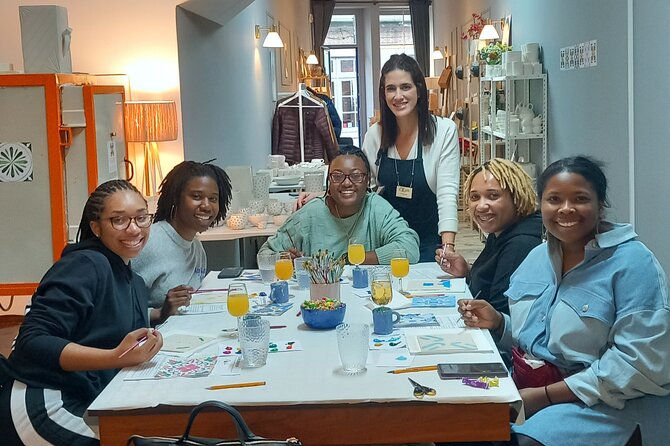
The workshop takes place at Boiler Studio, at R. Chã 77 in central Porto. You return to this same spot at the end, so there is no complicated transport plan or second meeting point to track.
The setting matters. Porto is full of tiled churches, railway halls, houses, and shopfronts, but you usually see azulejos as part of the city’s scenery. Here, you get a short lesson in how those tiles came to matter, then work with the same broad visual language yourself.
The studio is described as clean, spacious, well prepared, and easy to find. That makes a difference in a hands-on class. You want enough room for paints, brushes, your drink, and your elbows, especially if you are working with children or a group of friends.
The class is offered in English. It can accept up to 20 people, so the exact feel may depend on the day. A smaller session should feel more personal, while a full group may bring more energy and conversation but less one-to-one time.
More azulejo tile workshops:
- Porto: Tile Painting and Cocktails in Downtown Porto
★ 4.9 · 484 reviews - Porto: Tile Painting Workshop with Porto Wine (Sé do Porto)
★ 5.0 · 102 reviews - Porto Tile Painting Workshop in artist studio
★ 5.0 · 83 reviews
A short history lesson with a practical point
The opening part explains Portuguese tile history in plain terms. You learn how tiles became important in Portugal, which outside influences shaped the tradition, which colors appear most often in Porto and across the country, and which tiled sights deserve your attention during the rest of your visit.
That background gives your walking tour more purpose. After the class, a blue-and-white wall or patterned church facade is less likely to blur into the general scenery. You have a few useful questions in mind: why this pattern, why these colors, and why tiles here instead of painted plaster or exposed stone?
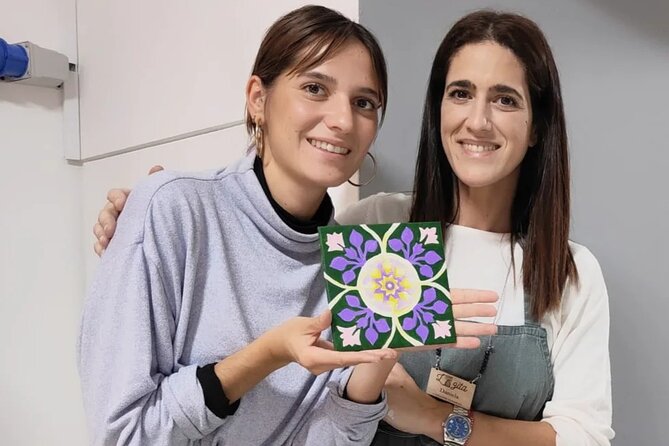
The lesson also helps you choose a design. If you already have a favorite Porto building or pattern, you can use it as a starting point. If your mind goes blank when faced with a blank tile, the studio provides outlines and examples.
I would not book this expecting a full academic course in Portuguese ceramics. The history section is an introduction designed to support the painting. Its value comes from the balance: you get enough cultural context to make the craft feel connected to Porto, without spending the whole two hours listening to a lecture.
From blank tile to finished keepsake
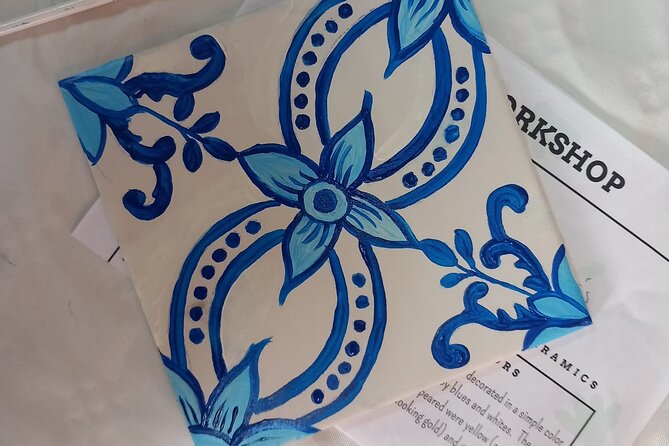
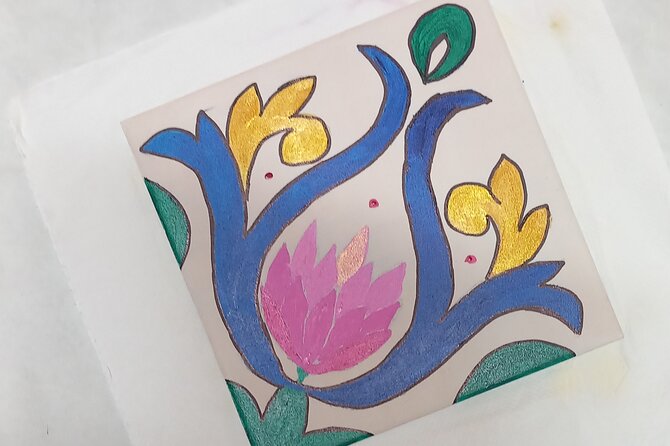
The practical portion is designed for beginners. You can follow a supplied outline or work freehand, and the instructor guides you through the process. You do not need prior art training, and the class is built to accommodate different skill levels.
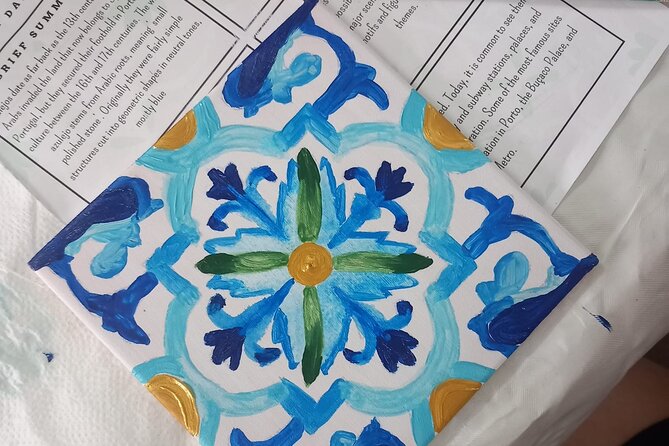
That does not mean every design takes the same amount of time. A simple geometric pattern or traditional blue-and-white motif should be easier to complete than a detailed bridge scene, portrait, or multicolored illustration. If you tend to fuss over small details, choose a design that leaves you enough time to enjoy the class.
One useful tip is to think about your design before arriving. You can still decide at the studio, but having a rough idea saves time and reduces the blank page problem. The supplied patterns also give you a safe route if you want a traditional-looking tile without having to invent a composition from scratch.
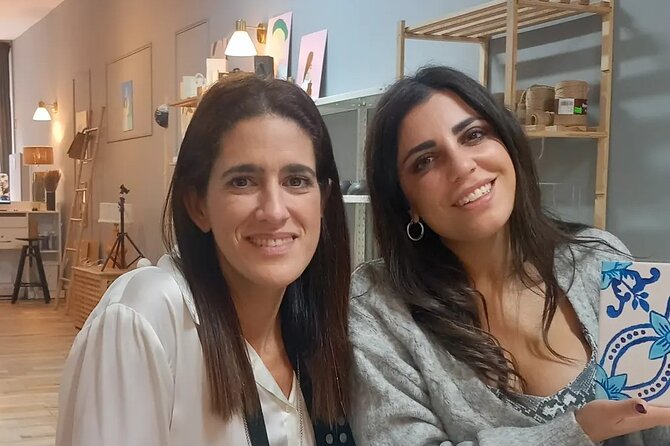
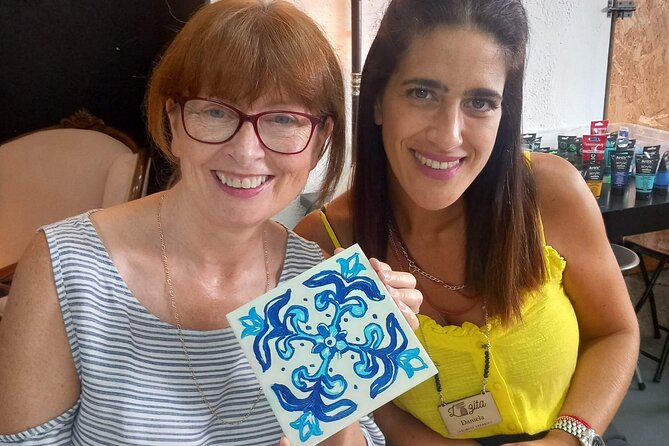
The instruction seems to be the strongest part of the class. Daniela is described as patient, clear, friendly, and good at helping different ages and skill levels. The teaching is not about correcting every brushstroke. It is about showing you how to turn a rough idea into something you will actually want to display.
Families can take part together. Children have painted their own designs, including playful food themes and rainbow versions of classic patterns. Adults can choose something more traditional, such as a Porto motif or a view of the Dom Luís I Bridge. That mix works well when not everyone in your group wants the same kind of activity.
Cocktails, conversation, and a relaxed pace
The drink adds a social touch without taking over the class. You may choose juice or a gin and port cocktail, and the cocktail has been singled out as a tasty part of the experience. You sip while you work, chat with the people at your table, and take a break from Porto’s steep streets.
This is a good fit for an afternoon when you want something calm but not passive. You are still making something, but the class does not require the physical effort of climbing viewpoints or crossing the city on foot.
The group format can also suit solo visitors. The activity gives you an easy way to talk with other people without the forced feel of a formal group tour. Couples, families, birthday groups, and hen parties can all share the same basic activity while making very different tiles.
The drink is a nice extra, but I would judge the class mainly on the instruction and the souvenir. If you do not drink alcohol, juice is available according to the practical information provided. The class itself remains the main event.
A few more Porto outings to weigh up
- The Unvanquished Tour in Porto City Center
★ 5.0 · 26,497 reviews - From Porto: Douro Valley w/ Boat Tour, Wine Tasting & Lunch
★ 4.7 · 19,061 reviews - Complete Douro Valley Wine Tour with Lunch, Wine Tastings and River Cruise
★ 5.0 · 12,920 reviews - Porto: Six Bridges Cruise
★ 4.2 · 11,680 reviews
Why the finished tile is worth more than a shop souvenir
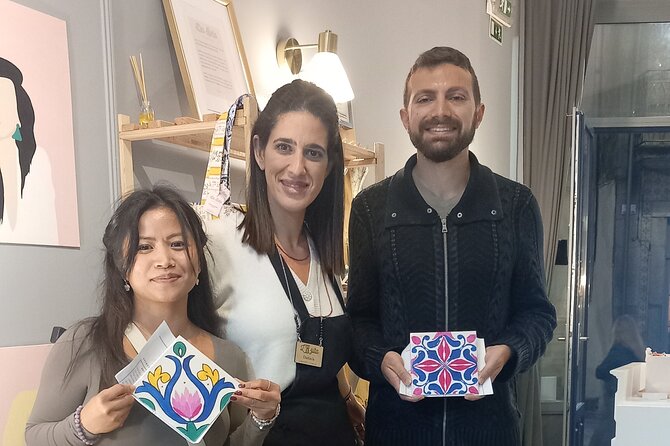
Porto has no shortage of small ceramic souvenirs. A painted tile from a shop may be attractive, but it tells you little about your own time in the city. The tile you make here carries the memory of choosing a pattern, making mistakes, getting help, and finishing the piece yourself.
The studio uses a technique that lets the tile be removed about an hour after the workshop. Some descriptions identify the painting as acrylic and explain that a curing process seals it within a few minutes, while the activity information gives the practical collection time as about one hour. The important point for planning is simple: you should be able to collect the finished tile on the same day, rather than waiting for a long firing or shipping process.
That quick turnaround is a major advantage for a short Porto visit. You might attend in the morning, spend the day sightseeing, then return for the tile. Or you can schedule the workshop early in your stay and collect the piece later that day.
You should still plan around the pickup. The activity information says the tile can be removed one hour after the workshop ends, but the supplied information does not specify a delivery or mailing service. If you are leaving Porto immediately after class, confirm the collection details before booking.
There is also a small tradeoff. A fast acrylic curing process is not the same as a traditional kiln-fired ceramic workshop. If your priority is authentic production by firing in a kiln, another class may suit you better. If your priority is leaving Porto with a completed personal souvenir, this method is far more convenient.
Fitting the workshop into a Porto day
The class lasts about two hours, not counting the time needed to collect your tile. Since it starts and ends at R. Chã 77, it is easy to pair with nearby sightseeing, provided you leave enough time for the workshop and the later pickup.
The studio is close to many tourist attractions. That makes it useful on a day centered on central Porto, but avoid placing it between two fixed-time activities on opposite sides of the city. Porto’s hills and uneven streets can make a short map distance take longer than expected.
A sensible plan is to combine the class with a nearby walking route before or after it. Use the history lesson as a preview, then look more closely at tiled buildings on your own. You could also visit the studio early in your stay, collect the tile later, and keep the rest of the day flexible.
The activity is offered in English. Confirmation normally arrives when you book, though reservations made within one hour of the start time are confirmed as soon as possible, subject to availability. It is commonly booked well ahead, with an average advance booking time of about 35 days, so do not assume you can always walk in during a busy Porto weekend.
Price, group size, and who gets good value
At $42.34 per person, this is not the cheapest way to fill two hours in Porto. It is also not simply a painting lesson. The price covers the guided cultural introduction, instruction, art materials, a drink, studio time, and a finished tile that you take home.
I see the best value for people who want an activity with a physical result. A typical sightseeing tour gives you photographs and memories, while this gives you a keepsake connected to the city. The value is also stronger if you are traveling with children or a mixed-age group and need one activity that can work for several generations.
A party of friends can enjoy the social side, and a solo visitor can join without needing to organize a private class. Groups larger than the normal available size should contact customer support at least 24 hours ahead so availability can be checked. The maximum group size is 20.
The class earns a 4.9 out of 5 rating from 187 ratings, with 99 percent recommending it. Those numbers do not remove the need to match the activity to your interests, but they do support the idea that the teaching, atmosphere, and finished tile are consistently strong parts of the experience.
Who should book this class
I would recommend it to you if you want a break from walking, enjoy making things, or prefer souvenirs with a personal story. It is also a smart choice for families, solo visitors, couples, and friend groups who want an activity everyone can join.
You do not need artistic ability. The instructor can guide you through a pattern, and you can choose a simpler design if detailed work makes you nervous. Children can take part, and the activity has been enjoyed by groups ranging from young adults to people in their sixties.
It may be less suitable if you want a serious ceramics course, a long kiln-firing process, or a detailed study of Portuguese art. The history section is short, and the painting method is made for a same-day souvenir. That is a strength for most holiday schedules, but a limitation for craft purists.
Service animals are allowed, the meeting point is near public transportation, and most people can participate. The supplied details do not give a full list of accessibility features, so contact the team if you have specific mobility or access needs.
Booking and cancellation basics
Free cancellation is available when you cancel at least 24 hours before the local start time. Cancellations or changes made within 24 hours are not refunded or accepted.
The activity requires a minimum number of participants. If the class is canceled because that minimum is not met, you are offered another date or experience, or a full refund. For unusual dates or times, contact the team directly rather than assuming the regular schedule can be changed.
Is Tile Painting and Cocktails in Porto worth booking?
Yes, if you want a relaxed cultural activity that gives you something useful to take home. The strongest reasons to book are Daniela’s patient, clear instruction, the short but helpful tile history, the cocktail or juice, and the chance to collect your finished piece roughly an hour later.
Book it early if the class fits your schedule, since it is often reserved weeks ahead. Choose a simple design if you want a calm session, plan a return to the studio for collection, and remember that the fast curing process favors convenience over traditional kiln-fired pottery.
FAQ
How long does the tile painting and cocktail experience last?
The workshop lasts approximately two hours. You should also allow time to return to the studio about one hour later to collect the finished tile.
Where does the activity start and end?
It starts at R. Chã 77, 4000-165 Porto, Portugal, and ends back at the same meeting point.
Is the workshop offered in English?
Yes. The activity is offered in English.
Do I need artistic experience?
No. Most people can participate, and the instructor provides step-by-step guidance. You can follow a supplied outline or create your own design.
What drink is included?
The experience includes a drink while you work. The available choices mentioned are juice or a gin and port cocktail.
Can I cancel for a full refund?
Yes, if you cancel at least 24 hours before the experience start time. Cancellations made less than 24 hours before the start are not refunded.
Latest reviews around Porto
- Private Walking Tour, highlights and secrets of Porto★ 3.9 · 3 reviews
- Private Porto Half-Day Tour – Wine Cellars & Cheese Tasting★ 5.0 · 3 reviews
- Portuguese Wine Tasting w Local Cheese & Cold Cuts pairing★ 5.0 · 3 reviews
- From Peso da Régua: Visit 3 wineries, tasting and viewpoint★ 5.0 · 3 reviews
- Porto: Full-Day All-Inclusive Private City Sightseeing Tour★ 4.3 · 3 reviews
- Small Painting Group with a Local Artist in Porto★ 5.0 · 3 reviews
- From Arouca: Paiva River Rafting Adventure – Adventure Tour★ 5.0 · 3 reviews
- Private Tour to Santiago de Compostela and its stunning Cathedral★ 5.0 · 3 reviews
Azulejo Tile Workshops, compared.
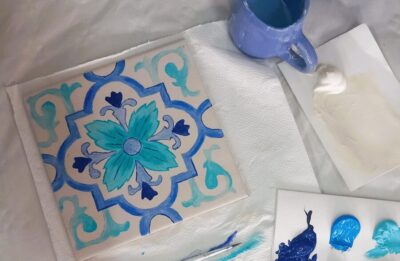
Porto: Tile Painting and Cocktails in Downtown Porto
Read our review →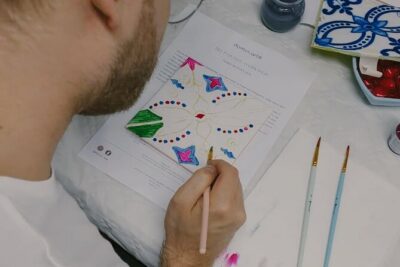
Porto: Tile Painting Workshop with Porto Wine (Sé do Porto)
Read our review →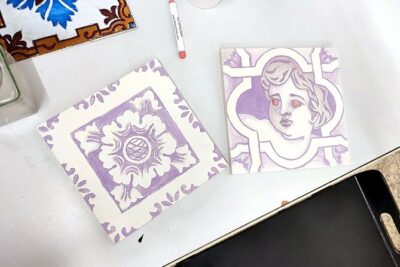
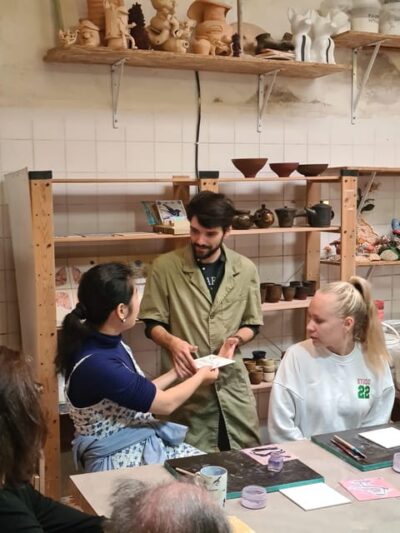
Porto: Tile Painting Workshop with Tea and Port Wine
Read our review →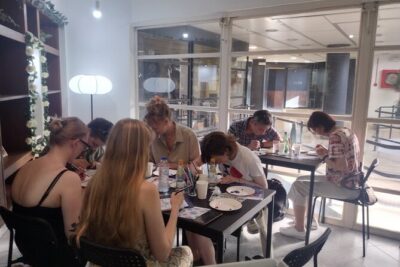
Browse the lists this tour appears in