
Reviewed · AZULEJO TILE WORKSHOPS
Porto: Tile Painting Workshop with Porto Wine (Sé do Porto)
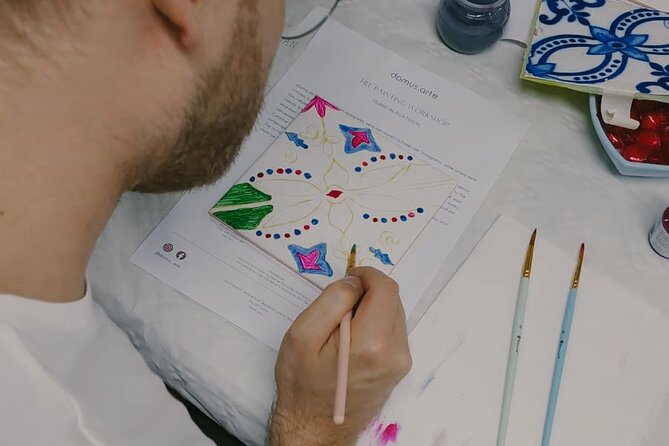
Portuguese tiles are more than pretty wall decoration, and this workshop lets you work with the tradition instead of simply photographing it. In a central Porto studio, you hear a short introduction to azulejos, trace a pattern onto a white ceramic tile, and paint your own souvenir with help from an instructor.
I like the easy entry for beginners and the chance to choose from patterns copied from Porto’s streets. I also like the relaxed extras: coffee, tea, juice, water, snacks, and a glass of Port wine. The main catch is practical: your tile must be fired after class, so you need time to return for it, often about an hour and a half later or the next day.
In This Review
- Key points to know before you book
- Why painting an azulejo is a good Porto break
- Finding Domus Arte near Porto Cathedral
- The short introduction to Portuguese azulejos
- Choosing a pattern or creating your own
- Painting with Port wine and light snacks
- What happens after you finish the paint
- Is $42.33 a fair price?
- Who will enjoy this workshop most?
- Should you book the Porto tile painting workshop?
- FAQ
- Where does the tile painting workshop begin?
- How long does the workshop last?
- What is included in the price?
- Do I need previous painting experience?
- Can I create my own tile design?
- Can I take the tile home immediately after class?
- What is the cancellation policy?
Key points to know before you book
- Paint a real ceramic tile: Use a traditional Porto pattern or create an original design on a white tile.
- Get plenty of guidance: Instructors such as Beatriz, Fernanda, Rita, Francisco, and Daniella have been praised for patience, humor, and hands-on help.
- Enjoy Portuguese refreshments: Port wine, coffee, tea, juice, bottled water, and sweet and savory snacks are included.
- Plan around tile collection: Your finished tile needs firing, so do not schedule this as your final activity unless you have enough time to return.
- Meet near Porto Cathedral: The class begins at Domus Arte, Rua da Bainharia 135, in downtown Porto.
- Good for mixed groups: Solo visitors, families, friends, work groups, and people with little or no painting experience can take part.
Why painting an azulejo is a good Porto break
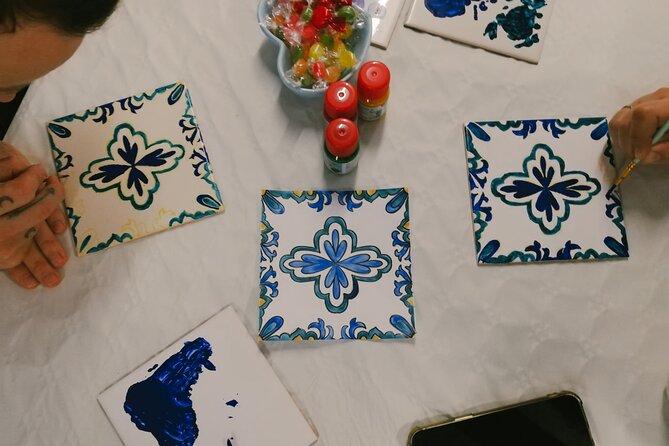
Porto is full of azulejos. You see them on churches, railway stations, houses, and ordinary streets, often in blue and white scenes or repeating geometric patterns. It is easy to admire them as part of the city’s scenery without thinking about the hands and methods behind them.
This two-hour class gives you a simple way to pay closer attention. You learn where Portuguese tiles came from, how they shaped the look of Porto and Lisbon, and how a painted design is transferred to ceramic. The history talk is brief rather than academic, which suits a hands-on activity. You get enough background to understand what you are making, then plenty of time to work.
I would treat this as a creative cultural stop rather than a formal art course. One of the most useful points to know is that you do not need drawing skills. The supplied patterns can be traced onto the tile with carbon paper, and the instructor shows you how to handle the paint and brush. That makes the class friendly for children, cautious adults, and anyone who normally says I am not artistic.
The finished object also has more meaning than a shop-bought souvenir. It may not be perfect, but it carries your choices and the memory of an afternoon in Porto. You can take home something small, useful, and connected to the city’s visual character.
More azulejo tile workshops:
- Porto: Tile Painting and Cocktails in Downtown Porto
★ 4.9 · 484 reviews - Tile Painting and Cocktails in Downtown Porto
★ 5.0 · 187 reviews - Porto Tile Painting Workshop in artist studio
★ 5.0 · 83 reviews
Finding Domus Arte near Porto Cathedral
The meeting point is Domus Arte | Concept Store, at Rua da Bainharia 135, 4050-084 Porto. The activity information also identifies Porto Cathedral as the itinerary stop, so this is a central old-town experience rather than a coach trip or a tour across the wider city.
That location works well if you are already exploring the cathedral and the Sé district. You can pair the workshop with a walk through Porto’s historic center, but allow time for the city’s steep streets and uneven pavements. The class itself ends back at the same meeting point, so you do not need to arrange transport between separate stops.
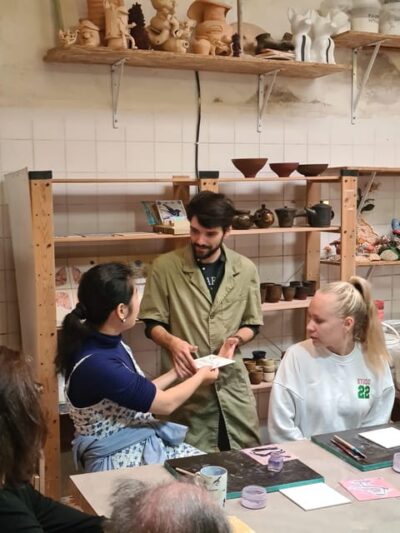
This is a private workshop setting, though the maximum group size is listed as 15 people. That wording matters. You should expect a class where the instructor can circulate and give personal help, not necessarily a one-to-one lesson. One account describes a larger-than-expected class, so group size may vary in practice. If individual attention is your main reason for booking, ask about the expected group size when arranging a private group.
The experience is offered in English, with morning and afternoon start times. That gives you a useful choice. A morning class can fit before a long sightseeing day, while an afternoon session makes a good rest stop after visiting the cathedral, São Bento area, or nearby streets.
The short introduction to Portuguese azulejos
The workshop begins with an explanation of Portuguese azulejos, including their origins and their role in the architecture of Porto and Lisbon. Do not expect a long lecture on ceramic production. The focus is to give you a clear sense of why tiles matter in Portugal before you start painting.
I value this part because it changes the way you look at the city afterward. Repeating patterns, blue-and-white scenes, and decorative panels are not random decoration. They are part of Portugal’s architectural identity, and the class connects your small tile to that larger tradition.
The introduction also covers the tile-making and painting process. The exact depth may depend on the instructor and the pace of the group. Some sessions have been described as a light, fun introduction rather than an in-depth technical lesson. That is fair for a two-hour class, but you should choose another type of course if you want advanced ceramic instruction or a detailed study of firing methods.
Instructors named in past sessions include Bea or Beatriz, Fernanda, Rita, Francisco, Pablo, Daniella, and Natalia. Their teaching styles appear to differ, but the useful pattern is clear: the class depends heavily on the person leading it. Strong instructors have been described as patient, funny, hands-on, and good at explaining color mixing. One instructor even mixed three paints to create orange for a design, which shows the practical help available when your chosen color is not ready on the palette.
Choosing a pattern or creating your own
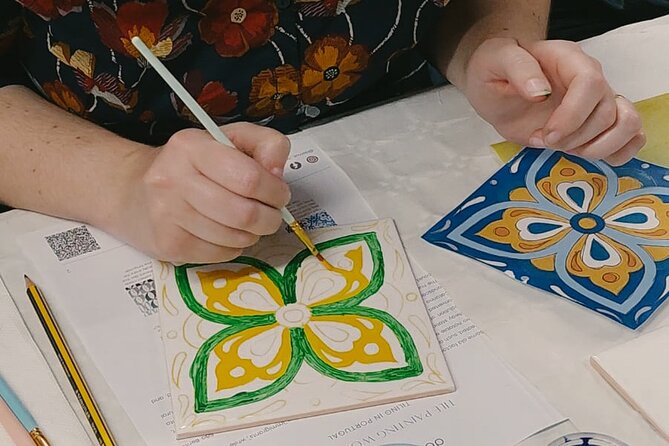
Once the introduction is finished, you receive a white ceramic tile and choose a design. The pattern selection includes traditional motifs taken from Porto’s streets and documented by the workshop team. You can copy one of these designs or create something original.
For most people, I would recommend choosing a traditional pattern for your first tile. The templates give you a strong starting point and help you produce a finished piece within the class time. You still make plenty of decisions through color, brushwork, and small changes to the design.
If you already enjoy drawing, an original design may be more rewarding. Just remember that you are working on a modest ceramic surface, not a large canvas. A simple image or repeating pattern is likely to work better than a very detailed scene.
The tracing method takes pressure off. Carbon paper helps transfer your selected pattern onto the tile, so your time goes into painting rather than trying to copy every line by eye. The instructor demonstrates brush techniques and stays available for questions. You can ask for help with color choices, mixing, and the amount of paint to use.
I would not rush this stage. Part of the pleasure is seeing how other people interpret the same selection of patterns. A group may begin with similar templates, yet the finished tiles can look quite different once people change the colors or add their own touches.
More Porto wine tastings worth an afternoon:
- From Porto: Douro Valley w/ Boat Tour, Wine Tasting & Lunch
★ 4.7 · 19,061 reviews - Complete Douro Valley Wine Tour with Lunch, Wine Tastings and River Cruise
★ 5.0 · 12,920 reviews - Porto: Live Fado Show with Glass of Port Wine
★ 4.8 · 6,498 reviews - Douro Valley: Wine Tour with Lunch, Tastings & River Cruise
★ 4.6 · 6,081 reviews
Painting with Port wine and light snacks
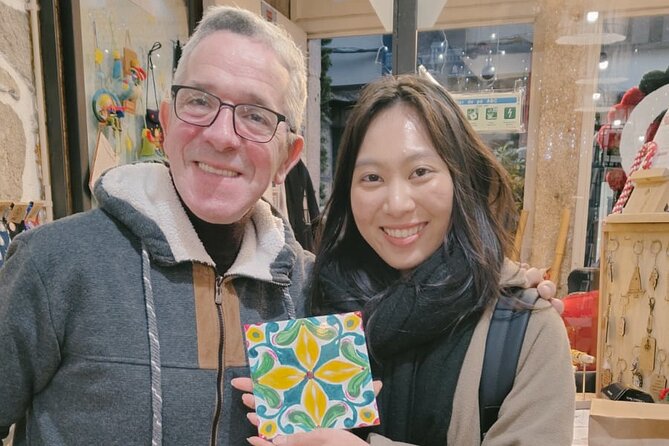
The refreshments make the workshop feel social rather than school-like. You can enjoy Port wine, coffee, tea, juice, bottled water, and sweet and savory snacks while you paint. These are modest additions, but they suit the pace of the class and give you a chance to talk with the people around you.
The Port wine is especially fitting. It connects the activity to the region without turning the workshop into a tasting tour. If you do not drink alcohol, the nonalcoholic choices mean you can still take part comfortably.
This is also a useful rainy-day plan. Porto can reward a full day on foot, but wet weather can make steep streets less pleasant. Two hours indoors gives you a break without losing the local focus. You are still learning about a Portuguese craft, not simply waiting out the rain.
The social side works best for friends, families, and work groups. A team event can use the shared activity as a simple way to spend time together, while a family can work at different skill levels without anyone needing prior experience. Solo visitors may also find it easy to chat while everyone paints, although the exact mix of people changes from one session to another.
What happens after you finish the paint

Your tile is not ready to take home immediately. It must be baked so the paint cures and becomes a finished ceramic piece. This is the most important scheduling detail in the whole experience.
The collection timing can vary. Some people have collected a tile roughly an hour and a half later, while others have picked it up the following day. One account describes a tile being ready within about an hour, while another says the group returned the next day. Since the details are not fully consistent, you should confirm the expected collection time at the workshop.
Do not book this activity on your last day in Porto unless you have a clear window before leaving. You need to return to Domus Arte, and a last-minute change in your plans could make collection difficult. If you are staying nearby for another night, the next-day option is much easier.
The wait is worthwhile because the fired tile is the point of the activity. You leave with a durable handmade reminder rather than wet paint on a piece of paper. Pack it carefully for the journey home, since ceramic can crack if placed loose in a suitcase.
Is $42.33 a fair price?
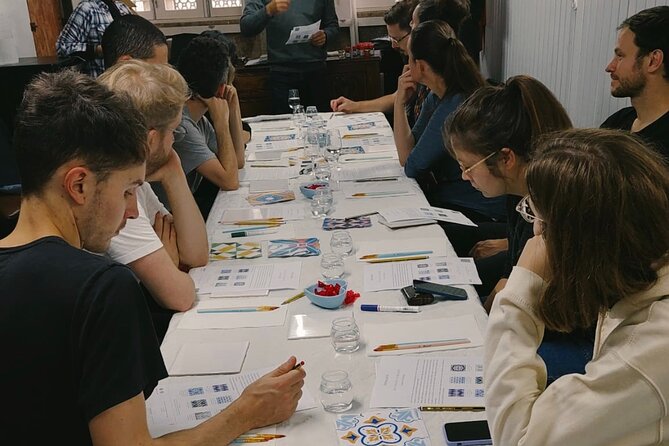
At $42.33 per person, the cost is reasonable if you value both the activity and the souvenir. You are paying for about two hours of instruction, all painting materials, the ceramic tile, refreshments, the firing process, and the time involved in preparing your finished piece.
The value is strongest when you want more than a standard sightseeing stop. A tile workshop gives you a short history lesson, a guided craft project, and an object to take home. It also fills a gap in a busy itinerary: you get to sit down, focus on one task, and enjoy a drink while still doing something tied to Portuguese culture.
The price may feel less attractive if you only want a quick activity or if your schedule cannot handle a second visit to collect the tile. It is also not the right choice for someone seeking a full technical course in ceramics. The class is designed for an enjoyable introduction, not professional training.
For a family or small group, the price can be easier to justify because the experience creates a shared souvenir. For a solo visitor, the decision depends on how much you value making something yourself. I would compare it with the cost of buying a decorative tile in Porto. The workshop costs more than a simple souvenir, but it gives you the story and the process behind the object.
Who will enjoy this workshop most?
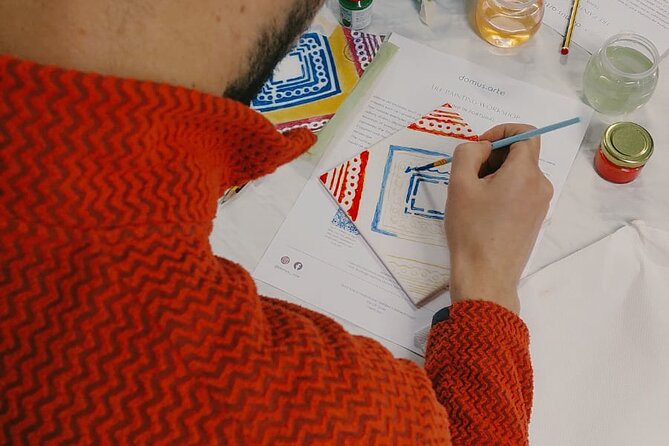
I would recommend it to anyone who wants a slower activity between major sights. It suits first-time painters because the templates and instructor support make the task manageable. It also works for experienced artists who want to play with Portuguese patterns and color.
Families should find the format flexible, since most people can participate and service animals are allowed. Bathrooms are available, and the workshop is near public transportation. The activity is not presented as a specialist or physically demanding tour, but the central Porto location may still involve walking on old-city streets.
Friends and bachelor or bachelorette groups can use it as a social activity without needing to organize separate supplies. It also has a natural team-building angle: everyone works on an individual tile while sharing the same table and refreshments.
I would be more cautious if your itinerary is packed tightly. The class lasts about two hours, and tile collection adds another time commitment. Starting late can also affect the schedule. One account noted a 30-minute delay while waiting for others to arrive, so leave some breathing room before your next fixed booking.
The activity is recommended by 100 percent of listed participants and carries a five-star rating from 102 reviews, with one four-star account. Those figures point to very strong satisfaction, but they should not replace practical planning. The experience succeeds when you want a relaxed craft session and can handle the collection stop.
Should you book the Porto tile painting workshop?
Book it if you want a personal Porto souvenir, a short introduction to azulejos, and a friendly activity that does not demand artistic talent. The instructors, including Beatriz, Fernanda, Rita, Francisco, Pablo, and Daniella in different sessions, are repeatedly praised for patient explanations, humor, and help with colors and designs.
Skip it if you want a serious ceramics lesson, a fast activity with no follow-up, or a tour that covers many city sights. The workshop stays focused on one tile, and you must plan to collect it after firing.
My best advice is to reserve a morning or afternoon slot that leaves space for a return visit. Do not put it just before your airport transfer or on the final hours of your trip. With that small bit of planning, this is a practical, creative way to connect with one of Porto’s most recognizable traditions.
FAQ
Where does the tile painting workshop begin?
It begins at Domus Arte | Concept Store, Rua da Bainharia 135, 4050-084 Porto, Portugal, in downtown Porto. Porto Cathedral is listed as the itinerary stop.
How long does the workshop last?
The activity lasts approximately two hours.
What is included in the price?
The price includes all painting materials, a white ceramic tile, tea or coffee, bottled water, juice, Port wine, and sweet and savory snacks.
Do I need previous painting experience?
No. The instructor provides patterns that you can trace and gives guidance on brush techniques, colors, and the painting process.
Can I create my own tile design?
Yes. You can choose from traditional patterns taken from Porto’s streets or create an original design.
Can I take the tile home immediately after class?
Usually, you need to wait while the tile is baked so the paint can cure. Collection may be later the same day or the next day, so confirm the timing during the workshop.
What is the cancellation policy?
You can cancel for a full refund up to 24 hours before the experience begins. Cancellations or changes made less than 24 hours before the start time are not accepted for a refund.
More Workshops in Porto
- Porto: Pastel de Nata Cooking Class with Grandma’s Recipe
★ 5.0 · 1,565 reviews - Porto: Pastel de Nata Pastry-Making Workshop
★ 4.9 · 1,542 reviews - Porto: Pastel de Nata Cooking Class with Port Wine – Sé
★ 4.8 · 888 reviews - Matosinhos: Surfing Lesson with Equipment
★ 4.8 · 704 reviews
Latest reviews around Porto
- Private Walking Tour, highlights and secrets of Porto★ 3.9 · 3 reviews
- Private Porto Half-Day Tour – Wine Cellars & Cheese Tasting★ 5.0 · 3 reviews
- Portuguese Wine Tasting w Local Cheese & Cold Cuts pairing★ 5.0 · 3 reviews
- From Peso da Régua: Visit 3 wineries, tasting and viewpoint★ 5.0 · 3 reviews
- Porto: Full-Day All-Inclusive Private City Sightseeing Tour★ 4.3 · 3 reviews
- Small Painting Group with a Local Artist in Porto★ 5.0 · 3 reviews
- From Arouca: Paiva River Rafting Adventure – Adventure Tour★ 5.0 · 3 reviews
- Private Tour to Santiago de Compostela and its stunning Cathedral★ 5.0 · 3 reviews
Azulejo Tile Workshops, compared.
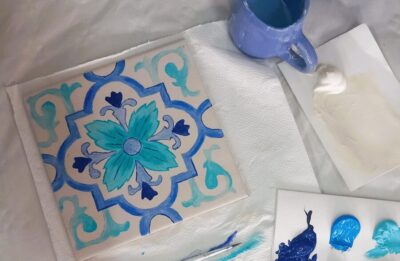
Porto: Tile Painting and Cocktails in Downtown Porto
Read our review →
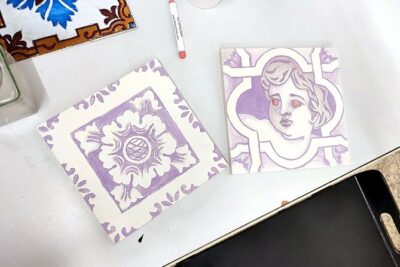
Porto: Tile Painting Workshop with Tea and Port Wine
Read our review →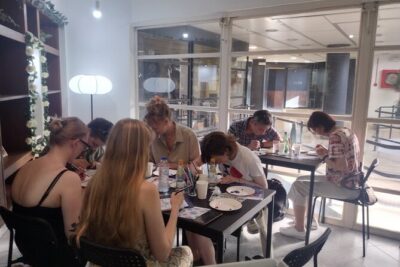
Browse the lists this tour appears in