
Reviewed · WORKSHOPS
Porto: Pastel de Nata Pastry-Making Workshop
The best part of this Porto activity is not simply eating a warm pastel de nata. You get to make the famous custard tart yourself, then sit down with a glass of Port while the pastries bake. I like the friendly, social format, and I like that the recipe and practical tips go home with you. The main thing to know is that the dough is prepared in advance, so this is a hands-on assembly and baking class, not a full pastry course from start to finish.
I also like the small-group setup, with no more than nine people, and the useful Porto advice shared between steps. Hosts such as Maria, Sara, Patricia, and Alice have a lively, inclusive style. Still, participation is shared across the group, so ask about a private workshop if you want to handle every single stage yourself.
In This Review
- Key points at a glance
- Starting at Boiler Studio on Rua Chã 77
- The first lesson: pastry, custard, and Portuguese context
- How the shared work actually works
- Port, wine, and conversation while the tarts bake
- The payoff: warm tarts and a cardboard box
- Is $41 a fair price for 90 minutes?
- Who will enjoy this Porto food class?
- Practical timing and booking advice
- My verdict on the Boiler Studio workshop
- FAQ
- Where does the pastel de nata workshop take place?
- How long does the workshop last?
- What drink is included?
- Do I make the pastry dough from the beginning?
- How many pastel de nata do I take home?
- Can children attend?
- Can I book a private or larger group workshop?
Key points at a glance
- Boiler Studio by Porto Cathedral: The workshop takes place on Rua Chã 77, close to São Bento Station, the Luis I Bridge, the Cathedral, and Time Out Market.
- A proper pastel de nata lesson: You roll prepared pastry, help make the egg custard, fill the cases, and bake the tarts under instruction.
- Wine with the baking: Your included drink can be wine, Port wine, or a mimosa, making the wait for the oven part of the social experience.
- Small groups of up to nine: The host shares the different tasks among participants, with a private option available for those wanting fuller participation.
- Take-home treats: You receive at least two pastries in a cardboard box, while several sessions have produced three per person.
- Useful for rainy afternoons: The 90-minute indoor class gives you a tasty break from Porto’s hills and changing weather.
Starting at Boiler Studio on Rua Chã 77
You meet at Boiler Studio, at Rua Chã 77, on a typical street directly in front of Porto Cathedral. This is a handy location for a short city break because you can combine the class with several major sights without arranging extra transport.
São Bento train station is nearby, as are the Luis I Bridge and Time Out Market. The Cathedral itself gives you a clear landmark for finding the studio. I would plan to arrive in this historic central area with a little time to spare, since the surrounding streets are part of the experience and Porto is not always a city where the quickest route is obvious.
The studio is described as bright, clean, and well organised. It also has a small area with gifts for sale. That may not matter to you if you only want to bake, but it helps give the class a proper workshop feel rather than the atmosphere of a rushed demonstration.
The setting also works well for a rainy day. Porto weather can change quickly, and 90 minutes indoors with warm pastry at the end is a useful way to protect part of your sightseeing schedule.
A few more Porto outings to weigh up
- Porto: Pastel de Nata Cooking Class with Grandma’s Recipe
★ 5.0 · 1,565 reviews - Porto: Pastel de Nata Cooking Class with Port Wine – Sé
★ 4.8 · 888 reviews - Matosinhos: Surfing Lesson with Equipment
★ 4.8 · 704 reviews
The first lesson: pastry, custard, and Portuguese context
The host begins by explaining the main stages of pastel de nata making. You receive a recipe to take home, and the instructor adds the small practical details that a printed sheet cannot easily cover.
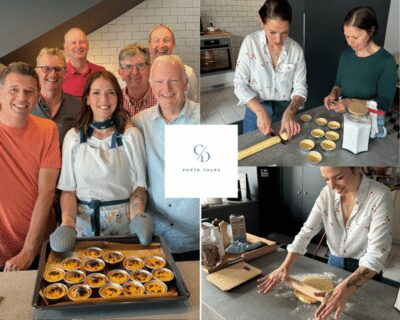
You roll out the prepared pastry and shape it into the tart cases. You also help prepare the egg custard mixture. The class is taught in English, and hosts including Maria, Sara, Patricia, Alice, and Ana have been praised for using humour and clear explanations to keep the pace relaxed.
The workshop does not make the dough from the beginning. The pastry needs about three hours to reach the proper condition, so the dough is prepared before the session. This is an important limitation to understand. You will still handle and roll the pastry yourself, but you will not spend the class measuring flour, mixing dough, and waiting for it to rest.
I see this as a sensible choice for a 90-minute activity. Making laminated pastry properly takes time, and trying to fit the entire process into a short class would leave little room for conversation, shaping, baking, or tasting. If your main goal is to learn the complete dough technique, ask about a private workshop or request more information before booking.
The useful part is the chance to ask questions as you work. You can also write notes on the recipe. Several participants have found the instructions practical enough to repeat the tarts at home, though one useful home-baking tip is that a single baking dish may not be enough if you plan to make a large batch for a group.
How the shared work actually works
The host does not hand every participant a full set of ingredients and equipment for an individual production line. Instead, the different steps are shared among the people at the table, with a maximum group size of nine.
That format makes the class social and keeps the session moving. You may come forward in stages to roll pastry, add the custard, or help with another part of the process. It also means you should not expect to perform every task for every tart.
This is the one point I would make especially clear before you book. If you want a private, highly technical class where you control the full recipe from bowl to oven, this may feel limited. If you want to learn the method, make your own contribution, and enjoy a relaxed activity with other people, the shared approach works well.
The small group matters. Nine is still large enough for a lively conversation, but far more manageable than a big cooking demonstration. The host can answer questions, keep an eye on the pastry, and draw quieter participants into the activity. The best sessions described in the feedback had six people, which sounds like a particularly comfortable size.
Port, wine, and conversation while the tarts bake
Once the pastries are prepared and baking, the class becomes less about technique and more about company. You receive one included drink, chosen from wine, Port wine, or a mimosa.
Port is the natural choice for a Porto food activity, and it pairs neatly with the sweet custard filling. A regular glass of wine or a mimosa gives you another option if Port is not your preference. Some sessions have included two drinks per person, but the stated inclusion is one glass, so treat any additional drink as a pleasant possibility rather than part of the guaranteed package.
The waiting time is put to good use. The host talks with the group, answers questions, and shares suggestions for places to eat and visit around Porto. This is not a formal city tour, so do not book it expecting a detailed guide to every neighbourhood. Instead, you get informal local pointers at the moment when you are already talking about food.
I particularly like this part for solo visitors. The format gives you an easy reason to speak with people from different countries, and the activity provides something to discuss right away. Couples and friends will also find it simple to join in, but you do not need to arrive with a large group to enjoy the class.
The hosts are a major part of the experience. Maria and Sara are often singled out for their warmth and humour, while Patricia is praised for making everyone feel included. Alice, Ana, Sarah, and Elise have also led well-received sessions. Staff can vary, but the pattern is clear: the tone is friendly, informal, and participatory rather than stiff or lecture-like.
A different sort of Porto day altogether:
- The Unvanquished Tour in Porto City Center
★ 5.0 · 26,497 reviews - From Porto: Douro Valley w/ Boat Tour, Wine Tasting & Lunch
★ 4.7 · 19,061 reviews - Complete Douro Valley Wine Tour with Lunch, Wine Tastings and River Cruise
★ 5.0 · 12,920 reviews - Porto: Six Bridges Cruise
★ 4.2 · 11,680 reviews
The payoff: warm tarts and a cardboard box
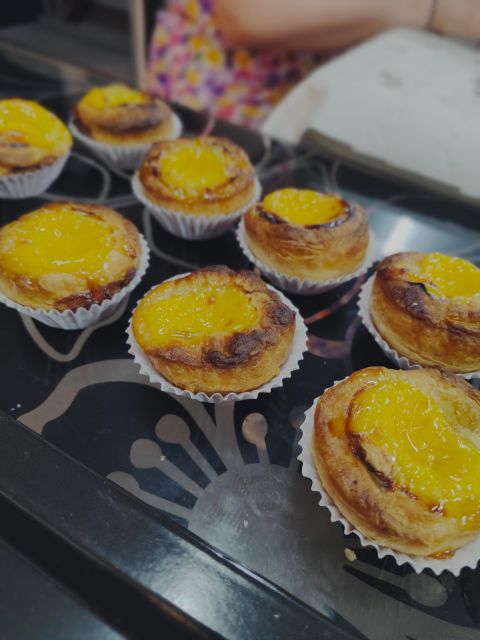
The pastries are eaten soon after baking, while they are still warm. That timing matters. Pastel de nata is widely available throughout Porto, but tasting one that you have shaped and filled yourself gives the familiar pastry a personal connection.
You receive at least two tarts to take away in a cardboard pastry box. In several sessions, the result has been three per person: one eaten at the studio and two taken home. The exact number may depend on the group and the way the work is shared, so the guaranteed wording is two or more.
Do not expect bakery-perfect uniformity from your first attempt. The appeal is seeing how the pastry behaves, learning how the custard is handled, and enjoying the result straight from the oven. The finished tarts have been described as delicious, and the recipe gives you a way to keep working on the technique after Portugal.
The take-home box is a small but useful touch. You can save the pastries for later, share them with someone who missed the class, or enjoy another taste while walking toward the river. I would keep the box level and handle it carefully, since freshly baked custard tarts are not the best food for being tossed into a full day bag.
Is $41 a fair price for 90 minutes?
At $41 per person, this is not the cheapest way to eat pastel de nata in Porto. A bakery visit costs far less, and you can buy excellent tarts throughout the city without booking a class.
The value comes from the combination of instruction, ingredients, a drink, social time, and take-home pastries. You are paying for a short activity that fills part of an afternoon or evening, not just for the food. The recipe and home-baking advice also give the experience some value after you leave Portugal.
I consider the price reasonable for people who enjoy food workshops and want more than a tasting stop. It is especially fair if you make good use of the location by visiting the Cathedral, São Bento Station, the bridge, or Time Out Market before or after the class.
The calculation is less convincing if you are only looking for a quick snack or a serious pastry qualification. The prepared dough means the class does not cover the complete pastry-making process. You are also sharing the work rather than producing a large personal batch.
For a couple, the class offers an easy shared activity with a drink and a small edible souvenir. For a solo participant, it provides a ready-made social setting. For families, children over 10 can join, but younger children are not suitable for this activity.
Who will enjoy this Porto food class?
I would recommend it most strongly to you if you fit one of these descriptions:
- You like cooking but do not want an intense, multi-hour lesson.
- You want to meet other people during a short Porto visit.
- You enjoy learning a recipe you can repeat at home.
- You need an indoor plan for a wet afternoon.
- You are travelling solo and prefer an activity with built-in conversation.
- You want a food experience close to Porto’s main central sights.
It also suits friends and couples who want a break from churches, viewpoints, and steep streets. The pastry is familiar enough to appeal to most people, while the hands-on work gives the activity more substance than a standard tasting.
I would be more cautious if you have strict dietary requirements, since no information is provided about substitutions. I would also ask ahead if your group has more than eight people. The normal format is capped at nine, and larger groups require additional information.
Children under 10 are not permitted. Older children may enjoy the shaping and decorating work, but the activity still includes wine, Port, or a mimosa for adults, so families should decide if the overall setting suits them.
Practical timing and booking advice
The activity lasts 1.5 hours. That is long enough for an introduction, preparation, baking, drinks, and tasting, but short enough to fit around a central Porto sightseeing plan.
I would avoid placing it directly before a train departure or another fixed appointment. The session is designed to be relaxed, and you will enjoy it more if you are not watching the clock while the pastries bake.
The class is offered in English, which is useful for international visitors. Since the instructor’s personality shapes much of the experience, the atmosphere may vary slightly by host. The strongest feedback consistently points to humour, patience, and making sure everyone has a turn.
You can cancel up to 24 hours in advance for a full refund, and the reserve-now, pay-later option keeps your plans flexible. Check the available starting times before you build the rest of your day around it.
The meeting point is central, but Porto’s streets around the Cathedral can be steep and uneven. The supplied details do not give specific accessibility information, so ask the provider directly if that affects your plans.
My verdict on the Boiler Studio workshop
I would book this if you want a friendly, practical food activity rather than a full professional baking course. The best features are the small English-speaking group, the humorous hosts, the chance to shape and bake the pastry yourself, and the simple pleasure of eating a warm tart with Port nearby.
The prepared dough is the main compromise. You learn how the pastry is rolled and formed, but not the complete three-hour dough process. The shared tasks are another consideration, especially if you want complete control over every tart.
For most visitors, those limits are balanced by the relaxed pace and strong social side. You leave with a recipe, useful tips, at least two pastel de nata, and a better understanding of why this small Portuguese pastry takes more care than it first appears.
FAQ
Where does the pastel de nata workshop take place?
It takes place at Boiler Studio on Rua Chã 77, on a typical street in front of Porto Cathedral. São Bento Station, the Luis I Bridge, Time Out Market, and the Cathedral are all nearby.
How long does the workshop last?
The workshop lasts 1.5 hours.
What drink is included?
One glass of wine, Port wine, or a mimosa is included. Some sessions have provided two drinks, but one drink is the stated inclusion.
Do I make the pastry dough from the beginning?
No. The dough is prepared in advance because it needs about three hours to be ready. You roll the prepared pastry yourself, help make the egg custard, and take part in the later stages.
How many pastel de nata do I take home?
You receive two or more pastries to take home in a cardboard box. Some sessions have produced three pastries per person, with one eaten during the class and two taken away.
Can children attend?
Children over 10 are welcome. The activity is not suitable for children under 10.
Can I book a private or larger group workshop?
The usual group size is no more than nine people. If you want to take part in every step, ask about a private workshop. Groups larger than eight should request more information before booking.
Latest reviews around Porto
- Private Walking Tour, highlights and secrets of Porto★ 3.9 · 3 reviews
- Private Porto Half-Day Tour – Wine Cellars & Cheese Tasting★ 5.0 · 3 reviews
- Portuguese Wine Tasting w Local Cheese & Cold Cuts pairing★ 5.0 · 3 reviews
- From Peso da Régua: Visit 3 wineries, tasting and viewpoint★ 5.0 · 3 reviews
- Porto: Full-Day All-Inclusive Private City Sightseeing Tour★ 4.3 · 3 reviews
- Small Painting Group with a Local Artist in Porto★ 5.0 · 3 reviews
- From Arouca: Paiva River Rafting Adventure – Adventure Tour★ 5.0 · 3 reviews
- Private Tour to Santiago de Compostela and its stunning Cathedral★ 5.0 · 3 reviews
Workshops, compared.
Porto: Pastel de Nata Cooking Class with Grandma’s Recipe
Read our review →
Porto: Pastel de Nata Cooking Class with Port Wine – Sé
Read our review →

Porto: Small Group Surf Lesson with Transportation
Read our review →
Porto: Tile-Painting Workshop with Porto Wine – Bainharia
Read our review →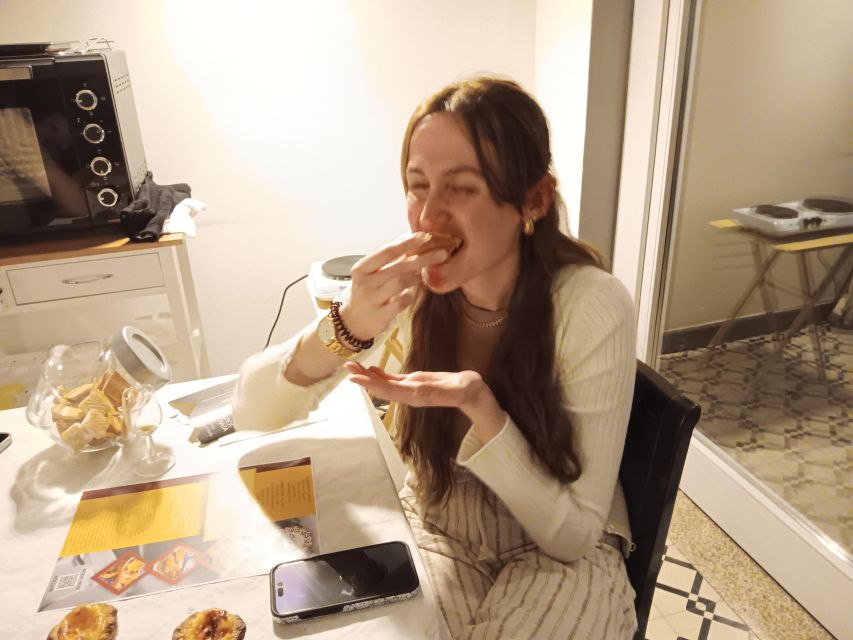
Porto: Pastel de Nata Cooking Class from Scratch
Read our review →
Pastel de Nata | Workshop from scratch | Porto’s city center
Read our review →Browse the lists this tour appears in