
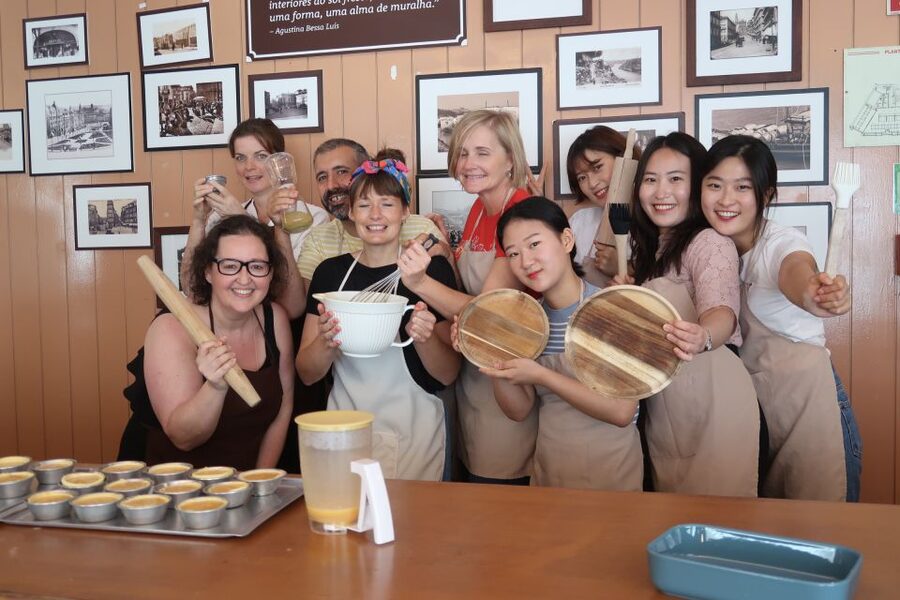
Reviewed · COOKING CLASSES
Porto: Pastel de Nata Cooking Class with Grandma’s Recipe
The best part of this Porto cooking class is that you make the pastry dough yourself. Many baking classes prepare the tricky puff pastry in advance, but Joana takes you through the full process before you fill the shells with creamy custard and bake them until blistered and golden.
I like the home setting, which feels personal rather than commercial, and the way everyone gets a real task in the kitchen. I also like that Joana shares her grandmother’s recipe and later sends it to you, so the class can continue in your own kitchen. The main drawback is location: the apartment is about 10 minutes by car from central Porto, and the ride can add to the $33 ticket.
In This Review
- Key points at a glance
- Why the pastry dough matters
- Arriving at Joana’s home
- A genuine welcome in a local kitchen
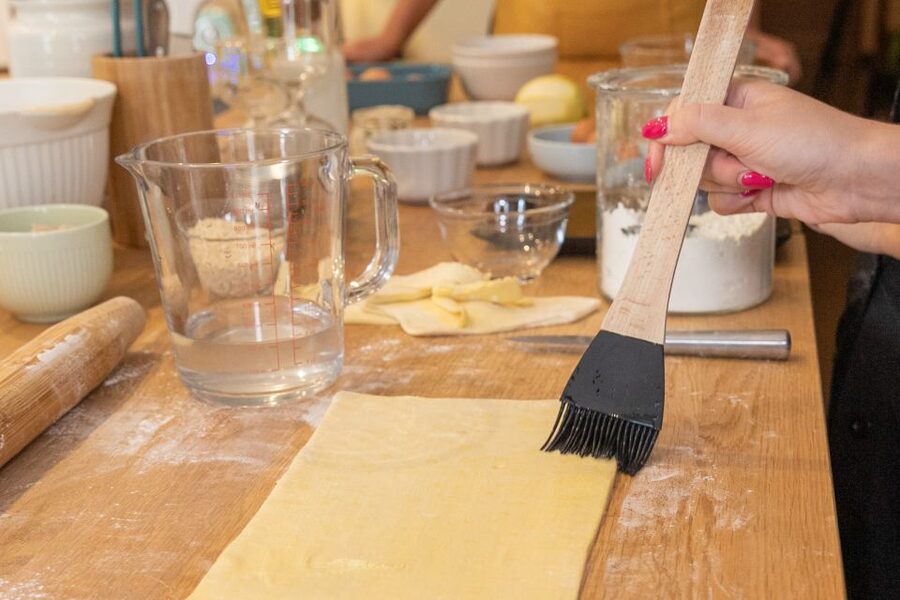
- Making the dough and shaping the shells
- Preparing the custard
- The oven-to-table finish
- What the two hours feel like
- Who will enjoy this class most
- Booking details worth knowing
- Should you book Joana’s pastel de nata class?
- FAQ
- How long does the pastel de nata class last?
- Where does the class take place?
- How do I get to the host’s home?
- Is transportation included in the price?
- Is the class suitable for beginners?
- What is included in the $33 price?
Key points at a glance
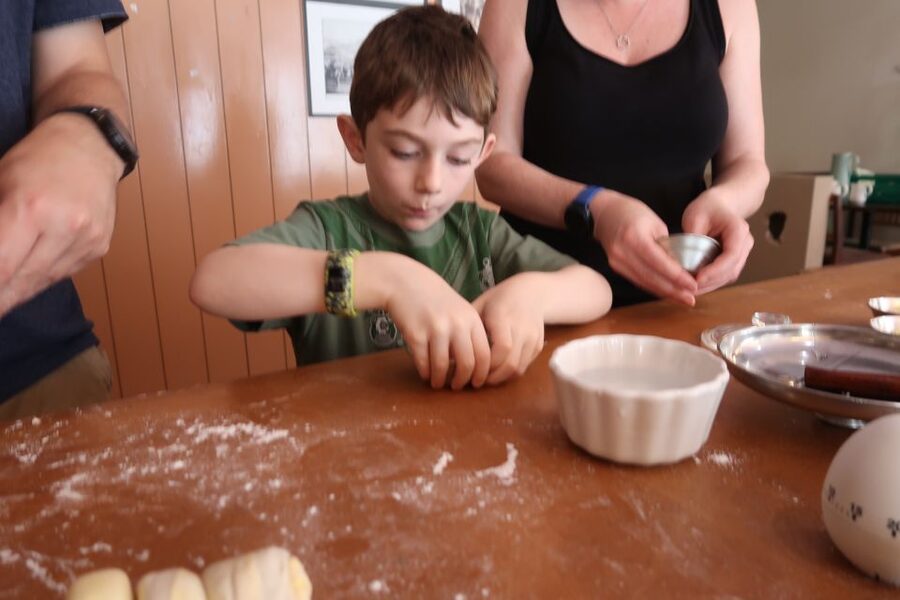
- Full pastry from scratch: You learn the dough as well as the custard, not just the final assembly.
- Joana’s family recipe: The class connects a famous Portuguese sweet to one local family’s kitchen traditions.
- Small, hands-on group: Up to 10 people take turns so the cooking does not become a spectator sport.
- Warm pastries at the table: The class ends with coffee, tea, orange juice, and your fresh batch of natas.
- A relaxed home atmosphere: Natural light, a beautifully decorated apartment, music, and a laid table add to the occasion.
- Outside the central tourist zone: Bolt, Uber, bus 800 or 801, and the Orange Metro Line all provide ways to reach the home.
Why the pastry dough matters
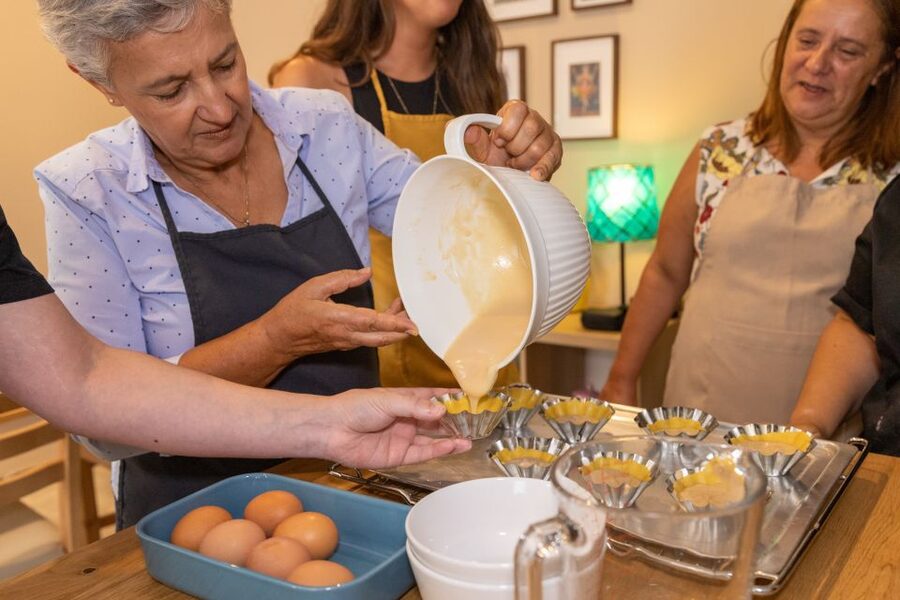
Pastel de nata looks simple: crisp pastry, pale custard, and a darkly toasted top. The shell is the hard part. It should be thin and flaky, with enough structure to hold the custard without turning soggy.
That is why this class offers more than a quick demonstration. You work through the pastry and custard rather than arriving to find half the recipe already done. The process takes patience, and the group rotates through jobs so each person can contribute.
The class is not designed as a professional pastry course. You will not leave with a bakery qualification or a long list of advanced techniques. You will, however, understand the basic rhythm of the dessert: prepare the dough, shape the pastry into the molds, make the custard, fill the shells, and bake.
For a home cook, that is the useful level. You see what the dough should feel like, how the custard comes together, and how the finished tart should look. One experienced baker found the class worthwhile, while another noted that completing both pastry and custard means you may not personally handle every single step. That is a fair trade-off in a two-hour group class.
More cooking classes in Porto:
- Porto: Pastel de Nata Cooking Class with Port Wine – Sé
★ 4.8 · 888 reviews - Porto: Pastel de Nata Cooking Class from Scratch
★ 4.9 · 468 reviews - Porto: Pastel de Nata Cooking Class with Porto Wine (Sé do Porto)
★ 5.0 · 340 reviews
Arriving at Joana’s home
The class takes place in Joana’s home, about 10 minutes by car from Porto city center. It is technically outside the central part of Porto, so check the route before you book and allow time for the trip.
For most people, Bolt or Uber is the simplest choice. If you are traveling with more than two people, a ride-share can also be the fastest and cheapest option compared with separate public transport tickets. One participant found the location added about €12 for an Uber ride, though your fare will depend on traffic, demand, and your starting point.
You can also take bus 800 or 801 from Bolhão. The bus ride is direct and takes about 20 minutes, with a stop just across from the house. There is one practical catch: bus tickets can be bought onboard only with coins, so do not arrive with nothing but a phone or bank card.
The Orange Metro Line from Trindade is another option. The ride to Fânzeres takes about 30 minutes, followed by a walk of roughly 700 meters, or about 10 minutes. That route takes longer, but it avoids road traffic and gives you a clear public transport plan.
At the address, ring the bell marked 2 Andar. Joana waits inside her home. If you drive, free street parking is available.
A genuine welcome in a local kitchen
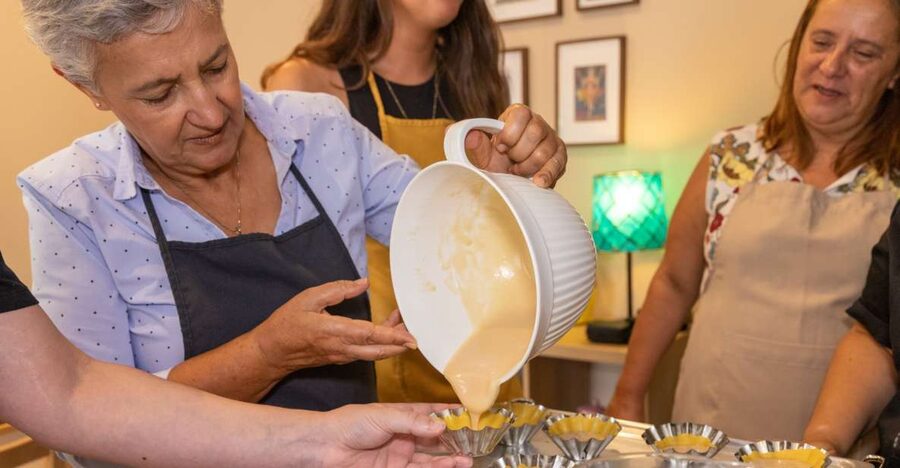
The opening is informal. Joana welcomes you inside, introduces herself, and talks about her family and the recipe that has belonged to her grandmother for years.
This matters because the class is built around a person, not just a pastry. You are not sitting in a demonstration kitchen watching an instructor move through a fixed script. You are entering someone’s home and hearing why this recipe matters to her.
The apartment is described as cozy, clean, and full of natural light. The kitchen is set up with the ingredients and utensils before the class begins, and the table is prepared for the final tasting. Music may be playing from Joana’s record player, another small touch that helps the room feel like a home rather than a rented classroom.
You should still remember that this is a private home. It will not have the space or equipment of a cooking school. For many people, that is precisely the appeal. If you prefer a polished commercial studio with plenty of counter space, this may feel more intimate than expected.
Making the dough and shaping the shells
Once everyone has settled in, you roll up your sleeves and begin the recipe. The group is generally divided into teams or uses a rotating system, allowing each person to take a turn.
You may help with several parts of the pastry preparation, from working the dough to shaping it inside the tart molds. The process is hands-on, but not rushed. Joana explains each stage in English and helps people who are less confident in the kitchen.
The rotating format works well for a group of up to 10. It keeps the class moving and gives beginners a way to watch before trying a task themselves. It also means you should not expect to perform every motion from start to finish. If touching every ingredient is essential to you, ask Joana at the beginning how the group will divide the work.
The strongest practical feature is that the pastry is made from scratch. A participant specifically appreciated learning the puff pastry because other classes sometimes prepare it before the group arrives. That extra step gives you a better sense of why good pastéis de nata have such delicate layers.
Do not worry if your first shell is not perfect. This is a learning experience, and Joana’s patient teaching helps take the pressure off. The goal is to understand the method and enjoy the process, not produce a bakery display case.
A few more Porto outings to weigh up
- Porto: Pastel de Nata Pastry-Making Workshop
★ 4.9 · 1,542 reviews - Matosinhos: Surfing Lesson with Equipment
★ 4.8 · 704 reviews - Porto: Small Group Surf Lesson with Transportation
★ 4.9 · 594 reviews - Porto: Tile-Painting Workshop with Porto Wine – Bainharia
★ 4.9 · 526 reviews
Preparing the custard
The custard is the other half of the dessert. Joana guides the group through her grandmother’s recipe, explaining the steps clearly and giving everyone a chance to follow along.
The finished filling should be creamy rather than heavy. The contrast with the pastry is what makes the tart work: crisp outer layers, soft center, and a hot, caramelized top.
The class is suitable for complete beginners, but experienced bakers can still pick up useful details. Joana’s approach is patient and encouraging, and she adjusts her help around the group rather than assuming everyone has the same skill level.
This is also where the family-recipe angle has real value. You are not simply copying a generic recipe from a cooking website. You are learning one version that Joana has kept in her family, then receiving the recipe to try at home. It gives you a food story to carry home along with the technique.
The oven-to-table finish
The class ends when the tarts come out of the oven. This is the moment to eat them warm, while the pastry is still crisp and the custard is fresh.
You gather around the table with drinks included: coffee, tea, and orange juice are available. Some classes may also include Port wine, as one participant reported, but the listed standard drinks are non-alcoholic, so do not book this expecting a formal wine tasting.
The table setting is part of the experience. Rather than grabbing a pastry while standing at a counter, you sit down with the group and share the results. That final meal turns a lesson into a social occasion.
The group atmosphere is a real strength. People often arrive alone, as couples, or with friends, and the shared work gives everyone an easy topic of conversation. You may leave with new cooking ideas, local suggestions from Joana, and new acquaintances from different countries.
The tarts themselves are the measure of the class, and the recipe produces a flaky shell with a creamy filling. Several participants found their homemade pastries better than ones they had bought elsewhere in Portugal, including famous examples in Lisbon. That comparison is subjective, but it tells you the baking is not treated as a token activity.
What the two hours feel like
Two hours is enough time for a satisfying introduction, but it is not a leisurely full-day food workshop. You will spend the session moving between explanation, preparation, baking, and eating.
The class is structured enough to start on time and keep the recipe on track. It is also relaxed enough for questions, family stories, and conversation. That balance is important in a home kitchen, where a rigid lesson could feel awkward.
Because the group can reach 10 people, some stages involve watching while another person works. The rotating system reduces that problem, but it cannot give everyone constant control of the counter. If you want a private lesson or extensive individual correction, a smaller private class would suit you better, though this experience is priced accordingly.
At $33 per person, the value is strong. Ingredients, utensils, instruction, drinks, and pastries are included. You also receive a recipe and gain a practical skill that you can repeat at home. Transportation is not included, so factor in the ride from central Porto when comparing the total cost with a city-center cooking school.
The strongest value comes from the combination of food and access. You are paying for the pastry, but also for time in a local home, personal instruction, and a cultural exchange that a standard bakery counter cannot provide.
Who will enjoy this class most
I would recommend this class to anyone who likes food with a story. You do not need to be a confident baker. Joana’s clear instructions and patient manner make the class accessible to beginners.
It is also a good choice for solo visitors. The shared tasks make it easy to meet people, and the table setting gives the group a natural way to talk after the cooking is done.
Couples and families with older children may enjoy it for the same reason. Everyone can take part, and the final pastries provide a clear reward for the work. The activity can also be a smart plan for a rainy afternoon in Porto, when an indoor experience feels more appealing than another walk through wet streets.
Experienced bakers should not dismiss it. The full pastry process is more useful than a class that simply supplies prepared shells. Still, an advanced baker may want more time for detailed technique, and the group format means individual practice is limited.
You should skip it if you need wheelchair access. The activity is not suitable for wheelchair users. You should also think twice if getting outside central Porto is difficult for your schedule, since the transport time can reduce the convenience of an otherwise compact class.
Booking details worth knowing
The experience costs $33 per person and lasts two hours. The group is limited to 10 participants, and the host or greeter speaks English.
You can reserve now and pay later, which helps if you are still arranging your Porto schedule. Free cancellation is available up to 24 hours in advance for a full refund. Starting times vary, so check availability for your chosen day.
The included items are straightforward:
- Ingredients
- Cooking utensils
- Guided instruction
- Non-alcoholic drinks
- Freshly prepared pastries
Transportation is not included. Plan your route before the class, especially if you choose the bus and need coins for the ticket.
Should you book Joana’s pastel de nata class?
I would book this if you want to connect Portuguese food with a real person and a family recipe. The home setting, full pastry preparation, small group, and warm table service give it more substance than a quick pastry demonstration.
I would not choose it if your priority is a central Porto location, a fully private lesson, or a professional bakery setting. The apartment is outside the city center, and a 10-person group cannot give every person equal time at every stage.
For most food-focused visits, though, $33 is a fair price for two hours of cooking, eating, and conversation. You leave with fresh pastéis de nata, a recipe to repeat at home, and a better understanding of the care behind Portugal’s most famous custard tart.
FAQ
How long does the pastel de nata class last?
The class lasts two hours, including the cooking lesson and the final tasting with drinks.
Where does the class take place?
The class takes place in Joana’s home, about 10 minutes by car from Porto city center. Ring the bell marked 2 Andar when you arrive.
How do I get to the host’s home?
You can use Bolt or Uber, take bus 800 or 801 from Bolhão, or take the Orange Metro Line from Trindade to Fânzeres and walk about 700 meters. Bus tickets must be bought onboard with coins.
Is transportation included in the price?
No. Transportation is not included. Free street parking is available if you drive.
Is the class suitable for beginners?
Yes. Joana guides the group through the recipe in English and provides patient, step-by-step instruction. Everyone takes part through a rotating system.
What is included in the $33 price?
The price includes ingredients, cooking utensils, the guided class, non-alcoholic drinks, and the freshly prepared pastries.
Latest reviews around Porto
- Private Walking Tour, highlights and secrets of Porto★ 3.9 · 3 reviews
- Private Porto Half-Day Tour – Wine Cellars & Cheese Tasting★ 5.0 · 3 reviews
- Portuguese Wine Tasting w Local Cheese & Cold Cuts pairing★ 5.0 · 3 reviews
- From Peso da Régua: Visit 3 wineries, tasting and viewpoint★ 5.0 · 3 reviews
- Porto: Full-Day All-Inclusive Private City Sightseeing Tour★ 4.3 · 3 reviews
- Small Painting Group with a Local Artist in Porto★ 5.0 · 3 reviews
- From Arouca: Paiva River Rafting Adventure – Adventure Tour★ 5.0 · 3 reviews
- Private Tour to Santiago de Compostela and its stunning Cathedral★ 5.0 · 3 reviews
Cooking Classes, compared.
Porto: Pastel de Nata Cooking Class with Port Wine – Sé
Read our review →
Porto: Pastel de Nata Cooking Class from Scratch
Read our review →
Porto: Pastel de Nata Cooking Class with Porto Wine (Sé do Porto)
Read our review →
Portuguese Cooking Class in Porto with Portuguese Wine
Read our review →
Shopping, cooking and eating together at my home in Porto
Read our review →
Traditional Cooking Class, Farm Tour & Lunch in the Douro Valley
Read our review →
Browse the lists this tour appears in