
Reviewed · COOKING CLASSES
Porto: Pastel de Nata Cooking Class with Porto Wine (Sé do Porto)
The best part of this Porto cooking class is the moment your own pastel de nata comes out warm from the oven, its custard set and its pastry crisp. You work through the custard and baking steps with an instructor, then eat several tarts on site and carry some away. I like the relaxed group format, plus the Port wine, coffee, snacks, and useful kitchen tips. The one catch is important: the puff pastry is prepared ahead of time, so this is a focused pastry workshop rather than a full from-scratch baking course.
I also like the friendly local help. Instructors such as Ana, Luis, Anita, Filipe, and Theresa have been praised for keeping everyone involved and offering practical advice about Porto. At $42.34, the class gives you food, drinks, a recipe, and a hands-on activity in about 90 minutes. If you expect every person to make every part alone, ask about a private class instead.
In This Review
- Key points to know before booking
- Making pastel de nata near Sé do Porto
- The recipe, step by step
- What you do with the pastry
- Warm tarts, Port wine, and the social side
- Baking and tasting the finished pastel de nata
- Is $42.34 good value?
- Who will enjoy this Porto cooking class?
- Practical details that affect your plans
- My call: book it if you want food, not pastry school
- FAQ
- Where does the pastel de nata class meet?
- How long does the cooking class last?
- Do I make the puff pastry from scratch?
- Is Port wine included?
- Can I take the pastel de nata home?
- What happens if I need to cancel?
Key points to know before booking
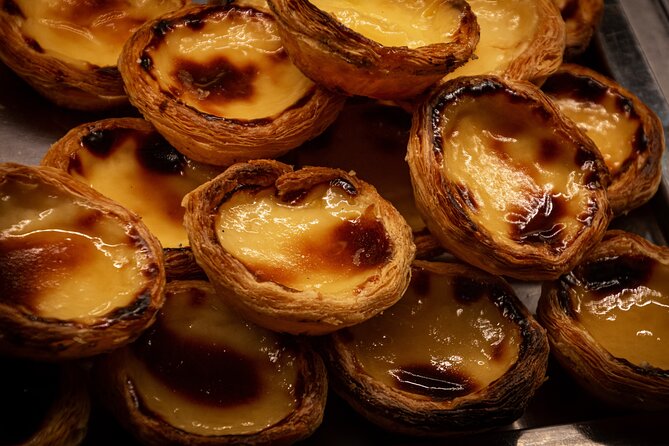
- Make the custard from scratch: The filling is the heart of the lesson, with clear guidance on texture, flavor, and baking.
- Pre-prepared puff pastry: You will shape and use the pastry, but you will not make the laminated dough during the standard class.
- Port wine is included: Sip Port along with juice, water, coffee, and small sweet and savory snacks.
- Take your tarts home: A transport box is provided, so you can save some for later or share them.
- A small, social class: The activity is listed for a maximum of eight people, while some promotional information mentions up to 12, so confirm the current group limit when booking.
- A handy rainy-day plan: The indoor class lasts about an hour and a half and ends where it begins, at Domus Arte near Sé do Porto.
Making pastel de nata near Sé do Porto
The class meets at Domus Arte, a concept store on Rua da Bainharia, close to Porto’s Sé cathedral. That location matters. You are in the old center, where steep streets, stone lanes, churches, and viewpoints are all within easy reach, so the class fits neatly into a day of exploring the historic core.
The meeting point is also more than a kitchen. Domus Arte includes modern and traditional Portuguese handicrafts and souvenirs, and you might want to allow a few minutes to look around before or after the lesson. The activity returns to this same spot, with no extra transport to arrange.
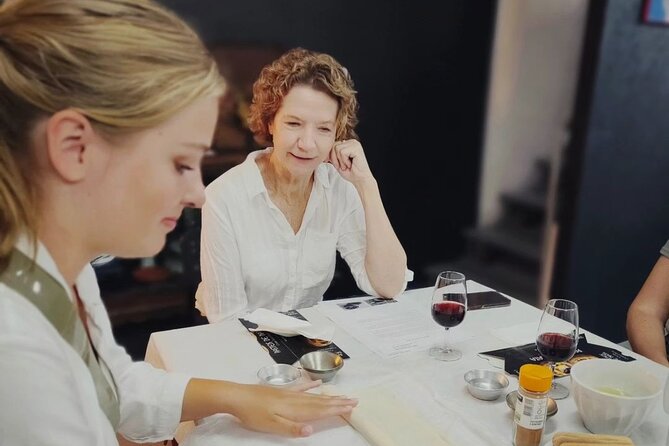
Once inside, expect a simple, clean, practical teaching space rather than a polished restaurant kitchen. That works in the class’s favor. You are there to mix, shape, bake, taste, and talk, not watch a chef perform from across a counter.
The session begins with a short introduction to the pastel de nata and its place in Portuguese food culture. It is not a long lecture, which is sensible for a 90-minute class. You get enough background to understand why this small tart is so important, then move quickly to the useful part: making one.
More Porto wine tastings worth an afternoon:
- From Porto: Douro Valley w/ Boat Tour, Wine Tasting & Lunch
★ 4.7 · 19,061 reviews - Complete Douro Valley Wine Tour with Lunch, Wine Tastings and River Cruise
★ 5.0 · 12,920 reviews - Porto: Live Fado Show with Glass of Port Wine
★ 4.8 · 6,498 reviews
The recipe, step by step
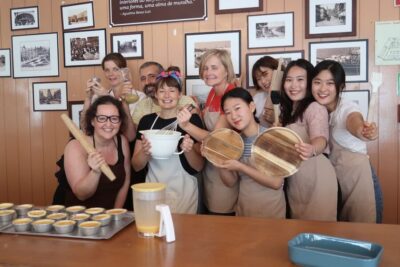
The group shares the preparation. The instructor explains each stage, then people take turns mixing, measuring, shaping, or helping with the next step. In a small group, this can feel quite personal. Several instructors, including Ana, Luis, Anita, and Filipe, are praised for making sure no one is left standing at the edge of the action.
Still, shared participation is not the same as individual cooking. You may not personally complete every single stage, especially if the class fills up. The description is clear that the standard workshop does not provide full individual participation from start to finish. If that distinction matters to you, book or ask about the private option.
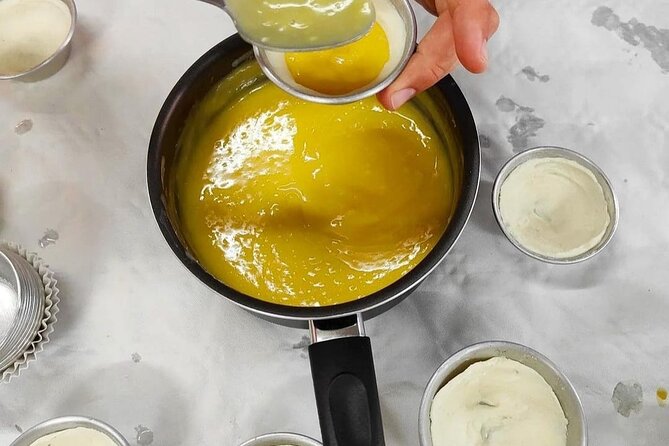
The custard receives the most attention. You learn how to prepare the filling and how to judge the consistency before baking. This is the most useful part of the lesson for home cooks because a good nata depends on more than simply combining sugar, milk, eggs, and flavorings. The class focuses on the method that produces a smooth custard with the right final texture.
You also get cooking hints that can be useful beyond this one dessert. Filipe, for example, has been praised for sharing practical ideas about other kitchen techniques. That sort of informal advice adds value, especially if you enjoy learning how local food is made rather than simply collecting a recipe card.
What you do with the pastry
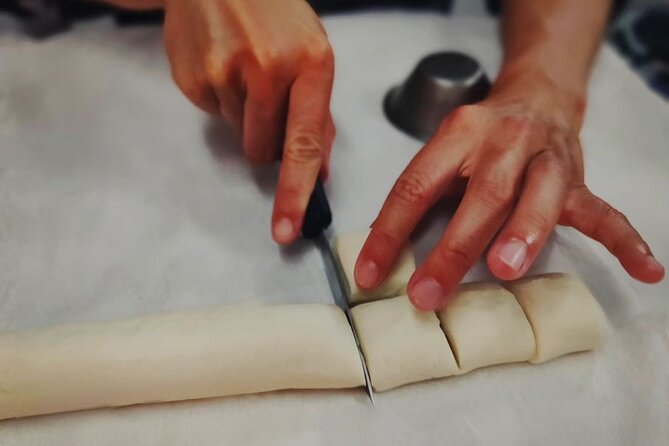
Here is the detail to understand before paying: the puff pastry is pre-prepared. You will not make the dough from flour and butter, then fold and roll it repeatedly to create layers. That longer process would not fit comfortably into a short class, particularly when you also need time for custard, shaping, baking, tasting, and packing.
Instead, the class shows you how to work with the prepared pastry and provides a house recipe for making it at home. The shortcut is practical. One person who took the class found that the pastry method worked well at home and produced a tasty result.
This makes the experience accessible for beginners and families. You avoid spending the entire session on dough handling and get to the part most people want: warm tarts with flaky pastry and creamy custard. But serious bakers looking for a full pastry curriculum may find the lesson too basic.
The class is best described as custard and nata assembly with baking, not traditional puff-pastry training. I consider that fair value if you know what you are buying.
Warm tarts, Port wine, and the social side
While the tarts are being prepared and baked, the atmosphere stays relaxed. Port wine is included, along with juice, water, and coffee. There are also sweet and savory snacks, so you are not waiting around hungry while the pastries finish.
The Port pairing makes sense. Porto is closely tied to this fortified wine, and tasting it alongside a Portuguese pastry gives the class a local-food angle rather than making it just another baking lesson. If you do not drink alcohol, juice, coffee, and water are available.
The social setting is part of the appeal. A small group gives you time to chat with people from different countries while working through a shared recipe. The instructors are often described as warm, funny, and generous with Porto suggestions. One particularly helpful teaching team even assisted with a lost item left in an Uber, then helped a participant communicate with a local.
That kind of personal attention cannot be guaranteed on every date, but the format allows it. You may also find the class especially pleasant on a wet Porto afternoon, when a warm indoor activity is more welcome than another climb up the city’s slippery hills.
More cooking classes in Porto:
- Porto: Pastel de Nata Cooking Class with Grandma’s Recipe
★ 5.0 · 1,565 reviews - Porto: Pastel de Nata Cooking Class with Port Wine – Sé
★ 4.8 · 888 reviews - Porto: Pastel de Nata Cooking Class from Scratch
★ 4.9 · 468 reviews - Porto Local Market Visit & Cooking Class / Showcooking
★ 5.0 · 206 reviews
Baking and tasting the finished pastel de nata
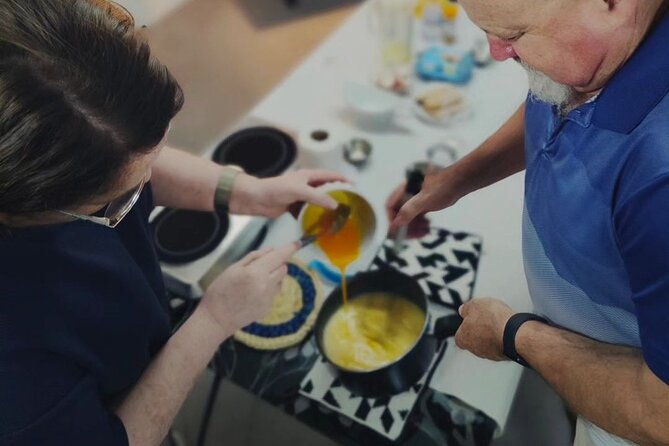
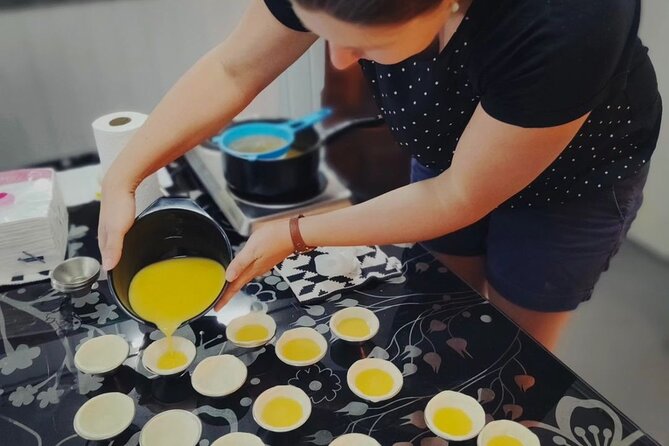
The baking stage is the payoff. The instructor guides the group through the final process, then you see the pastries change from pale shells and liquid custard into the familiar browned-topped tarts.
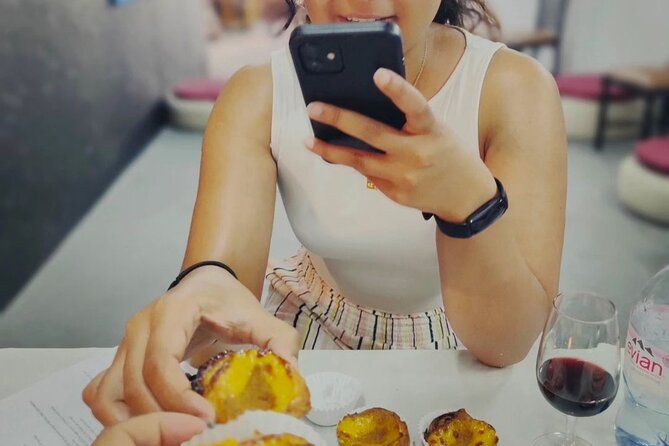
Each person prepares several pastel de nata. You can eat them at the venue or take them away in the included transport box. The warm pastry at the end is a strong reason to choose this class over a simple food tour. You are not only tasting a local specialty. You are eating something you helped make.
The number of tarts you receive may depend on the group and how the portions are shared. One solo participant was able to take several to hotel staff and even carry some onward to Lisbon, but you should not assume you will receive a large box. The transport box is useful, though one practical detail matters: freshly made custard tarts are not always easy to carry on a flight.
You also receive the recipe, which is the lasting part of the experience. The class aims to leave you confident enough to repeat the process at home. It is a realistic promise because the lesson concentrates on the custard and uses a workable pastry shortcut.
Is $42.34 good value?
At $42.34 per person, this is not the cheapest way to eat a pastel de nata in Porto. A bakery visit costs far less. The value comes from the activity, instruction, Port wine, snacks, recipe, and takeaway box.
For a 90-minute class, the price is reasonable if you want a compact cultural activity with food at the center. You also avoid committing half a day to a cooking school. The timing leaves room for lunch, sightseeing, or a visit to the Douro riverfront afterward.
The calculation changes if you mainly want a technical pastry lesson. Since the dough is prepared beforehand and group tasks are shared, a confident baker may feel that the hands-on work is too limited. One family of four found the cooking quite simple for the price, particularly because the group was small and the class finished quickly.
For beginners, couples, families, and people who simply love pastel de nata, the value is stronger. You get an easy recipe, a warm result, and a story to take home. The class also has a high overall satisfaction level, with 97 percent recommending it and a 4.9 rating from 340 published ratings. Those figures do not remove the pastry limitation, but they show that the experience usually delivers what it promises.
Who will enjoy this Porto cooking class?
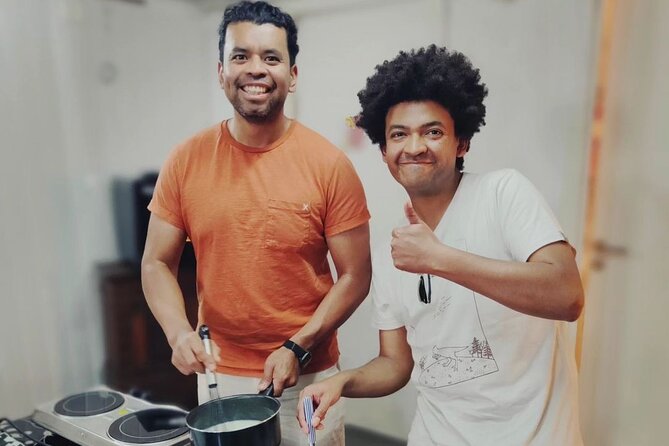
I would choose this for anyone who likes food, wants a short activity, or needs a backup plan for rain. It suits first-time bakers because the instructor breaks the work into clear steps and helps you recover if something feels unfamiliar.
Families can also do well here. The class is short enough for children who may lose interest during a longer cooking course, and the end result is immediate and edible. A parent should still confirm any age-related arrangements directly, since no specific age policy is provided.
It is a good fit for solo participants, too. The small group gives you people to talk with, and the shared work keeps the session from feeling awkward. If you book alone and the group is very small, you may receive more direct help, though the class could also finish sooner.
Food-focused couples and friends will appreciate the combination of cooking and Port tasting. You can make the class part of a day around Sé do Porto, then walk on to other central sights.
I would be more cautious if you are a dedicated pastry enthusiast. You will learn the custard and receive a pastry recipe, but you will not laminate puff pastry from scratch. For that, ask about a private workshop or choose a longer course.
Practical details that affect your plans
The experience lasts about one hour and 30 minutes, though some sessions may run closer to two hours depending on the group and the baking schedule. Do not book another fixed appointment immediately afterward. A little flexibility is wise.
The activity is offered in English and uses a mobile ticket. Confirmation arrives at booking. The meeting point is Rua da Bainharia 135, 4050-084 Porto, Portugal, at Domus Arte, and the activity ends there.
Bathrooms are available, and the site is near public transportation. Service animals are allowed. If you have a dietary need, contact the organizers ahead of time. One participant reported that gluten-free accommodation was possible when requested before class, but you should arrange this in advance rather than rely on a last-minute adjustment.
The group size needs a small clarification. The highlights describe a cap of 12, while the additional details specify a maximum of eight. Since the smaller figure is more useful for planning, I would expect a small setting but confirm the current limit when you reserve.
The experience is booked, on average, about 16 days ahead. That is a useful signal for busy periods. If you know you want the class, reserve before arriving rather than assuming you can walk in.
Free cancellation is available up to 24 hours before the start time for a full refund. Within 24 hours, cancellations and changes are not accepted for a refund. The operator also requires a minimum number of participants, so if that minimum is not met, you are offered another date or experience, or a full refund.
My call: book it if you want food, not pastry school
I would book this class if you want to spend a friendly hour and a half making one of Portugal’s most recognizable treats, tasting Port, and leaving with something you can repeat at home. The instructors are the main strength, with Ana, Luis, Anita, Filipe, and Theresa all associated with clear teaching and a welcoming manner.
The class is especially good for a rainy afternoon, families, solo visitors, and anyone who wants a break from churches and viewpoints. The location near Sé makes it easy to add to a central Porto sightseeing day.
I would skip it if your main goal is to make laminated puff pastry entirely from scratch or to cook every component individually. For everyone else, the warm custard, helpful instruction, recipe, drinks, and takeaway box make the $42.34 price a fair buy, as long as you understand the shortcut.
FAQ
Where does the pastel de nata class meet?
It meets at Domus Arte, a concept store at Rua da Bainharia 135, 4050-084 Porto, Portugal, near Sé do Porto. The activity ends back at the same meeting point.
How long does the cooking class last?
The scheduled duration is about one hour and 30 minutes. Some sessions may take closer to two hours, so leave extra time before your next fixed plan.
Do I make the puff pastry from scratch?
No. The puff pastry is prepared ahead of time for the standard workshop. You focus on the custard, shaping, and baking, and receive a house-made recipe to use at home.
Is Port wine included?
Yes. Port wine is included, along with juice, water, coffee, and a selection of sweet and savory snacks.
Can I take the pastel de nata home?
Yes. You can eat the tarts at the venue or take them away, and a transport box is included.
What happens if I need to cancel?
You can cancel up to 24 hours before the experience start time for a full refund. Cancellations or changes made within 24 hours are not refunded or accepted.
More Workshops in Porto
- Porto: Pastel de Nata Pastry-Making Workshop
★ 4.9 · 1,542 reviews - Matosinhos: Surfing Lesson with Equipment
★ 4.8 · 704 reviews - Porto: Small Group Surf Lesson with Transportation
★ 4.9 · 594 reviews - Porto: Tile-Painting Workshop with Porto Wine – Bainharia
★ 4.9 · 526 reviews
Latest reviews around Porto
- Private Walking Tour, highlights and secrets of Porto★ 3.9 · 3 reviews
- Portuguese Wine Tasting w Local Cheese & Cold Cuts pairing★ 5.0 · 3 reviews
- Private Porto Half-Day Tour – Wine Cellars & Cheese Tasting★ 5.0 · 3 reviews
- From Peso da Régua: Visit 3 wineries, tasting and viewpoint★ 5.0 · 3 reviews
- Porto: Full-Day All-Inclusive Private City Sightseeing Tour★ 4.3 · 3 reviews
- Small Painting Group with a Local Artist in Porto★ 5.0 · 3 reviews
- From Arouca: Paiva River Rafting Adventure – Adventure Tour★ 5.0 · 3 reviews
- Private Tour to Santiago de Compostela and its stunning Cathedral★ 5.0 · 3 reviews
Cooking Classes, compared.
Porto: Pastel de Nata Cooking Class with Grandma’s Recipe
Read our review →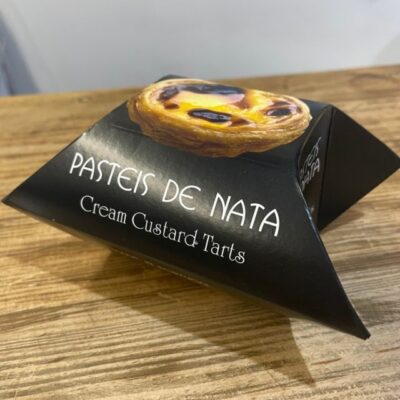
Porto: Pastel de Nata Cooking Class with Port Wine – Sé
Read our review →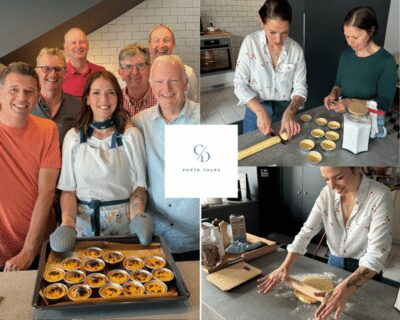
Porto: Pastel de Nata Cooking Class from Scratch
Read our review →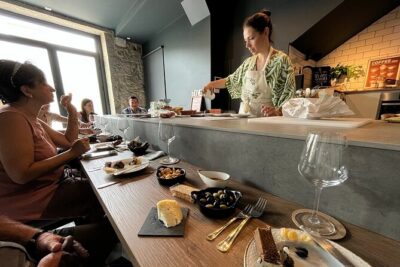
Portuguese Cooking Class in Porto with Portuguese Wine
Read our review →
Shopping, cooking and eating together at my home in Porto
Read our review →
Traditional Cooking Class, Farm Tour & Lunch in the Douro Valley
Read our review →
Browse the lists this tour appears in