
Reviewed · WORKSHOPS
Pastel de Nata | Workshop from scratch | Porto’s city center
The best part of this Porto workshop is that you learn the pastry from the beginning, including the dough, rather than simply filling ready-made shells. You work in a central kitchen on Rua do Souto, take turns with the key steps, and finish with warm pastel de nata and coffee or tea.
I like the small-group format, which allows the instructor to explain pastry technique without turning the class into a rushed demonstration. I also like the relaxed Portuguese touch of local wine during the baking, plus the useful fact that you can take the method home and make the tarts again.
The main consideration is that this is a shared group class, not a private lesson. With up to 12 people, you will alternate tasks rather than handle every stage continuously. Arrive early, too: the door closes at the scheduled start time, and late entry is not allowed.
In This Review
- Key points to know before booking
- Making Porto’s famous tart from the dough up
- A 2.5-hour schedule with plenty of tasting
- Why the dough matters more than a pastry demonstration
- The shared format: social, practical, and not fully individual
- Instructors who shape the feel of the class
- A central Porto address that works well in a busy itinerary
- The price and what you receive for $48.36
- Who should book this Porto pastry workshop?
- Booking timing and cancellation details
- Is this the right food experience in Porto?
- FAQ
- Where does the pastel de nata workshop start?
- How long does the activity last?
- What language is the workshop offered in?
- What is included in the price?
- Is transportation included?
- How many people can join the class?
- Can children attend?
- Can I arrive after the scheduled start time?
- Is the workshop suitable for people with gluten or lactose intolerance?
Key points to know before booking
- You make the dough from scratch: This is more than a custard demonstration, and the pastry work is a central part of the lesson.
- Warm pastel de nata finish: The class ends with freshly baked Portuguese tarts, served with coffee or tea.
- Local wine is included: You can sip a regional wine while learning about Portuguese food and culture.
- Up to 12 people per class: A small group gives the instructor room to offer advice, but tasks are shared.
- Strict start time: The door closes at the appointed hour, with no late entry.
- Adults only: Children under 15 cannot participate or accompany a booking. Ages 15 to 17 need an adult.
Making Porto’s famous tart from the dough up
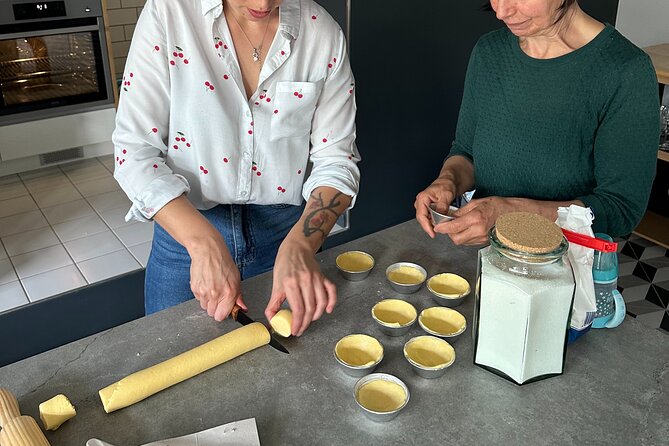
Pastel de nata is often treated as a quick snack in Portugal: flaky pastry, smooth custard, and a darkly spotted top. This workshop shows you the work behind that simple-looking tart.
The important distinction is the dough. You are not just spooning custard into prepared pastry. The class includes making the pastry itself, which gives you a better chance of repeating the recipe at home. Several instructors, including Vanessa, Ana, Clara, and Mariah, are named as hosts for different sessions, so the exact teaching style may vary by date.
The format is practical. Your instructor demonstrates a stage, explains what matters, and then participants take turns helping with the process. You should expect to share the work rather than produce a separate batch entirely by yourself.
That arrangement suits people who want a social cooking class. It also means you should not book this expecting uninterrupted time at your own work station. If full, individual participation is important to you, a private lesson is the better choice.
A few more Porto outings to weigh up
- Porto: Pastel de Nata Cooking Class with Grandma’s Recipe
★ 5.0 · 1,565 reviews - Porto: Pastel de Nata Pastry-Making Workshop
★ 4.9 · 1,542 reviews - Porto: Pastel de Nata Cooking Class with Port Wine – Sé
★ 4.8 · 888 reviews
A 2.5-hour schedule with plenty of tasting
The class lasts about two and a half hours, giving the pastry, custard, baking, and cultural talk room to unfold at a comfortable pace. The session is not built around racing through a recipe.
At the beginning, the host introduces the activity and the basic idea behind pastel de nata. Portuguese culture and food history are woven into the cooking, so you get context while your hands are busy. This is useful because the tart is not simply a generic custard pastry. It is one of Portugal’s best-known food symbols, and learning its method makes the snack more memorable.
A glass of local wine helps set the tone. Alcoholic beverages are included, and the class also includes coffee and/or tea. The wine is a pleasant addition, though you can decide how much you want to drink during a hands-on kitchen session.
The class then moves through the pastry and filling. You might be asked to help with the dough, shape pastry shells, prepare part of the custard, or assist with another stage. The exact division depends on the size of your group and the instructor’s plan.
Finally, the pastries go into the oven. The payoff is a warm pastel de nata, with coffee or tea alongside it. One practical tip is worth keeping in mind: these tarts are at their best soon after baking. If you have access to an oven later, reheating can restore some of that fresh texture.
Why the dough matters more than a pastry demonstration
Many food activities in popular cities let you watch a specialist assemble a local dish. This one gives you a useful skill instead.
The pastry is the part most likely to intimidate a home baker. One especially helpful element is the attention given to rough puff pastry and the handling of the dough. Even people who bake regularly may learn something from the instructor’s tips about working with pastry and preparing the simple syrup mixture used in the custard.
You do not need to arrive as an experienced baker. The teaching is designed to be followed step by step, and the instructors are described as patient, clear, funny, and easygoing. Ana is a professionally trained pastry chef, while Vanessa is praised for explaining techniques in a way that keeps the class relaxed and accessible.
That makes this a good pick for mixed groups. A confident baker can pick up small technique tips, while a first-time baker can follow along without feeling foolish. The result is not just a plate of pastries. You leave with a method you can try at home.
The shared format: social, practical, and not fully individual
The class can hold up to 12 participants. That is still a manageable number for a cooking lesson, especially when the instructor keeps the group involved. Smaller sessions can be much more intimate, with some classes having only four people or even operating as a private session when attendance is low.
A smaller group gives you more chances to ask questions and handle the ingredients. With a fuller class, expect the work to rotate. You may shape one portion of pastry while another participant works on a different step, then switch roles.
This structure has two clear benefits. First, it keeps the class social. You meet other people while preparing a food that is closely tied to Portugal. Second, it avoids making every person repeat the same task twelve times, which would stretch the class well beyond two and a half hours.
The tradeoff is simple: you will not control every part of every tart. If you want to make an entire batch independently, book a private lesson instead of this group activity.
A different sort of Porto day altogether:
- The Unvanquished Tour in Porto City Center
★ 5.0 · 26,497 reviews - From Porto: Douro Valley w/ Boat Tour, Wine Tasting & Lunch
★ 4.7 · 19,061 reviews - Complete Douro Valley Wine Tour with Lunch, Wine Tastings and River Cruise
★ 5.0 · 12,920 reviews - Porto: Six Bridges Cruise
★ 4.2 · 11,680 reviews
Instructors who shape the feel of the class
The host makes a real difference in a hands-on class, and the named instructors bring slightly different strengths.
Vanessa is repeatedly described as engaging, humorous, patient, and good at bringing each participant into the process. Her explanations cover both the pastry and cream, and she appears to keep the pace relaxed without losing the practical detail.
Ana brings professional pastry training and offers tips for getting the pastry and custard right. She is also described as good at involving a larger group, including sessions with up to 10 participants.
Clara is presented as cheerful and energetic, with clear explanations of the baking process and the background of pastel de nata. Mariah is noted for being informative, friendly, and fun while keeping the class educational.
You may not be able to choose a specific instructor when booking. The quality of the class depends partly on who leads your session, but the teaching approach is consistent in the details that matter: demonstrations, shared participation, food context, and time to enjoy the finished tarts.
A central Porto address that works well in a busy itinerary
The meeting point is R. do Souto 67, 4050-595 Porto, Portugal, in the city center. The activity begins and ends at this same location, so there is no transfer time or complicated pickup arrangement.
The workshop is near public transportation, which makes it easier to fit into a day of sightseeing. You can plan it as a mid-morning or afternoon break, but leave extra time to find the address and settle in before the start.
The strict arrival rule deserves more attention than it might normally receive. The door closes at the scheduled time, and you cannot join once the class has begun. There are no exceptions because late entry affects the cooking session and the closed-door setup.
I would not schedule this immediately after a timed attraction on the other side of Porto. Build in a buffer. The workshop is not a drop-in activity, and missing the opening may mean losing the whole booking.
Pickup and drop-off are not included, but that should not be a problem for most independent visitors. You make your own way to the central meeting point and return there after the pastries.
The price and what you receive for $48.36
At $48.36 per person, this is not the cheapest way to eat pastel de nata in Porto. You can buy the finished pastry for very little in bakeries and cafés.
The value comes from the activity, not the quantity of food. You are paying for about two and a half hours of instruction, use of the cooking space, pastry and custard preparation, local wine, coffee or tea, and the chance to eat the warm result. You also get a recipe process that can be repeated at home.
I think the price makes sense if you enjoy cooking, food traditions, or social classes. It is less compelling if your only goal is to sample the pastry. For that, a bakery crawl costs far less and gives you more chances to compare different versions.
The class also offers good value for couples, friends, and solo visitors who like meeting people through food. A small group makes the cost feel more justified than a large demonstration where you only watch.
Who should book this Porto pastry workshop?
This suits adults who want an activity with a clear local connection and a tasty ending. It is especially good for:
- People who want to learn a recipe they can repeat at home
- First-time bakers who prefer guided instruction
- Experienced home cooks curious about Portuguese pastry
- Couples and friends looking for a shared activity
- Solo visitors who enjoy small-group classes
- Anyone who wants a break from sightseeing that still feels tied to Porto
It is not suitable for people intolerant to gluten or lactose, since both are part of this pastry and custard-based activity. Children under 15 are not permitted to participate or accompany customers with reservations. Participants aged 15 to 17 must attend with an adult.
Only people with reservations may enter. You cannot bring a nonparticipating companion, regardless of age. Animals, including service animals, are not allowed in the workshop.
Booking timing and cancellation details
This activity is often booked around 23 days in advance, so popular dates may require planning. That is particularly useful if you have only a short stay in Porto and want a specific morning or afternoon.
Confirmation is provided at booking, and mobile tickets are accepted. The class is offered in English.
You can cancel for a full refund up to 24 hours before the start time. Cancellations or changes made less than 24 hours before the experience are not refunded or accepted. The cut-off follows Porto’s local time.
The activity requires a minimum number of participants. If the provider cancels because that minimum is not reached, you will be offered another date or experience, or a full refund.
Is this the right food experience in Porto?
Book it if you want more than a tasting. The real appeal is making the pastry from scratch, learning why each stage matters, and eating the finished tarts while they are still warm.
I would choose this workshop over a standard food tour if you want one focused activity with a useful skill at the end. I would skip it if you dislike shared cooking, need a child-friendly outing, or cannot eat gluten and lactose.
For the best fit, arrive early, keep your schedule flexible around the fixed start time, and think of the class as a group lesson rather than a private baking appointment. At $48.36, it is a fair buy for hands-on instruction, wine, coffee or tea, and a traditional Portuguese pastry you can try to recreate long after Porto.
FAQ
Where does the pastel de nata workshop start?
The workshop starts at R. do Souto 67, 4050-595 Porto, Portugal, in Porto’s city center.
How long does the activity last?
The workshop lasts approximately 2 hours and 30 minutes.
What language is the workshop offered in?
The activity is offered in English.
What is included in the price?
The experience includes coffee and/or tea, local wine, the baking workshop, and pastel de nata at the end.
Is transportation included?
No. Pickup and drop-off are not included. The activity starts and ends at the meeting point and is near public transportation.
How many people can join the class?
The group can have a maximum of 12 participants.
Can children attend?
Children under 15 are not permitted to participate or accompany customers with reservations. Participants aged 15 to 17 may attend only when accompanied by an adult.
Can I arrive after the scheduled start time?
No. The door closes at the scheduled time, and late entry is not permitted.
Is the workshop suitable for people with gluten or lactose intolerance?
No. The activity is not suitable for people intolerant to gluten and lactose.
Latest reviews around Porto
- Private Walking Tour, highlights and secrets of Porto★ 3.9 · 3 reviews
- Private Porto Half-Day Tour – Wine Cellars & Cheese Tasting★ 5.0 · 3 reviews
- Portuguese Wine Tasting w Local Cheese & Cold Cuts pairing★ 5.0 · 3 reviews
- From Peso da Régua: Visit 3 wineries, tasting and viewpoint★ 5.0 · 3 reviews
- Porto: Full-Day All-Inclusive Private City Sightseeing Tour★ 4.3 · 3 reviews
- Small Painting Group with a Local Artist in Porto★ 5.0 · 3 reviews
- From Arouca: Paiva River Rafting Adventure – Adventure Tour★ 5.0 · 3 reviews
- Private Tour to Santiago de Compostela and its stunning Cathedral★ 5.0 · 3 reviews
Workshops, compared.
Porto: Pastel de Nata Cooking Class with Grandma’s Recipe
Read our review →
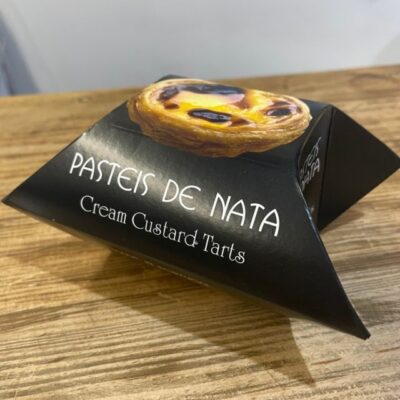
Porto: Pastel de Nata Cooking Class with Port Wine – Sé
Read our review →

Porto: Small Group Surf Lesson with Transportation
Read our review →
Porto: Tile-Painting Workshop with Porto Wine – Bainharia
Read our review →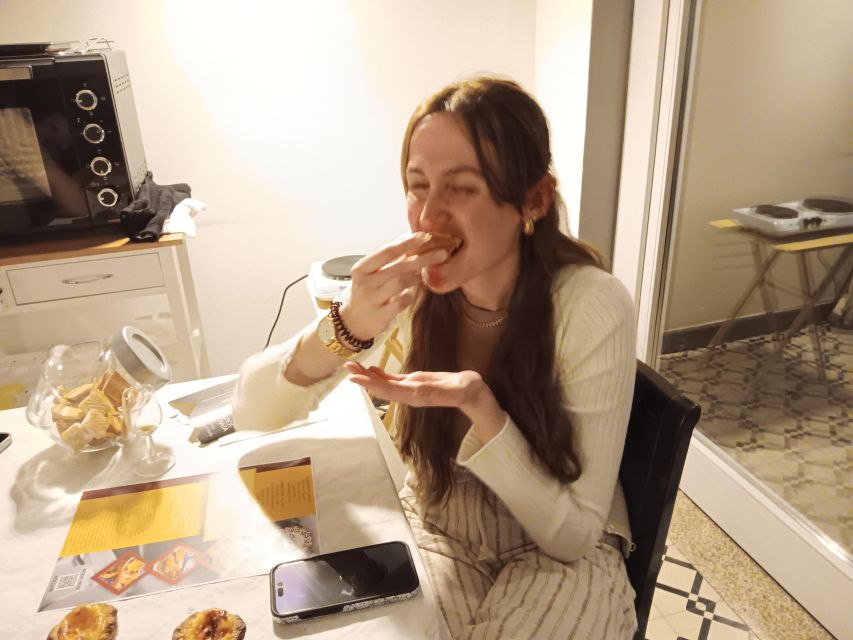
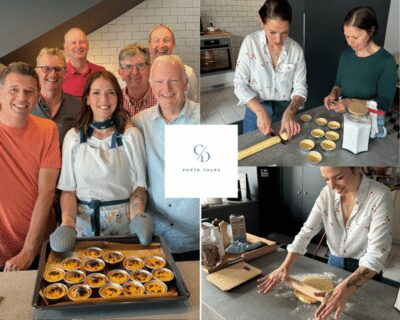
Porto: Pastel de Nata Cooking Class from Scratch
Read our review →Browse the lists this tour appears in