
Reviewed · WORKSHOPS
Viana do Castelo: Clay, Ceramics and Tea Workshop
Viana do Castelo’s ceramic tradition becomes something you can hold in your hands during this small-group clay workshop. I like the choice of projects, from a mug or bowl to a platter or pitcher, and I like that local artists guide you without rushing the process. A cup of tea adds a simple Portuguese touch.
The main catch is time: your piece will not be ready that day. You’ll need to wait a few weeks for it to be finished, or pay extra to have it shipped. The workshop is in English and Spanish, and the group is limited to six people.
In This Review
- Key points to know
- A hands-on way to meet Viana’s ceramic tradition
- Finding the studio near Praça 1º de Maio
- The first stage: turning clay into a form
- Choosing between a mug, plate, bowl, or larger piece
- Painting gives the piece its Viana connection
- The wait after the workshop
- What the $41 price gets you
- The instructors and the pace of the class
- Why this works for families and first-time makers
- The tea and the local studio atmosphere
- Booking details that affect your day
- Who should book the Viana clay workshop?
- FAQ
- How long does the Viana do Castelo ceramics workshop last?
- What can I make during the workshop?
- Is the ceramic piece finished on the same day?
- Can the finished ceramic piece be shipped?
- Are materials and equipment included?
- What languages are available, and is the studio wheelchair accessible?
Key points to know
- Create a real keepsake: You hand-model and hand-paint your own ceramic piece instead of buying a ready-made souvenir.
- Work with local artists: Michele and Gustavo provide guidance with the clay, tools, and decorative steps.
- Pick your project: Options include mugs, plates, bowls, platters, and pitchers.
- Small group setting: With a maximum of six participants, you get room for questions and personal help.
- Plan for the wait: Your finished piece is available after a few weeks, with paid shipping if you cannot collect it.
- Good rainy-day choice: The 2.5-hour indoor workshop offers a calm break from sightseeing in northern Portugal.
A hands-on way to meet Viana’s ceramic tradition
You notice Viana do Castelo’s connection to ceramics in its workshops, sculptures, and decorative work around the city. This activity lets you move past simply looking at local craft. You sit down with clay and make something yourself.
That difference matters. A shop-bought souvenir may remind you that you visited Viana. A hand-shaped cup or plate also reminds you of the choices you made, the uneven edges you corrected, and the colors you selected. It does not need to look perfect. In fact, a few signs of the maker’s hand are part of the charm.
The workshop lasts about two and a half hours, enough time to cover the basic stages without turning the session into a full-day class. You receive the materials and equipment, then work with an instructor who helps you develop an idea and handle the clay.
You do not need to arrive as an artist. The experience is built for first-time ceramic makers, and the guidance is intended to take you from basic modeling through decoration and finishing.
A few more Porto outings to weigh up
- Porto: Pastel de Nata Cooking Class with Grandma’s Recipe
★ 5.0 · 1,565 reviews - Porto: Pastel de Nata Pastry-Making Workshop
★ 4.9 · 1,542 reviews - Porto: Pastel de Nata Cooking Class with Port Wine – Sé
★ 4.8 · 888 reviews
Finding the studio near Praça 1º de Maio
The meeting point is between Rua da Bandeira and Praça 1º de Maio, in central Viana do Castelo. Transportation is not included, so you make your own way there. The central location is useful if you are already spending the day on foot in town.
Allow a little time to locate the exact entrance. The meeting point is given by nearby streets and the square rather than by a broad landmark. Once inside, you can expect a modern, airy studio filled with works by independent local artists.
That studio setting is part of the appeal. You are not working in a generic classroom with blank walls. Finished pieces around you give you ideas for shape and decoration, while the creative setting helps the session feel connected to Viana rather than attached to it only by name.
The space is wheelchair accessible. The workshop is offered in English and Spanish, and its small maximum of six participants should make it easier to follow demonstrations and ask for help.
The first stage: turning clay into a form
The session begins with the basics of working clay. Your instructor helps you understand the equipment and the techniques needed to make a useful object. The exact shape is your choice, within the options available in the studio.
A mug is a friendly choice for a first project because its purpose is clear and its size is manageable. A plate or bowl gives you more room for decoration. A platter or pitcher may appeal if you want something more ambitious, but larger forms can require more care as you shape them.
The important point is that this is hand modeling, not simply painting a pre-made object. You build the form yourself, guided by the artist. That gives you creative freedom, but it also means your finished item may have small variations in thickness or shape.
Do not treat those variations as mistakes you must hide. Handmade ceramics often look best when they retain some evidence of the process. Your instructor can help you make the piece stable and usable while still allowing your own idea to show.
The workshop is described as calm and unrushed, which is useful when you are learning a new craft. Clay responds better to patience than force. A relaxed pace also makes this a good choice for families, couples, and anyone who wants a break from moving quickly between monuments.
Choosing between a mug, plate, bowl, or larger piece
The range of possible objects lets you match the project to your skill and travel plans. If you want a practical souvenir, choose something you can use at home. If you prefer decoration, a plate or platter gives you a broad surface for painting.
Some participants have made two pieces during the session, including a platter and pitcher. That may be possible depending on your pace and the project, but you should not assume you will finish multiple large objects in 2.5 hours. Ask the instructor what is realistic when you arrive.
I would choose one main piece unless you already work with clay. A well-finished mug or bowl is more satisfying than several rushed forms. Families may prefer different objects for each person, while a couple might make matching cups or a shared serving piece.
The instructors help you explore the possibilities rather than forcing every person into the same project. That personal attention is one of the strongest reasons to choose this workshop over a larger craft class.
A different sort of Porto day altogether:
- The Unvanquished Tour in Porto City Center
★ 5.0 · 26,497 reviews - From Porto: Douro Valley w/ Boat Tour, Wine Tasting & Lunch
★ 4.7 · 19,061 reviews - Complete Douro Valley Wine Tour with Lunch, Wine Tastings and River Cruise
★ 5.0 · 12,920 reviews - Porto: Six Bridges Cruise
★ 4.2 · 11,680 reviews
Painting gives the piece its Viana connection
After shaping comes the decorative stage. You hand-paint your piece, using the techniques and guidance provided in the studio. This is where a simple clay form becomes a personal reminder of Viana do Castelo.
You can use the local artistic surroundings for ideas, but the activity does not require you to copy a particular design. Think about the kind of object you want to keep, the colors you like, and how much decoration the surface can comfortably handle.
Painting ceramics is less forgiving than painting paper. Lines may look different after the piece is finished, and the final color can change during firing. The instructor can explain the finishing process and help you make choices that suit the material.
That uncertainty is part of the fun, but it is also worth knowing before you book. You will not leave with a finished, fully fired object in your bag. You leave having made the important creative decisions, then wait for the final result.
The wait after the workshop
Your ceramic piece is ready to take home after a few weeks. The supplied information does not give an exact completion time, so ask the studio for the current estimate during your visit, especially if your departure date is close.
You have two choices. Collect the piece later if you remain in the area or plan another stop in Viana, or arrange shipping for an extra fee. Shipping is helpful for visitors with a tight Portugal itinerary, but it adds cost beyond the $41 workshop price.
This delay is the main practical issue to consider. If you need a souvenir in your suitcase that same afternoon, choose a market or shop instead. If you like the idea of receiving a handmade reminder later, the waiting period can make the object feel like a small postcard from home.
Pack your plans accordingly. The safest approach is to give the studio a delivery address you can reliably access if you choose shipping, and to confirm the fee before committing.
What the $41 price gets you
At $41 per person, the price includes the ceramics workshop, all materials and equipment, instruction from a local artist, your own handmade piece, and a cup of tea. Food and other drinks are not included, and transportation to the studio is also your responsibility.
The value is strongest if you want more than a passive demonstration. You are paying for guided making time, a personal object, and access to equipment that would be impractical to use during a short holiday.
The group limit also matters. Six people is small enough for the instructor to help with individual shapes and painting choices. In a larger class, you might spend more time waiting for a tool or trying to catch the instructor’s attention. Here, the format is better suited to questions and beginners who need reassurance.
The price does not include the later shipping charge. Factor that into your budget if you are flying home soon. The tea is a pleasant extra, but the value comes from the instruction and finished ceramic rather than the drink.
The instructors and the pace of the class
Michele is identified as the main instructor in the strongest personal accounts, with Gustavo also involved in the workshop. The teaching style is patient and attentive, with clear help during both construction and painting.
One useful detail is that the class may run longer than the stated 2.5 hours if participants need extra time. A group was allowed to stay almost an hour beyond the scheduled end so everyone could feel satisfied with their pieces. That is encouraging, but you should still avoid booking another timed activity immediately afterward.
The class is not presented as a formal art-school lesson. You learn practical techniques while making one object. That makes it accessible, but it may feel too basic if you already have extensive ceramics experience and want advanced wheel throwing, glazing, or kiln instruction.
No pottery wheel work is specified. The confirmed format is hand modeling and hand painting, so book it for a hand-built craft session rather than a wheel-throwing class.
Why this works for families and first-time makers
The workshop suits families because everyone can make a different item and work at their own level. A child, parent, or first-time adult can focus on a manageable piece while the instructor offers advice. The calm pace also leaves room for shared conversation instead of turning the activity into a race.
It is a good rainy-day plan, though you do not need bad weather to justify it. Northern Portugal sightseeing can involve plenty of walking, and a seated creative session gives you a change of rhythm.
Couples can use the activity as a shared souvenir project. Solo visitors may appreciate the small group because it offers company without the pressure of a large social tour. If you are traveling with a group of six or fewer, you can keep the session more personal.
The activity may be less suitable if you dislike waiting for results, have no time to collect or receive the piece, or want a detailed historical lecture about Portuguese ceramics. The focus is making, not a long museum-style presentation.
The tea and the local studio atmosphere
The included cup of tea is a modest detail, but it fits the mood. You are spending several hours concentrating on your hands, and a warm drink helps the workshop feel hospitable rather than purely instructional.
The studio’s display of independent local artists’ work adds another useful layer. You can see how ceramics can move from simple functional objects to more expressive pieces. It may also help you decide how much decoration you want on your own mug, bowl, plate, or platter.
Do not expect a full meal. Food and drinks beyond the included tea are not part of the activity. If you need lunch or a snack, plan that separately before or after the class.
Booking details that affect your day
The duration is 2.5 hours, and starting times depend on availability. Check the time carefully against your other plans, particularly if you are visiting Viana do Castelo as a day trip.
The activity allows free cancellation up to 24 hours before the start for a full refund. You can also reserve now and pay later, which helps if your route through Portugal is still changing.
English and Spanish are the listed teaching languages. If you need another language, the supplied details do not confirm that option, so do not assume it will be available.
The workshop is wheelchair accessible, but the information does not explain every detail of the workspace or equipment setup. If you have specific access needs, contact the provider before booking so the studio can clarify what support is available.
Who should book the Viana clay workshop?
I would choose this for a visitor who values a personal souvenir over a quick purchase. You get a direct connection to the city’s craft culture and leave with an object shaped and painted by your own hands.
It is especially well suited to families, couples, solo visitors, and small groups who want a quiet creative activity. The $41 cost is reasonable when you count the materials, artist guidance, small group size, and finished piece, though shipping can raise the final amount.
I would skip it if your schedule allows no room for a 2.5-hour session or if you need to take the finished souvenir home immediately. I would also look elsewhere if your main goal is advanced ceramics training or wheel work.
For most first-time makers, this is a thoughtful addition to a Viana do Castelo visit. Book it when you can accept the wait, choose a project you will actually use, and leave enough time afterward for the studio’s relaxed pace.
FAQ
How long does the Viana do Castelo ceramics workshop last?
The workshop lasts 2.5 hours. Starting times vary, so you need to check availability when booking.
What can I make during the workshop?
You can choose from several ceramic objects, including a mug, plate, bowl, platter, or pitcher.
Is the ceramic piece finished on the same day?
No. Your piece will be ready to take home after a few weeks.
Can the finished ceramic piece be shipped?
Yes. Shipping is available for an extra fee.
Are materials and equipment included?
Yes. The workshop includes all materials and equipment, along with guidance from a local artist.
What languages are available, and is the studio wheelchair accessible?
Instruction is available in English and Spanish. The activity is wheelchair accessible.
Latest reviews around Porto
- Private Walking Tour, highlights and secrets of Porto★ 3.9 · 3 reviews
- Private Porto Half-Day Tour – Wine Cellars & Cheese Tasting★ 5.0 · 3 reviews
- Portuguese Wine Tasting w Local Cheese & Cold Cuts pairing★ 5.0 · 3 reviews
- From Peso da Régua: Visit 3 wineries, tasting and viewpoint★ 5.0 · 3 reviews
- Porto: Full-Day All-Inclusive Private City Sightseeing Tour★ 4.3 · 3 reviews
- Small Painting Group with a Local Artist in Porto★ 5.0 · 3 reviews
- From Arouca: Paiva River Rafting Adventure – Adventure Tour★ 5.0 · 3 reviews
- Private Tour to Santiago de Compostela and its stunning Cathedral★ 5.0 · 3 reviews
Workshops, compared.
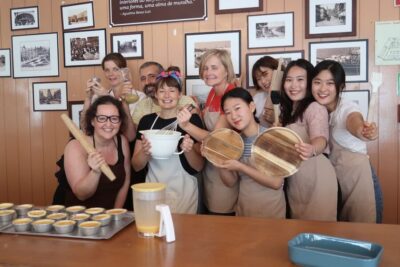
Porto: Pastel de Nata Cooking Class with Grandma’s Recipe
Read our review →
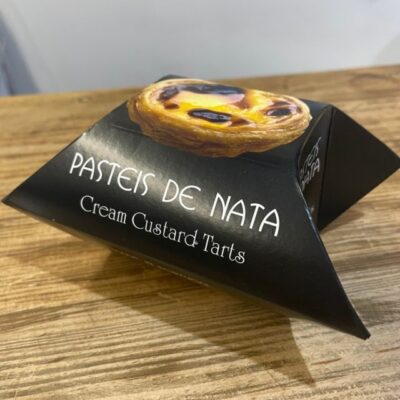
Porto: Pastel de Nata Cooking Class with Port Wine – Sé
Read our review →

Porto: Small Group Surf Lesson with Transportation
Read our review →
Porto: Tile-Painting Workshop with Porto Wine – Bainharia
Read our review →
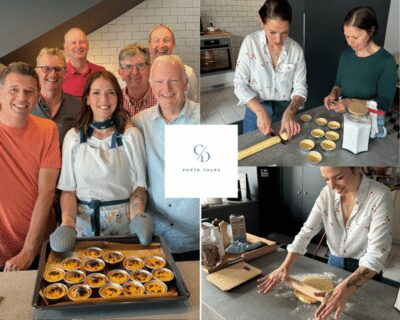
Porto: Pastel de Nata Cooking Class from Scratch
Read our review →Browse the lists this tour appears in